
Dr. Gymbro
←

#strength

9 articles
A wide, editorial-style still life photographed in soft natural window light on a pale oak gym bench. In the foreground, a small rustic ceramic bowl in warm sand tones holds a mound of fine golden-beige ashwagandha root powder, with a few dried gnarled ashwagandha roots and a sprig of green leaves with tiny orange-red berries resting beside it. A wooden scoop dusted with powder lies at an angle. Just behind, a matte black barbell with a single chalk-dusted steel plate sits slightly out of focus, a light haze of white chalk hanging in the air and catching the sunlight.

On the left side, a neat stack of printed research papers with a sharp black pen and a few muted sage-green sticky tabs. One page shows a simple, abstract forest-plot-style line graph with small squares and horizontal lines, subtly out of focus, hinting at statistics without legible text. A pair of minimal round reading glasses rests on the pages. A small linen gym towel is folded near the edge of the bench.

The palette is restrained and modern: warm cream, soft sage green, muted terracotta, charcoal black, and brushed steel highlights. The background is a softly blurred minimalist studio space with a pale plaster wall and a long soft shadow cast by a window frame, giving a calm, contemplative mood. Shallow depth of field, crisp detail on the powder and roots, gentle film-like grain, and generous negative space on the right third of the frame for a headline overlay. The overall look is a clean, trendy health-and-science journal cover, thoughtful and skeptical rather than promotional, balancing the natural herbal element against the discipline of strength training.
nutrition

Ashwagandha pour les haltérophiles : boost de force ou mirage statistique ?

BY DR. GYMBRO ·

L'ashwagandha est commercialisée auprès des haltérophiles comme un accélérateur de force et de masse, et une nouvelle méta‑analyse d’essais randomisés sur l’entraînement en résistance a mis en évidence des gains au développé couché et au squat en 1RM qui semblent impressionnants sur le papier. Mais seuls trois essais regroupant 161 participants pouvaient être synthétisés. Les deux résultats de force ont perdu leur signification sous le test plus strict HKSJ, chaque résultat reposant sur une seule étude influente. Le GRADE a évalué les preuves comme faibles à très faibles, et aucun effet fiable sur la masse grasse n’a été détecté. Voici ce que montre réellement la revue, et qui pourrait encore vouloir l’essayer.
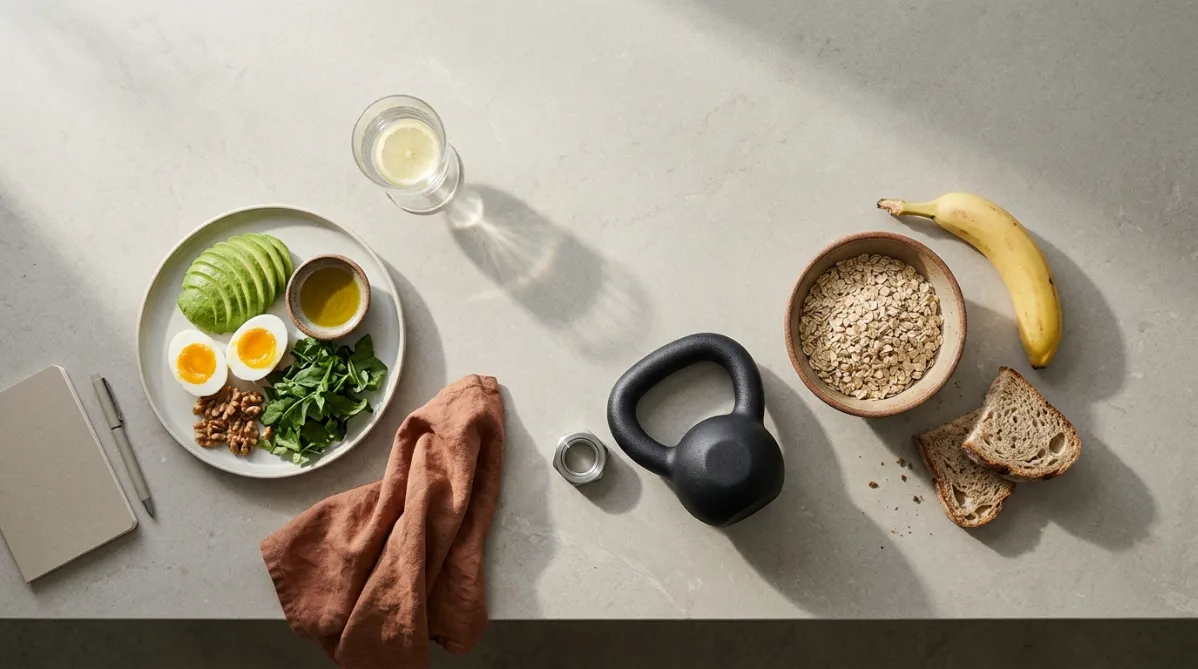
A wide, editorial-style flat lay photographed from above on a pale warm-gray stone countertop, bathed in soft natural window light with gentle long shadows. On the left half, a minimalist keto plate: sliced avocado fanned out in creamy green, two soft-boiled eggs halved to reveal golden yolks, a small pile of dark leafy greens, a few walnuts, and a glossy drizzle of olive oil in a small ceramic dish. On the right half, a contrasting arrangement of carbohydrates: a rustic bowl of oats, a ripe banana, and a few slices of sourdough, arranged with equal visual weight. Between the two sides, a matte black kettlebell sits at the center, and a slim brushed-steel barbell collar rests nearby, suggesting resistance training without a gym setting. A simple, elegant glass of water with a lemon slice catches the light and casts a delicate refracted glow, hinting at water weight and glycogen. A linen napkin and a small, neutral-toned notebook with a pen add a journal-like touch. The palette is muted and modern: sage green, cream, terracotta, charcoal, and soft butter yellow. The composition is clean and balanced with generous negative space across the top and bottom edges, suitable for headline overlay. The mood is calm, thoughtful, and science-informed, like a contemporary health and wellness magazine cover. Shallow depth of field, crisp textures on the food, subtle film-like grain, and high-end, trendy food photography styling.
nutrition

Keto pour les haltérophiles : la graisse diminue, mais la masse maigre en retrait de 1,4 kg

BY DR. GYMBRO ·

Une revue de 50 études montre que les régimes cétogènes réduisent la graisse tout en maintenant généralement la force. Chez les pratiquants de musculation, la masse maigre était en moyenne 1,37 kg plus basse qu’avec des régimes non cétogènes, mais les auteurs estiment ce résultat de faible certitude. Ils soulignent que cela ne prouve pas une perte musculaire ; le glycogène et l’eau peuvent expliquer la différence. Les performances à haute intensité étaient le plus souvent inchangées ou légèrement détériorées. Voici à qui le keto peut convenir en phase de coupe, qui devrait l’éviter, et comment préserver la masse maigre.
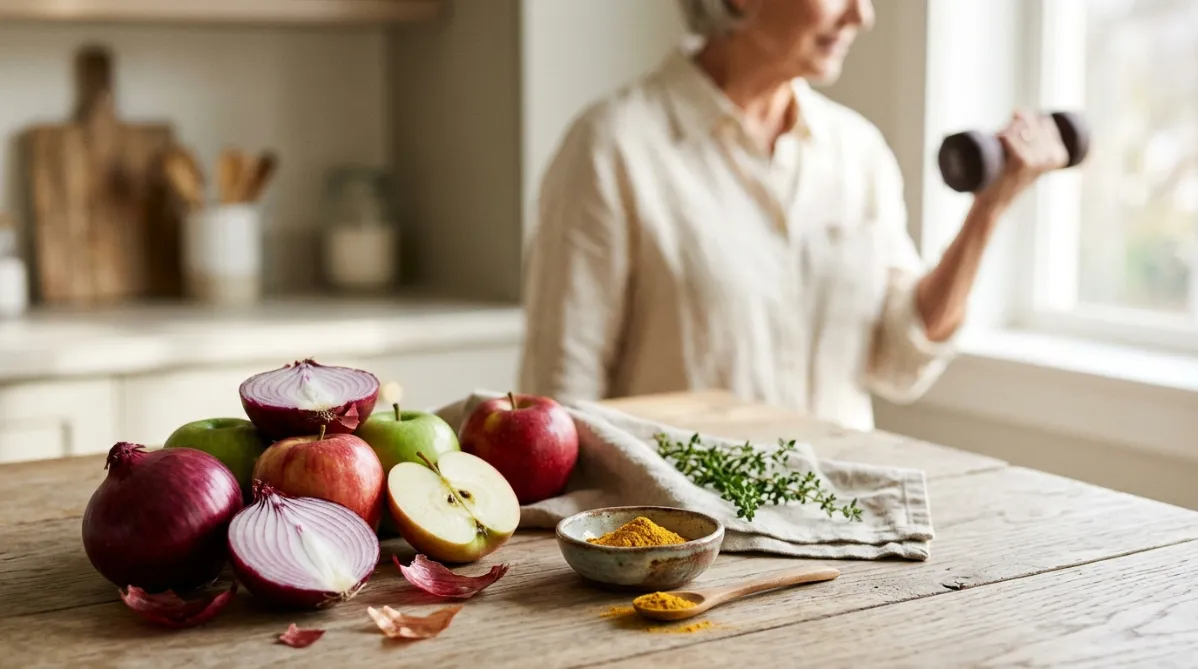
A landscape editorial photograph of a rustic kitchen table in soft morning window light. On a weathered light oak surface, a loose arrangement of fresh red onions, a few halved to show their purple-white rings, and crisp red and green apples, one sliced open to reveal pale flesh. A small ceramic bowl holds a pinch of golden-yellow quercetin powder, with a wooden spoon resting beside it. In the softly blurred background, an older woman in a cream linen shirt lifts a modest dumbbell near a sunlit window, her posture strong and relaxed. Her silhouette is out of focus, which keeps the produce as the main subject.

The palette is warm and natural: deep magenta onion skins, glossy apple reds, buttery yellow accents, and creamy neutrals. A gentle shallow depth of field gives creamy bokeh in the background. The light is diffused and golden, with delicate shadows and a few dried onion skin flakes scattered across the wood for texture. A folded linen napkin and a small sprig of thyme add a curated, modern lifestyle-magazine feel.

The composition follows the rule of thirds, with the produce at lower left and negative space on the right, where the blurred lifter and window glow provide balance. The overall look is clean, calm, and contemporary, like a premium health and wellness journal cover: natural, tactile, and optimistic, with fine film-like grain and true-to-life color.
nutrition

La quercétine a triplé les gains de force chez les pratiquants âgés — sans plus de muscle

BY DR. GYMBRO ·

Un flavonoïde bon marché présent dans les oignons et les pommes aurait simplement boosté les gains de force chez les pratiquants âgés bien au‑delà de ce que l’entraînement seul pouvait offrir. Dans un essai randomisé, en double‑aveugle, les adultes plus âgés prenant 200 mg/jour de glycosides de quercétine ont gagné environ 15 % de force au niveau du genou en six semaines, contre environ 5 % avec le placebo. Étrangement, la masse musculaire n’a varié dans aucun des deux groupes. L’avantage semblerait venir du système nerveux, avec des unités motrices à seuil élevé qui s’activent plus rapidement. Voici ce que l’étude a révélé, comment l’appliquer, et pourquoi la petite taille de l’échantillon impose la prudence.
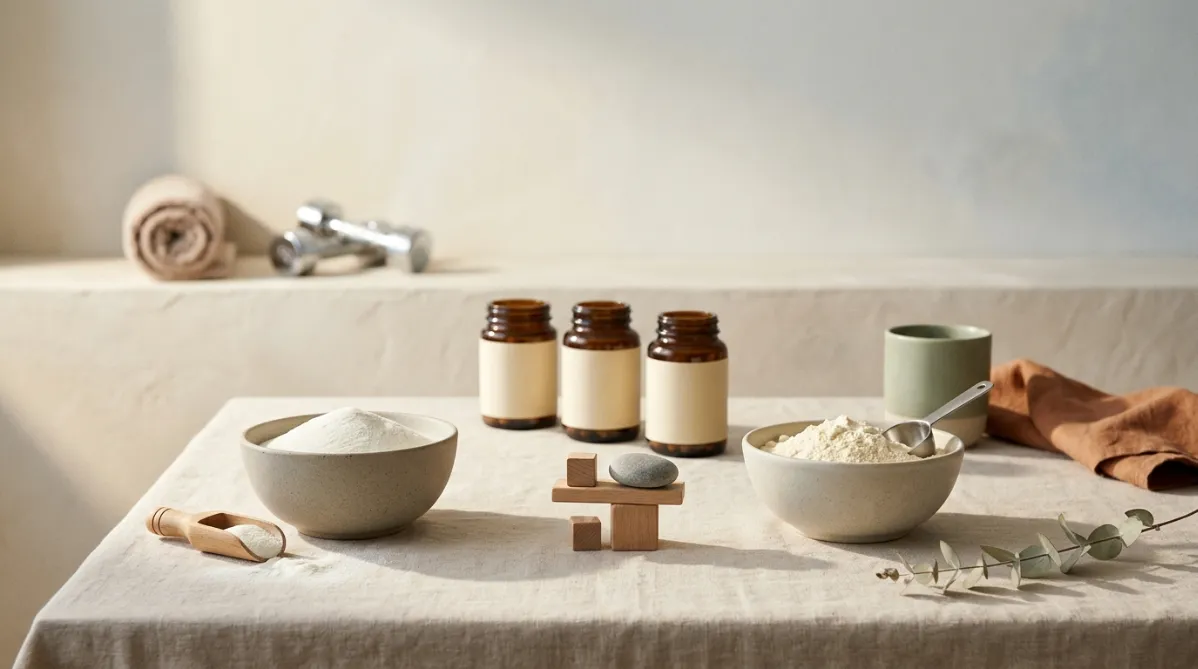
A bright, minimalist editorial still life on a pale oat-colored linen surface, shot from a slightly elevated three-quarter angle in soft natural window light. On the left, a matte ceramic bowl of fine white collagen powder with a wooden scoop resting beside it, a light dusting of powder spilling across the linen. On the right, a matching bowl of creamy off-white whey powder with a brushed-steel scoop. Between them sits a small, neatly balanced stack of simple geometric wooden blocks and a single smooth gray stone, hinting at a scale or comparison without showing a literal scale. Behind them, a lightly blurred row of three clean amber glass supplement jars with plain cream labels, unbranded. A single rolled yoga towel and a pair of small chrome dumbbells sit softly out of focus in the background on a pale plaster shelf. Accents of muted sage green and warm terracotta appear in a ceramic cup and a folded napkin, giving the palette a calm, contemporary wellness-magazine feel. A thin, elegant sprig of dried eucalyptus lies at the edge of the frame. Shadows are long, gentle, and slightly cool, with a creamy shallow depth of field and fine grain. The composition leaves generous negative space across the upper third for title overlay, with a subtle gradient from warm ivory to pale gray-blue in the background wall. The styling is clean and modern like a trendy health journal website, with a refined, tactile, editorial photography look, balanced symmetry, and no text, no people, no futuristic or laboratory elements.
nutrition

Le collagène surpasse la whey pour la musculation dans une analyse de 78 essais ?

BY DR. GYMBRO ·

Une méta‑analyse en réseau de 2026 portant sur 78 essais randomisés et 4 755 participants a placé le collagène en première position pour les gains de force et de masse maigre lors d’un entraînement en résistance, devant la whey. Plus surprenant encore, aucun autre supplément protéiné n’a surpassé le placebo. Pourtant, le collagène est une protéine incomplète, pauvre en leucine, et les intervalles de confiance sont larges. Voici ce que montrent réellement les chiffres, pourquoi le résultat doit être confirmé par des comparaisons directes, et comment ajuster votre pile de suppléments en attendant.
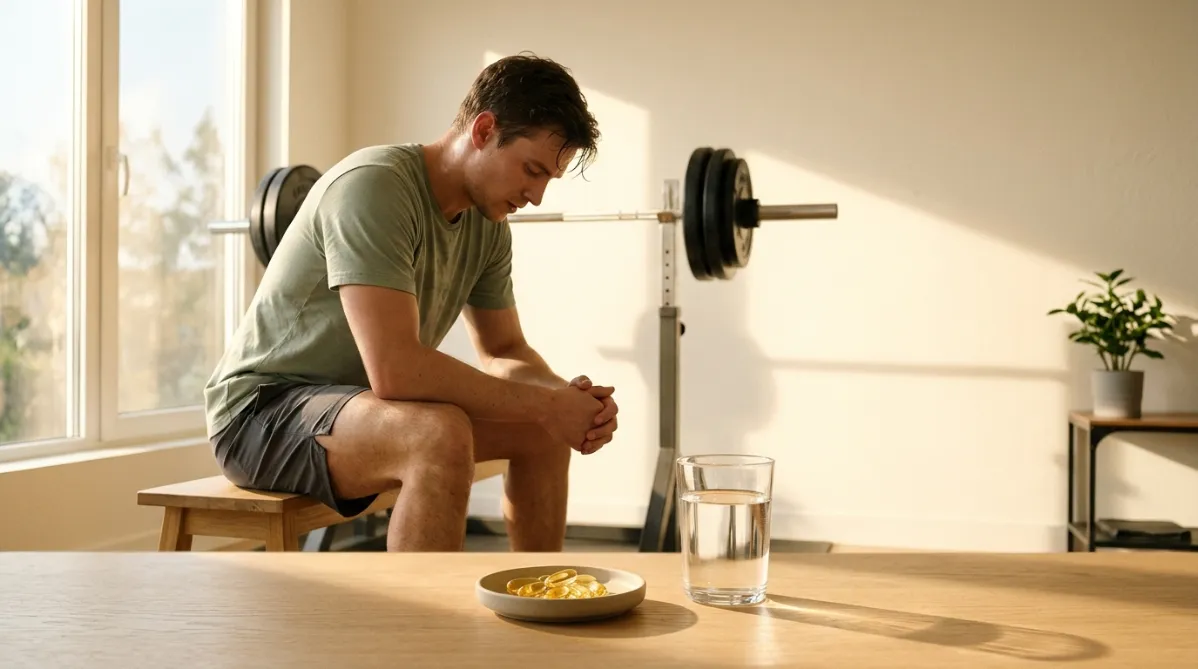
A sunlit, minimalist home gym corner photographed in soft golden morning light, with a young athletic man seated on a wooden bench, leaning forward with his elbows resting on his knees, catching his breath after a hard leg session. He wears a muted sage-green t-shirt and charcoal shorts, his face turned slightly away from the camera, calm and focused. A matte ceramic dish in the foreground holds a few small, translucent golden softgel capsules, with a glass of water beside it catching the light and casting a soft caustic shadow across a pale oak floor. Behind him, a loaded barbell rests on a squat rack, slightly out of focus, and a tall window pours warm sunlight diagonally across the scene, creating long gentle shadows and a hazy glow. A small potted green plant sits on a shelf at the edge of the frame. The color palette is warm and editorial: cream, soft gold, sage green, pale wood, and charcoal accents. Shallow depth of field, with crisp focus on the capsules and glass in the lower third and a creamy bokeh background. The composition leaves generous negative space on the right side for a headline overlay. The mood is clean, modern, and aspirational, like a high-end wellness magazine or a trendy health journal feature. Shot on a 50mm lens, natural light, fine film grain, subtle matte finish, landscape 16:9 framing.
recovery

La vitamine D accélère la récupération de force chez les hommes non déficients

BY DR. GYMBRO ·

Des hommes dont le taux de vitamine D était déjà normal récupèrent plus rapidement leur force après une séance intensive d’entraînement des jambes lorsqu’ils prennent 4 000 UI par jour. Dans cet essai randomisé contrôlé par placebo, portant sur 28 hommes actifs, la force isométrique maximale a rebondi d’environ 8 % à 24 h. Les marqueurs de dommages musculaires (ALT et AST) ont également augmenté moins fortement, mais aucune réduction des courbatures n’a été observée. Voici ce que l’étude a démontré, ses limites, et qui pourrait réellement en bénéficier.
A sun-lit editorial still life on a pale oak gym bench: a loaded barbell rests on a rack just above it, chalk dust drifting in the air. In the foreground sits a small ceramic bowl of roasted beets, some sliced to show their deep magenta rings, with a few whole beets still wearing their leafy burgundy stems. Next to the bowl is a matte white supplement tub with a minimal label, a wooden scoop of fine white powder, and a clear glass of water catching soft highlights. A slim notebook lies open beside them with a simple hand-drawn bar graph and a pen, suggesting data and analysis without any readable text. Behind the bench, a softly blurred minimalist training space: raw concrete wall, tall window with warm morning light, a rack of black dumbbells fading into bokeh. The palette is earthy and modern: beet magenta, warm cream, charcoal, brushed steel, and touches of sage green from the beet leaves. Soft directional light from the left creates long gentle shadows and a slight film-grain texture. Shallow depth of field keeps the beets and powder tack sharp. The composition is wide and balanced, with negative space on the right for headline overlay. The overall feel is a clean, contemporary health and fitness journal photograph, warm and tactile, with an understated scientific tone.
nutrition

La bêtaïne augmente la puissance du bench‑throw d’environ 16 % en 14 jours

BY DR. GYMBRO ·

Deux semaines de supplémentation en bêtaïne, un composé dérivé de la betterave commercialisé sous le nom de TMG, ont entraîné une hausse d’environ 16 % de la puissance au bench‑throw dès le premier jour d’un bloc d’essai intensif chez des hommes pratiquant la musculation. Un essai randomisé, double‑aveugle et croisé a également montré une force isométrique au développé couché accrue, ainsi que des améliorations plus modestes de la puissance du saut vertical et de la force isométrique au squat. En revanche, le nombre de répétitions et la puissance du squat‑jump sont restés stables, et l’étude ne comptait que 12 participants. Voici les données, la dose utilisée et ce que les haltérophiles peuvent vraiment en déduire.
A bright, minimalist editorial still life shot from a slightly elevated three-quarter angle on a pale oat-colored stone countertop, bathed in soft natural window light with gentle long shadows. In the center sit two matching matte white supplement scoops, side by side. One is heaped with fine white crystalline powder, the other holds an almost identical pile, so the viewer is invited to compare them. Beside them are two simple frosted glass tumblers of cloudy water, each with a small whisper of powder swirling at the bottom. A third glass of clear water sits slightly apart, as a quiet nod to the placebo.

Scattered around the scene are fresh, sliced watermelon wedges with vivid coral-pink flesh and pale green rinds, and a few sliced green apples with crisp white interiors, hinting at the natural sources of citrulline and malic acid. A small brushed-brass measuring spoon and a minimalist matte sage-green shaker bottle rest at the edge of the frame. Off to one side, a clean ceramic dish holds a few loose grains of powder, and a slim linen notebook with a pencil lies open to a blank page, suggesting data and study notes without any legible text.

The color palette is soft and modern: warm cream, blush coral, sage green, and touches of brass, with a faintly blurred background of a sunlit kitchen or studio with a pale plaster wall. Shallow depth of field keeps the scoops tack sharp while the background melts into a creamy bokeh. The composition leaves generous negative space on the left third of the frame for a title overlay. The overall mood is calm, trustworthy, and trendy, like a contemporary wellness and science journal cover, with crisp detail, subtle film-like grain, and a clean, airy, balanced feel.
science research

Citrulline Malate vs L‑Citrulline : le malate est‑il vraiment important ?

BY DR. GYMBRO ·

Citrulline malate ou L‑citrulline pure ? Un protocole randomisé, double‑aveugle, contrôlé par placebo et en cross‑over, mené chez 43 adultes entraînés, a comparé les deux formes à un placebo, et la réponse pourrait vous faire économiser. Aucun des deux n’a amélioré la force, la puissance, la performance au saut, le nombre de répétitions ni la perception de l’effort, et le malate n’a rien apporté de supplémentaire par rapport à la même dose de citrulline. Voici ce que l’étude a mesuré, les doses employées et les réserves qui empêchent de tirer une conclusion définitive. Si vous hésitez encore sur le produit à mettre dans votre shaker, commencez par lire ceci.
A wide, editorial-style flat lay photographed from slightly above on a pale oak gym bench with a soft matte finish. On the left, a small white ceramic cup of black coffee sits on a matching saucer, with a thin curl of steam rising and catching warm window light. Beside it is a second, slightly larger handleless stoneware mug in muted sage green, also filled with coffee, so the pair suggests one to two cups. In the center-right foreground rests a sleek matte-black steel barbell plate, partly overlapping a brushed-steel dumbbell with fine knurling. A folded charcoal gym towel and a clean white chalk-dusted wrist strap lie casually to one side. A small scatter of whole roasted coffee beans spills across the bench in front of the cups, glossy and deep brown. Near the bottom edge, a minimalist analog kitchen scale in soft cream with a thin black needle hints at precise dosing, without any readable numbers or text.

Soft morning sunlight streams in from the upper left, creating long, gentle shadows and a warm golden glow against cool neutral tones. The background is a softly blurred, airy home gym or boutique training studio with out-of-focus squat rack uprights, pale concrete walls, and a leafy green plant in a terracotta pot adding a touch of organic color. The palette is restrained and modern: warm cream, espresso brown, charcoal, sage green, and hints of brushed silver. Shallow depth of field keeps the cups and beans tack sharp while the background melts into creamy bokeh. The composition leaves generous negative space on the right third for a title overlay, with a balanced, calm, premium magazine feel, like a contemporary wellness and sports science journal. High-resolution, natural color grading, subtle film grain, realistic textures on ceramic, steel, and coffee crema.
nutrition

Quel dosage de caféine avant de soulever ? Une méta‑analyse montre que 1–2 mg/kg suffisent

BY DR. GYMBRO ·

Le dosage habituel de caféine avant une séance de musculation est de 3 à 6 mg/kg, soit plusieurs tasses de café ou une forte dose de pré‑entraînement. Une méta‑analyse de 2022, portant sur 12 essais, a montré que même 0,9 à 2 mg/kg amélioraient la force (d ≈ 0,17), l’endurance (d ≈ 0,21) et la vitesse moyenne de la barre (d ≈ 0,56). Pour la plupart des pratiquants, cela correspond à une ou deux tasses de café. Les effets restent modestes et proviennent d’études aiguës, mais ils suggèrent qu’on peut obtenir un bénéfice comparable avec beaucoup moins de caféine.
A wide, editorial flat-lay photograph shot from directly above on a pale warm-gray stone countertop, lit by soft natural morning window light with gentle diagonal shadows. On the left, a neatly arranged cluster of whole-food protein sources: two seared chicken breast slices with a golden crust, a small ceramic bowl of creamy Greek yogurt topped with blueberries, three halved soft-boiled eggs with jammy orange yolks, a handful of raw almonds, and a small pile of dried lentils scattered on a linen napkin. At the center, a matte white shaker bottle and a wooden scoop resting in a pile of fine vanilla-colored protein powder, a few grains dusted artfully across the surface. On the right, a minimalist kitchen scale in matte black displaying a portion of food, next to an open notebook with a hand-drawn curve that rises steeply and then flattens into a plateau, drawn in a deep terracotta ink pen, with a small dot marking the bend. A brass pen lies beside the notebook. A single dumbbell with a brushed steel finish sits partially in frame at the upper right corner, grounding the fitness theme without feeling gym-like. Color palette: warm cream, sage green, terracotta, soft charcoal, and butter yellow accents, with generous negative space along the top edge for title overlay. Shallow depth of field, crisp textures, subtle film grain, modern lifestyle magazine aesthetic, clean and calm composition, 16:9 landscape.
nutrition

Quelle quantité de protéines optimise réellement la prise de muscle ? Le plateau à 1,6 g/kg expliqué

BY DR. GYMBRO ·

Vous pensez qu’il faut plus de 2 g de protéines par livre de poids corporel pour développer vos muscles ? Une méta‑analyse de 49 études, portant sur 1 863 adultes en bonne santé, montre que les bénéfices plafonnent autour de 1,6 g/kg par jour. L’intervalle de confiance s’étend jusqu’à environ 2,2 g/kg, offrant ainsi une fourchette réaliste au lieu d’une dose astronomique. Les athlètes déjà entraînés tirent le plus profit de la supplémentation, tandis que l’avantage diminue avec l’âge. Voici ce que ces chiffres impliquent pour votre assiette, votre shaker et votre portefeuille.

This page is available in