Dr. Gymbro
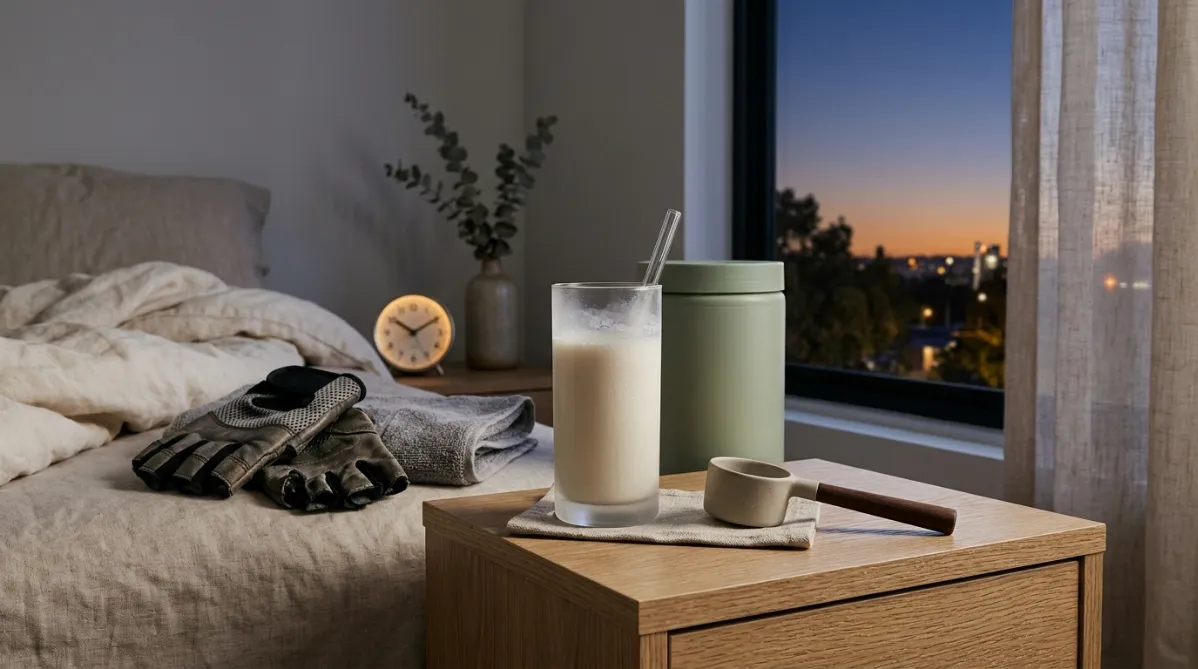
A quiet bedside scene at dusk, shot in soft natural light with a shallow depth of field. A tall frosted glass of creamy, pale-white shake sits on a light oak nightstand, with a thin film of condensation on the glass and a faint milky residue near the rim. Beside it, a matte ceramic scoop rests on a small linen coaster. A minimalist tub of unbranded protein powder in muted sage green sits slightly out of focus in the background.

To the left, a neatly made bed with oatmeal-colored linen sheets and a rumpled cream duvet. A pair of worn lifting gloves and a folded gray gym towel sit on the edge of the bed, suggesting an evening workout just finished. A small analog alarm clock reads about 10:30 PM, its soft face glowing faintly. A sprig of dried eucalyptus in a small stoneware bud vase adds an organic touch.

Through a large window on the right, deep indigo twilight fades into a warm amber horizon, and the last light spills across the wall in long, gentle gradients. A sheer curtain moves slightly. The palette is warm neutrals (cream, oak, sand, soft terracotta) with a few muted blue-violet accents from the evening sky.

The composition uses the rule of thirds, with the glass at the left-center foreground and generous negative space on the right, where headline text could sit. The mood is calm, restorative, and editorial, like a modern wellness and nutrition journal. The lighting is gentle and diffused, with subtle film grain and slightly lifted shadows. The textures of linen, wood, glass, and ceramic are crisp. The image is clean and uncluttered, with no text, logos, or people, and no futuristic or sci-fi elements.
Nutrition

El batido nocturno de 40 g: Qué hace la caseína mientras duermes

Dr. Gymbro · · 4 min read

El hallazgo: tu cuerpo sigue trabajando mientras duermes

Entrenar por la noche plantea una cuestión incómoda: ¿qué ocurre con la recuperación durante las aproximadamente ocho horas que pasas sin comer? Un estudio de 2012, llevado a cabo por Res y colaboradores y publicado en Medicine & Science in Sports & Exercise, probó una posible respuesta. Dieciséis hombres jóvenes y sanos entrenaron por la tarde y, 30 min antes de acostarse, consumieron 40 g de proteína de caseína. La proteína se digirió y absorbió durante el sueño, la síntesis proteica total aumentó y el balance neto de proteína cambió de negativo a positivo.

Es un resultado claro y útil, pero merece una lectura cuidadosa porque el estudio es fácil de sobrevalorar.

Cómo se diseñó el estudio

Todos los participantes realizaron una única sesión de entrenamiento de fuerza a las 20:00 h, después de un día con alimentación estandarizada. A las 21:00 h recibieron una comida de recuperación con 20 g de proteína y 60 g de carbohidrato. Luego, a las 23:30 h, unos 30 min antes de dormir, bebieron 40 g de caseína o una bebida placebo.

Los investigadores usaron caseína intrínsecamente marcada, es decir, la proteína llevaba un trazador ([1‑C]fenilalanina). Combinado con infusiones continuas de trazador intravenoso, extracción de sangre y biopsias musculares, pudieron seguir dónde iba la proteína a lo largo de la noche de 7,5 h. Rastrear directamente la digestión, absorción y turnover proteico es una gran fortaleza y la razón por la que el estudio se cita con frecuencia.

Los números

Los resultados clave:

  • Digestión y absorción: La caseína se digirió y absorbió eficazmente durante el sueño. Los aminoácidos circulantes subieron rápidamente y se mantuvieron elevados el resto de la noche.
  • Síntesis proteica total: 311 ± 8 µmol/kg en 7,5 h con caseína, frente a 246 ± 9 µmol/kg con placebo (P < 0,01).
  • Balance neto de proteína: +61 ± 5 µmol/kg con caseína, frente a –11 ± 6 µmol/kg con placebo (P < 0,01). En otras palabras, la noche con placebo mostró un ligero balance negativo, mientras que la noche con caseína fue claramente positiva.
  • Síntesis de proteína muscular: Aproximadamente un 22 % más alta con caseína (0,059 %/h vs 0,048 %/h). Este resultado sólo alcanzó significación marginal (P = 0,05).

Los hallazgos a nivel de cuerpo entero son sólidos. El resultado específico del músculo es más bien sugestivo que definitivo, y debe presentarse como tal.

¿Por qué caseína?

La caseína forma un gel en el estómago, lo que retrasa su liberación y genera un suministro prolongado de aminoácidos. Ese perfil se adapta mejor a un ayuno nocturno que una proteína de rápida digestión, que produce un pico que desaparece pronto. El estudio respalda la idea práctica de que el sueño no detiene la digestión lo suficiente como para perder la proteína: los aminoácidos llegaron y se mantuvieron disponibles durante toda la noche.

Limitaciones honestas

Esto no prueba que un batido antes de dormir construya más músculo. Ten en cuenta estas advertencias:

  • Muestra pequeña: 16 hombres jóvenes y sanos. Los resultados pueden no extrapolarse directamente a mujeres, adultos mayores o personas con antecedentes de entrenamiento diferentes.
  • Una sola noche: Las medidas fueron agudas. Un aumento de síntesis en una noche no garantiza una mayor hipertrofia a lo largo de meses.
  • Marcadores sustitutos: La síntesis y el balance proteico son indicadores mecánicos, no tamaño muscular ni fuerza.
  • Resultado muscular marginal: El aumento del ~22 % en síntesis muscular quedó justo en el umbral de significación.
  • Contexto: Los participantes ya habían ingerido una comida de recuperación tras el entrenamiento, de modo que el batido fue un añadido, no un sustituto.

Ensayos más largos han investigado si esto se traduce en crecimiento, pero la principal aportación de este estudio es demostrar la plausibilidad fisiológica: la proteína sigue actuando durante la noche.

Recomendaciones prácticas

Dosis: El estudio utilizó 40 g de caseína. Esa es una porción considerable, así que ajústala a tu ingesta diaria total en lugar de considerarla una cifra mágica.

Opciones alimentarias: Un polvo de caseína es la manera más sencilla de replicarlo. El requesón y el yogur griego son alternativas integrales ricas en caseína. Las porciones varían, así que revisa las etiquetas para estimar la cantidad de proteína por ración.

Momento: El protocolo indicó que los participantes lo bebieran unos 30 min antes de acostarse, tras una comida de recuperación previa.

Quién se beneficia más:

  • Deportistas que entrenan por la noche y enfrentan una larga brecha antes de su próxima comida.
  • Personas que tienen dificultad para alcanzar su objetivo diario de proteína. Una porción antes de acostarse es un punto fácil para incluir 30–40 g.
  • Quienes ya consumen suficiente proteína y duermen bien no deberían esperar un cambio dramático. La proteína total diaria y el entrenamiento constante siguen siendo la base.

Conclusión

El batido nocturno de 40 g es una estrategia de bajo esfuerzo, respaldada por la evidencia, para mantener los aminoácidos disponibles durante el ayuno más largo del día. Res y colaboradores demostraron que la caseína pre‑sueño se digiere, se absorbe y altera el balance proteico nocturno de ligeramente negativo a claramente positivo. Lo que no mostraron es un aumento garantizado en el crecimiento muscular a largo plazo. Úsalo como una herramienta conveniente para cubrir huecos de proteína y apoyar la recuperación nocturna, no como sustituto de una dieta equilibrada y de un buen programa de entrenamiento.
Original study

Read the original research on pubmed.ncbi.nlm.nih.gov →

This article summarizes published research for general information. It is not medical advice.

DG

Written by

Dr. Gymbro

Dr. Gymbro writes for Dr. Gymbro: science-backed fitness, nutrition & performance.

Related Articles

A softly lit bedside table in a calm, modern bedroom at dusk, photographed in wide landscape format with shallow depth of field. In the foreground, a matte white shaker bottle sits beside a tall frosted glass of creamy, pale vanilla-colored protein shake, with a few condensation droplets catching warm light. Next to the glass rests a slim fitness band on a dark charcoal fabric strap, its small LED glowing a gentle green, lying casually on a light oak wooden surface. A small scoop of fine white protein powder rests on a ceramic dish nearby, with a light dusting of powder on the wood.

In the soft-focus background, a neatly made bed with oatmeal-colored linen bedding and a textured knit throw blanket. A sheer curtain filters the last peach and lavender light of evening from a large window. A small potted olive branch in a terracotta vase and a closed paperback book add a quiet editorial touch. A bedside lamp with a warm, cream-colored shade casts a golden glow across the scene and creates gentle highlights on the glass.

The palette is muted and harmonious: warm cream, soft sand, oatmeal beige, faint sage green accents, and touches of dusty lavender in the window light. The mood is peaceful, reassuring, and clean, like a contemporary wellness magazine or a trendy health journal feature. Lighting is natural and cinematic, with soft shadows and a subtle film-like grain. The composition follows the rule of thirds, with the shake and band on the left third and open negative space on the right for headline overlay. Minimalist, Scandinavian-inspired styling, high-end lifestyle photography, crisp details, and a tranquil, premium editorial feel.
recovery

La caseína antes de acostarse no estropeará tu sueño, según datos de WHOOP

BY DR. GYMBRO ·

¿Un batido de 40 g de caseína antes de dormir sabotea tu sueño? Un estudio aleatorizado, doble ciego y cruzado con 21 atletas universitarias de la División I, que midió el sueño con pulseras WHOOP 4.0, no halló efectos adversos en la duración, la eficiencia, la frecuencia cardíaca en reposo ni la variabilidad de la frecuencia cardíaca. La alfa‑lactalbumina y el carbohidrato produjeron resultados idénticos. Ningún suplemento mejoró el sueño, de modo que, aunque no lo perjudican, tampoco son la solución milagrosa para dormir mejor.

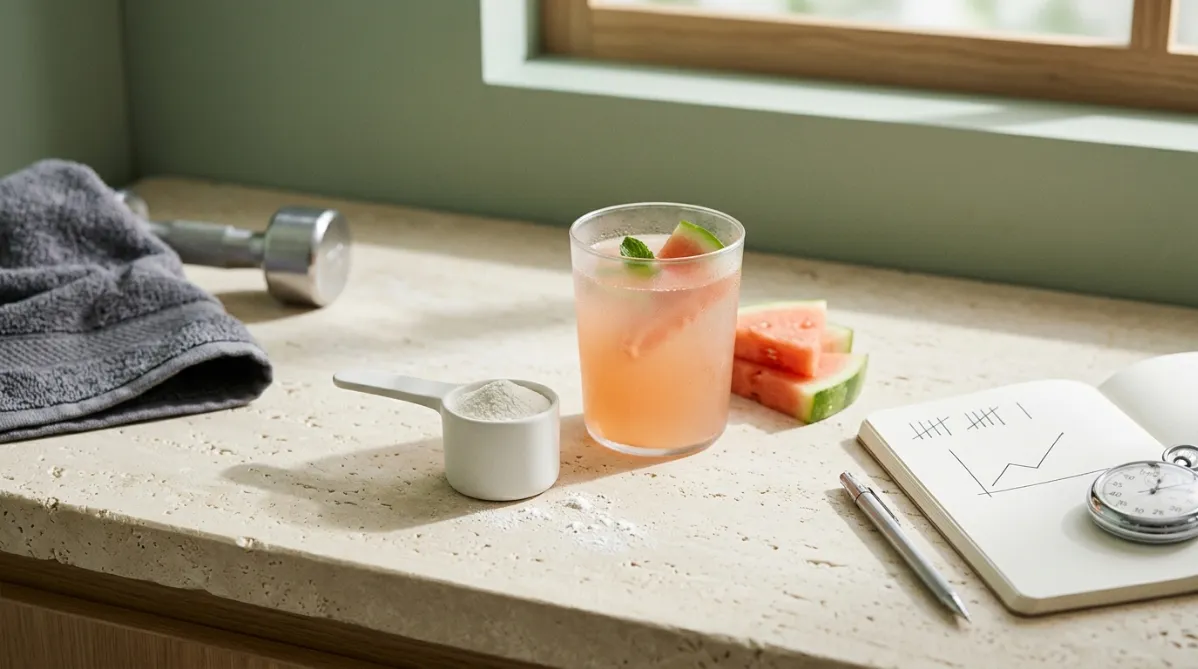
A wide, editorial-style still life photographed on a pale limestone countertop in soft morning window light. At the center sits a matte white scoop of fine white powder resting beside a frosted glass tumbler of cloudy, pale pink-orange water, with a few watermelon slices and a halved wedge showing glossy coral flesh and thin green rind, a nod to citrulline's natural source. To the left, a neatly folded charcoal gym towel and a brushed steel dumbbell rest at the edge of the frame, slightly out of focus. To the right, a minimalist open notebook with a few hand-drawn tally marks and a simple line graph sketched in black ink rises toward the right edge, next to a slim mechanical pencil and a small analog stopwatch with a clean white face. A few loose grains of powder are scattered across the stone, catching the light. Soft diagonal shadows fall across the surface from a nearby window, and a gentle sage-green wall in the background adds calm contrast. The palette is warm cream, watermelon coral, sage green, and soft graphite gray, with plenty of negative space on the upper left for headline overlay. Shallow depth of field, crisp focus on the powder scoop and watermelon, subtle film grain, natural tones, and a clean, modern wellness-journal aesthetic. Shot at eye level with a slight downward angle, like a contemporary health and science magazine cover. No text, no logos, no people.
nutrition

8 g de Citrulline Malate = ¿53 % más repeticiones y 40 % menos dolor? Lo que muestra el estudio

BY DR. GYMBRO ·

Un ensayo cruzado de 2010 encontró que una dosis de 8 g de citrulina malato se asoció con alrededor de un 53 % más de repeticiones en la última serie evaluada y aproximadamente un 40 % menos de dolor muscular a las 24 y 48 h. El mayor aumento de repeticiones apareció al final de la sesión, cuando la fatiga ya estaba acumulada. Aquí mostramos qué se probó, cómo aplicar la dosis y el momento de forma sensata, quién puede beneficiarse y por qué el 14,63 % de molestias estomacales y las limitaciones del estudio merecen atención.

A wide editorial still life on a pale, warm-gray stone surface lit by soft morning window light from the left. In the foreground, a rustic ceramic bowl in matte oatmeal glaze holds dried ashwagandha roots, pale tan and gnarled, with a few scattered beside it. A small wooden scoop dusted with fine golden-beige powder rests next to the bowl. Behind them, a few olive-green ashwagandha sprigs with small orange-red berries in papery husks arc across the frame, adding a quiet pop of color.

Midground right: a matte black chalk-dusted dumbbell handle and a single brushed-steel weight plate lean casually against a linen-textured backdrop in muted sage. A folded cream cotton towel and a slim notebook with a pencil suggest a training log. The notebook is open to blank, softly lined pages with no legible text.

The background fades into a gentle blur of neutral beige and soft terracotta tones, with a hint of a plant shadow cast across the wall in dappled light. Fine dust and powder particles float in the light beams, giving a tactile, organic feel.

The composition follows the rule of thirds: botanical elements on the left and center, gym elements on the right, and negative space in the upper right for headline overlay. Shallow depth of field, crisp focus on the roots and powder, creamy bokeh behind. Color palette: sage green, warm sand, terracotta, charcoal black, and a touch of burnt orange. The mood is calm, modern, and trustworthy, like a premium wellness and science magazine. Photographed on a 50mm lens, natural grain, subtle film-like contrast, clean minimalist styling, high-end editorial photography.
nutrition

La hierba milenaria que superó al placebo en un estudio de 8 semanas: fuerza, masa muscular y testosterona

BY DR. GYMBRO ·

¿Podría una raíz ayurvédica de siglos de antigüedad superar realmente a un placebo en el gimnasio? En un ensayo aleatorio de 8 semanas con 57 levantadores novatos, los hombres que tomaron 300 mg de extracto de ashwagandha dos veces al día aumentaron más la fuerza en el press de banca, incrementaron la masa de brazos y pecho, y mostraron un mayor aumento de testosterona que el grupo placebo. Además, perdieron más grasa corporal. El inconveniente es que el estudio fue pequeño, breve y limitado a hombres principiantes. Aquí tienes los datos, cómo se administró la dosis, a quién podría beneficiar y por qué debes mantener el escepticismo.

A wide, editorial flat-lay photograph shot from directly above on a pale warm-gray stone countertop, lit by soft natural morning window light with gentle diagonal shadows. On the left, a neatly arranged cluster of whole-food protein sources: two seared chicken breast slices with a golden crust, a small ceramic bowl of creamy Greek yogurt topped with blueberries, three halved soft-boiled eggs with jammy orange yolks, a handful of raw almonds, and a small pile of dried lentils scattered on a linen napkin. At the center, a matte white shaker bottle and a wooden scoop resting in a pile of fine vanilla-colored protein powder, a few grains dusted artfully across the surface. On the right, a minimalist kitchen scale in matte black displaying a portion of food, next to an open notebook with a hand-drawn curve that rises steeply and then flattens into a plateau, drawn in a deep terracotta ink pen, with a small dot marking the bend. A brass pen lies beside the notebook. A single dumbbell with a brushed steel finish sits partially in frame at the upper right corner, grounding the fitness theme without feeling gym-like. Color palette: warm cream, sage green, terracotta, soft charcoal, and butter yellow accents, with generous negative space along the top edge for title overlay. Shallow depth of field, crisp textures, subtle film grain, modern lifestyle magazine aesthetic, clean and calm composition, 16:9 landscape.
nutrition

¿Cuánta proteína realmente maximiza el músculo? La meseta de 1,6 g/kg explicada

BY DR. GYMBRO ·

¿Crees que necesitas más de 2 g de proteína por kilo para crecer? Un meta‑análisis con 49 ensayos y 1 863 adultos demostró que los beneficios se estabilizan alrededor de 1,6 g/kg al día. El límite superior del intervalo de confianza llega a unos 2,2 g/kg, lo que brinda a los levantadores un rango práctico en lugar de una dosis arbitraria. Los deportistas entrenados obtuvieron el mayor beneficio de la suplementación, mientras que la ventaja disminuye con la edad. Aquí te explicamos qué significa todo eso para tu plato, tu batido y tu bolsillo.

This page is available in