Dr. Gymbro
A landscape editorial photograph of a lone runner's hands resting on a weathered wooden table beside a small white ceramic dish of fine white powder and a clear glass of water, shot in soft morning light. A slim matte aluminum energy drink can, unbranded with a minimalist pale sage-green label, stands slightly out of focus in the background, with a single scoop of powder dusted lightly on the tabletop. A pair of worn running shoes and a folded gray towel sit at the edge of the frame. Through a large window behind them, a blurred misty trail winds through green trees at sunrise, with warm golden light spilling across the scene.

The color palette is calm and modern: creamy off-white, sage green, warm honey gold, and soft charcoal. The composition follows the rule of thirds, with the dish and glass in the lower left third and generous negative space on the right for a title overlay. The depth of field is shallow, with a crisp focus on the powder's delicate texture and tiny glints of light on the glass rim. The mood is clean, thoughtful, and quietly energetic, like a contemporary health and science magazine feature. Natural grain, subtle film-like softness, and gentle shadows give it an authentic lifestyle-editorial look. There are no text, logos, or futuristic elements, only tactile, real-world materials like wood, ceramic, glass, cotton, and metal.
Nutrition

El ingrediente de la bebida energética que mejora la resistencia por sí solo

Dr. Gymbro · · 4 min read

Olvida la cafeína por un momento

El otro ingrediente de la lata de bebida energética, que la mayoría de la gente pasa por alto, podría estar haciendo un trabajo real por sí solo. Un meta‑análisis de 2018 publicado en Sports Medicine encontró que la taurina aislada mejoró el rendimiento de resistencia, y una sola dosis fue suficiente para lograrlo. No se requiere fase de carga ni semanas de píldoras.

Aquí tienes lo que hicieron los investigadores, lo que descubrieron y qué debemos concluir.

Qué hizo realmente el estudio

El artículo de Waldron, Patterson, Tallent y Jeffries es una revisión sistemática y meta‑análisis. El equipo buscó en múltiples bases de datos en septiembre de 2017 y seleccionó los estudios que cumplían los criterios de elegibilidad. Al final quedaron 10 estudios revisados por pares que probaban la taurina oral por sí sola, sin estar mezclada con cafeína ni azúcar.

Siete de esos estudios emplearon pruebas de tiempo‑hasta‑agotamiento (TTE), donde los atletas entrenan a una intensidad constante hasta que no pueden continuar. Los autores realizaron un sub‑análisis separado con esos ensayos.

También llevaron a cabo una meta‑regresión para responder a dos preguntas prácticas:

  1. ¿Modifica la dosis la eficacia de la taurina?
  2. ¿Importa si la tomas de forma aguda (una sola dosis) o de forma crónica (más de un día)?

Las dosis en los estudios variaron entre 1 y 6 g al día. Se administraron como dosis únicas o durante hasta dos semanas, en una muestra diversa de participantes.

Qué encontró: Los números

El resultado principal es que la taurina mejoró el rendimiento de resistencia global con un g de Hedges de 0,40 (IC del 95 % 0,12‑0,67, p = 0,004). Por convención, ese tamaño de efecto se considera pequeño a moderado, lo cual es respetable para un suplemento barato y de fácil acceso.

Los ensayos de tiempo‑hasta‑agotamiento contaron la misma historia: g = 0,43 (IC 95 % 0,12‑0,75, p = 0,007).

Las dos preguntas prácticas recibieron respuestas inesperadas:

  • Agudo vs. crónico: No hubo diferencia (p = 0,897 para la muestra completa y p = 0,896 para el grupo TTE). Tomar taurina durante varios días no superó a una sola dosis.
  • Dosis: La cantidad no moderó el efecto (p > 0,05). Dentro del rango de 1‑6 g, más no significa mejor.

Los autores concluyeron que el rendimiento de resistencia puede mejorarse con una única dosis oral de taurina, en cualquier cantidad entre 1 y 6 g.

La trampa: Lee esto antes de comprar una lata

Esto es alentador, pero no constituye una sentencia definitiva. Ten en cuenta estas limitaciones:

  • Evidencia limitada. Diez estudios no son muchos, y los ensayos individuales fueron pequeños. Una estimación combinada de estudios reducidos puede variar cuando aparezcan investigaciones de mayor envergadura.
  • Intervalos de confianza amplios. El rango total (0,12‑0,67) permite desde un beneficio diminuto hasta uno bastante notable.
  • «Sin efecto de dosis» no prueba igualdad. Con tan pocos estudios, la meta‑regresión tiene poder limitado para detectar una relación dosis‑respuesta. Los datos indican que la dosis no moduló significativamente el efecto, pero no demuestran que 1 g y 6 g sean idénticos.
  • Poblaciones y protocolos heterogéneos. Los estudios incluyeron una variedad de sujetos y pruebas de ejercicio, de modo que los resultados pueden no trasladarse directamente a tu deporte o nivel de forma.
  • No es un estudio de bebidas energéticas. El análisis examinó taurina aislada. No dice nada sobre si una lata estilo Red Bull brinda el mismo beneficio, ya que esos productos combinan taurina con cafeína y otros ingredientes.

Lo mejor es interpretar el hallazgo como una señal prometedora y de bajo riesgo, no como un truco garantizado de rendimiento.

Cómo usarla

El artículo muestra que la taurina funcionó con dosis entre 1‑6 g, ya sea en una sola ingesta o durante hasta dos semanas. Con eso en mente, aquí tienes una guía práctica basada en los protocolos típicos de esta línea de investigación.

Dosis: Comienza en el rango bajo, alrededor de 1‑3 g. La mayoría de los estudios usaron cantidades dentro de ese intervalo. La meta‑análisis no encontró ventaja clara al subir la dosis, aunque sí incluyó hasta 6 g.

Momento: Toma una dosis única aproximadamente 1‑2 horas antes del entrenamiento de resistencia. Eso coincide con la mayoría de los ensayos.

Carga: No es necesaria. El análisis no encontró diferencias entre suplementación aguda y crónica, así que no tienes que comprometerte a un programa de varias semanas.

Forma: El polvo de taurina puro o las cápsulas son la opción más sencilla y coinciden con lo que se probó. El polvo suele ser muy barato por porción y fácil de mezclar en una bebida pre‑entrenamiento.

Para quién es: Corredores, ciclistas, remeros, nadadores y cualquiera que realice esfuerzos de resistencia sostenidos y busque una opción económica para probar. Resulta especialmente atractivo si quieres algo para usar en sesiones clave o el día de la competición sin una fase de carga.

Quién debería evitarlo (o consultar primero):

  • Cualquier persona con una condición médica o que tome medicamentos debe consultar a un profesional de la salud antes de añadir suplementos.
  • Mujeres embarazadas o en periodo de lactancia deben buscar consejo médico previo.
  • Deportistas de disciplinas explosivas o centradas en fuerza no deben esperar el mismo beneficio, ya que este análisis solo observó rendimiento de resistencia.
  • Quien espere sustituir un plan de entrenamiento y alimentación adecuado. Un tamaño de efecto de 0,40 es útil, no mágico.

Conclusión

La taurina es más que un simple relleno de etiqueta de bebida energética. En este meta‑análisis de 10 estudios, la taurina oral aislada produjo una mejora pequeña‑a‑moderada en el rendimiento de resistencia (g = 0,40), y una sola dosis bastó. La evidencia es limitada, así que considérala como un experimento inteligente y barato, no como una garantía. Pruébala en tus entrenamientos primero, mantén una dosis moderada y evalúa los resultados por ti mismo.
Original study

Read the original research on pubmed.ncbi.nlm.nih.gov →

This article summarizes published research for general information. It is not medical advice.

DG

Written by

Dr. Gymbro

Dr. Gymbro writes for Dr. Gymbro: science-backed fitness, nutrition & performance.

Related Articles

A sleek aluminum energy drink can and a matte scoop of white pre-workout powder sit side by side on a pale concrete gym bench, lit by soft morning window light. The can is slim and minimalist, with a muted sage green label and no legible text. Beside it is a clear glass shaker half full of cloudy, lightly frothy liquid with condensation beading on its surface. A few fine grains of powder are scattered across the bench, catching the light. Behind them, slightly out of focus, a stainless steel barbell rests on a rack, and a folded charcoal gym towel sits at the edge of the frame.

The color palette is warm neutral: oatmeal, soft gray, and sage, with a single accent of pale citrus yellow from a halved lemon wedge placed near the glass. A thin, elegant shadow from the window blinds falls diagonally across the scene, giving it an editorial, magazine-style rhythm. The composition leaves generous negative space on the right third of the frame, a smooth blurred wall in warm off-white, suitable for headline text overlay.

The shot is a low-angle, shallow depth-of-field product-style photograph, as if taken with an 85mm lens at f/2. The foreground objects are tack sharp and the background melts into creamy blur. The mood is calm, clean, and modern, like a wellness or science journal feature. Subtle film grain and gentle contrast add a tactile, contemporary lifestyle feel. There are no people, no logos, and no futuristic or sci-fi elements, just a quiet, considered still life that suggests the choice between a canned drink and a scooped supplement.
nutrition

Tu bebida energética puede funcionar como un pre‑entrenamiento—con un detalle

BY DR. GYMBRO ·

La cafeína y la taurina aparecen juntas en bebidas energéticas y pre‑entrenamientos, pero ¿realmente mejoran el rendimiento? Un meta‑análisis de 11 ensayos aleatorizados (234 participantes) encontró mejoras moderadas en la potencia máxima y en el tiempo hasta el agotamiento, además de una menor percepción del esfuerzo. La frecuencia cardíaca no cambió y el tiempo de reacción resultó demasiado inconsistente como para confiar en él. El inconveniente es que los estudios son pequeños y no pueden demostrar si la taurina aporta algo más allá de la cafeína. Aquí te mostramos qué dicen los datos y a quién conviene pensarlo dos veces.

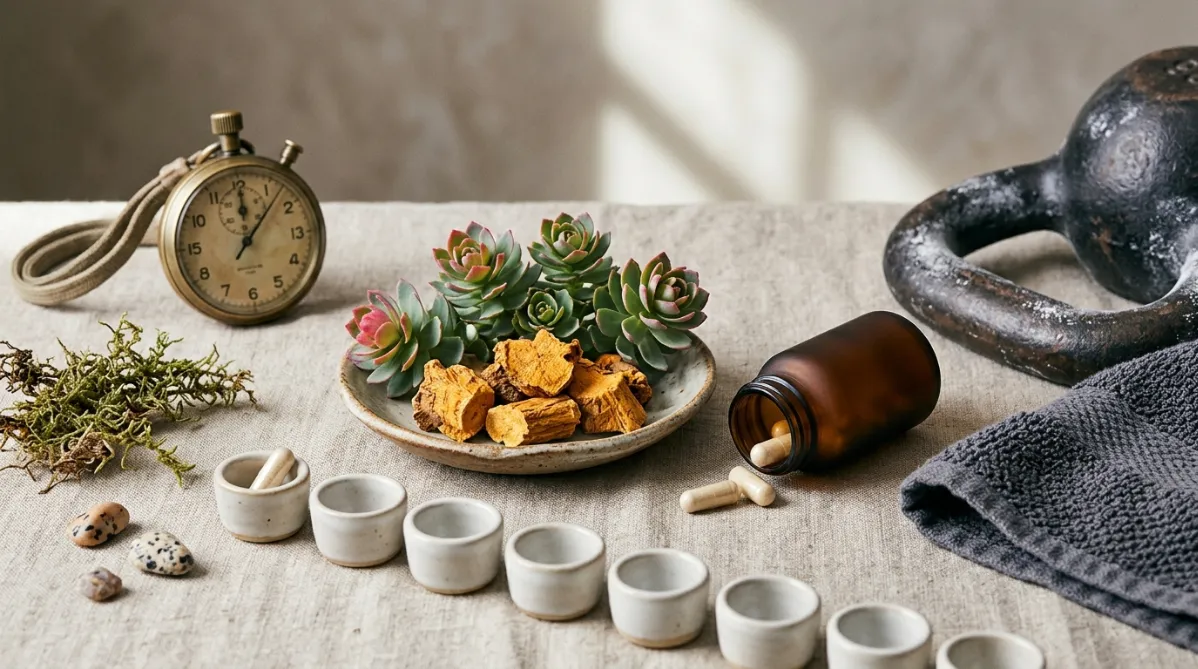
A wide, editorial still life photographed in soft natural window light on a pale oatmeal-colored linen surface. At the center sits a small, rustic ceramic dish holding a handful of dried golden-orange Rhodiola rosea root pieces and a few fresh, fleshy green-gray succulent rosettes with rosy-pink tips. Beside it, a single matte amber glass capsule bottle lies on its side, with two cream-colored capsules spilling out. On the left, a minimalist analog stopwatch with a brushed brass case rests slightly out of focus, its hands suggesting a duration just past the quarter-hour mark. On the right, a worn, chalk-dusted steel kettlebell handle and a folded charcoal gym towel fill the negative space, hinting at lifting without showing a full gym scene.

In the foreground, a neat row of seven tiny ceramic pill cups arranged in a gentle diagonal line, the first cup holding one capsule and the rest sitting empty, as a quiet visual metaphor for a single dose versus daily dosing. A sprig of dried alpine moss and a few small speckled pebbles add organic texture. The background is a softly blurred warm-gray plaster wall with a gentle gradient shadow cast by a window frame, creating diagonal light stripes across the scene.

The palette is muted and earthy: sage green, terracotta, warm cream, brushed brass, and soft charcoal, with one subtle pop of coral from the Rhodiola tips. Shallow depth of field, crisp focus on the root and capsules, and fine film-like grain. The composition leaves generous clean negative space in the upper left for a headline overlay. The overall feel is a modern wellness and science journal: calm, tactile, minimal, and sophisticated, with a slightly moody, high-end magazine look. There is no text, no people, and no futuristic elements.
nutrition

200 mg de Rhodiola aumentan 24 segundos; cuatro semanas de consumo diario no aportan nada

BY DR. GYMBRO ·

Una sola dosis de 200 mg de Rhodiola rosea tomada una hora antes del ejercicio incrementó el tiempo a la extenuación de 16,8 a 17,2 minutos y elevó el VO₂‑máx en un ensayo cruzado doble ciego. La sorpresa es que cuatro semanas de consumo diario no reforzaron ese efecto ni modificaron ninguna variable medida. La ganancia fue pequeña, apenas 24 segundos, y la fuerza, el tiempo de reacción y la atención permanecieron sin cambios. Aquí tienes lo que realmente encontró el estudio, quién podría probar una dosis aguda y por qué no deberías contar con “cargar” la rhodiola.

A wide, editorial-style flat lay photographed from above on a pale warm-gray linen surface in soft natural window light. At the center, a small open amber glass jar tips gently onto its side, spilling a few cream-colored capsules across the fabric. Next to the jar sits a loose arrangement of fresh mushrooms: a cluster of golden-tan reishi with glossy, lacquered caps, a few slender white enoki stems, a halved shiitake showing its pale gills, and a curl of turkey tail with concentric bands of rust, cream, and charcoal. A small wooden scoop holds a pile of fine beige mushroom powder.

On the left third of the frame, a matte black sports watch with a minimal face lies beside a folded sage-green running shirt and a pair of lightweight off-white running shoes, hinting at athletic training without showing a person. A slim white notebook with a single pencil rests nearby, open to a blank page with a faint hand-drawn line graph trending upward, in thin graphite strokes.

On the right side, a pair of clear glass beakers and a single small petri dish with a soft amber-tinted liquid add a subtle laboratory note, kept calm and organic. A single sprig of dried herbs and a few scattered oat-colored grains add texture.

The palette is earthy and refined: oatmeal, soft sage, terracotta, warm amber, and charcoal accents against the muted neutral background. Shadows are soft and diffused, with a gentle highlight on the glass and the glossy reishi cap. The composition leaves generous negative space in the upper right for a headline overlay. Shallow depth of field blurs the edges slightly, while the central mushrooms and capsules stay crisp. The overall feel is modern, clean, and trendy, like a wellness and science magazine cover, with tactile natural textures, minimal styling, and a quiet sense of curiosity and skepticism.
science research

Una cápsula de setas aumentó el VO2max un 14,8 % — pero hay un gran problema

BY DR. GYMBRO ·

Una cápsula de setas, 40 días y un aumento del 14,8 % en VO2max suena casi demasiado bueno para ser verdad. En este nuevo artículo de *Antioxidants* 50 jóvenes deportistas masculinos que tomaron 320 mg/día de un extracto multisetas rico en beta‑glucanos pasaron de 46,26 a 53,12 mL/kg/min. El gran problema es que el estudio careció de grupo placebo, no hubo aleatorización ni cegamiento, y los atletas siguieron entrenando durante el ensayo. Los experimentos celulares en cardiomiocitos de rata añaden una pista relacionada con la hipoxia, pero se probaron compuestos individuales, no la cápsula completa. Aquí analizamos lo que el estudio encontró, lo que no puede demostrar y a quién conviene ser escéptico.

A wide, editorial-style still life shot from a slightly elevated angle on a pale oatmeal-colored linen surface in soft, diffused morning light. At the center, a shallow matte ceramic bowl in warm terracotta holds a small mound of fine, golden-tan ashwagandha root powder. Beside it lie a few gnarled, dried ashwagandha roots and a sprig of green leaves with tiny orange-red berries in their papery husks. To the left, a minimalist amber glass supplement bottle sits with a few capsules spilled beside it, label blank and clean. A wooden scoop rests on the surface, dusted with powder.

On the right side of the frame, a pair of sleek, muted sage-green running shoes sits slightly off-center. A folded cream towel and a stainless steel water bottle sit just behind them, with a single brushed-steel kettlebell partly out of focus in the background to hint at strength training without dominating the scene. The running shoes and the botanical elements share equal visual weight, suggesting the endurance theme.

A thin, curved line of scattered powder sweeps across the linen from the bowl toward the shoes, like a gentle path or track. Soft shadows fall to the left, and a warm sunbeam crosses the surface and picks out the texture of the powder and the roots.

The palette is restrained and modern: warm terracotta, sage green, cream, soft gold, and touches of charcoal. The background is a blurred pale plaster wall with a hint of a window shadow. Shallow depth of field, crisp focus on the bowl and roots, and generous negative space in the upper left for a headline. Contemporary wellness magazine aesthetic, calm, natural, tactile, high-end lifestyle photography, no text, no people, no futuristic elements.
science research

La sorpresa de la ashwagandha: favorece la resistencia más que la fuerza

BY DR. GYMBRO ·

La ashwagandha suele promocionarse como potenciadora de fuerza y músculo, pero un metaanálisis reciente muestra que su mayor beneficio está en la resistencia aeróbica. Analizando 13 ensayos aleatorizados con 599 participantes, los autores hallaron un efecto medio de g = 0.54 para la resistencia, mientras que los incrementos de fuerza fueron positivos pero inciertos. La dosis que parece más eficaz se sitúa entre 500‑600 mg al día, aunque con importantes advertencias. Aquí se resume la evidencia, quién podría beneficiarse y quién debería pensarlo dos veces.

This page is available in