Dr. Gymbro
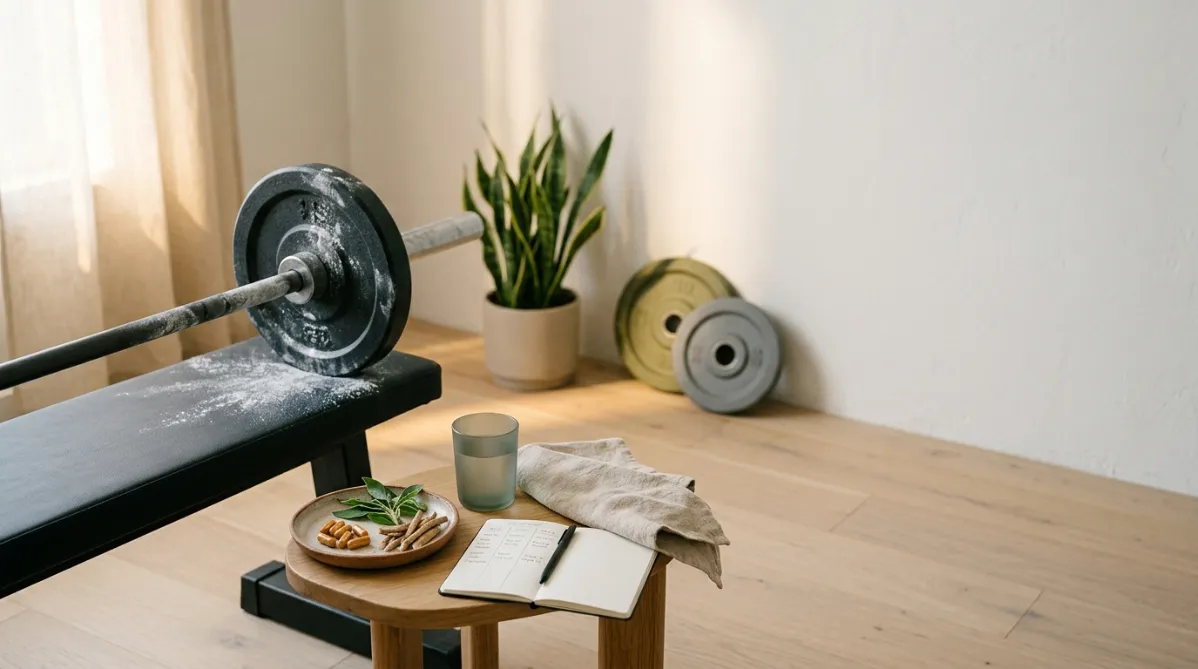
A soft, editorial still life photographed in a calm bedside setting at dusk, in landscape format. On a pale oak nightstand sits a single smooth, off-white oval caplet resting on a small matte ceramic dish in warm oatmeal tones. Next to it is a half-full glass of water with delicate condensation. Behind them, a small amber glass supplement bottle with a minimal cream label stands slightly out of focus. A few dried ashwagandha roots and a sprig of green leaves with small orange-red berries are arranged loosely across the wood grain in the foreground, adding an organic, botanical feel.

The background is a softly blurred bedroom with linen bedding in muted sage and sand tones. A warm lamp with a paper shade casts a golden glow from the left. Through a sheer curtain, deep blue twilight hints at evening. The light is gentle and directional, with long soft shadows and a subtle film-grain texture.

A small analog alarm clock with a muted face sits in the blurred distance, suggesting nighttime without dominating the scene. To the right, a folded cream notepad and a slim pen suggest research and note-taking, adding a quiet editorial touch. The composition follows the rule of thirds, with the caplet and dish in the lower-left third and generous negative space on the right for headline overlay.

The palette is earthy and restrained: sage green, warm beige, soft terracotta, and muted navy. The mood is thoughtful, trustworthy, and wellness-focused, like a modern health journal or a minimalist lifestyle magazine. Shallow depth of field with a crisp focus on the caplet, shot at eye level with an 85mm lens aesthetic, and high-end, natural, and tactile.
Science & Research

Una cápsula de ashwagandha tomada por la noche supera al placebo: lo que debes saber antes de comprar

Dr. Gymbro · · 4 min read

Una cápsula de ashwagandha tomada por la noche supera al placebo: lo que debes saber antes de comprar

Una cápsula al día, durante ocho semanas, fue suficiente para que, en un ensayo aleatorizado con 226 participantes, superara al placebo en estrés, ansiedad y bienestar mental, con una p < 0,0001 y sin efectos secundarios graves reportados. No obstante, antes de lanzarte a comprar una botella, hay un detalle que el resumen omite y que resulta crucial.

Qué hicieron realmente los investigadores

El estudio, publicado en Neuropsychiatric Disease and Treatment en 2026, fue un ensayo multicéntrico, doble ciego, aleatorizado y controlado con placebo. Ese diseño se considera el más fiable para este tipo de preguntas. Ni los participantes ni los investigadores sabían quién recibía el producto real.

El ensayo reclutó a 226 adultos con estrés y ansiedad de leve a moderado. Se dividieron en dos grupos casi iguales: 112 recibieron una cápsula de ashwagandha y 114 un placebo idéntico. Ambos grupos tomaron una cápsula al día después de comer, preferiblemente por la noche, durante ocho semanas.

Los resultados primarios fueron la Escala de Ansiedad de Hamilton (HAM‑A), una medida clínica de ansiedad, y la Escala de Estrés Percibido (PSS‑10), una medida autoinformada de la percepción de estrés. Los resultados secundarios incluyeron bienestar mental, fatiga y seguridad.

El resultado principal

La ashwagandha superó al placebo en estrés percibido (PSS‑10), ansiedad (HAM‑A) y bienestar mental, medido con el Cuestionario de Salud General‑12. Cada diferencia alcanzó significación estadística con p < 0,0001.

Los autores también presentaron dos análisis habituales: la intención de tratar (ITT), que incluye a todos los asignados al azar, y el análisis por protocolo (PP), que solo considera a quienes siguieron el plan. El efecto se mantuvo en ambos. Un análisis de superioridad, siguiendo las directrices de la USFDA, mostró además que la ashwagandha era mejor que el placebo para el estrés y la ansiedad tanto en la población ITT como en la PP.

Esa consistencia es importante; si un hallazgo solo apareciera al excluir a ciertos participantes, el escepticismo estaría justificado. En este caso, el efecto se observó en cualquier análisis.

Hallazgos de seguridad

El resumen indica que no hubo eventos adversos relacionados con el fármaco ni eventos adversos graves durante todo el estudio. Para un suplemento que se toma cada noche durante dos meses, eso resulta tranquilizador, aunque no constituye una garantía de seguridad absoluta; un ensayo con 226 personas no puede descartar problemas raros.

La trampa: lo que el resumen no dice

El resumen no indica la dosis en miligramos por cápsula ni el tipo de extracto de ashwagandha utilizado. Por lo tanto, el estudio no brinda ningún número para replicar y nada aquí debe interpretarse como una dosis recomendada.

Esto es relevante porque los productos de ashwagandha varían mucho. Los extractos de raíz, los polvos de raíz entera y las distintas estandarizaciones no son intercambiables. Si vas a comprar, busca un extracto estandarizado claramente etiquetado con la cantidad de principio activo indicada, preferiblemente avalado por pruebas de terceros. No asumas que cualquier botella aleatoria corresponde a lo que se probó.

Otros aspectos a considerar:

  • Vínculos con la industria: dos autores están afiliados al equipo de investigación y desarrollo clínico de Himalaya Wellness Company; la declaración de conflictos de intereses revela honorarios de otro autor provenientes de distintas compañías, fuera de este trabajo. Una replicación independiente reforzaría los hallazgos.
  • Horizonte corto: el ensayo cubre ocho semanas. No sabemos qué ocurre después.
  • Detalle limitado: el resumen indica los niveles de significación pero no los tamaños del efecto, por lo que no podemos estimar cuán grandes fueron las mejoras en la práctica. La fatiga era un resultado secundario, pero el resumen no informa sus resultados; no asumas nada al respecto.

Conclusiones prácticas

Cómo se usó en el ensayo

  • Una cápsula al día, después de comer, preferiblemente por la noche.
  • Un horizonte de ocho semanas. Ese es el periodo que cubre la evidencia, así que no esperes efectos inmediatos.
  • Revisa las etiquetas para asegurarte de que sea un extracto estandarizado, ya que el resumen no indica dosis ni tipo de extracto.

A quién puede ser relevante

  • Adultos con estrés y ansiedad de leve a moderado, que es la población estudiada.
  • Personas que buscan un suplemento complementario junto con buen sueño, ejercicio y hábitos de manejo del estrés.

Qué no es

  • No es un sustituto del tratamiento para trastornos de ansiedad graves. El ensayo solo incluyó casos leves a moderados. Si tus síntomas son severos o interfieren con la vida diaria, consulta a un profesional.

Quién debe ser cauteloso o evitarlo (precauciones generales, no hallazgos de este estudio)

  • Embarazo: los suplementos herbales como la ashwagandha suelen desaconsejarse a menos que un médico lo autorice.
  • Problemas de tiroides: la ashwagandha puede influir en la función tiroidea; consulta a tu médico antes de usarla.
  • Enfermedad hepática: se han reportado alteraciones hepáticas en la literatura de suplementos; cualquier persona con patología hepática debe buscar consejo médico.
  • Sedantes u otros fármacos que causen somnolencia: combinar estos con una hierba relajante puede potenciar la somnolencia, por lo que es conveniente hablar con un farmacéutico o médico.

Conclusión

Se trata de un ensayo bien diseñado, controlado con placebo, que muestra un efecto fuerte y consistente y un historial de seguridad impecable durante ocho semanas. Respaldan la idea de que una cápsula de ashwagandha tomada por la noche puede aliviar el estrés y la ansiedad leves a moderados. Sin embargo, la ausencia de información sobre la dosis y el tipo de extracto, la autoría vinculada al fabricante y la corta duración hacen que sea un dato prometedor, no la palabra final. Si decides probar la ashwagandha, elige un producto transparente y estandarizado, úsalo durante las ocho semanas completas y mantén a tu médico informado, sobre todo si alguna de las precauciones anteriores te aplica.
Original study

Read the original research on pubmed.ncbi.nlm.nih.gov →

This article summarizes published research for general information. It is not medical advice.

DG

Written by

Dr. Gymbro

Dr. Gymbro writes for Dr. Gymbro: science-backed fitness, nutrition & performance.

Related Articles

A landscape editorial still life shot from slightly above on a pale oat-colored linen surface, lit by soft morning window light with gentle long shadows. On the left, in warm golden sunlight, sits a small ceramic bowl of dried ashwagandha root pieces and a scatter of fine tan powder. Beside it are a few rough, rosy-gold slices of Rhodiola rosea root and a sprig of tiny succulent-like green leaves with yellow blossoms. A matte sand-colored stoneware mug of steaming tea and a simple glass of water stand nearby. A small amber glass bottle with a minimal unbranded label tips out two capsules.

The right side of the frame is cooler and bluer, as if dusk is arriving. It holds a muted indigo ceramic dish with a few pale capsules, a small bundle of dried chamomile flowers (the source of apigenin), and a few green tea leaves. A slim, unlit beeswax candle and a folded charcoal wool blanket suggest evening. The warm and cool halves meet softly in the center, where a rumpled white cotton napkin sits beneath a small brass spoon.

In the background, out of focus, a wooden shelf holds a worn paperback, a small potted plant, and the edge of a kettlebell in matte black, hinting at an active lifestyle. Subtle film grain, shallow depth of field, and a muted palette of cream, terracotta, sage green, and deep indigo give it a clean, modern wellness-magazine feel. Leave generous negative space in the upper third for a headline overlay. No text, no logos, no people.
recovery

Ashwagandha + Rhodiola funcionó. El stack nocturno para dormir no lo hizo.

BY DR. GYMBRO ·

Un nuevo ensayo de cuatro brazos sorprende a la comunidad de suplementos. En 103 adultos sanos y activos, una combinación matutina de 600 mg de ashwagandha y 300 mg de *Rhodiola rosea* se asoció con menor estrés percibido, mejor calidad del sueño y mejor estado de ánimo. El popular stack nocturno de magnesio L‑treonato, L‑teanina y apigenina no aportó nada, y combinar ambos pareció empeorar el afecto positivo. Aquí presentamos los hallazgos, sus limitaciones (solo dos semanas, grupos pequeños) y cómo los atletas podrían aplicarlos.

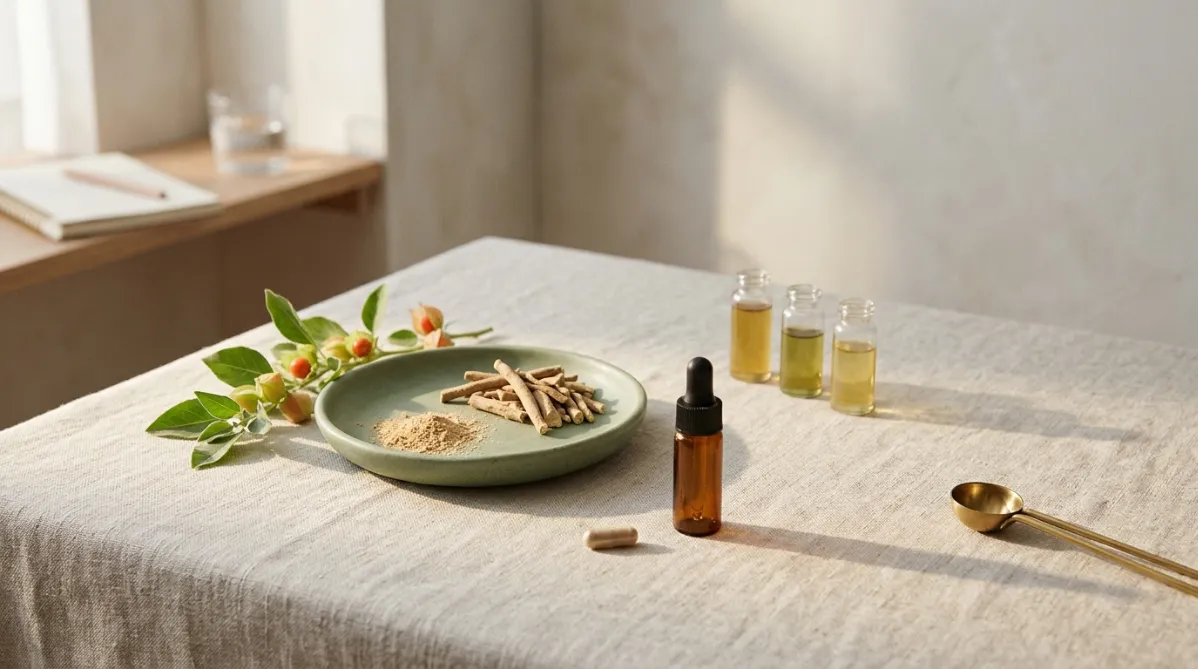
A softly lit, minimalist editorial still life on a pale oat-colored linen surface, shot from a slightly elevated three-quarter angle. In the center-left, a small handmade ceramic dish in matte sage green holds a modest pile of dried ashwagandha root pieces and a scattering of fine tan powder. A few fresh ashwagandha sprigs, with delicate green leaves and small orange-red berries in papery husks, rest beside it. In front, a single tiny capsule sits alone on the linen, with a slim glass dropper bottle in amber tint just behind it, suggesting a very small dose. To the right, a neat row of three small glass vials stands slightly out of focus, their contents a muted gold, hinting at comparison without any labels or text. A delicate brass measuring spoon lies at the edge of the frame, catching a thin highlight.

Soft morning window light falls from the upper left, casting long, gentle shadows and a warm glow across the textures: rough linen weave, matte ceramic, glossy glass, and the powdery root. The color palette is calming and earthy, with sage green, warm cream, soft terracotta, amber, and touches of muted coral from the berries. In the background, a blurred, airy room with a pale plaster wall and a hint of a wooden shelf holding a notebook and a small glass of water, adding a quiet wellness-journal atmosphere. Shallow depth of field, crisp focus on the dish and capsule, and generous negative space on the right third of the frame for headline overlay. The overall mood is calm, thoughtful, and slightly skeptical, like a contemporary health and science magazine feature, with natural, realistic photography, fine grain, and subtle film-like color grading.
science research

Solo 30 mg de Ashwagandha reducen el estrés en 4 semanas: el truco

BY DR. GYMBRO ·

La mayoría de los ensayos con ashwagandha utilizan entre 250 y 600 mg al día, pero este estudio probó solo 30 mg durante 28 días en 60 adultos estresados. El grupo que tomó ashwagandha informó menos estrés y su cortisol salival se mantuvo estable frente a un estrés de laboratorio, mientras que el grupo placebo mostró un aumento. Sin embargo, los valores p rondan entre 0,04 y 0,047, el análisis por protocolo no fue significativo y la mayoría de los demás resultados no mostraron diferencias. Además, el fabricante del extracto financió el estudio. Aquí se explica lo que los datos respaldan, a quién podría ayudar y lo que no prueban.

A wide landscape editorial photograph of a modern, softly lit home gym corner with pale oak flooring and a matte white wall. In the foreground, a chalk-dusted barbell rests across a minimalist bench, shot at a low angle with shallow depth of field. On a small natural-wood side table beside it sits a ceramic dish holding a few amber-colored capsules, a handful of dried ashwagandha roots, and a few green leaves. A matte glass of water and a folded linen towel sit nearby. A slim open notebook with a pen lies next to the dish, suggesting careful reading and note-taking, with blurred handwritten columns that suggest comparison, but no legible text.

Soft morning window light enters from the left, casting long, gentle shadows and a warm golden glow across the scene. The palette is muted and earthy: sage green, warm sand, cream, charcoal gray, and touches of terracotta. A single potted green plant in the background adds texture. Two weight plates in stacked, muted tones lean against the wall, slightly out of focus.

The composition follows the rule of thirds, with the barbell and supplement dish on the left and generous negative space on the right for headline overlay. The mood is calm, trustworthy, and analytical, like a contemporary health and science magazine cover. Crisp detail, natural film-like grain, subtle color grading, and a clean, uncluttered, premium lifestyle feel. No people, no text, no logos, no futuristic elements.
supplements

Ashwagandha SR duplicó las ganancias en press de banca en 90 días: lea la letra pequeña

BY DR. GYMBRO ·

Una cápsula de ashwagandha de liberación sostenida, tomada una vez al día, duplicó aproximadamente las ganancias en press de banca frente al placebo en un ensayo aleatorizado de 90 días. Los participantes que tomaron 300 mg de AshwaSR añadieron 15,31 kg a su 1‑RM, frente a 7,33 kg con placebo. Sin embargo, el aumento de testosterona en los hombres no superó al del placebo, el estudio fue financiado por el desarrollador del producto y los valores de VO2máx parecen inusualmente altos. A continuación se muestra lo que realmente evidencia el ensayo, la dosis utilizada, a quién podría convenir y a quién debería evitarlo.

A calm, softly lit flat-lay on a pale oat-colored linen surface, shot from slightly above in a wide landscape composition. On the left, a matte ceramic bowl holds fine cream-colored plant protein powder, with a wooden scoop resting beside it and a few loose dusty-beige grains scattered across the linen. In the center, a small rustic wooden board displays dried ashwagandha roots, pale tan and gnarled, next to a few fresh rhodiola rhizomes with rosy-pink and coppery tones, and a few small sprigs of green leaves and tiny yellow-gold rhodiola flowers. On the right, a tall glass of creamy pale-blush smoothie sits next to a folded soft gray-blue cotton napkin, with a tumbler of water in the background. A delicate sprig of dried lavender and a small ceramic dish of capsules add subtle texture. Morning window light enters from the upper left, casting long, gentle shadows and a warm golden glow across the scene, with a faint hint of dusk-blue in the shadows to suggest restful sleep. The palette is muted and earthy: sage green, warm cream, dusty rose, soft terracotta, and touches of slate blue. The background is softly blurred with shallow depth of field, leaving generous negative space in the upper right for headline text. The style is editorial wellness photography, like a modern lifestyle journal, minimal, organic, tactile, and refined, with natural textures, subtle film grain, and a serene, restorative mood. No text, no people, no futuristic elements.
recovery

Ashwagandha + Rhodiola + Proteína: Reducción del 56 % de los Problemas de Sueño

BY DR. GYMBRO ·

Treinta días de una proteína vegetal combinada con rhodiola y ashwagandha redujeron la dificultad auto‑reportada para conciliar el sueño en un 56 %, la somnolencia diurna en un 60 % y la puntuación global de sueño en 3,7 veces más que con placebo. Al ser una fórmula mixta, no se puede atribuir el efecto a un ingrediente concreto. El ángulo de fase, marcador de salud celular medido por bioimpedancia, apenas cambió. A continuación se resumen los hallazgos del estudio con 100 participantes, las dosis empleadas y a quiénes pueden ser relevantes los resultados.

This page is available in