Dr. Gymbro
←

#aging

1 article
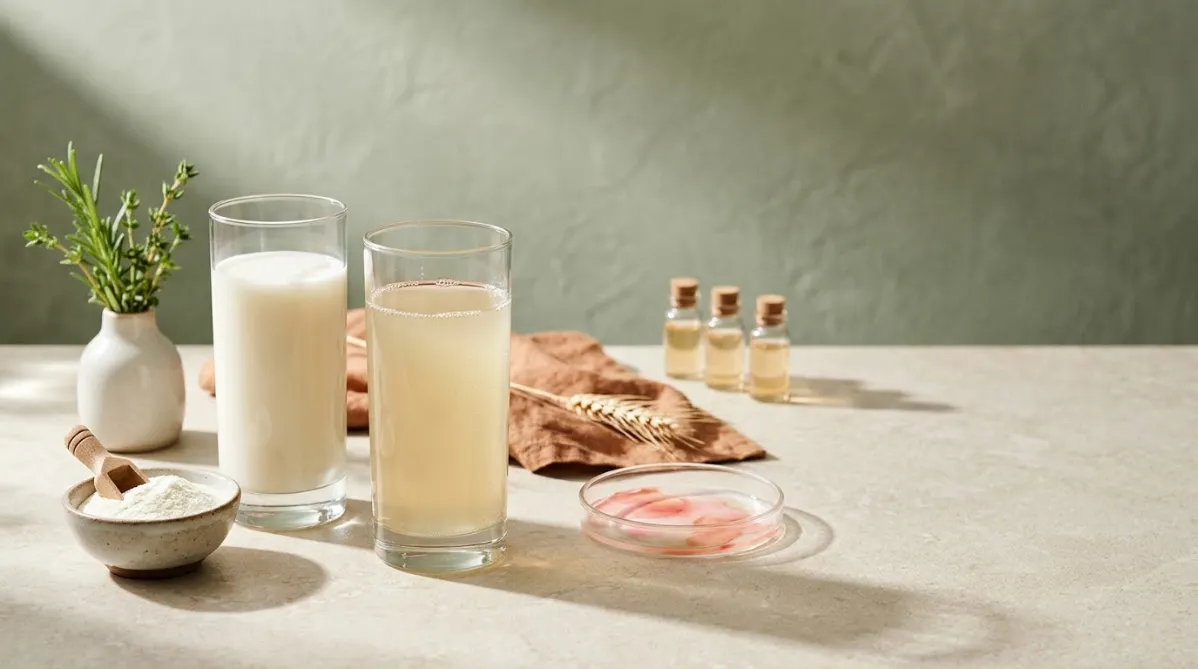
A softly lit editorial still life on a pale oat-colored stone surface, shot from a slightly elevated three-quarter angle. In the foreground, two matching tall glasses of milky, creamy liquid stand side by side. The left glass holds a smooth, opaque white whey drink. The right holds a slightly more translucent, pale champagne-yellow fermented whey with fine, delicate bubbles clinging to the inside of the glass. Beside them sits a small ceramic bowl of white whey powder with a wooden scoop, and a few sprigs of fresh herbs in a minimalist ceramic vase add a touch of green.

Behind the glasses, slightly out of focus, a row of three small clear glass vials with cork stoppers contains pale amber serum. A delicate glass petri dish in the mid-ground holds a soft, abstract blush-pink and coral watercolor-like swirl suggesting cultured cells, with no clinical or futuristic detailing. A folded linen napkin in warm terracotta and a single sprig of dried wheat grass add organic texture.

The background is a muted sage-green plaster wall with a gentle gradient of natural window light falling from the left, casting long, soft shadows and subtle caustic reflections from the glasses across the surface. The palette is warm and earthy: cream, oat, sage, soft terracotta, and pale amber, with small accents of blush pink.

The composition leaves generous negative space on the right third of the frame for headline overlay. Shallow depth of field, fine film grain, and a calm, contemporary wellness-journal aesthetic, like a high-end nutrition or food-science magazine spread. Crisp focus on the glasses, with a creamy bokeh falloff in the background. No text, no labels, no people, no laboratory machinery, no futuristic elements.
science research

Suero de whey fermentado hizo crecer células musculares más que el whey regular

BY DR. GYMBRO ·

La sangre extraída tras la ingesta de whey fermentado hizo que las células musculares crecieran más que la sangre tras consumir whey regular, aunque esas células eran de ratón en cultivo. En este estudio cruzado japonés, el suero de hombres jóvenes y mayores se aplicó a miotubos C2C12, aumentando el diámetro, la señalización S6K1 (mTOR) y marcadores del metabolismo oxidativo. La síntesis de proteína muscular fue mayor con suero de donantes mayores, lo que sugiere una pista para quienes enfrentan resistencia anabólica. Aquí explicamos lo que realmente significan los hallazgos, por qué el whey regular sigue siendo la opción probada y qué debemos vigilar a continuación.

This page is available in