Dr. Gymbro
←

#hydrolyzed cartilage

1 article
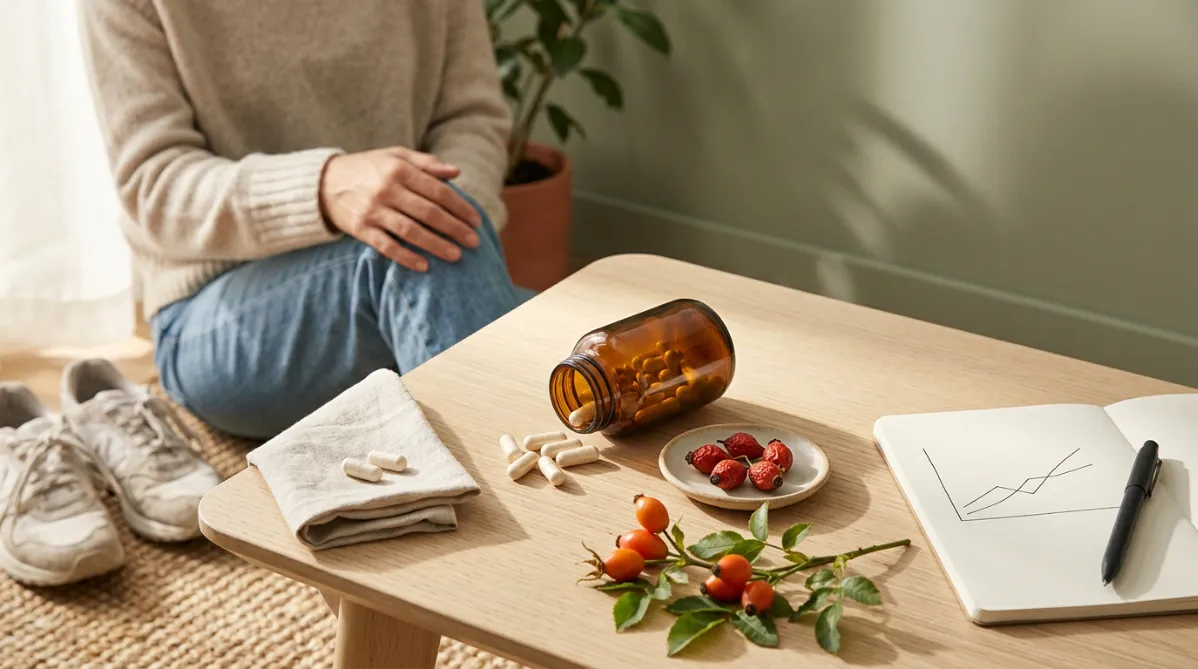
A softly lit editorial still life on a pale oak table, shot from a slightly elevated three-quarter angle in a wide landscape frame. In the center sits an open amber glass supplement bottle on its side, with a small scatter of cream-colored capsules spilling onto the wood. Next to it is a ceramic dish holding a few dried rosehips in deep coral red, and a sprig of fresh rosehip with glossy orange-red berries and green leaves lies across the foreground. On the left, a neat pair of matching white capsules rests on a folded linen napkin, a quiet visual nod to the placebo and treatment groups. Behind them, slightly out of focus, a woman's hands in a soft oatmeal knit sweater rest on a knee in relaxed denim, suggesting everyday movement without showing a face. A pair of worn, clean running shoes sits at the edge of the frame on a woven jute rug. On the right side of the table, a minimalist notebook lies open with a hand-drawn simple line graph, two gently rising lines nearly overlapping, next to a matte black pen. Morning window light streams from the left, casting long, soft shadows and a warm golden glow with gentle highlights on the glass bottle. The background is a muted sage-green wall with a hint of a leafy plant in a terracotta pot, creamy bokeh throughout. The palette is earthy and calm: warm beige, sage, terracotta, coral red, and soft white. The mood is thoughtful, trustworthy, and quietly skeptical, like a modern health and science journal. Clean composition with generous negative space on the upper right for headline overlay. Fine-grain film texture, shallow depth of field, natural color grading, high-end lifestyle magazine photography.
nutrition

El suplemento para la rodilla que falló en su objetivo pero aún llamó la atención

BY DR. GYMBRO ·

Un ensayo aleatorizado evaluó un suplemento de cartílago de pollo hidrolizado y escaramujo en 138 adultos activos con dolor de rodilla, y el resultado principal no mostró diferencia. Tanto el grupo que tomó el suplemento como el que recibió placebo mejoraron más de dos puntos en una escala de 0 a 10. Los análisis exploratorios sugirieron beneficios en el dolor durante actividades cotidianas, sobre todo en mujeres posmenopáusicas, aunque esos hallazgos provienen de subgrupos pequeños y no son concluyentes. El estudio fue escrito por empleados de las compañías que comercializan el producto. A continuación se muestra lo que los datos revelan, lo que no demuestran y cómo pensar en probarlo.

This page is available in