Dr. Gymbro
←

#injection-lipolysis

6 articles
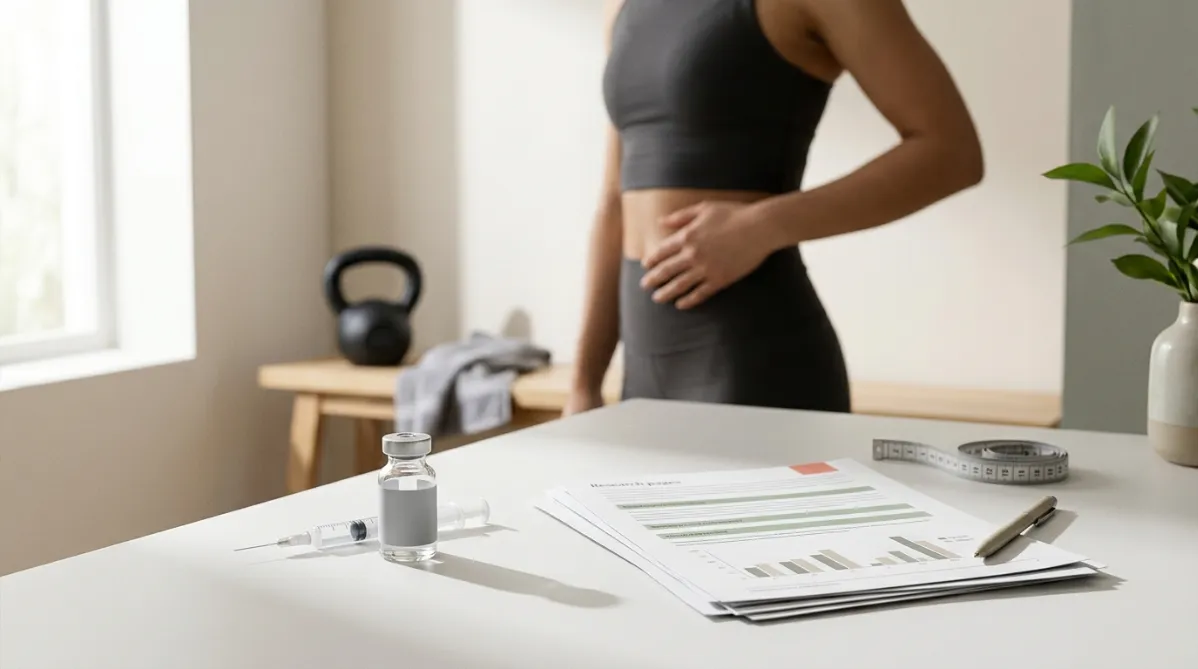
A wide, editorial-style photograph of a clean, bright clinical consultation space with a modern wellness-journal feel. In the foreground, a minimalist matte white tabletop holds a small glass vial with a soft gray label and a sterile syringe laid parallel beside it. Next to them sits a neatly folded stack of printed research pages, with a few subtle sage-green highlighted lines and a simple bar chart in muted tones. A slim stainless steel measuring tape curls loosely nearby, and a fine-point pen rests on the pages.

In the softly blurred midground, the torso of an athletic person in a fitted charcoal training top stands slightly out of focus. One hand rests lightly at the waist, which suggests body composition without showing a face. A weighted matte-black kettlebell and a folded gray gym towel sit on a pale oak bench to one side, a quiet reference to lifters and training.

The background is a calm wall in warm off-white and pale stone, with a tall window to the left. It lets in diffused morning daylight that casts long, gentle shadows across the table. A single green leafy plant in a ceramic pot adds a touch of organic color on the right edge.

The palette is restrained and contemporary: soft whites, warm beige, sage green, charcoal, and a small accent of muted coral. The composition follows the rule of thirds, with the vial and syringe on the left third and open negative space on the right, where headline text could sit. Use shallow depth of field, crisp focus on the vial's glass edges, and subtle highlights on the glass. The mood is thoughtful, credible, and analytical, in the style of a premium health and science magazine. Shoot it as if with a 50mm lens at f/2.8, with natural light, fine grain, and a clean, uncluttered finish.
science research

Inyecciones para la pérdida de grasa CBL‑514: el ensayo de fase 2 que los culturistas deben leer

BY DR. GYMBRO ·

Un ensayo de fase 2 controlado con placebo encontró que las inyecciones de CBL‑514 redujeron la grasa subcutánea abdominal en ecografía mientras el peso corporal apenas cambiaba. A las 8 semanas, el 69,6 % de los participantes tratados que permanecieron en el estudio lograron al menos 150 mL de pérdida de grasa, frente a 0 % con placebo. Sin embargo, el estudio fue simple ciego, casi la mitad de los tratados abandonó el estudio y el seguimiento fue corto. El fármaco es investigacional, no es un quemador de grasa y no está aprobado. Aquí lo que los levantadores de pesas en fase de corte deberían extraer de él.
A wide, editorial-style flat lay photographed from above on a pale warm-gray stone surface, bathed in soft diffused natural light from a window at the left. At the center sits a clean white clinical document folder, slightly open, with blurred printed charts and abstract bar graphs peeking out, no readable text. Beside it rests a minimalist glass vial with a pale frosted label and a silver cap, laid on its side, and a sleek stainless steel ruler marked in centimeters running diagonally across the frame, a quiet nod to the "mg/cm²" dosing concept. Three small ceramic dishes in a row at the right hold progressively larger amounts of fine white powder, suggesting graduated dose levels without implying consumer use. A sprig of dried eucalyptus and a matte sage-green fountain pen add organic softness. A thin translucent grid overlay, like tracing paper with a faint 10 x 10 square outline, is partially draped over the surface to evoke a measured treatment area. The palette is muted and modern: ivory, sage green, soft slate blue, and touches of brushed silver, with generous negative space on the left third for a headline. Shadows are gentle and long, depth of field shallow, with the foreground ruler crisp and the background edges melting into a soft blur. The mood is calm, trustworthy, scientific yet approachable, like a contemporary health and science magazine cover. Subtle film grain, high-end editorial photography, 16:9 landscape composition.
science research

Dosis de CBL-514 - ¿Qué dice la ciencia?

BY DR. GYMBRO ·

No existe una “dosis recomendada” de CBL‑514 para el consumidor, ni una medida estándar ni un protocolo de entrenamiento en mg/kg. Las únicas dosis conocidas son las que los investigadores administraron en los ensayos clínicos de este fármaco en investigación. Este artículo desglosa el régimen de la fase 2 (2 mg/cm², hasta 600 mg por sesión en un área de 300 cm²) y el estudio previo de fase 2a que buscó la dosis óptima (1,2, 1,6 y 2,0 mg/cm²). También explica por qué no se deben mezclar los números de ambos estudios, incluido el origen del frecuentemente citado 24,96 %. CBL‑514 no está aprobado y nada de lo que se expone constituye consejo médico ni una guía de hazlo‑tú‑mismo.
A soft-lit, minimalist editorial still life on a pale warm-gray seamless backdrop. In the center, a sterile glass vial with a clear, faintly golden liquid sits beside a slim syringe, both resting on a smooth matte terracotta ceramic slab. Beside them, a neat arrangement of translucent, pearly fat-like droplets in varying sizes, glistening like water beads, spills across the surface to suggest localized fat volume. Behind the objects, a large, softly blurred arc of cream and blush-pink paper forms a gentle curve suggesting an abdomen silhouette, without showing any human body. In the lower foreground, a slim measuring tape in muted sage green loops casually around the vial base, with legible tick marks hinting at volume reduction. To the right, a minimalist ceramic beaker with fine milliliter markings sits half-filled, catching a sliver of window light. Subtle data-inspired elements appear as flat, tasteful props: two thin stacks of off-white paper cards, one tall and one very short, symbolizing treatment versus placebo outcomes, with a few cards fading out toward the edge of frame to hint at participant dropout. A single small coral-red dot sticker on one card nods to injection-site reactions. Lighting is diffused natural morning light from the left, creating long, gentle shadows and soft highlights on glass and ceramic. The palette is restrained and modern: warm neutrals, soft sage, terracotta, blush, and touches of translucent gold. Shallow depth of field with crisp focus on the vial and syringe, background gently dissolving. Composition follows the rule of thirds with generous negative space on the right for headline overlay. The overall mood is calm, credible, and contemporary, like a premium health-science magazine cover, shot on a medium-format camera with fine grain and a clean, high-end editorial finish.
science research

¿Realmente CBL-514 quema grasa? Esto es lo que sabemos

BY DR. GYMBRO ·

En un ensayo de fase 2, el 69,6 % (16 de 23) de los participantes que recibieron CBL‑514 redujeron al menos 150 mL de grasa abdominal a las ocho semanas, frente a 0 de 16 en el grupo placebo. No obstante, los denominadores disminuyeron porque casi la mitad de los sujetos abandonó el estudio; el ensayo fue simple ciego y el seguimiento solo duró ocho semanas. El peso corporal no cambió, por lo que se trata de una reducción local del volumen de grasa y no de una quema sistémica. Las reacciones en el sitio de inyección fueron casi universales, y el dolor severo se presentó en el 18,4 % de los tratados. A continuación, se detallan los números exactos, sus limitaciones y lo que realmente indican.
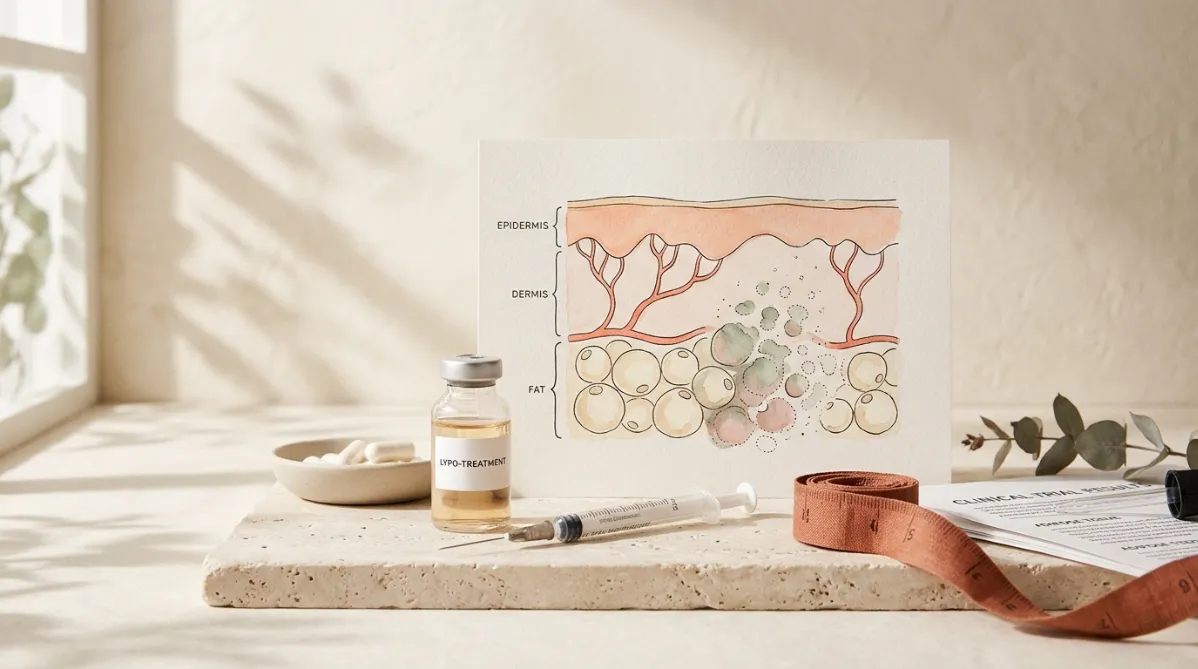
A softly lit, minimalist editorial still life on a warm off-white textured paper backdrop. In the center, a clean glass laboratory vial with a pale amber liquid sits beside a slim, sterile syringe with a fine needle, both placed on a pale travertine stone slab. Behind them, a large translucent cross-section illustration of skin layers is rendered as a delicate, hand-painted watercolor and ink diagram: soft peach epidermis, creamy yellow subcutaneous fat lobules shaped like clustered round cells, and thin coral capillary lines. A few of the fat cells in the diagram are gently fading, with dissolving edges and tiny dotted outlines to suggest cells quietly breaking down, painted in muted sage green and dusty rose.

On the left, a small ceramic dish holds a handful of matte white capsules, set aside and out of focus, hinting at what the treatment is not. On the right, a folded linen measuring tape in soft terracotta drapes across the stone, and a small stack of research papers with blurred text sits beneath a sprig of dried eucalyptus. Subtle botanical shadows from a window fall diagonally across the scene, creating a calm, natural-light atmosphere.

Color palette: warm cream, soft peach, sage green, muted terracotta, dusty rose, and touches of amber. The composition is balanced, with generous negative space on the upper left for title overlay. Shot as if with a 50mm lens, shallow depth of field, crisp focus on the vial and syringe, gentle film grain, and a refined, modern health-journal aesthetic. Contemporary, calm, trustworthy, and tactile. Landscape 16:9 format.
science research

¿Cómo funciona CBL‑514? La ciencia detrás

BY DR. GYMBRO ·

CBL‑514 no es un estimulante, ni un termogénico, ni un GLP‑1. Es un inyectable en fase de investigación que pretende inducir la apoptosis de adipocitos en una zona localizada de grasa subcutánea. Su mecanismo, que incluye la inhibición de DYRK1b y la regulación al alza de la caspasa‑3 y de la relación Bax/Bcl‑2, se basa en estudios preclínicos reportados por el patrocinador. En el ensayo de fase 2, el volumen de grasa abdominal medido por ultrasonido disminuyó, mientras que el peso corporal medio apenas variaba. A continuación se muestra lo que la ciencia sí y no demuestra, y por qué la evidencia del mecanismo en humanos sigue siendo indirecta.
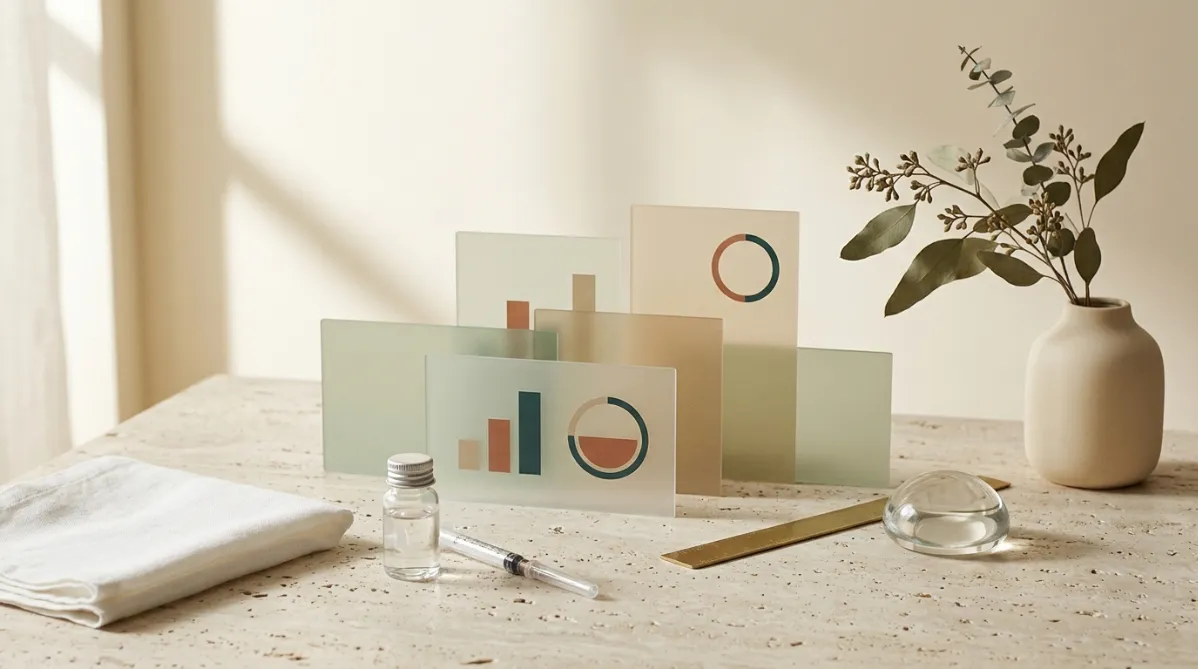
A calm, editorial-style still life photographed in soft natural window light on a pale travertine surface. In the foreground, a small clear glass vial with a silver cap and a slim, capped syringe rest beside a folded white linen cloth, their edges catching delicate highlights. Behind them is a minimalist arrangement of translucent frosted acrylic cards in pale sage green and warm sand, staggered like pages of a clinical report. A few of the cards carry abstract bar-chart shapes and simple circle diagrams in muted terracotta and deep teal. One circle is just under half filled, a quiet nod to the participants who did not finish the trial. A slim brass ruler and a rounded ultrasound-style glass paperweight lie diagonally across the middle ground, hinting at measurement without any machinery. On the right, a sprig of dried eucalyptus in a matte ceramic bud vase adds organic softness. The background is a smooth, softly blurred wall in warm cream, with long gentle shadows falling from the left. The palette is restrained: ivory, sage, sand, terracotta, and touches of teal and brass. The composition leaves generous negative space in the upper left for a headline overlay. The mood is thoughtful, trustworthy, and modern, like a contemporary health and science journal. Shot on a 50mm lens at shallow depth of field, with fine film-like grain and a clean, high-end magazine finish. There are no people, no text, no logos, and no futuristic elements.
science research

Inyecciones CBL-514 para la eliminación de grasa: ¿qué dice la ciencia?

BY DR. GYMBRO ·

CBL‑514 es una inyección en fase 2, aleatorizada y controlada con placebo para eliminar grasa. El estudio fue a ciego simple, el patrocinador participó en su diseño, análisis y redacción, y 37 de 75 participantes tratados (49,3 %) no lo completaron. Además, el grupo tratado estuvo compuesto en un 94 % por mujeres y un 86 % por personas blancas. Este análisis describe quiénes fueron inscritos, cómo funcionó el protocolo y las mediciones por ultrasonido, y qué puede y qué no puede revelar el diseño. Es solo material educativo, no consejo médico.

A soft, editorial still life in a bright, minimalist clinical-meets-wellness setting, shot in landscape format with a shallow depth of field. In the foreground, a single sterile glass vial with a clear liquid and a slim silver-capped syringe rest on a matte, pale sage-green ceramic tray. Next to them is a neatly folded white linen cloth. The vial's label is blank and clean, with no readable text. Behind the tray, slightly out of focus, the torso of a person in a simple cream-colored fitted tank top is visible from the ribs to the hips. A gentle, hand-drawn-style dotted grid of tiny ink dots is marked on the lower abdomen, suggesting localized injection points in a contained patch, not the whole body. A soft hand in a light nitrile glove hovers near the area holding a fine pen.

The background is a warm, creamy off-white wall with a faint, diffused window light casting long, soft shadows across the scene. A small sprig of dried eucalyptus in a minimalist stone vase sits at the far right edge, adding organic texture. Color palette: muted sage green, warm ivory, soft peach skin tones, and brushed silver accents, with a subtle touch of terracotta in a small ceramic dish at the left.

Lighting is natural morning daylight, airy and diffused, with gentle highlights on the glass vial that catch tiny reflections. The composition follows the rule of thirds, with the vial and syringe on the left third and open negative space on the right, which would suit headline overlay. The overall feel is modern, calm, trustworthy, and sophisticated, like a contemporary health and science magazine cover, with fine film-like grain, crisp detail on the glass and a creamy bokeh backdrop. No text, no logos, no futuristic elements.
science research

¿Qué es CBL‑514? ¿Quema grasa?

BY DR. GYMBRO ·

La frase “inyección quemagrasas” evoca un atajo de ciclo de corte o una inyección al estilo Ozempic para perder peso, pero CBL‑514 no es nada de eso. Es un fármaco investigacional de pequeña molécula, inyectable para la lipólisis, probado con múltiples inyecciones en zona de grasa abdominal. Un ensayo de fase 2 de 2025 mostró que redujo el volumen de grasa medido por ultrasonido frente al placebo, mientras que el peso corporal apenas cambió. A continuación se analizan los datos, sus limitaciones y por qué se trata de contorneo local, no de quema de grasa sistémica.

This page is available in