Dr. Gymbro
←

#memory

1 article
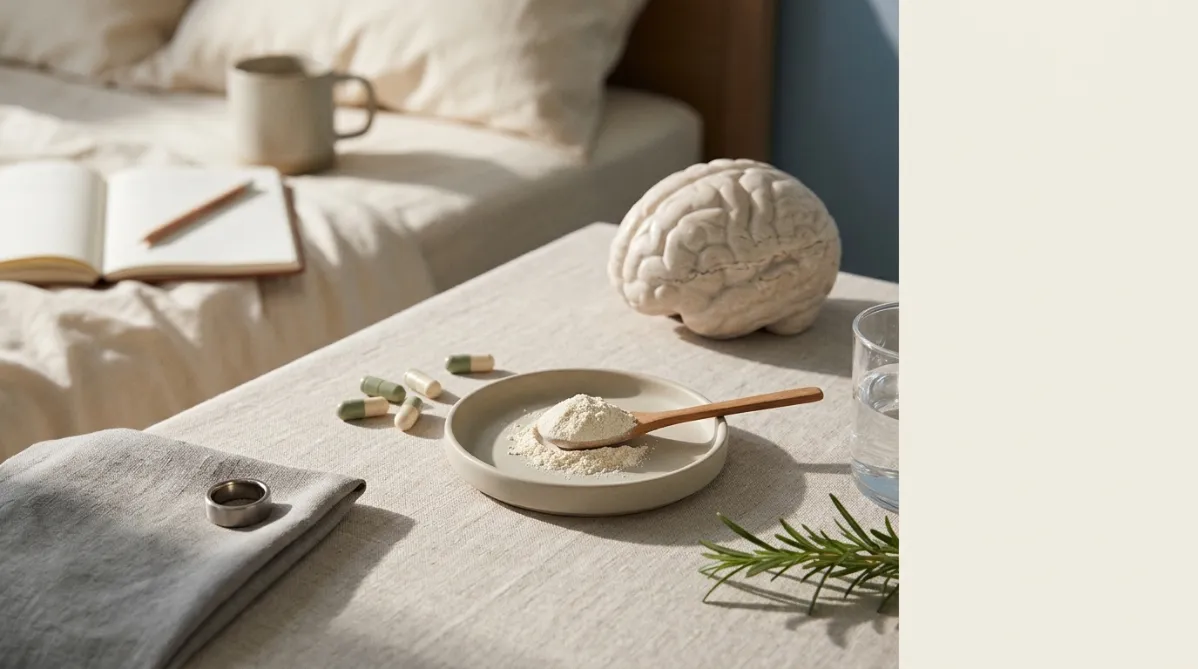
A wide, editorial still life photographed in soft natural window light on a pale oatmeal linen surface. At the center sits a small matte ceramic dish holding a modest scoop of fine off-white powder, with a few loose capsules in muted sage green and cream scattered beside it. A slim wooden scoop rests at the dish's edge. To the left, a minimalist smart ring in brushed titanium sits on a folded stone-gray cloth, catching a thin highlight. To the right, a glass of water with soft refraction and a sprig of fresh rosemary add a touch of organic color.

In the background, a softly blurred bedside scene: a rumpled cream bedsheet, a ceramic mug, and an open notebook with a pencil, suggesting sleep tracking and cognitive testing without any readable text. A single sculptural brain-shaped form carved from pale travertine stone sits slightly behind the dish, cool and understated, with subtle veining that echoes the linen texture. Long, gentle shadows stretch across the table from a morning sun source on the upper left.

The palette is calm and modern: warm neutrals, sage green, soft sand, and muted terracotta accents, with a hint of dusty blue in the shadows. Shallow depth of field, crisp focus on the powder and ring, creamy bokeh in the background. Generous negative space on the right third for headline overlay. The mood is quiet, thoughtful, and trustworthy, like a contemporary health and science journal's cover photograph, clean, tactile, and airy, with fine film-like grain and balanced contrast.
science research

Magnesio L‑Treonato: ¿6 semanas y 7,5 años menos de edad cognitiva?

BY DR. GYMBRO ·

Seis semanas de magnesio L‑treonato (Magtein) se asociaron con una mejora general de la cognición, la memoria de trabajo y la episódica, una respuesta más rápida y una reducción estimada de 7,5 años en la “edad cognitiva del cerebro” en un ensayo aleatorizado con 100 participantes. El anillo Oura también detectó una frecuencia cardíaca nocturna más baja y una mayor variabilidad de la frecuencia cardíaca, aunque el sueño medido no cambió. El estudio utilizó 2 g/día del compuesto, aproximadamente 144 mg de magnesio elemental, en adultos de 18 a 45 años con insatisfacción del sueño. Sin embargo, el financiamiento provino del fabricante, varios p‑values rondan 0,05 y muchos resultados de sueño fueron nulos.

This page is available in