Dr. Gymbro
←

#sodium-bicarbonate

1 article
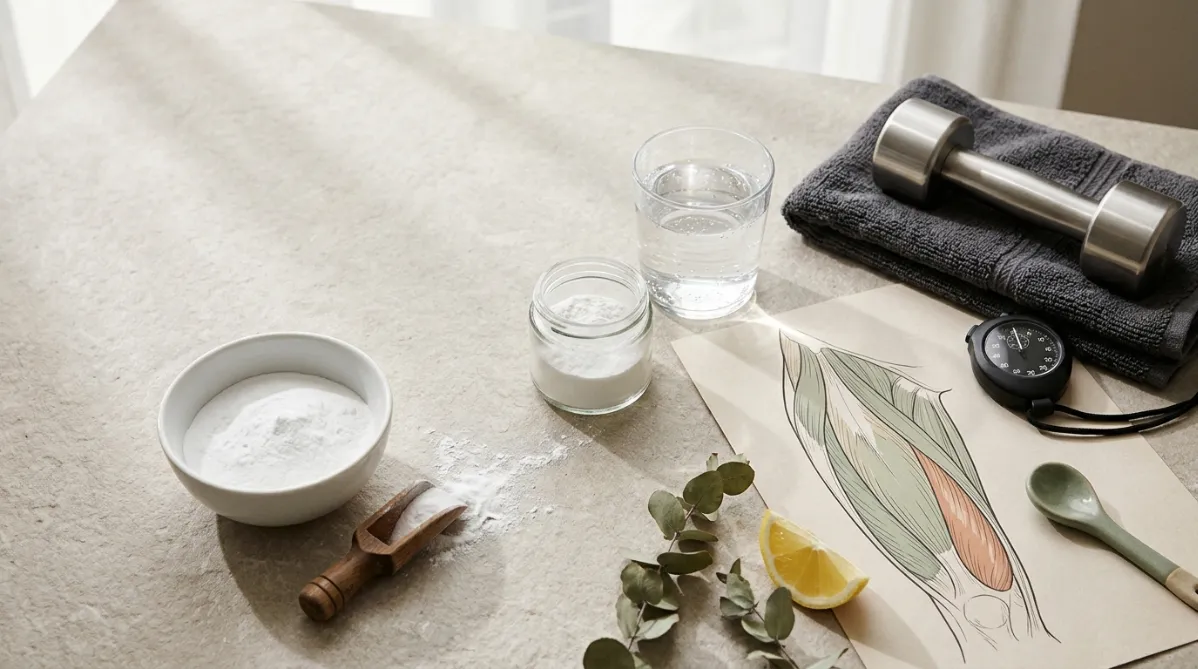
A wide, editorial-style flat lay on a pale warm-gray stone surface, shot from slightly above in soft natural window light with gentle diagonal shadows. On the left, a matte white ceramic bowl holds fine white baking soda powder, with a wooden scoop resting beside it and a light dusting of powder across the stone. In the center, a small glass jar of white beta-alanine powder sits next to a clear glass of water that catches the light. To the right, a neatly folded charcoal gym towel lies under a single brushed-steel dumbbell, and a sleek matte black stopwatch sits nearby. A printed anatomical cross-section of a thigh, in muted sage green and soft terracotta line-art tones, is tucked under the items like an elegant editorial illustration. It shows quad muscle groups in a stylized, minimalist way and is not clinical or futuristic. A few sprigs of dried eucalyptus and a lemon wedge add organic texture and a pop of soft yellow. The palette is cream, sage, warm gray, and charcoal, with small terracotta accents. The composition leaves generous negative space at the upper left for a title overlay. Shallow depth of field blurs the background edges, and the mood is calm, modern, and trustworthy, like a contemporary health and fitness journal. The look is high-end magazine photography with subtle film grain, clean and minimal.
nutrition

Beta‑alanina + Bicarbonato de sodio: Crecimiento del cuádriceps en resonancia magnética. ¿La trampa?

BY DR. GYMBRO ·

Un ensayo de ocho semanas encontró que hombres que tomaron beta‑alanina junto con bicarbonato de sodio incrementaron el tamaño del cuádriceps entre un 21‑24 % según la resonancia magnética, frente a un 5‑9 % con placebo. El grupo de suplementos también completó aproximadamente un 29 % más de volumen de entrenamiento, lo que podría explicar gran parte del efecto. Sin embargo, con solo 20 participantes y sin mejoras adicionales en fuerza, el panorama es más matizado que los números principales sugieren. A continuación se detalla lo que el estudio encontró, lo que no encontró, y cómo interpretar las dosis, el hormigueo y la tolerancia gastrointestinal.

This page is available in