Dr. Gymbro
←

#women's health

2 articles
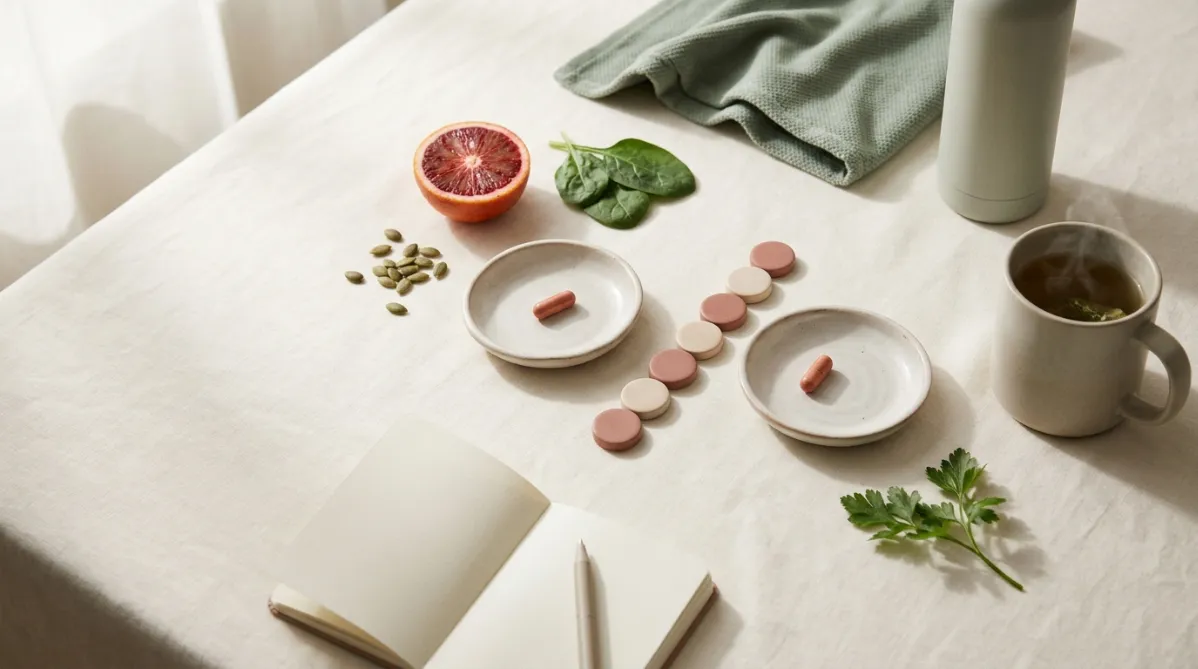
A bright, airy editorial flat-lay shot from slightly above, on a soft warm-white linen surface with gentle natural window light and long, soft shadows. Two small ceramic dishes sit side by side at the center. The left dish holds a single small capsule in muted terracotta. The right dish holds one small capsule in the same color, with a noticeable empty space beside it to suggest rhythm and spacing. Between them lies a minimalist wooden calendar block or a row of seven small round ceramic discs in alternating tones, dusty rose and cream, evoking an every-other-day pattern. Around the dishes are fresh, iron-rich foods arranged with restraint: a halved blood orange, a few deep green spinach leaves, a small scattering of pumpkin seeds, and a sprig of parsley. A folded sage-green athletic towel and a slim, modern water bottle sit at the upper edge, hinting at women who train. A matte ceramic mug of herbal tea sits at the right with a faint curl of steam. A small notebook with a pen lies open at the lower left, its pages blank, suggesting lab results and tracking without any legible text. The palette is soft and cohesive: warm cream, dusty rose, terracotta, sage green, with small accents of deep coral. The mood is calm, clean, and wellness-oriented, like a contemporary health and science journal feature. Shallow depth of field keeps the capsules sharp and softly blurs the edges of the frame. The composition leaves generous negative space on the left third for title overlay. The look is a high-end lifestyle photograph with subtle film grain, natural textures, and refined minimalism, with no people, no text, and no futuristic or laboratory elements.
nutrition

Menos Hierro, Cada Dos Días: Incrementos Similares de Ferritina en Mujeres

BY DR. GYMBRO ·

La hepcidina puede limitar la absorción de hierro después de una dosis diaria, lo que quizás explique por qué el suplemento oral suele decepcionar y provocar molestias estomacales. Un ensayo aleatorizado de 2026 con 66 mujeres con deficiencia de hierro comparó 21 mg de hierro cada 48 h contra 30 mg diarios durante 42 días. La ferritina aumentó de forma significativa en ambos grupos sin diferencias estadísticamente relevantes, la hemoglobina se mantuvo estable y los efectos gastrointestinales fueron leves. El truco es que el estudio fue activo‑controlado y las formas de hierro fueron distintas, de modo que los resultados son comparables, no superiores. Aquí explicamos qué significa para las mujeres que entrenan y por qué deberías medir la ferritina antes de suplementar.
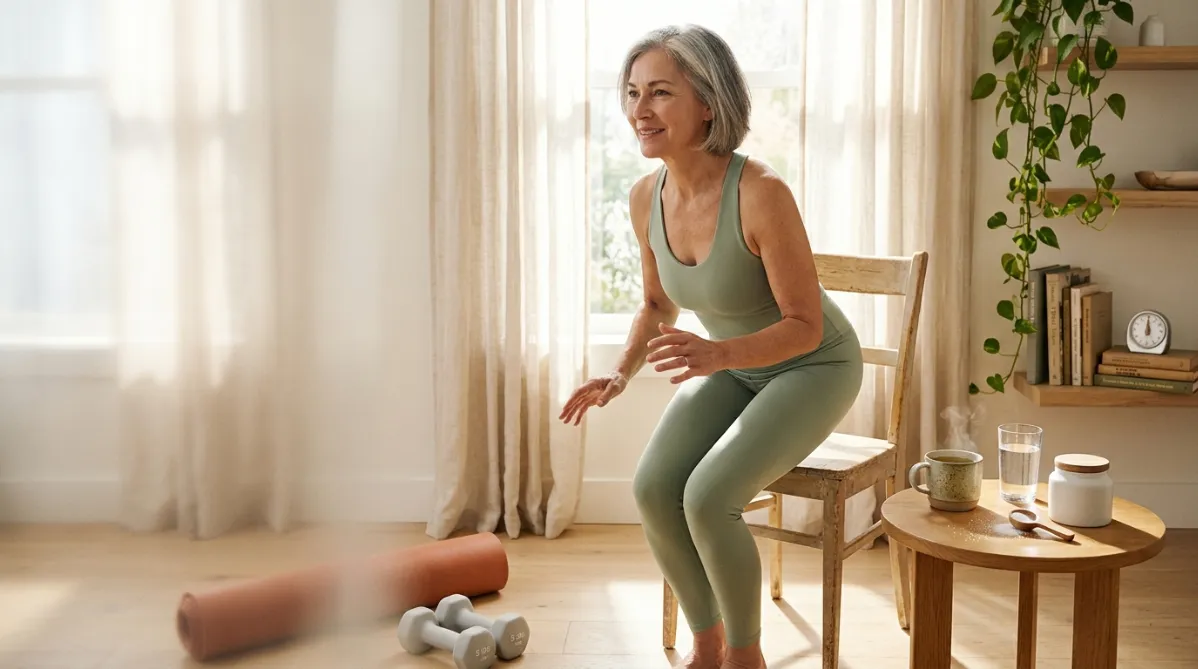
A wide landscape editorial photograph of a bright, airy sunlit living room with pale oak floors and a large window with sheer linen curtains. In the center, a woman in her late 50s with silver-streaked hair, wearing soft sage-green athletic wear, rises from a simple wooden chair, caught mid-motion with a calm, determined expression. Her hands are lightly extended forward for balance. Beside her on a small round oak side table sits a ceramic mug of tea, a glass of water, and a small matte white jar with a wooden scoop resting beside it, a few fine white crystalline grains scattered on the tabletop. In the soft-focus foreground, a pair of light-gray dumbbells and a rolled terracotta-colored yoga mat rest on the floor. A trailing green pothos plant spills from a shelf in the background, with a stack of books and a small analog kitchen timer nearby.

The color palette is warm and muted: cream, sage green, soft terracotta, natural wood, and gentle morning-gold light. Light streams diagonally across the scene, creating long soft shadows and a subtle glow on the woman's shoulders. Shallow depth of field blurs the background gently, while the woman and the table remain crisp. The composition follows the rule of thirds, with the woman on the right and generous negative space on the left, suited for headline overlay. The mood is hopeful, grounded, and modern, like a high-end wellness magazine or a trendy health journal. Natural film-like grain, soft contrast, and a slight matte finish give it a contemporary lifestyle photography feel. There are no futuristic elements, no digital overlays, and no text.
science research

La creatina ayuda a mujeres con rodillas dañadas a levantarse mejor, pero no por lo que piensas

BY DR. GYMBRO ·

La creatina suele promocionarse entre los jóvenes que levantan pesas, pero un ensayo aleatorizado y doble ciego la probó en mujeres posmenopáusicas con osteoartritis de rodilla. Tras 12 semanas de entrenamiento de piernas, el grupo que tomó creatina mejoró su puntuación en la prueba de levantarse de una silla de 15,7 a 18,1, mientras que el placebo apenas cambió (de 15,0 a 15,2). La creatina también redujo la rigidez, aumentó la masa magra y mejoró la calidad de vida. Sin embargo, el alivio del dolor y la fuerza máxima en la prensa de piernas no fueron superiores al placebo. Aquí se muestra lo que revelan los números y a quién podría ayudar realmente.

This page is available in