Dr. Gymbro
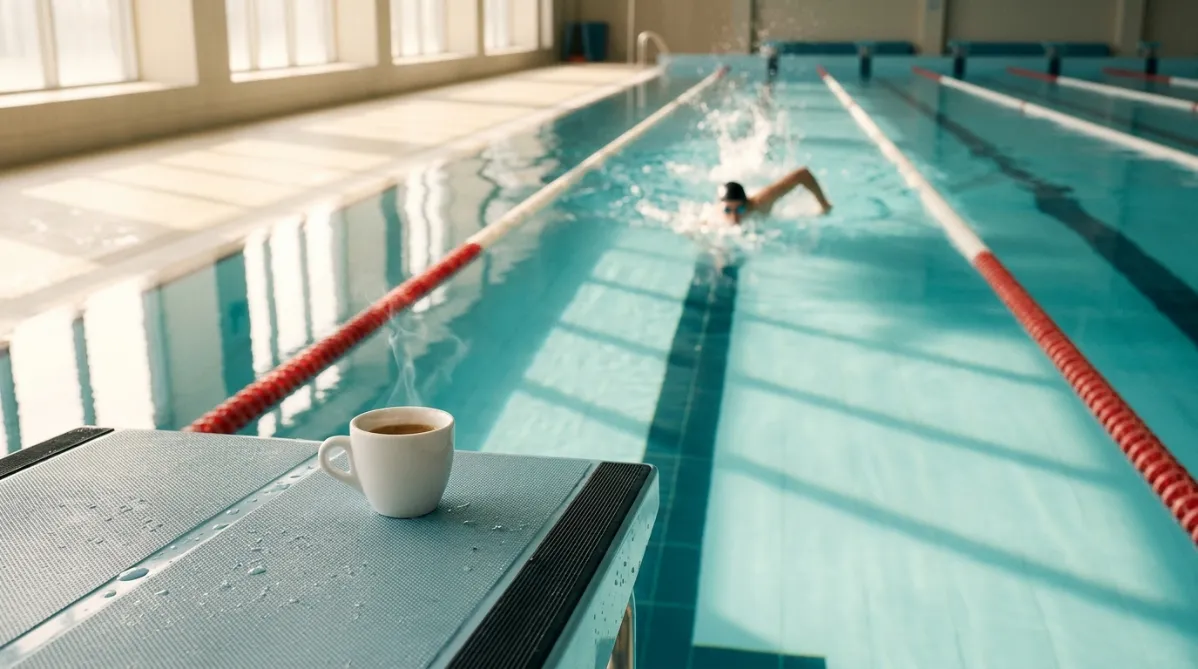
A wide, editorial-style photograph of a competition swimming pool lane seen from just above the water line at the starting end, in soft morning light. In the foreground, on the pool deck, a white ceramic espresso cup sits on the edge of a blue-gray starting block, a thin curl of steam rising from it. The cup is in crisp focus, with a few droplets of water on the textured non-slip deck around it. Behind it, the pool stretches into the distance as a series of calm lanes divided by red and white lane ropes. The turquoise water glints with gentle ripples and long, shimmering reflections. At the far end, a lone swimmer in a dark cap and goggles is mid-stroke, caught in a small burst of white splash, and slightly out of focus because of the shallow depth of field.

Large windows along the side wall let in pale golden sunlight, which throws soft diagonal light across the water and the deck. The palette is clean and modern: aqua, deep teal, warm cream and a small accent of coffee brown. The cup's warm tones stand out against the cool blues. The composition follows the rule of thirds, with the cup in the lower left third and open negative space of water and light on the right, leaving room for headline text. The look is minimal, airy and contemporary, like a high-end sports and science magazine, with subtle film grain, natural color grading, and a slightly desaturated, calm mood. Faint stopwatch-like details appear only as a thin black timing pad edge on the starting block, with no text or numbers visible. The overall feel is quiet anticipation just before a race, precise and fresh, with a sense of small margins and measured performance.
Nutrition

کافئین شناوران را سریع‌تر می‌کند، اما کمتر از آنچه فکر می‌کنید

Dr. Gymbro · · 4 min read

شناوران سال‌ها پیش از مسابقات قهوه می‌نوشند، اما آیا واقعاً سرعتشان را در استخر افزایش می‌دهد؟ یک متاآنالیز چندسطحی جدید در Journal of the International Society of Sports Nutrition سعی می‌کند این سؤال را روشن کند. پاسخ بله است: کافئین کمک می‌کند، اما میزان سود و اهمیت دوز، پیچیدگی‌های بیشتری نسبت به آنچه در روتین‌های پیش‌مسابقه معمولاً فرض می‌شود دارد.

چه کاری انجام دادند پژوهشگران؟

تیم تحت رهبری Wang و با همکاری پژوهشگران شناخته‌شدهٔ کافئین Jozo Grgic و Juan Del Coso، پنج پایگاه داده را برای یافتن آزمایش‌های تصادفی، کنترل‌شده با پلاسیبو و متقاطع در شناگران رقابتی جستجو کردند. ۱۳ مطالعه که معیارها را برآورده می‌کردند، شامل ۱۴۴ مرد و ۴۸ زن بودند و ۲۸ اندازه‌گیری اثر عملکرد به دست آمد.

از آنجا که بسیاری از مطالعات چندین نتیجه را گزارش می‌کردند، نویسندگان از مدل‌های اثر‑های تصادفی سه‑سطحه‌ای استفاده کردند تا از شمارش دوبارهٔ همان شناوران جلوگیری شود. آن‌ها همچنین ریسک بایاس را با RoB 2 ارزیابی کردند و اطمینان از شواهد را با GRADE رتبه‌بندی کردند. به‌علاوه، علاوه بر اثر استاندارد شده، نسبت لگاریتمی میانگین‌ها را محاسبه کردند تا نتیجه به‌صورت درصد ساده قابل بیان باشد.

عدد سرخط: حدود ۱٫۷٪

کافئین عملکرد شنا را با اختلاف میانگین استاندارد ۰٫۵۷ (فاصله اطمینان ۹۵٪  ۰٫۲۰ تا ۰٫۹۴؛ p = ۰.۰۰۵) بهبود داد، که اثر متوسطی است. نسخهٔ درصدی این نتیجه ساده‌تر است: بهبود ۱٫۷۱٪ (فاصله اطمینان ۹۵٪  +۱٫۰۱٪ تا +۲٫۴۱٪؛ p < ۰.۰۰۱).

این مقدار شاید کوچک به نظر برسد، اما در شنا حتی صدم ثانیه‌ها می‌توانند تصمیم‌گیرنده باشند. به‌عنوان مثال، ۱٫۷٪ یک مسابقهٔ ۶۰‑ثانیه‌ای تقریباً یک صدم ثانیه است؛ اختلافی بسیار بزرگ در سطح بالایی است، هرچند این عدد میانگین کلی است و تضمین‌کنندهٔ افزایش مشخص برای هر شناور نیست.

آیا دوز بزرگتر سرعت بیشتری می‌دهد؟

جالب‌ترین یافته از تحلیل‌های اکتشافی میان‌متغیرها این بود که مطالعاتی که دوز ۶ mg/kg یا بالاتر استفاده کرده بودند، اثر تجمعی بزرگ‌تری (SMD = ۰٫۹۵، ۹۵٪ CI = ۰٫۵۲ تا ۱٫۳۸) نسبت به مطالعات با دوز کمتر از ۶ mg/kg (SMD = ۰٫۲۲، ۹۵٪ CI = ‑۰٫۱۵ تا ۰٫۶۰) نشان دادند. اختلاف بین این دو گروه از نظر آماری معنی‌دار بود (p = ۰.۰۱۷).

دقت کنید که فاصله اطمینان دوز پایین‌تر صفر را در بر می‌گیرد؛ بنابراین در این مجموعه داده نمی‌توان با اطمینان گفت دوزهای زیر ۶ mg/kg عملکرد را بهبود می‌بخشند. نویسندگان این الگوی احتمالی دوز‑وابسته را «ممکن» می‌نامند، چرا که از مقایسهٔ مطالعات استخراج شده است نه از آزمایش مستقیم دوزها بر روی همان شناوران.

چه چیزهایی تأثیری نداشتند (به‌نظر می‌رسد)

تحلیل همچنین زمان مصرف، طول مسابقه، فرم مصرف، سبک شنا، جنسیت و سطح ورزشکار را بررسی کرد. هیچ‌یک از این عوامل اختلاف واضحی بین زیرگروه‌ها نشان نداد. این به این معنی نیست که بی‌اهمیت‌اند؛ با تنها ۱۳ مطالعه، توان آماری برای کشف تفاوت‌ها ممکن است کافی نباشد. به‌هرحال، متاآنالیز هیچ قاعدهٔ مبتنی بر شواهدی برای مثلاً «آدامس در مقابل کپسول» یا «زن در مقابل مرد» ارائه نمی‌دهد.

پیچیدگی لاکتات

هشت مطالعه ۲۴ اندازه‌گیری اثر لاکتات خون را فراهم کردند. کافئین لاکتات پس‌آزمون را به‌طور متوسط ۰٫۸۵ mmol/L افزایش داد (۹۵٪ CI = ۰٫۲۲ تا ۱٫۴۹؛ p = ۰.۰۱۶). ناهمگونی بالا بود (I² = ۷۶٫۵٪).

افزایش لاکتات لزوماً نشانگر نکتهٔ منفی نیست؛ ممکن است نشان‌دهندهٔ فشار بیشتر یا استفادهٔ بیشتر از ظرفیت‌های آناروبیک باشد، که در اثر کافئین معمول است. تحلیل‌های زیرگروهی اکتشافی نشان داد که افزایش‌ها در مسابقات آزاد و کوتاه‌فاصله بزرگ‌تر بودند، اما نویسندگان هشدار می‌دهند این نتایج به‌سختی به مدل‌سازی وابسته‌اند و باید با احتیاط خوانده شوند.

نکتهٔ ناهمگونی

ناهمگونی کلی برای عملکرد قابل توجه بود (I²total = ۶۴٫۷٪) و عمدتاً ناشی از تفاوت‌های بین مطالعات بود. پروتکل‌ها، جمعیت‌های شناور، رویدادها و روش‌ها در آزمایش‌ها متفاوت بود، بنابراین اثر متوسط ممکن است پراکندگی واقعی را پنهان کند. برخی شناوران و برخی مطالعات احتمالاً سودهای خیلی بزرگ‌تری نسبت به ۱٫۷٪ تجربه کرده‌اند؛ برخی دیگر تقریباً هیچ تغییری ندیده‌اند. نویسندگان نتایج زیرگروهی را «ایده‌ساز» می‌نامند و نمی‌توانند بگویند چه کسی بهترین پاسخ را می‌دهد.

نکات عملی برای شناوران

  • انتظار یک برتری متوسط و واقعی. برآورد بهترین حدود ۱٫۷٪ بهبود است، با بازهٔ قابل قبول حدود ۱٪ تا ۲٫۴٪.
  • دوز مهم است و بازهٔ معمول ممکن است مرز باشد. راهنمایی‌های تغذیهٔ ورزشی معمولاً ۳ تا ۶ mg/kg را ذکر می‌کنند. در این تحلیل واضح‌ترین سود در ۶ mg/kg یا بالاتر دیده شد، در حالی که دوزهای کمتر اثر تجمعی قانع‌کننده‌ای نشان ندادند. یک شناور ۷۰ kg حدود ۴۲۰ mg کافئین در ۶ mg/kg دریافت می‌کند. دوزهای بالاتر خطر اضطراب، ناراحتی معده و اختلال خواب را افزایش می‌دهند؛ بنابراین بهتر است آن‌ها را در تمرین تست کنید، نه در روز مسابقه.
  • زمان و فرم هنوز نامشخص است. مرور هیچ تفاوت واضحی بر اساس زمان یا فرم نشان نداد، پس پایهٔ متاآنالیزی برای پروتکل دقیق وجود ندارد. بسیاری از ورزشکاران تقریباً یک ساعت قبل از مسابقه کافئین می‌گیرند؛ این رویه بیشتر از ادبیات کلی می‌آید، نه از تحلیل زیرگروهی این مقاله.
  • برای چه افرادی مناسب است. شواهد مربوط به شناوران رقابتی در شرایط تک‌دوزی، کنترل‌شده با پلاسیبو است. کسانی که کافئین را به‌خوبی تحمل می‌کنند و در مسابقه‌های با حاشیهٔ کوچک علاقه‌مندند بیشترین سود را می‌برند. افراد حساس یا کسانی که مشکل خواب یا اضطراب دارند باید محتاط‌تر باشند.
  • انتظار تغییرات لاکتات. اگر لاکتات را دنبال می‌کنید، مقدار بالاتر پس‌مسابقه پس از مصرف کافئین یک یافتهٔ معمول است و لزوماً هشداردهنده نیست.

نتیجه‌گیری نهایی

کافئین به‌نظر می‌رسد شناوران را سریع‌تر می‌کند، به‌طور متوسط حدود ۱٫۷٪، که در ورزشی که به صدم ثانیه‌ها تصمیم می‌گیرد، معنادار است. اما سودها بین مطالعات متفاوت است، سیگنال دوز به سمت ۶ mg/kg یا بالاتر نیاز به تأیید بیشتری دارد و بسیاری از سؤال‌ها هنوز باز هستند. کافئین را به‌عنوان ابزاری برای آزمون فردی در نظر بگیرید، نه فرمولی جهانی.

Original study

Read the original research on pubmed.ncbi.nlm.nih.gov →

This article summarizes published research for general information. It is not medical advice.

DG

Written by

Dr. Gymbro

Dr. Gymbro writes for Dr. Gymbro: science-backed fitness, nutrition & performance.

Related Articles

A lone trail runner pauses on a high alpine ridge at dawn, holding a small enamel camp mug of steaming coffee, with thin ribbons of steam curling into crisp, cold air. She wears a fitted charcoal running vest and a muted sage windbreaker, and her breath is faintly visible. Behind her, layered mountain ranges fade into soft blue and lavender haze, and a sea of low clouds fills the valley below. Warm golden sunlight skims the ridgeline and rim-lights her profile, shoulders, and the rising steam. In the foreground, a scattering of dried alpine grasses and lichen-covered stones is in sharp focus, with a worn trail snaking toward the summit. Near the mug sits a small pair of trail running shoes with dusty soles and a simple analog wristwatch resting on a flat rock.

The composition follows a wide 16:9 editorial layout. The subject sits slightly right of center on the rule of thirds, leaving generous negative space in the pale peach-and-powder-blue sky on the left, where headline text could sit. The palette is restrained and modern: warm amber, soft cream, dusty sage, slate blue, and a touch of terracotta. The look is cinematic but natural, with shallow depth of field on the foreground details, gentle film grain, and a slightly matte finish. It evokes a high-end outdoor lifestyle magazine or a contemporary wellness journal. The mood is calm, focused, and quietly determined, capturing the contrast between thin, cold altitude air and the warmth of a coffee ritual. The image has no text, logos, or futuristic elements, and no gym equipment, only natural light, texture, and atmosphere.
nutrition

کافئین در هوای نازک: تقویت استقامت که هیپوکسی نمی‌تواند از بین ببرد

BY DR. GYMBRO ·

هوای نازک باعث کاهش توان استقامتی می‌شود، اما یک متاآنالیز جدید نشان می‌دهد که مصرف کافئین می‌تواند بخشی از این افت را جبران کند. پژوهشگران نه مطالعه تصادفی متقابل با کنترل پلاسیبو که مجموعاً ۱۱۷ شرکت‌کننده (تنها ۱۹ نفر زن) داشتند، بررسی کردند و اثر متوسط تا بزرگ (g = 0.76) بر عملکرد در هیپوکسی یافتند. جالب این است که اشباع اکسیژن خون و حس تلاش تغییر نکرد؛ در عوض ضربان قلب، لاکتات خون و تهویه افزایش یافت. با این حال شواهد با اطمینان کم ارزیابی شده‌اند و تنها تعداد کمی از زنان در این مطالعات حضور داشته‌اند، بنابراین این نتایج نویدبخش‌اند نه قطعی.

A calm, editorial-style flat lay photographed from above on a pale, warm-gray stone countertop in soft morning window light. On the left, a small white ceramic cup of black coffee with a delicate swirl of steam, beside a scattering of whole roasted coffee beans. On the right, a minimalist glass jar of fine white baking soda powder with a wooden spoon resting beside it, a few soft white grains dusted across the surface. In the center, a clean white scale-like balance made of matte ceramic with two small dishes: one holding a few coffee beans, the other a small mound of white powder, perfectly level to suggest the idea of equal outcomes. A folded sage-green linen napkin and a simple stainless steel stopwatch rest near the top edge, along with a pair of minimalist white running shoes partially visible in the corner. Subtle long shadows, gentle natural highlights, and a shallow depth of field give a tactile, premium feel. The color palette is muted and modern: cream, warm espresso brown, soft sage, and chalky white, with a single accent of pale terracotta in a small ceramic dish. Composition is balanced and uncluttered with generous negative space on the upper right for a title overlay. The overall mood is clean, contemporary, and quietly scientific, like a cover from a trendy health and performance journal. Wide landscape 16:9 framing, crisp detail, natural film-like grain.
nutrition

کافئین + سدیم بیکربنات: آیا ترکیب آن بهتر از هر کدام به‌تنهایی است؟

BY DR. GYMBRO ·

ترکیب دو مکمل شناخته‌شدهٔ ارتقایی، در نگاه اول پیروزی قطعی به‌نظر می‌آید؛ اما متاآنالیز جدیدی از ۱۳ مطالعهٔ تعویضی نشان می‌دهد محاسبه به این سادگی نیست. نسبت به پلاسیبو، ترکیب کافئین و سدیم بیکربنات به‌طور متوسط ۸٫۴ وات توان اضافه کرده و زمان مسابقهٔ زمان‌سنجی را حدود ۱٫۶٪ کاهش داده است. این نتایج در تحلیل leave‑one‑out از بین می‌روند و ترکیب نسبت به کافئین یا بیکربنات به‌تنهایی برتری نشان نمی‌دهد. در ادامه به بررسی داده‌ها، دوزهای معمول و افرادی که ممکن است به این ترکیب علاقه‌مند شوند می‌پردازیم.

A wide, editorial-style photograph of a sprinter crouched in starting blocks on a deep terracotta-red running track, shot from a low angle at the side as the first morning light rakes across the lanes. The athlete is mid-set, hips lifted, hands poised behind crisp white lane lines, with a soft focus on their muscular calves and spiked shoes in the foreground. Warm golden sunlight creates long, elegant shadows and subtle lens flare, while the distant lanes fade into a creamy bokeh.

In the lower right foreground, slightly out of focus, sits a minimalist still life on a matte concrete ledge beside the track: a small ceramic cup of black coffee with a thin wisp of steam, two loose roasted coffee beans, and a simple stopwatch with a clean white face. The ceramic is a muted sand color, adding a refined, modern lifestyle touch.

The color palette is restrained and trendy: terracotta, warm cream, soft charcoal, and a hint of sage green from trees blurred in the far background. The composition uses generous negative space across the upper left, ideal for headline text overlay. The look is similar to a contemporary health and sports science magazine: natural film-like grain, gentle contrast, shallow depth of field, and a calm, focused mood. No text, no logos, no graphics, and no futuristic elements, just a realistic, tactile, sunlit scene that suggests precision, preparation, and explosive speed.
science research

دوز دو برابر کافئین، سرعت بیشتر؟ چه مقدار ۶ mg/kg واقعا افزایشی دارد

BY DR. GYMBRO ·

یک آزمون تصادفی، دو‌کودک و دو‌دو‌سوک در ۲۱ دونده مرد تمرین‌کرده مقایسهٔ ۳ mg/kg و ۶ mg/kg کافئین را انجام داد. هر دو دوز نسبت به دارونما بهتر بودند، ولی دوز بالاتر فقط در ۳۰ و ۶۰ متر اول سرعت اضافی می‌داد و در ۱۰ متر تغییری نداشت. علاوه بر این، ارتفاع پرش و نرخ توسعهٔ نیرو در بلوک شروع با ۶ mg/kg بهبود یافت، در حالی که زمان واکنش یا توان اوج ویندگیت تغییر نکرد. در اینجا مقدار این دوزها به میلی‌گرم برای ورزشکاران ۷۰ تا ۸۰ kg، زمان مصرف، گروه هدف و نکات مربوط به عوارض جانبی توضیح داده شده است.

A landscape editorial photograph in a bright, modern gym studio with soft natural light pouring through tall windows. In the foreground, a matte ceramic cup and a small glass jar of plain white powder sit on a light oak bench, with a wooden scoop resting beside them and a few loose grains dusted across the wood. The jar has no label, which hints at mystery without being heavy-handed. Slightly out of focus behind them, a female athlete in a sage green athletic set stands at a barbell, chalked hands gripping the bar, her expression calm and focused. A male cyclist on a stationary bike is blurred in the far background. The palette is warm neutrals: cream, soft sand, pale oak, muted sage, and a touch of terracotta, with gentle golden-hour highlights and soft shadows. The composition follows the rule of thirds, with the cup and jar in the lower left, the athlete on the right, and open negative space in the upper area for headline text. The depth of field is shallow, with a creamy bokeh background. The mood is contemplative, curious, and trendy, like a contemporary health and science magazine cover. Fine film grain, subtle matte finish, clean minimalist styling, and no text or logos.
science research

کافئین تقلبی همچنان ورزشکاران را قوی‌تر و سریع‌تر می‌کند

BY DR. GYMBRO ·

اگر بخشی از انرژی پیش‌ورزشیتان از ذهن‌تان می‌آید نه از یک قاشق کافئین، چه می‌شود؟ یک متاآنالیز ۲۰۲۶ شامل ۱۷ مطالعه نشان داد که حتی وقتی ورزشکاران فکر می‌کردند دارویی که دریافت کرده‌اند کافئین است، عملکرد ورزشی آن‌ها بهتر شد (d = 0.49). این اثر در تست‌های پرس سینه، مسابقات دوچرخه‌سواری زمان‌محور و شتاب‌گیری‌های تکراری مشاهده شد. اثرات بیشتر زمانی بود که پژوهشگران کور بودند و در مطالعاتی با حضور بیشتر زنان. شواهد با اطمینان پایین و ریسک بالای سوگیری همراه است. این نتایج به این معنی نیست که مصرف کافئین واقعی ۳‑۶ mg/kg را کنار بگذارید، بلکه یادآوری می‌کند که انتظارات نیز یک متغیر عملکردی هستند.

This page is available in