Dr. Gymbro
←

#resistance training

33 articles
supplements

Ecdystérone pour la perte de graisse ? 30 mg réduisent la graisse des bras davantage que le placebo

BY DR. GYMBRO ·

L’ecdystérone est reconnue comme un anabolisant naturel, mais un essai de 12 semaines l’a étudiée sous l’angle de la graisse et du sucre sanguin. Des hommes prenant 30 mg/jour d’20E extrait d’asperge tout en s’entraînant trois fois par semaine ont perdu davantage de graisse au niveau des bras que le groupe placebo, et leur oxydation des graisses, insuline à jeun et sensibilité à l’insuline ont évolué favorablement. Le point faible : un effectif très réduit de 10 participants par groupe, la plupart des changements n’étant observés que dans le groupe supplément. Voici ce qui a tenu face au placebo, ce qui ne l’a pas fait, et comment éviter les produits sous‑dosés si l’envie vous prend de les essayer.

nutrition

Boire 60 g de glucides pendant la séance rend‑il plus fort ? Pas vraiment

BY DR. GYMBRO ·

Les boissons glucidiques intra‑entraînement sont omniprésentes, mais augmentent‑elles réellement votre force ? Un essai pilote randomisé, contrôlé par placebo et en cross‑over, portant sur 15 adultes entraînés en résistance, a testé 60 g de maltodextrine pendant une séance de musculation à charge égale. La glycémie a augmenté d’environ 19 mg/dL, alors que le lactate, la force réactive et la force de préhension n’ont montré aucun changement net. Les répétitions d’extension du genou à l’échec étaient environ 2,5 supérieures avec les glucides, mais ce signal provenait de seulement 10 personnes et n’était pas significatif après ajustement. Voici ce que l’étude démontre réellement, qui pourrait encore en bénéficier, et pourquoi il s’agit d’une génération d’hypothèses plutôt que d’un feu vert.
A wide, editorial-style still life photographed in soft natural window light on a pale oak or light grey concrete surface. In the center-left, a shallow ceramic bowl filled with plump, dusky blue-black blackcurrants, some with tiny glossy highlights and a few still attached to slender green stems with serrated leaves. Beside the bowl, a matte black dumbbell handle rests diagonally, partially in frame and slightly out of focus, suggesting strength training without a gym setting. In the foreground, two small minimalist glass dishes sit side by side: one holds a small pile of deep purple powder, the other a larger pile, a subtle visual nod to the low versus high dose. A few scattered berries add a natural touch. A folded linen cloth in muted oatmeal tone adds texture, and a single white capsule sits near the dishes for scale.

The background is a soft, creamy off-white wall with gentle shadow gradients from the window, leaving generous negative space on the right third of the frame for title overlay. The color palette is restrained and modern: deep indigo and violet from the berries, warm neutral beige, charcoal black, and touches of fresh leaf green. Shallow depth of field, crisp focus on the berries in the foreground, subtle film grain, and a calm, refined, contemporary magazine aesthetic like a wellness or sports science journal cover. Overhead angle tilted slightly to about 35 degrees, balanced composition, clean and uncluttered, with natural soft shadows and a premium, quietly athletic mood.
nutrition

Cassis pour les haltérophiles : pourquoi la petite dose l’emporte sur la grande

BY DR. GYMBRO ·

Une semaine d’extrait de cassis a augmenté le 1RM au développé couché chez des haltérophiles entraînés ; la petite dose de 250 mg s’avère souvent aussi efficace, voire supérieure, à la dose de 600 mg. La haute dose a fait grimper la puissance au développé de près de 80 W par rapport au placebo, tandis que la petite dose a amélioré les scores du test Stroop. Le placebo a cependant dépassé le groupe sans capsule au leg‑press, ce qui oblige à interpréter ces gains avec prudence. Avec seulement 20 participants et une période de sept jours, il s’agit d’un signal prometteur plutôt que d’une preuve définitive. Voici ce qui tient la route, ce qui reste incertain, et qui pourrait l’essayer.
A bright, airy overhead flat-lay on a pale oak table in soft morning light. On the left, a vibrant plant-based protein spread in ceramic bowls: roasted chickpeas, marinated tofu cubes, lentil salad with herbs, edamame, sliced avocado, and a small dish of pumpkin seeds. On the right, a few contrasting items: a simple plate with grilled chicken breast, a hard-boiled egg halved, and a small bowl of Greek yogurt. Between the two sides, a pair of compact, matte-black hexagonal dumbbells rests on a folded sage-green linen towel, with a simple stainless-steel kitchen scale and a small open notebook with a pencil, suggesting tracking protein intake. A pair of weathered, elegant older hands, silver-haired and mid-60s, reaches in gently to pick up a bowl, with a casual cream knit sleeve visible. Natural window light casts soft diagonal shadows across the table. The palette is warm and muted: sage green, cream, terracotta, soft charcoal, with pops of fresh green and orange from the vegetables. Shallow depth of field, crisp focus on the food and dumbbells, gentle blur at the edges. The composition follows a clean editorial style with generous negative space at the top and right for headline text. The overall feel is modern wellness-magazine photography: calm, clean, and inviting, with tactile textures of linen, ceramic, wood, and fresh produce. Landscape 16:9 framing.
nutrition

Devenir végétarien après 55 ans ? Ce que révèle une étude sur 108 pratiquants de musculation

BY DR. GYMBRO ·

Vous envisagez d’abandonner la viande tout en continuant la musculation après la cinquantaine ? L’essai randomisé IMPACT, mené auprès de 108 adultes de plus de 55 ans, montre que végétariens et omnivores gagnent tous deux du muscle et de la force en 12 semaines d’entraînement. Cependant, les participants végétariens ont consommé moins de protéines (1,24 g/kg/j) et ont ajouté moins de masse musculaire des membres (+0,38 kg contre +0,66 kg). Les chercheurs n’ont pas pu démontrer la non‑infériorité du régime végétarien, et le résultat sur le muscle reste statistiquement indéterminé.

A wide, editorial-style still life photographed in soft natural window light on a pale oak gym bench. In the foreground, a small rustic ceramic bowl in warm sand tones holds a mound of fine golden-beige ashwagandha root powder, with a few dried gnarled ashwagandha roots and a sprig of green leaves with tiny orange-red berries resting beside it. A wooden scoop dusted with powder lies at an angle. Just behind, a matte black barbell with a single chalk-dusted steel plate sits slightly out of focus, a light haze of white chalk hanging in the air and catching the sunlight.

On the left side, a neat stack of printed research papers with a sharp black pen and a few muted sage-green sticky tabs. One page shows a simple, abstract forest-plot-style line graph with small squares and horizontal lines, subtly out of focus, hinting at statistics without legible text. A pair of minimal round reading glasses rests on the pages. A small linen gym towel is folded near the edge of the bench.

The palette is restrained and modern: warm cream, soft sage green, muted terracotta, charcoal black, and brushed steel highlights. The background is a softly blurred minimalist studio space with a pale plaster wall and a long soft shadow cast by a window frame, giving a calm, contemplative mood. Shallow depth of field, crisp detail on the powder and roots, gentle film-like grain, and generous negative space on the right third of the frame for a headline overlay. The overall look is a clean, trendy health-and-science journal cover, thoughtful and skeptical rather than promotional, balancing the natural herbal element against the discipline of strength training.
nutrition

Ashwagandha pour les haltérophiles : boost de force ou mirage statistique ?

BY DR. GYMBRO ·

L'ashwagandha est commercialisée auprès des haltérophiles comme un accélérateur de force et de masse, et une nouvelle méta‑analyse d’essais randomisés sur l’entraînement en résistance a mis en évidence des gains au développé couché et au squat en 1RM qui semblent impressionnants sur le papier. Mais seuls trois essais regroupant 161 participants pouvaient être synthétisés. Les deux résultats de force ont perdu leur signification sous le test plus strict HKSJ, chaque résultat reposant sur une seule étude influente. Le GRADE a évalué les preuves comme faibles à très faibles, et aucun effet fiable sur la masse grasse n’a été détecté. Voici ce que montre réellement la revue, et qui pourrait encore vouloir l’essayer.
A wide, editorial-style flat lay photographed from above on a pale warm-gray stone countertop, bathed in soft natural window light with gentle long shadows. On the left half, a minimalist keto plate: sliced avocado fanned out in creamy green, two soft-boiled eggs halved to reveal golden yolks, a small pile of dark leafy greens, a few walnuts, and a glossy drizzle of olive oil in a small ceramic dish. On the right half, a contrasting arrangement of carbohydrates: a rustic bowl of oats, a ripe banana, and a few slices of sourdough, arranged with equal visual weight. Between the two sides, a matte black kettlebell sits at the center, and a slim brushed-steel barbell collar rests nearby, suggesting resistance training without a gym setting. A simple, elegant glass of water with a lemon slice catches the light and casts a delicate refracted glow, hinting at water weight and glycogen. A linen napkin and a small, neutral-toned notebook with a pen add a journal-like touch. The palette is muted and modern: sage green, cream, terracotta, charcoal, and soft butter yellow. The composition is clean and balanced with generous negative space across the top and bottom edges, suitable for headline overlay. The mood is calm, thoughtful, and science-informed, like a contemporary health and wellness magazine cover. Shallow depth of field, crisp textures on the food, subtle film-like grain, and high-end, trendy food photography styling.
nutrition

Keto pour les haltérophiles : la graisse diminue, mais la masse maigre en retrait de 1,4 kg

BY DR. GYMBRO ·

Une revue de 50 études montre que les régimes cétogènes réduisent la graisse tout en maintenant généralement la force. Chez les pratiquants de musculation, la masse maigre était en moyenne 1,37 kg plus basse qu’avec des régimes non cétogènes, mais les auteurs estiment ce résultat de faible certitude. Ils soulignent que cela ne prouve pas une perte musculaire ; le glycogène et l’eau peuvent expliquer la différence. Les performances à haute intensité étaient le plus souvent inchangées ou légèrement détériorées. Voici à qui le keto peut convenir en phase de coupe, qui devrait l’éviter, et comment préserver la masse maigre.
A landscape editorial photograph of a rustic kitchen table in soft morning window light. On a weathered light oak surface, a loose arrangement of fresh red onions, a few halved to show their purple-white rings, and crisp red and green apples, one sliced open to reveal pale flesh. A small ceramic bowl holds a pinch of golden-yellow quercetin powder, with a wooden spoon resting beside it. In the softly blurred background, an older woman in a cream linen shirt lifts a modest dumbbell near a sunlit window, her posture strong and relaxed. Her silhouette is out of focus, which keeps the produce as the main subject.

The palette is warm and natural: deep magenta onion skins, glossy apple reds, buttery yellow accents, and creamy neutrals. A gentle shallow depth of field gives creamy bokeh in the background. The light is diffused and golden, with delicate shadows and a few dried onion skin flakes scattered across the wood for texture. A folded linen napkin and a small sprig of thyme add a curated, modern lifestyle-magazine feel.

The composition follows the rule of thirds, with the produce at lower left and negative space on the right, where the blurred lifter and window glow provide balance. The overall look is clean, calm, and contemporary, like a premium health and wellness journal cover: natural, tactile, and optimistic, with fine film-like grain and true-to-life color.
nutrition

La quercétine a triplé les gains de force chez les pratiquants âgés — sans plus de muscle

BY DR. GYMBRO ·

Un flavonoïde bon marché présent dans les oignons et les pommes aurait simplement boosté les gains de force chez les pratiquants âgés bien au‑delà de ce que l’entraînement seul pouvait offrir. Dans un essai randomisé, en double‑aveugle, les adultes plus âgés prenant 200 mg/jour de glycosides de quercétine ont gagné environ 15 % de force au niveau du genou en six semaines, contre environ 5 % avec le placebo. Étrangement, la masse musculaire n’a varié dans aucun des deux groupes. L’avantage semblerait venir du système nerveux, avec des unités motrices à seuil élevé qui s’activent plus rapidement. Voici ce que l’étude a révélé, comment l’appliquer, et pourquoi la petite taille de l’échantillon impose la prudence.
A bright, modern gym scene shot in soft natural daylight from large windows, with a wide landscape composition. In the foreground, slightly off-center to the left, sits a clean white ceramic scoop resting on a matte surface beside a small pile of fine white powder. Next to it are two clear glass tumblers on a pale oak bench. One is filled a third of the way with cloudy water and the other two-thirds of the way, a quiet visual nod to different doses. A minimalist matte shaker bottle in sage green stands behind them, slightly out of focus.

The middle ground shows a polished leg press machine with a black padded seat and brushed steel frame. Several weight plates are loaded on its pegs, and the machine catches warm highlights. Beyond it, a bent-over barbell rests on a rubber floor, deliberately softer in focus to suggest contrast between the two exercises.

The background is an airy, uncluttered studio-style gym with pale concrete walls, a few green potted plants, and long soft shadows across the floor. The color palette is muted and editorial: warm off-white, sand, sage green, charcoal, and a subtle accent of terracotta orange. A shallow depth of field gives it a magazine-like, premium wellness-journal look.

Add a subtle graphic touch: three thin horizontal lines of different lengths in terracotta, painted or projected on the wall, hinting at a bar chart comparing three results without any text or numbers. The overall mood is calm, focused, and scientific yet approachable, like a contemporary health and fitness publication cover. Clean lines, generous negative space on the right side for title overlay, and crisp, high-resolution photographic quality.
nutrition

8 g de citrulline malate, trop peu ? Seuls 12 g ont augmenté les répétitions au leg press

BY DR. GYMBRO ·

La plupart des pré‑workouts contenant de la citrulline malate misent sur une dose modérée, mais un nouveau test pilote en double‑aveugle suggère que cela ne serait peut‑être pas suffisant pour faire la différence. Chez 12 adultes entraînés, seule la dose de 12 g a augmenté de façon significative le nombre total de répétitions, tandis que 8 g n’a pas atteint la signification. Le gain s’est manifesté au leg press, avec environ 17 répétitions en placebo, 19 avec 8 g et 20 avec 12 g, mais pas au tirage penché. Pris une heure avant l’entraînement, le dosage plus élevé semble prometteur, même si la petite taille de l’échantillon ne permet de formuler qu’une hypothèse, pas de verdict.
A soft-lit editorial still life on a pale warm-gray concrete surface, shot from a slightly elevated three-quarter angle in a wide landscape frame. On the left, a single amber glass supplement bottle with a minimalist cream label, its lid set beside it. A few golden-yellow softgel capsules are scattered in a loose arc across the surface, catching the light like small drops of honey. At the center-right, a matte sage-green yoga mat is partly unrolled, with a polished chrome dumbbell resting on it. Next to the dumbbell sits a worn canvas hand gripper, a nod to the handgrip finding. Behind them, a wooden gym bench is slightly out of focus, and a folded linen towel sits on top of it.

Warm morning sunlight enters from the upper left through a large window. It casts long, gentle diagonal shadows and a faint golden glow across the scene, a quiet reference to vitamin D and sunshine. A sprig of dried eucalyptus or a small potted succulent adds an organic touch near the bottom right. A small, neatly stacked pile of two or three matte pastel-toned weight plates in butter yellow and dusty terracotta adds color blocking.

The palette is muted and modern: butter yellow, sage, warm sand, soft terracotta, and off-white, with a single strong amber accent from the bottle. The depth of field is shallow, with crisp focus on the capsules and bottle and a creamy blur falling off toward the background. The negative space on the upper right is clean and uncluttered, which leaves room for a headline overlay. The overall feel is calm, minimalist, and contemporary, like a premium health and wellness magazine or a trendy online journal. The grain is subtle, the contrast gentle, and the textures tactile: brushed metal, frosted glass, linen, and concrete. There are no people, no text, and no futuristic elements.
science research

Vitamine D : pas de perte de poids ni de gain musculaire, sauf une exception

BY DR. GYMBRO ·

Une méta‑analyse dose‑réponse de 28 essais randomisés portant sur 1 675 adultes a comparé la supplémentation en vitamine D associée à l’exercice à l’exercice seul. Le taux sanguin de vitamine D a augmenté d’environ 34 nmol/L, mais le poids corporel, l’IMC, la masse graisseuse, le pourcentage de graisse et la masse maigre n’ont pas progressé davantage que par l’entraînement. La force à la presse à cuisses n’a pas non plus changé. L’exception concerne de modestes gains en extension du genou (+4,36 kg) et une amélioration de la force de préhension chez les personnes âgées ou à doses élevées.
A wide, softly lit editorial still life on a clean, light oak gym bench in a bright, minimalist training studio. In the foreground, two matching frosted translucent shaker bottles stand side by side. One holds a pale, creamy white drink and the other a clear, faintly golden carbohydrate drink. Condensation beads on both. Beside them rest a pair of matte black hex dumbbells and a folded sage-green towel. A small ceramic bowl of rolled oats and a sliced banana sit at the edge of the frame, hinting at a balanced daily meal. In the soft-focus background, tall windows let in diffused morning light, and a barbell rack is blurred into gentle geometric lines. The palette is muted and modern: warm cream, sage green, charcoal, and soft terracotta accents. Light falls from the left in long, gentle shadows across the bench. The composition is airy, with generous negative space on the right third for the headline. The mood is calm, credible, and contemporary, like a premium health and science journal feature. Shallow depth of field, crisp textures on the wood grain and glass, and a subtle film-like grain. No people, no text, no futuristic elements.
nutrition

Shake protéiné intra‑séance : une étude biopsique de 8 semaines n’a pas révélé d’hypertrophie supplémentaire

BY DR. GYMBRO ·

Vous pensez devoir boire des protéines pendant l’entraînement sous peine de perdre vos gains ? Une étude suédoise randomisée, incluant des biopsies musculaires, montre le contraire. Pendant 8 semaines, des hommes entraînés à jeun ont développé autant de muscle avec une boisson uniquement glucidique qu’avec des glucides + protéines. En revanche, le simple fait de soulever des poids a entraîné une croissance généralisée des fibres de type IIA et a presque éliminé les fibres de type IIX. L’étude est petite et exploratoire, donc de modestes effets ne peuvent être écartés, mais le message pratique est clair : l’entraînement et l’apport quotidien total en protéines passent avant tout.
A bright, minimalist editorial still life on a pale oat-colored linen surface, shot from a slightly elevated three-quarter angle in soft natural window light. On the left, a matte ceramic bowl of fine white collagen powder with a wooden scoop resting beside it, a light dusting of powder spilling across the linen. On the right, a matching bowl of creamy off-white whey powder with a brushed-steel scoop. Between them sits a small, neatly balanced stack of simple geometric wooden blocks and a single smooth gray stone, hinting at a scale or comparison without showing a literal scale. Behind them, a lightly blurred row of three clean amber glass supplement jars with plain cream labels, unbranded. A single rolled yoga towel and a pair of small chrome dumbbells sit softly out of focus in the background on a pale plaster shelf. Accents of muted sage green and warm terracotta appear in a ceramic cup and a folded napkin, giving the palette a calm, contemporary wellness-magazine feel. A thin, elegant sprig of dried eucalyptus lies at the edge of the frame. Shadows are long, gentle, and slightly cool, with a creamy shallow depth of field and fine grain. The composition leaves generous negative space across the upper third for title overlay, with a subtle gradient from warm ivory to pale gray-blue in the background wall. The styling is clean and modern like a trendy health journal website, with a refined, tactile, editorial photography look, balanced symmetry, and no text, no people, no futuristic or laboratory elements.
nutrition

Le collagène surpasse la whey pour la musculation dans une analyse de 78 essais ?

BY DR. GYMBRO ·

Une méta‑analyse en réseau de 2026 portant sur 78 essais randomisés et 4 755 participants a placé le collagène en première position pour les gains de force et de masse maigre lors d’un entraînement en résistance, devant la whey. Plus surprenant encore, aucun autre supplément protéiné n’a surpassé le placebo. Pourtant, le collagène est une protéine incomplète, pauvre en leucine, et les intervalles de confiance sont larges. Voici ce que montrent réellement les chiffres, pourquoi le résultat doit être confirmé par des comparaisons directes, et comment ajuster votre pile de suppléments en attendant.
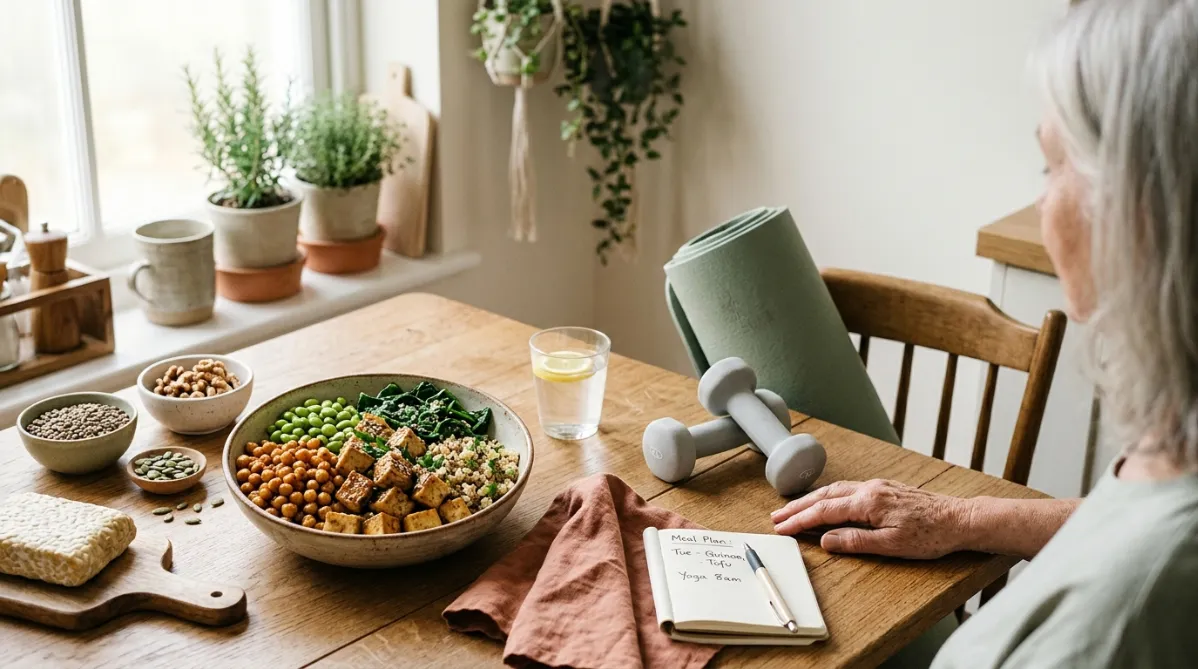
A landscape editorial photograph of a sunlit kitchen table, shot from a slightly elevated three-quarter angle. On the left, a rustic ceramic bowl holds a warm plant-based protein meal: roasted chickpeas, marinated tofu cubes, edamame, quinoa, and wilted greens, topped with toasted sesame seeds. Around it are small dishes of lentils, walnuts, pumpkin seeds, and a block of tempeh on a wooden board. On the right, a pair of weathered hands belonging to an older adult with silver hair, partially visible and softly out of focus, rests beside a pair of light dumbbells and a rolled sage-green yoga mat leaning against a chair. A linen napkin, a glass of water with a lemon slice, and a small handwritten notebook with a pen suggest careful planning. Soft morning light streams through a large window on the left and casts gentle long shadows across the pale oak tabletop. The color palette is muted and earthy: warm cream, sage green, terracotta, soft mustard, and natural wood tones. The background has shallow depth of field, with blurred shelves of herbs in pots and a few hanging plants. The mood is calm, hopeful, and health-focused, in the style of a modern lifestyle magazine or science journal feature, with clean composition, generous negative space in the upper right for headline text, and a subtle film-like grain. No text, no logos, no futuristic elements.
nutrition

Passer au véganisme à 65 ans et plus : perte de 1,15 kg de masse maigre en 12 semaines

BY DR. GYMBRO ·

Un essai randomisé de 12 semaines chez 72 adultes de 65 ans et plus a montré que passer au véganisme sans planifier son apport en protéines leur a coûté 1,15 kg de masse maigre. Le groupe omnivore est resté stable. L’ajout d’entraînement en résistance a limité la perte à 0,62 kg, ce qui aide beaucoup mais n’efface pas la diminution. Le vrai coupable était une baisse d’environ 20 à 28 g de protéines par jour, et non les plantes elles‑mêmes. Voici ce que montrent les données et comment protéger vos muscles avec un régime à base de plantes.
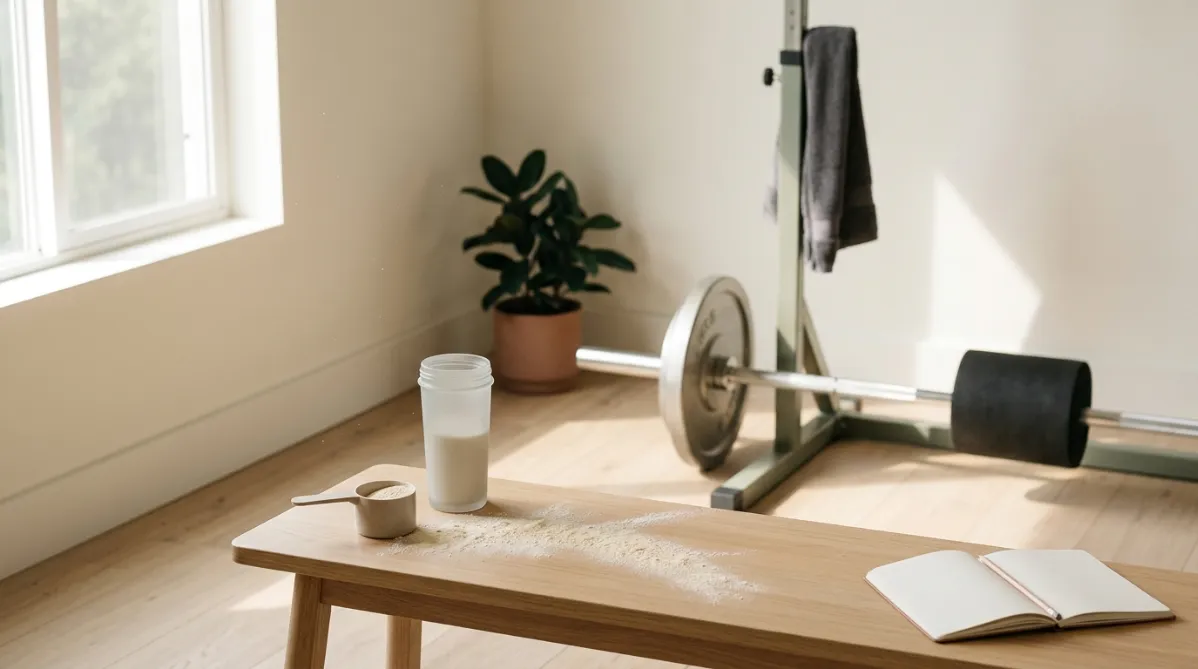
A wide, softly lit editorial photograph of a minimalist home gym corner with pale oak flooring and a warm off-white wall. In the foreground on a light wooden bench sits a matte ceramic scoop resting beside a simple frosted glass shaker bottle, with a delicate dusting of fine cream-colored protein powder spilled across the wood in a natural, casual arc. In the soft-focus midground, a loaded barbell rests on a squat rack with brushed steel plates, and a neatly folded charcoal towel hangs over the rack's upright. To the right, a small open notebook with a pencil lies on the bench, suggesting tracked training logs, with no legible text. Morning sunlight streams diagonally through a large window on the left, casting long gentle shadows and a warm golden glow across the scene, with subtle dust motes floating in the light. The color palette is muted and modern: sage green, warm sand, soft terracotta, and cream, with a single accent of deep forest green from a potted plant in the background corner. Shallow depth of field, crisp detail on the powder and scoop, creamy bokeh on the barbell. Shot as if with a 50mm lens at f/2, natural film-like grain, clean negative space on the upper right for headline overlay. The mood is calm, thoughtful, and science-minded, with a contemporary wellness magazine aesthetic, realistic and tactile, with no people, no logos, and no text.
nutrition

La poudre de protéine augmente-t-elle la force ? 23 essais dévoilent le hic

BY DR. GYMBRO ·

Ajouter de la poudre de protéine à votre entraînement rend‑il vraiment plus fort ? Une méta‑analyse de 2026, portant sur 23 essais randomisés et 611 jeunes adultes, a trouvé un avantage moyen de 7,4 kg au squat et de 2,6 kg au développé couché. Le bénéfice au squat était surtout présent dans les programmes de 12 semaines ou moins et dans les essais où la protéine était prise autour des séances et avant le coucher. Le signal lié au timing était toutefois marginal, aucune dose optimale n’a été établie, et les auteurs soulignent que le gain est conditionnel, pas universel. Voici ce que les données soutiennent et ce qu’elles ne soutiennent pas.
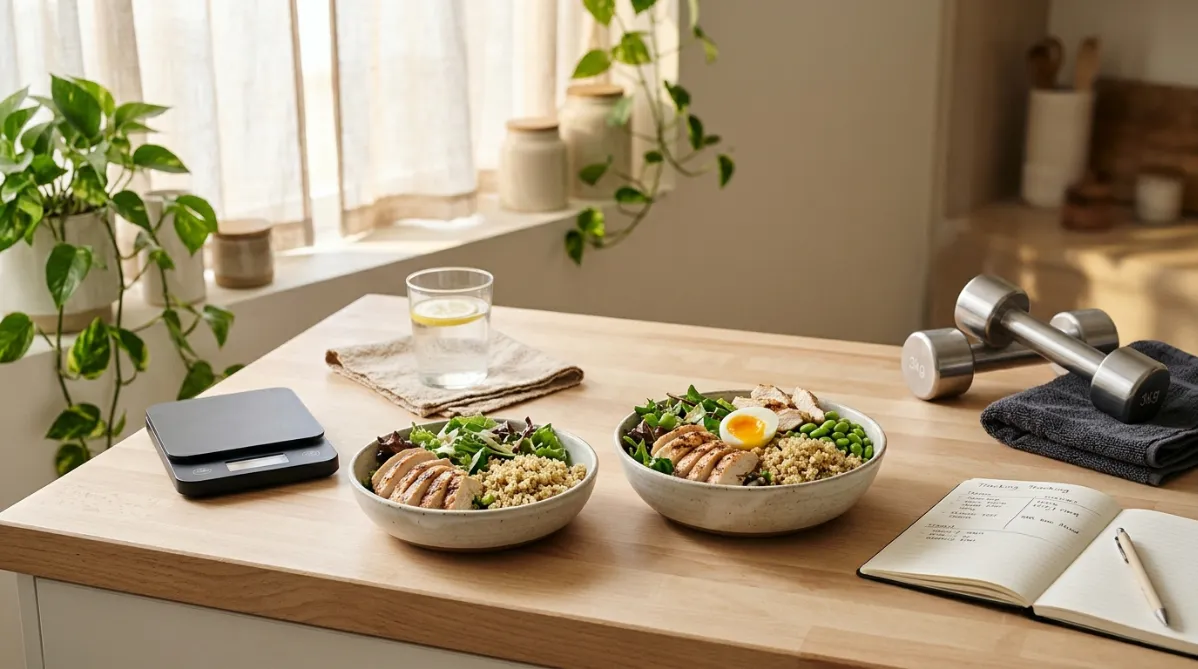
A wide landscape editorial photograph of a clean, sunlit kitchen counter in soft natural morning light, styled like a modern wellness journal cover. In the foreground, two matching ceramic bowls sit side by side on a pale oak butcher block. The left bowl holds a modest portion of sliced grilled chicken breast, quinoa, and greens. The right bowl holds a noticeably larger, double-sized portion of the same ingredients, with extra chicken, a soft-boiled egg, and edamame. The contrast in portion size is clear but elegant. Beside the bowls are a matte black digital kitchen scale, a tall glass of water with a lemon slice, and a small linen napkin in warm oatmeal tone. A pair of sleek brushed-steel dumbbells rests slightly out of focus on the counter's edge, and a folded charcoal gym towel sits next to them. In the soft-focus background, a large window with sheer curtains lets in diffused golden light, and a trailing green pothos plant adds an organic touch. A small, minimal notebook with a pen lies open to the side, suggesting careful tracking. The color palette is muted and cohesive: warm creams, sage green, soft terracotta, charcoal, and natural wood. Shallow depth of field, crisp focus on the bowls, gentle shadows, and subtle film-like grain. Composition follows the rule of thirds with generous negative space on the upper right for headline text. The mood is calm, thoughtful, and trustworthy, like a contemporary health and science magazine feature. There are no people, no text, and no futuristic elements.
nutrition

3,2 g/kg de protéines pendant 16 semaines : cela a-t-il endommagé les reins des pratiquants ?

BY DR. GYMBRO ·

Manger le double de protéines recommandé chez les adeptes de musculation pourrait-il nuire à leurs reins ? Une étude randomisée de 16 semaines, menée sur 44 hommes entraînés, a comparé 3,2 g/kg à 1,6 g/kg. Aucun marqueur rénal n’a montré de différence statistiquement significative, que les participants pratiquent uniquement de la musculation ou un entraînement mixte avec du cardio. En revanche, les groupes à forte teneur en protéines ont présenté de modestes hausses du BUN et de la cystatine C, ainsi qu’une légère baisse de l’eGFR, que les auteurs qualifient de « descriptif uniquement ». Voici ce que cela signifie, ce que l’étude ne peut pas conclure, et pourquoi il faut rester prudent.

A wide, editorial-style still life photographed on a pale warm-gray concrete surface in soft, diffused morning window light. On the left side, a tall clear glass filled with deep magenta-crimson beetroot juice sits beside two halved raw beetroots, their concentric rings of vivid fuchsia and purple clearly visible, with a few small green-and-red-veined leaves draped casually nearby. On the right side, a matching clear glass of cloudy white creatine solution rests next to a small matte ceramic bowl heaped with fine white powder and a minimal wooden scoop, a light dusting of powder scattered across the surface. In the center, between the two sides, a simple matte black barbell grip and a single chalk-dusted weight plate edge rise into the frame at a low angle, hinting at lifting without showing a person. The composition is split in a balanced, symmetrical way, with a subtle vertical shadow line dividing the saturated magenta tones on the left from cool, neutral whites and creams on the right. The background is softly blurred with a muted sage-green and oatmeal-toned wall, with plenty of negative space at the top for a headline overlay. Shallow depth of field, crisp focus on the glasses' condensation droplets and the textured beetroot flesh. The color palette is limited and refined: magenta, cream, charcoal, and soft sage. The mood is clean, modern, and health-journal chic, like a contemporary wellness magazine cover, with natural shadows, a tactile matte finish, and subtle film-like grain. No text, no logos, no futuristic elements.
nutrition

Jus de betterave vs créatine : qui gagne pour la musculation en 72 heures ?

BY DR. GYMBRO ·

Un essai randomisé en croisé a opposé le jus de betterave à la créatine pendant environ 72 heures de supplémentation chez des haltérophiles novices. La créatine a permis davantage de répétitions au développé couché à 80 % du 1RM, tandis que le jus de betterave s’est démarqué sur la vitesse de la barre, l’oxygénation musculaire, le pic de fréquence cardiaque et la récupération mesurée par la variabilité du rythme cardiaque. Le résumé ne précise ni les doses ni le timing, d’où ces lacunes. Voici le tableau complet et les profils susceptibles de privilégier chaque supplément.
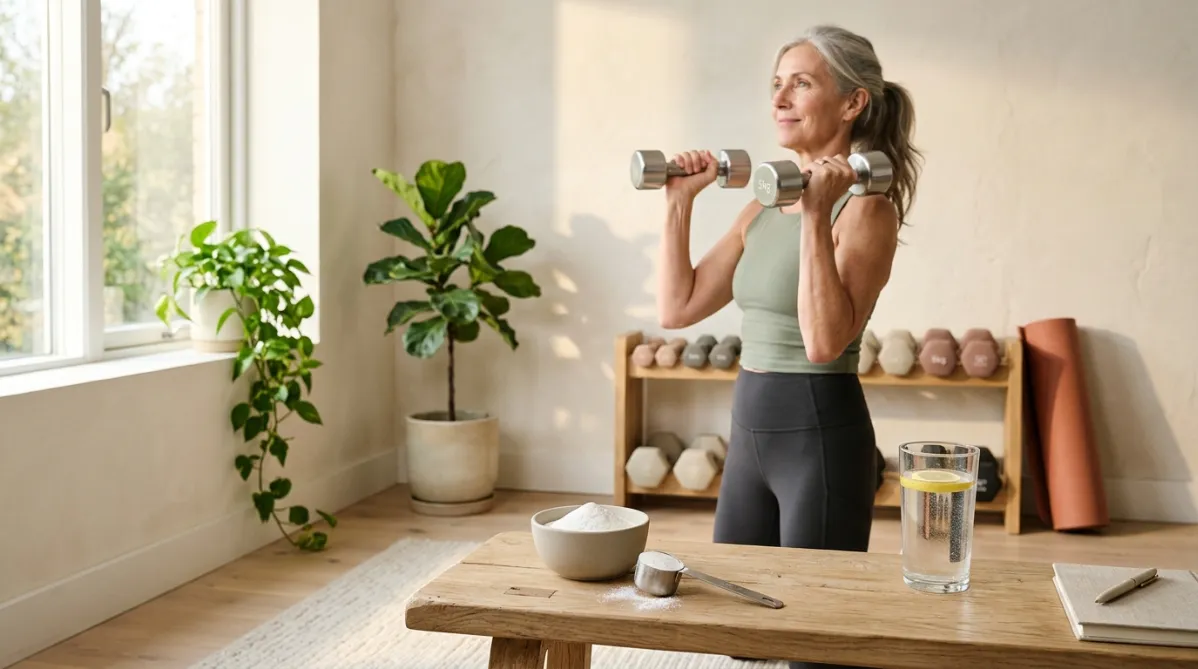
A softly lit, airy home gym corner in warm morning light, photographed in a modern editorial style. In the foreground on a pale oak wooden bench sits a small matte ceramic bowl of fine white creatine powder, with a stainless steel measuring scoop resting beside it, leveled and slightly dusted. Next to it is a tall glass of water with a lemon slice, condensation beading on the surface. In the middle ground, a woman in her late 50s with silver-streaked hair tied loosely back, wearing a sage green athletic top and charcoal leggings, is mid-motion lifting a brushed steel dumbbell in a controlled shoulder press. She looks calm and focused, with a faint smile. Her posture is strong and natural. Behind her, a tidy rack holds dumbbells in muted tones, and a rolled terracotta yoga mat leans against a cream plaster wall. A large window on the left pours diffused golden sunlight across the floor, casting long soft shadows. A leafy fiddle-leaf fig and a trailing pothos add organic green accents. A small linen notebook and a pen sit on the bench, hinting at tracking progress. The palette is warm neutrals with sage, terracotta, soft cream, and touches of brushed metal. Shallow depth of field keeps the powder and scoop crisp, with the woman slightly softened behind. Composition follows the rule of thirds, with the powder bowl in the lower left and the woman on the right, leaving breathing room at the top for a headline overlay. The mood is empowering, grounded, and quietly scientific, like a contemporary wellness magazine cover with natural film-like grain and gentle contrast.
science research

Créatine après la ménopause : le piège de la dose qui se cache derrière les gains

BY DR. GYMBRO ·

Une méta‑analyse de 2026 portant sur sept essais randomisés et 608 femmes post‑ménopausées montre que la créatine peut être bénéfique, mais seulement dans les bonnes conditions. Un apport de 5 g par jour ou plus, combiné à un entraînement en résistance, a augmenté la masse maigre de 0,37 kg et le 1RM au leg‑press de 7,5 kg. Des doses de 3 g ou moins sans entraînement n’ont produit aucun effet mesurable. La densité osseuse est restée stable et les effets indésirables étaient comparables à un placebo.
A calm, sunlit bedroom scene in soft editorial photography style, shot in landscape format. In the foreground, a rumpled bed with crisp oatmeal-colored linen sheets and a cream waffle-knit blanket, morning light spilling across it through sheer curtains. On a light oak nightstand sits a clear glass of water beside a small ceramic bowl holding a loose scoop of fine white powder, a wooden spoon resting next to it. A minimalist fabric wristband in muted sage green lies casually on the nightstand, suggesting sleep tracking without any screens or glowing displays. A slim open notebook with a pencil rests beside it, hinting at research and reflection. A potted olive branch in a terracotta vase adds an organic touch. The wall behind is warm off-white plaster with soft, gently shifting shadows of leaves. Color palette: warm sand, muted sage, soft blush, creamy white, and touches of terracotta. The mood is quiet, restorative, and thoughtful, like a modern wellness journal feature. Shallow depth of field, a soft film-like grain, natural diffused light, and generous negative space on the right side of the frame for title overlay. The composition is balanced and uncluttered, with a gentle golden-hour glow. The style is contemporary lifestyle editorial, tactile and understated, with no text, no people's faces, and no futuristic elements.
science research

La créatine n’a pas boosté le cerveau des femmes en périménopause : le sommeil, une autre histoire

BY DR. GYMBRO ·

La créatine était censée affûter le cerveau des femmes en périménopause, mais le test principal de vitesse de pensée n’a montré aucun avantage. En revanche, une petite étude exploratoire menée auprès de 51 femmes a mis en évidence une oxygénation préfrontale accrue, une amélioration de 7,4 points de la cohérence du sommeil à la sixième semaine et moins de journées de sensibilité thermique. Tous les participants, y compris le groupe placebo, ont été plus rapides au test de Stroop. La conception de l’étude, le dosage, les limites et les conflits d’intérêts des auteurs sont détaillés ici afin que vous puissiez juger de la portée des résultats.
A wide, editorial-style still life photographed in soft natural window light, set on a pale oak gym bench or a light concrete surface. In the center foreground, a tall clear glass of deep magenta-crimson beetroot juice catches the light, with a faint luminous glow along its rim and condensation beading on the outside. Two other glasses sit slightly behind it, one holding a pale, neutral-colored liquid and one empty. They suggest the placebo and no-treatment conditions without any labels. Beside the glasses, a halved raw beetroot shows concentric rings of vivid fuchsia and violet. A few whole beets with their leafy stems and dark green and burgundy leaves are scattered casually nearby.

On the right side of the frame, slightly out of focus, a matte black women's-size dumbbell and a neatly folded light gray towel rest on the bench. Behind them, the soft blur of a minimalist, airy training space includes a barbell rack and a leg press machine in muted tones. The background is bright and neutral, in warm off-white, soft sand, and light gray, so the magenta of the juice is the dominant accent color.

A small, restrained motif of four evenly spaced chalk marks or four small round weight plates arranged in a neat row on the bench hints at the "four sets" of the trial. A few drops of beet juice have splashed onto the surface, forming a tasteful organic pattern.

The composition follows the rule of thirds, with the glass of juice on the left third and open negative space on the right for headline text. Shallow depth of field, crisp focus on the glass and beet, subtle film-like grain, and a calm, modern, trendy magazine aesthetic. The palette is magenta, deep burgundy, sage green, cream, and soft gray. The mood is quiet, skeptical, and scientific without any laboratory imagery, with clean lines and an elegant, minimal feel.
supplements

Le jus de betterave n’augmente aucune répétition chez les femmes entraînées en résistance

BY DR. GYMBRO ·

Le jus de betterave est souvent présenté comme un stimulant naturel des répétitions, mais une étude randomisée, en double‑aveugle et croisée, menée chez des femmes pratiquant la musculation n’a montré aucun bénéfice. Seize participantes ont consommé du jus riche en nitrate (12,8 mmol), un placebo ou rien avant quatre séries de développé couché et de presse à cuisses jusqu’à l’échec. Le nombre total de répétitions, l’effort perçu, la fréquence cardiaque, la pression artérielle et le lactate n’ont pas varié de façon statistiquement significative. Ces résultats n’infirment pas définitivement le jus de betterave, mais ils suggèrent que son effet ergogénique pourrait être limité pour cette population et ce protocole.
A softly lit, minimalist gym interior photographed in a modern editorial style. In the foreground, a muscular lifter in a fitted charcoal tank top is mid-set at a cable station, forearm and shoulder muscles defined, a light dusting of chalk on their hands. The frame is shot at a slight low angle with shallow depth of field, so the background gym equipment melts into creamy blur. On a matte concrete-textured bench beside them sits a clean, unbranded matte-white scoop container of white powder, a stainless steel shaker bottle, and a small analog stopwatch, arranged with careful, magazine-style composure. A few loose grains of white powder catch the light on the bench surface.

Warm golden late-afternoon sunlight pours through tall industrial windows on the left, creating long diagonal light streaks, gentle lens flare, and a subtle haze of floating chalk dust that glows in the beams. The palette is restrained and sophisticated: warm sand, soft cream, muted terracotta, deep charcoal, and a single accent of sage green from a potted plant on a shelf. Rows of neatly racked dumbbells in dark metal repeat in the mid-ground, adding rhythm and depth.

The composition follows the rule of thirds: the lifter and supplement still life occupy the right two-thirds, while the left third remains calm, with a smooth, softly blurred wall and window light, leaving generous negative space for headline text. Subtle film grain, natural color grading, and a slightly desaturated, high-end lifestyle photography look evoke a contemporary health and science journal. No text, logos, or graphics. Clean, aspirational, grounded, and tactile, with a sense of focused effort and quiet intensity.
nutrition

La bêta‑alanine fonctionne enfin pour les haltérophiles — si vous vous entraînez ainsi

BY DR. GYMBRO ·

La bêta‑alanine a longtemps fait couler des avis mitigés en musculation, mais une nouvelle étude randomisée contrôlée pourrait en éclaircir les raisons. Quand des pratiquants entraînés ont pris 6,4 g par jour pendant quatre semaines, leurs répétitions totales ont augmenté de 17,3 % sur les drop‑sets et de 18,2 % sur les bi‑sets, alors que le groupe placebo n’a montré aucune amélioration significative. La perception de l’effort, la motivation et l’humeur restent inchangées, ce qui indique que le gain était purement physique. Voici la dose, la période de charge, à qui ces données s’appliquent et qui devrait rester sceptique.
A bright, airy overhead flat-lay on a pale oak wooden table in soft morning daylight. At the center, three matching ceramic glasses in a neat row, each holding a creamy shake in a slightly different tone: one warm golden-yellow, one soft sage green-beige, one pure milky white. Beside the glasses, small shallow ceramic bowls hold the raw sources: dried yellow corn kernels, split green peas, and a small pitcher of fresh milk. A few fresh corn husks and a single ear of corn with pale green leaves are arranged diagonally across the left side of the frame, while a sprig of fresh herbs adds a touch of green. On the right, a pair of matte sage-green dumbbells and a rolled linen towel suggest light resistance exercise, placed with calm, editorial restraint. A linen napkin, a wooden scoop dusted with fine powder, and a few scattered kernels add natural texture. The color palette is warm cream, butter yellow, muted sage, and soft white, with gentle natural shadows falling to the lower right. Shallow depth of field, clean negative space at the top for headline overlay, minimalist modern magazine styling, crisp food-photography look, subtle film-like grain, wide landscape composition.
nutrition

La protéine végétale qui égalise le lait pour la synthèse musculaire

BY DR. GYMBRO ·

On pense généralement que les protéines végétales sont moins efficaces que le lait pour développer les muscles, mais une nouvelle étude menée chez des seniors montre que la protéine de maïs ne fait pas exception. Dans un essai randomisé portant sur 48 volontaires en bonne santé d’environ 68 ans, 20 g de protéine de maïs, un mélange pois‑maïs, et la protéine du lait ont tous stimulé la synthèse des protéines musculaires bien au‑delà du placebo, sans différence notable entre les groupes. L’exercice de résistance a amplifié la réponse dans chaque groupe. Voici la dose, les chiffres, les profils auxquels cela peut convenir et les mises en garde avant de changer votre shake.
A softly lit, minimalist strength-training studio photographed in a modern editorial style. In the foreground, a matte black barbell loaded with weight plates rests on a light oak platform, with fine chalk dust floating in warm morning light. Beside it on a pale concrete bench sits a simple ceramic scoop of white creatine powder, with a small spill of fine crystals catching the light, next to a minimal frosted glass jar with no label. A matte sage-green shaker bottle and a folded cream towel sit nearby. In the soft-focus background, tall windows let in diffused golden sunlight, casting long, gentle shadows across the floor. A rack of neatly arranged dumbbells is blurred in muted charcoal tones.

The color palette is calm and sophisticated: warm off-white, sand, sage green, soft charcoal, and touches of terracotta. A small open notebook with a pencil lies on the bench, suggesting research and data tracking, with abstract hand-drawn bar graph lines faintly visible on the page but not legible. The composition follows the rule of thirds, with the barbell and powder on the left and generous negative space on the right for headline text. Shallow depth of field, crisp textures on the metal knurling and powder grains, subtle film grain, and a contemporary wellness-magazine look. Clean, airy, and editorial, with a grounded, scientific yet approachable mood. Landscape 16:9 composition.
science research

Créatine + Musculation : Plus de force, aucun dosage ne se démarque

BY DR. GYMBRO ·

Une méta‑analyse portant sur 63 études et 1 489 participants a évalué l’effet supplémentaire de la créatine lors d’un entraînement en résistance. Les gains de force étaient modérés et homogènes pour le haut et le bas du corps, tandis que l’augmentation de masse maigre était plus discrète et la masse grasse ne variait pas de façon significative. La surprise : le protocole de dosage, la dose quotidienne ou la phase de charge n’ont eu aucun impact notable. L’âge apparaît comme le seul facteur exploratoire influençant l’ampleur des bénéfices, les plus jeunes affichant les meilleurs effets de force. Voici les conclusions de l’étude et ce qu’elle ne permet pas encore d’affirmer.
A warm, sunlit boutique fitness studio in soft morning light, shot in wide landscape composition. In the foreground, a woman in her late 60s with silver-white hair in a loose bun and a relaxed, confident smile holds a light dumbbell mid-curl. She wears a sage green athletic top and charcoal leggings. Her posture is strong and graceful. Beside her, slightly out of focus, a second older woman with short gray hair performs a bodyweight squat. Both are part of a small circuit training class.

On a pale oak wooden bench in the sharp foreground, a minimalist glass tumbler holds a cloudy, pale lemon-colored drink. Next to it is a small ceramic dish of white powder with a tiny wooden scoop, a folded linen towel, and a matte white water bottle. Scattered nearby are a few fresh lemon slices and a sprig of mint for a clean, editorial still-life touch.

The studio has tall arched windows with sheer white curtains, letting in golden diffused light that creates long soft shadows on a light blonde wood floor. Background details include neatly arranged pastel-colored kettlebells and rubber resistance bands in muted terracotta, sand, and sage hanging on a minimalist wall rack. A leafy fiddle-leaf fig plant sits in a terracotta pot in the corner.

The color palette is calm and modern: warm creams, soft sage green, terracotta, muted peach, and gentle gold highlights. Shallow depth of field with a creamy bokeh background, shot as if on a 50mm lens at f/2. Natural film-like grain, subtle warmth, high-end wellness magazine aesthetic, clean negative space on the right side of the frame for title overlay. The mood is optimistic, vital, and grounded, celebrating healthy aging, strength, and community. Photorealistic, editorial lifestyle photography.
nutrition

Acides aminés et musculation : réduction de la myostatine chez les femmes de 65 ans et plus

BY DR. GYMBRO ·

Et si l’hormone qui freine la croissance musculaire pouvait être modulée après 65 ans ? Dans un essai randomisé de 12 semaines mené chez 96 femmes âgées en bonne santé, l’alliance d’un entraînement en circuit et de 5,5 g d’acides aminés essentiels deux fois par jour a généré la plus forte hausse du ratio follistatine / myostatine. Le groupe combiné a également gagné de la masse musculaire et affiché une diminution plus marquée des marqueurs inflammatoires. Voici le dosage exact, le protocole, le public‑cible, les contre‑indications et les limites de l’étude.
A softly lit, editorial-style flat lay on a pale oat-colored linen surface, shot from slightly above at a gentle angle. On the left, a matte ceramic bowl in warm cream holds a small mound of fine white collagen peptide powder, with a wooden scoop resting beside it and a light dusting of powder on the linen. In the center, a tall frosted glass of water with a faint swirl of dissolving powder catches soft window light. On the right, a single brushed-steel dumbbell with a muted charcoal grip sits partly in frame, with a rolled sage-green gym towel beside it. A small, clean, minimalist notebook lies open near the bottom edge with a thin pen and a few handwritten lines and a simple hand-drawn bar chart showing two bars of different heights. This subtly hints at data and scrutiny without any legible text. A sprig of dried eucalyptus adds an organic touch in the upper corner.

The light is warm morning sunlight from the left, producing long, soft shadows and a gentle golden glow, with a shallow depth of field that blurs the background edges into creamy neutrals. The palette is restrained and modern: oat, cream, sage, soft terracotta, and charcoal accents. The composition leaves open negative space on the upper right for title overlay. The overall mood is calm, thoughtful, and wellness-meets-science, in the style of a contemporary health and nutrition magazine, with crisp textures, natural grain, and a clean, trendy, slightly muted film-like finish.
science research

Peptides de collagène triplent les gains en collagène musculaire I : quel est le piège ?

BY DR. GYMBRO ·

Douze semaines de musculation intensive combinées à 15 g de peptides de collagène spécifiques par jour ont augmenté la teneur en collagène de type I du quadriceps de 29,8 % contre 9,9 % pour le groupe placebo. Résultat confirmé par biopsie dans le cadre d’un essai randomisé – rare dans le domaine des compléments alimentaires. Mais le résumé ne mentionne aucun gain de force ou de volume, les collagènes de type III et IV ont progressé dans les deux groupes, et un co‑auteur détient des brevets liés au collagène. Voici ce que montre réellement l’étude, ce qu’elle ne démontre pas et qui pourrait s’y intéresser.
A serene, softly lit bedside scene in a modern minimalist bedroom, photographed in a warm editorial style. On a pale oak nightstand sit two matching frosted glass tumblers of creamy white protein shake, one slightly closer to the camera in sharp focus, the other gently blurred behind it. Beside them rests a small analog alarm clock with a matte cream face, its hands showing a late-evening hour, and a single ceramic scoop dusted with fine white powder on a linen coaster. A folded gray gym towel and a pair of worn sneakers are tucked at the edge of the frame, hinting at an earlier workout.

In the background, a neatly made bed with textured oatmeal linen bedding and a rumpled cream throw blanket glows under the amber light of a small paper-shade lamp. A sheer curtain filters deep indigo twilight from a window, with a faint crescent moon visible. The palette is muted and calming: warm cream, soft sand, dusty blue, and touches of terracotta from a small clay vase holding a dried pampas stem.

Shallow depth of field, gentle film-like grain, soft window light mixing with the warm lamp glow, long soft shadows across the wood grain. Composition follows the rule of thirds with the glasses on the left third and open negative space on the right, suitable for headline overlay. The mood is quiet, thoughtful, and contemporary, like a lifestyle and science feature in a trendy wellness journal. Clean, natural, tactile, with no text, no people, and no futuristic elements.
nutrition

Le lactosérum avant le coucher réduit de moitié le temps d'endormissement, la caséine non

BY DR. GYMBRO ·

Tout le monde considère la caséine comme la protéine de nuit, mais une petite étude randomisée, en double‑aveugle et en crossover, montre un résultat surprenant. Après une séance de musculation, 40 g de whey pris 30 minutes avant de se coucher ont fait chuter le temps médian d’endormissement à 9 minutes contre 19 minutes avec un placebo glucidique, tout en réduisant les courbatures du lendemain. La caséine n’a pas dépassé le contrôle de façon significative. À noter : l’échantillon ne compte que neuf participants, et le lactosérum n’a pas été statistiquement supérieur à la caséine en comparaison directe.
A wide, softly lit editorial still life on a pale warm-gray concrete surface, shot from a slightly elevated three-quarter angle. In the center-left, two matte ceramic scoops sit side by side. One holds fine ivory whey powder, the other holds slightly coarser, pale golden collagen peptide powder. A small, elegant dusting of both powders spills between them and blends into a soft swirl. Behind them, three minimalist cream and sage-green supplement tubs with no legible text stand in a staggered row, with a frosted glass shaker bottle of creamy liquid beside them.

On the right, a brushed-steel barbell plate and a compact chalk-dusted kettlebell rest slightly out of focus, suggesting resistance training. Pale wisps of chalk hang in the air. A folded charcoal gym towel and a pair of worn leather lifting straps lie in the foreground. A single cross-section of a clean white bone model, a stylized vertebra, rests on a small oak block at the far right. It subtly signals the bone-density theme without looking clinical.

Natural window light enters from the left, casting long, gentle shadows and a warm highlight on the powders. The palette is muted and modern: oatmeal, bone white, sage green, soft charcoal, and touches of warm amber. Shallow depth of field keeps the scoops tack-sharp and melts the background into creamy blur. Leave generous negative space in the upper right for headline overlay. The overall feel is a premium health and science journal cover: clean, tactile, minimalist, with fine film-like grain and a calm, editorial mood.
nutrition

Le whey + collagène surpasse les deux séparément chez les bodybuilders — mais il y a un piège

BY DR. GYMBRO ·

Mélanger 30 g de whey avec 10 g de collagène a fait mieux que la whey seule, le collagène seul ou le placebo sur tous les paramètres mesurés dans un essai de huit semaines chez des hommes entraînés en musculation. Cette association a ajouté 2,66 kg de muscle (BIA), a accru la densité minérale osseuse lombaire et a amélioré le squat, le développé couché ainsi que les marqueurs de remodelage osseux. Le collagène seul a eu un effet sur les os, la whey seule sur le muscle. Mais avec seulement 40 participants, des apports protéiques inégaux et une hausse de densité osseuse inattendue, il faut rester prudent.
A wide landscape editorial photograph of a bright, airy sunlit living room with pale oak floors and a large window with sheer linen curtains. In the center, a woman in her late 50s with silver-streaked hair, wearing soft sage-green athletic wear, rises from a simple wooden chair, caught mid-motion with a calm, determined expression. Her hands are lightly extended forward for balance. Beside her on a small round oak side table sits a ceramic mug of tea, a glass of water, and a small matte white jar with a wooden scoop resting beside it, a few fine white crystalline grains scattered on the tabletop. In the soft-focus foreground, a pair of light-gray dumbbells and a rolled terracotta-colored yoga mat rest on the floor. A trailing green pothos plant spills from a shelf in the background, with a stack of books and a small analog kitchen timer nearby.

The color palette is warm and muted: cream, sage green, soft terracotta, natural wood, and gentle morning-gold light. Light streams diagonally across the scene, creating long soft shadows and a subtle glow on the woman's shoulders. Shallow depth of field blurs the background gently, while the woman and the table remain crisp. The composition follows the rule of thirds, with the woman on the right and generous negative space on the left, suited for headline overlay. The mood is hopeful, grounded, and modern, like a high-end wellness magazine or a trendy health journal. Natural film-like grain, soft contrast, and a slight matte finish give it a contemporary lifestyle photography feel. There are no futuristic elements, no digital overlays, and no text.
science research

La créatine aide les femmes souffrant de douleurs au genou à se lever plus facilement – mais pas pour les raisons que vous imaginez

BY DR. GYMBRO ·

La créatine est habituellement associée aux jeunes haltérophiles, mais une étude randomisée en double‑aveugle l’a testée chez des femmes ménopausées atteintes d’arthrose du genou. Après 12 semaines d’entraînement des jambes, le score au test timed‑stands du groupe créatine est passé de 15,7 à 18,1, tandis que celui du groupe placebo est resté quasi inchangé (15,0 à 15,2). La créatine a également amélioré la raideur, la masse maigre des membres inférieurs et la qualité de vie. En revanche, le soulagement de la douleur et la force maximale au leg‑press n’étaient pas supérieurs à ceux du placebo. Voici ce que montrent les chiffres et à qui cela pourrait réellement profiter.
A clean, editorial still life shot from a slightly elevated angle on a pale oatmeal-colored stone countertop, lit by soft natural window light from the left that casts long, gentle shadows. In the center sits an open, unlabeled amber glass supplement bottle on its side, with a small scatter of cream and white capsules spilling toward the viewer. Beside it, a matte ceramic dish holds a few capsules and a pinch of coarse sea salt. To the right, a neatly arranged group of whole foods that are natural zinc and magnesium sources: halved oysters on a small slate board, a small bowl of pumpkin seeds, a handful of raw cashews, and a few dark green spinach leaves. In the left foreground, a worn leather gym notebook lies open with minimal handwritten tally marks and a simple hand-drawn flat line graph in dark ink, with a brass pen resting across it. A single chrome dumbbell handle edges into the frame at the far left, softly out of focus, and a folded charcoal gym towel sits at the top right corner. The palette is warm and muted: sand, cream, sage green, amber, and charcoal, with a subtle terracotta accent in the ceramic dish. The depth of field is shallow, with the capsules and bottle in crisp focus and the background gently blurred into a soft beige haze. The mood is calm, thoughtful, and skeptical, like a modern health and science magazine feature. The composition leaves generous negative space on the upper right for headline text. The texture is tactile and fine-grained, with a subtle film-like softness and natural contrast. Wide landscape 16:9 framing.
science research

ZMA et testostérone ? 8 semaines chez des haltérophiles n’ont rien donné

BY DR. GYMBRO ·

Le ZMA a bâti sa réputation sur des affirmations audacieuses concernant la testostérone, un lien avec le scandale BALCO et une première étude de football qui semblait prometteuse. Des chercheurs ont ensuite testé le produit de façon plus stricte : 42 hommes entraînés, en double‑aveugle, pendant huit semaines d’entraînement standardisé. Le taux sérique de zinc a légèrement augmenté, mais sans différence significative, et aucun changement n’a été observé sur les hormones, la force, la composition corporelle, l’endurance ou la puissance anaérobie. Voici ce que l’étude a réellement montré, pourquoi la carence reste une question à part, et ce que les pratiquants devraient plutôt faire.
A wide, landscape editorial photograph of a clean, sunlit kitchen counter or pale stone tabletop, styled like a modern wellness magazine spread. Two scoops sit side by side on a matte ceramic surface. The left one is a plain, humble wooden scoop heaped with fine white creatine powder. The right is a glossy, ornate brushed-gold scoop holding the same white powder, which hints at "premium" branding. Behind each scoop stands a tub. The left tub is minimal, matte, and cream-colored with simple sans-serif lettering and no readable words. The right tub is sleek black with metallic gold accents and an overly polished look. A few fine grains of powder are scattered across the surface, catching the light.

The composition uses a shallow depth of field. The foreground scoops are crisp, and the background softly blurs into a warm neutral palette of oatmeal, soft sage green, and muted terracotta. Soft morning window light comes in from the left, casting long, gentle shadows and a subtle highlight along the scoops' edges. A small price tag shape, blank and unmarked, sits near the gold scoop, with a slightly crumpled paper texture to suggest the "pricey" angle without any text. A glass of water with condensation and a folded linen napkin sit at the edge of the frame. A single green sprig or eucalyptus stem adds a natural accent.

The overall mood is calm, intelligent, and quietly skeptical, with the plain option feeling confident and the flashy one a bit overdressed. The color grading is soft and slightly desaturated with creamy highlights, and there is fine film grain. The layout leaves generous negative space on the right third for a headline overlay. It looks like a high-end lifestyle and science journal cover, with a minimalist, tactile, trendy feel and no futuristic or sci-fi elements.
science research

Créatine éthyl‑ester vs monohydrate : la forme onéreuse qui ne tient pas la route

BY DR. GYMBRO ·

Les industriels de compléments aiment vanter les mérites d’une « créatine avancée » supposée mieux absorbée que la forme classique. Un essai randomisé en double‑aveugle de 2009 a comparé la créatine éthyl‑ester, la créatine monohydrate et un placebo chez 30 hommes non entraînés pendant sept semaines d’entraînement intensif. Le CEE a entraîné une diminution de la créatine sérique et une hausse marquée de la créatinine sérique, signe d’une dégradation accrue. La créatine musculaire a augmenté de façon similaire dans les deux groupes créatine, mais la force, la puissance et la composition corporelle n’ont différé d’aucun groupe. Conclusion : évitez la forme « premium » et restez simple.
A wide, editorial-style still life photographed from slightly above on a pale oak surface in soft morning window light. At the center, a small matte white supplement tub with a plain, unlabeled front sits tipped on its side, spilling a modest pile of fine white powder across the wood. Beside it, a wooden scoop rests in the powder, and a few white capsules are scattered in a loose arc. To the left, a clean glass of water catches the light and throws a delicate caustic shadow. To the right, a neatly arranged group of whole foods sits in contrast: two brown eggs, a small wedge of salmon fillet on parchment, a handful of raw almonds, and a sprig of rosemary. A matte black steel dumbbell handle is partly visible at the top edge of the frame, grounding the fitness theme. In the lower foreground, a slim, open linen-bound notebook holds a hand-drawn line graph with a single line trending gently downward, a thin ink pen lying across the page. The palette is muted and warm: cream, soft sage green, pale oak, charcoal accents, and a touch of terracotta from a ceramic dish holding the almonds. Shallow depth of field blurs the background, a softly lit minimalist kitchen counter with a hint of a plant leaf. The mood is calm, thoughtful, and scientific without being clinical, like a cover image for a contemporary health and nutrition journal. Natural shadows, subtle film grain, and generous negative space on the upper left leave room for a headline overlay. Crisp focus on the powder and scoop, with refined, understated composition and no text or logos visible.
nutrition

L’acide D‑aspartique diminue la testostérone à 6 g/j chez les haltérophiles entraînés

BY DR. GYMBRO ·

L’acide D‑aspartique est présenté comme un booster naturel de testostérone, mais une étude contrôlée portant sur 24 haltérophiles a montré que 6 g/jour font réellement baisser la testostérone totale et libre. La dose de 3 g, que l’on retrouve sur de nombreuses étiquettes, n’a aucun effet mesurable. Un essai de trois mois ultérieur n’a mis en évidence aucun gain de force ni de masse musculaire. Voici ce que révèle l’étude, pourquoi les athlètes entraînés peuvent réagir différemment des personnes sédentaires, et où votre argent serait mieux dépensé.
A bright, minimalist editorial still life shot from a slightly elevated three-quarter angle on a pale oat-colored stone countertop, bathed in soft natural window light with gentle long shadows. In the center sit two matching matte white supplement scoops, side by side. One is heaped with fine white crystalline powder, the other holds an almost identical pile, so the viewer is invited to compare them. Beside them are two simple frosted glass tumblers of cloudy water, each with a small whisper of powder swirling at the bottom. A third glass of clear water sits slightly apart, as a quiet nod to the placebo.

Scattered around the scene are fresh, sliced watermelon wedges with vivid coral-pink flesh and pale green rinds, and a few sliced green apples with crisp white interiors, hinting at the natural sources of citrulline and malic acid. A small brushed-brass measuring spoon and a minimalist matte sage-green shaker bottle rest at the edge of the frame. Off to one side, a clean ceramic dish holds a few loose grains of powder, and a slim linen notebook with a pencil lies open to a blank page, suggesting data and study notes without any legible text.

The color palette is soft and modern: warm cream, blush coral, sage green, and touches of brass, with a faintly blurred background of a sunlit kitchen or studio with a pale plaster wall. Shallow depth of field keeps the scoops tack sharp while the background melts into a creamy bokeh. The composition leaves generous negative space on the left third of the frame for a title overlay. The overall mood is calm, trustworthy, and trendy, like a contemporary wellness and science journal cover, with crisp detail, subtle film-like grain, and a clean, airy, balanced feel.
science research

Citrulline Malate vs L‑Citrulline : le malate est‑il vraiment important ?

BY DR. GYMBRO ·

Citrulline malate ou L‑citrulline pure ? Un protocole randomisé, double‑aveugle, contrôlé par placebo et en cross‑over, mené chez 43 adultes entraînés, a comparé les deux formes à un placebo, et la réponse pourrait vous faire économiser. Aucun des deux n’a amélioré la force, la puissance, la performance au saut, le nombre de répétitions ni la perception de l’effort, et le malate n’a rien apporté de supplémentaire par rapport à la même dose de citrulline. Voici ce que l’étude a mesuré, les doses employées et les réserves qui empêchent de tirer une conclusion définitive. Si vous hésitez encore sur le produit à mettre dans votre shaker, commencez par lire ceci.
A wide, editorial-style flat lay photographed from above on a pale warm-gray concrete surface, lit by soft natural window light with gentle long shadows. On the left, two matte ceramic bowls in muted sage green and cream sit side by side. One holds fine white crystalline powder, the other holds slightly coarser off-white powder. Between them, a small brass measuring scoop rests on the surface, dusted with powder. Behind the bowls, two simple amber glass jars with minimal cream labels and no legible text stand slightly out of focus.

On the right side, a pair of chalk-dusted black hex dumbbells and a worn leather lifting strap curve across the frame. A folded charcoal gym towel sits beneath them. A rumpled matte-black shaker bottle lies on its side near the top edge. A slice of watermelon, the natural source of citrulline, sits on a small white ceramic plate in the lower center. Its vivid coral-pink flesh and dark seeds add a saturated pop of color against the neutral palette. A few loose watermelon seeds and a scattering of white powder dust trail across the surface toward the dumbbells, tying the composition together.

In the lower left corner, an open notebook with blank cream pages holds a slim silver pen and a minimalist analog stopwatch. A thin line of hand-drawn tally marks suggests counted reps, with no readable words or numbers.

The palette is restrained and contemporary: warm grays, sage, cream, charcoal, and amber, with the watermelon's coral-pink as the single bright accent. The mood is calm, clean, and precise, like a modern wellness or science-journal feature. Shallow depth of field keeps the powder bowls and watermelon crisp while the background items soften slightly. Generous negative space across the upper center leaves room for a headline overlay. The photograph looks high-end and tactile, with a subtle film-grain finish.
nutrition

L‑citrulline vs citrulline malate : l’essor de l’endurance du haut du corps

BY DR. GYMBRO ·

Tout le monde débat pour savoir si la L‑citrulline pure ou la citrulline malate est la plus efficace, mais une étude récente de six semaines a révélé un résultat surprenant. Les deux formes ont dépassé le placebo sur le nombre de répétitions à l’échec du haut du corps et ont augmenté les métabolites de l’oxyde nitrique. Aucun effet n’a été observé sur la force maximale (1RM) et les effets sur les jambes restent limités à une tendance. Avec seulement 33 hommes entraînés, il s’agit davantage d’une indication prometteuse qu’une preuve définitive. Voici ce que les doses, le timing et le protocole impliquent pour votre entraînement.
A wide, editorial-style flat lay photographed from slightly above on a pale oak gym bench with a soft matte finish. On the left, a small white ceramic cup of black coffee sits on a matching saucer, with a thin curl of steam rising and catching warm window light. Beside it is a second, slightly larger handleless stoneware mug in muted sage green, also filled with coffee, so the pair suggests one to two cups. In the center-right foreground rests a sleek matte-black steel barbell plate, partly overlapping a brushed-steel dumbbell with fine knurling. A folded charcoal gym towel and a clean white chalk-dusted wrist strap lie casually to one side. A small scatter of whole roasted coffee beans spills across the bench in front of the cups, glossy and deep brown. Near the bottom edge, a minimalist analog kitchen scale in soft cream with a thin black needle hints at precise dosing, without any readable numbers or text.

Soft morning sunlight streams in from the upper left, creating long, gentle shadows and a warm golden glow against cool neutral tones. The background is a softly blurred, airy home gym or boutique training studio with out-of-focus squat rack uprights, pale concrete walls, and a leafy green plant in a terracotta pot adding a touch of organic color. The palette is restrained and modern: warm cream, espresso brown, charcoal, sage green, and hints of brushed silver. Shallow depth of field keeps the cups and beans tack sharp while the background melts into creamy bokeh. The composition leaves generous negative space on the right third for a title overlay, with a balanced, calm, premium magazine feel, like a contemporary wellness and sports science journal. High-resolution, natural color grading, subtle film grain, realistic textures on ceramic, steel, and coffee crema.
nutrition

Quel dosage de caféine avant de soulever ? Une méta‑analyse montre que 1–2 mg/kg suffisent

BY DR. GYMBRO ·

Le dosage habituel de caféine avant une séance de musculation est de 3 à 6 mg/kg, soit plusieurs tasses de café ou une forte dose de pré‑entraînement. Une méta‑analyse de 2022, portant sur 12 essais, a montré que même 0,9 à 2 mg/kg amélioraient la force (d ≈ 0,17), l’endurance (d ≈ 0,21) et la vitesse moyenne de la barre (d ≈ 0,56). Pour la plupart des pratiquants, cela correspond à une ou deux tasses de café. Les effets restent modestes et proviennent d’études aiguës, mais ils suggèrent qu’on peut obtenir un bénéfice comparable avec beaucoup moins de caféine.
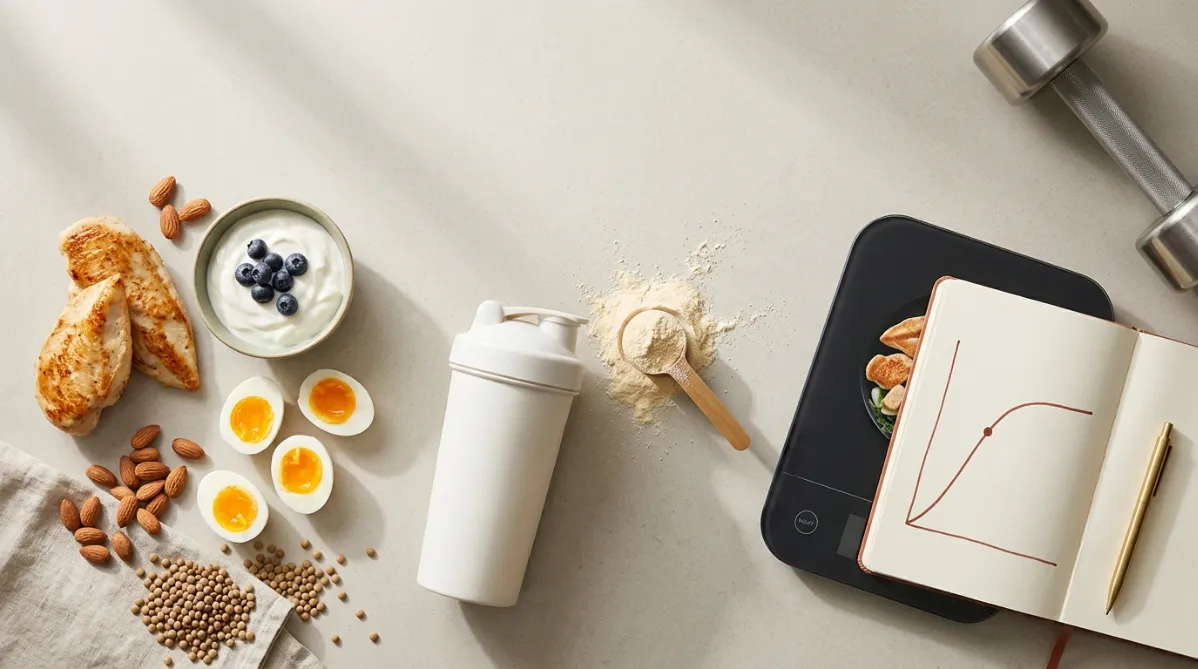
A wide, editorial flat-lay photograph shot from directly above on a pale warm-gray stone countertop, lit by soft natural morning window light with gentle diagonal shadows. On the left, a neatly arranged cluster of whole-food protein sources: two seared chicken breast slices with a golden crust, a small ceramic bowl of creamy Greek yogurt topped with blueberries, three halved soft-boiled eggs with jammy orange yolks, a handful of raw almonds, and a small pile of dried lentils scattered on a linen napkin. At the center, a matte white shaker bottle and a wooden scoop resting in a pile of fine vanilla-colored protein powder, a few grains dusted artfully across the surface. On the right, a minimalist kitchen scale in matte black displaying a portion of food, next to an open notebook with a hand-drawn curve that rises steeply and then flattens into a plateau, drawn in a deep terracotta ink pen, with a small dot marking the bend. A brass pen lies beside the notebook. A single dumbbell with a brushed steel finish sits partially in frame at the upper right corner, grounding the fitness theme without feeling gym-like. Color palette: warm cream, sage green, terracotta, soft charcoal, and butter yellow accents, with generous negative space along the top edge for title overlay. Shallow depth of field, crisp textures, subtle film grain, modern lifestyle magazine aesthetic, clean and calm composition, 16:9 landscape.
nutrition

Quelle quantité de protéines optimise réellement la prise de muscle ? Le plateau à 1,6 g/kg expliqué

BY DR. GYMBRO ·

Vous pensez qu’il faut plus de 2 g de protéines par livre de poids corporel pour développer vos muscles ? Une méta‑analyse de 49 études, portant sur 1 863 adultes en bonne santé, montre que les bénéfices plafonnent autour de 1,6 g/kg par jour. L’intervalle de confiance s’étend jusqu’à environ 2,2 g/kg, offrant ainsi une fourchette réaliste au lieu d’une dose astronomique. Les athlètes déjà entraînés tirent le plus profit de la supplémentation, tandis que l’avantage diminue avec l’âge. Voici ce que ces chiffres impliquent pour votre assiette, votre shaker et votre portefeuille.

This page is available in