Dr. Gymbro
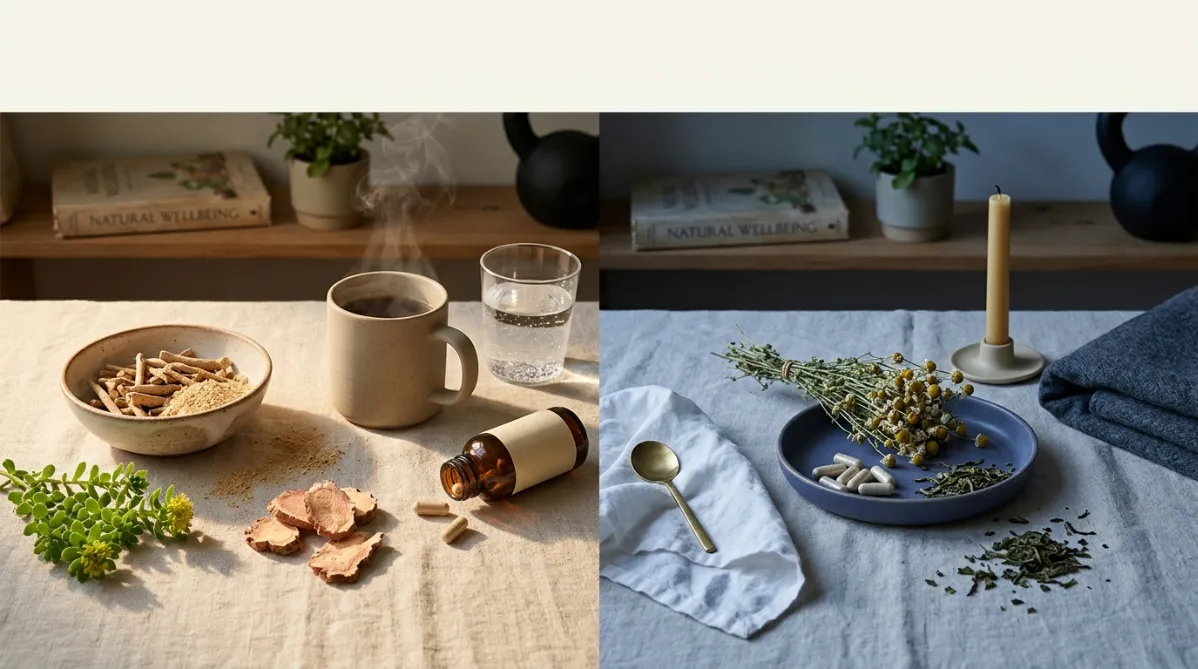
A landscape editorial still life shot from slightly above on a pale oat-colored linen surface, lit by soft morning window light with gentle long shadows. On the left, in warm golden sunlight, sits a small ceramic bowl of dried ashwagandha root pieces and a scatter of fine tan powder. Beside it are a few rough, rosy-gold slices of Rhodiola rosea root and a sprig of tiny succulent-like green leaves with yellow blossoms. A matte sand-colored stoneware mug of steaming tea and a simple glass of water stand nearby. A small amber glass bottle with a minimal unbranded label tips out two capsules.

The right side of the frame is cooler and bluer, as if dusk is arriving. It holds a muted indigo ceramic dish with a few pale capsules, a small bundle of dried chamomile flowers (the source of apigenin), and a few green tea leaves. A slim, unlit beeswax candle and a folded charcoal wool blanket suggest evening. The warm and cool halves meet softly in the center, where a rumpled white cotton napkin sits beneath a small brass spoon.

In the background, out of focus, a wooden shelf holds a worn paperback, a small potted plant, and the edge of a kettlebell in matte black, hinting at an active lifestyle. Subtle film grain, shallow depth of field, and a muted palette of cream, terracotta, sage green, and deep indigo give it a clean, modern wellness-magazine feel. Leave generous negative space in the upper third for a headline overlay. No text, no logos, no people.
Recovery

Ashwagandha e Rhodiola funzionano: lo stack serale per il sonno è inefficace

Dr. Gymbro · · 5 min read

Ashwagandha e Rhodiola funzionano: lo stack serale per il sonno è inefficace

Ecco la svolta che nessuno si aspettava: in un nuovo studio a quattro bracci, l’integratore che ha davvero spostato l’ago del termometro su stress e sonno è stato quello mattutino. Ashwagandha più Rhodiola rosea hanno funzionato, mentre il popolare “stack” serale a base di magnesio L‑treonato, L‑teanina e apigenina non ha aggiunto nulla. Assumere entrambi gli stack, anzi, ha mostrato risultati peggiori su una misura dell’umore.

Se sollevi pesi, corri o ti impegni in allenamenti intensi mentre gestisci lo stress lavorativo e un sonno irregolare, questa ricerca merita una lettura attenta.

Cosa hanno fatto i ricercatori

Un team dell'Università della South Carolina e collaboratori ha pubblicato una sperimentazione randomizzata, in doppio cieco e controllata con placebo sul Journal of the International Society of Sports Nutrition (2026). Hanno reclutato 103 adulti sani e attivi (53 donne, età media 34,8 anni) dividendoli in quattro gruppi:

  • Solo AM (n = 26): 600 mg di ashwagandha + 300 mg di Rhodiola rosea al mattino, placebo alla sera.
  • Solo PM (n = 25): placebo al mattino, poi 2 g di magnesio L‑treonato (che fornisce 145 mg di magnesio), 200 mg di L‑teanina e 50 mg di apigenina alla sera.
  • AM + PM (n = 25): entrambi gli “stack” attivi.
  • Placebo (n = 27): placebo in entrambi i momenti.

Lo studio è durato quattro settimane: una settimana di baseline, solo due settimane di integrazione, e una settimana di wash‑out. I partecipanti hanno compilato quotidianamente questionari sullo stress e, settimanalmente, i questionari PROMIS (stress percepito, affetto e sonno). Hanno inoltre completato il Pittsburgh Sleep Quality Index (PSQI) all’inizio e alla fine del wash‑out e indossato un dispositivo di monitoraggio del sonno che ha registrato dati oggettivi ogni notte.

Cosa hanno riscontrato

Il gruppo con l’adattogeno mattutino è stato quello che ha spiccato. Ecco i numeri riportati nello studio:

  • Lo stress percepito settimanale è diminuito nel gruppo AM (p = 0,034; η² = 0,020). Lo stress giornaliero non ha mostrato differenze.
  • L’impairment legato al sonno è calato nel gruppo AM (p = 0,032; d = 2,74).
  • Il tempo di veglia dopo l’addormentamento (wake after sleep onset) è diminuito nel gruppo AM (p = 0,047; η² = 0,020), secondo i dati del wearable.
  • La qualità del sonno al PSQI è migliorata nel gruppo AM rispetto al gruppo AM + PM (differenza media = 0,66 AU, p < 0,001, d = 1,45).
  • L’affetto positivo è aumentato nel gruppo AM al termine del periodo di wash‑out (p = 0,003; d = 1,68) e ha continuato a salire. Il gruppo AM + PM ha mostrato l’effetto opposto, con una diminuzione (p = 0,009; d = 0,16).

Gli autori hanno concluso che la combinazione mattutina di ashwagandha e Rhodiola è stata associata a miglioramenti nello stress soggettivo, nella qualità del sonno e nell’affetto positivo dopo 14 giorni, rispetto al placebo.

Lo “stack” serale, da solo o sovrapposto a quello mattutino, non ha mostrato benefici nei risultati evidenziati. Per chi ha costruito un costoso rituale notturno di integratori, questo è il punto scomodo.

Perché la combinazione potrebbe non aver funzionato in sinergia

L’abstract dell’articolo non propone un meccanismo per cui l’aggiunta dello “stack” serale non ha portato miglioramenti, quindi ogni spiegazione è puramente ipotetica. Una possibilità è che persone sane e attive avessero poco margine di miglioramento su quei percorsi fisiologici. Un’altra è che più ingredienti non significhino automaticamente più benefici. I dati mostrano che l’approccio “metti tutto” non è stato migliore rispetto agli adattogeni mattutini da soli e, per l’affetto positivo, è risultato peggiore.

I limiti

Prima di ripensare la tua scorta di integratori, tieni presente queste limitazioni:

  • È stato breve. L’integrazione è durata solo due settimane.
  • I partecipanti erano sani. Si trattava di adulti attivi senza disturbi di stress o sonno. Gli autori suggeriscono che gli effetti minimi su altri outcome possano riflettere il limitato margine di miglioramento in soggetti sani in un periodo così corto.
  • I gruppi erano piccoli. Ogni braccio contava circa 25 persone e sono stati testati molti outcome.
  • Alcuni effetti sono marginali. Diverse p‑value sono appena sotto 0,05 (0,032, 0,034, 0,047) e i valori di η² di 0,020 sono ridotti.
  • Le dimensioni dell’effetto sono eterogenee. I valori di Cohen’s d vanno da 0,16 a 2,74; i più alti sono insolitamente alti per la ricerca sugli integratori. Usali con cautela.
  • Il risultato sull’affetto positivo è strano. È risultato significativo alla fine del periodo di wash‑out, non durante l’integrazione.

Gli autori stessi chiedono interventi più lunghi e popolazioni con stress e disturbi del sonno più marcati.

Come usarlo (praticamente)

Dosaggio: le dosi testate erano 600 mg di ashwagandha e 300 mg di Rhodiola rosea al giorno.

Timing: al mattino. È così che è stato assunto il braccio attivo, ed è l’unico che ha mostrato benefici. Da notare che lo “stack” serale non è stato assunto di sera.

Durata: lo studio ha coperto 14 giorni, quindi non ci sono prove sull’uso a lungo termine.

Forma: l’abstract non specifica il tipo di estratto o la sua standardizzazione. Cerca prodotti che indichino chiaramente l’estratto, la sua standardizzazione e che corrispondano alle dosi sopra indicate.

Chi può trarne beneficio: adulti sani, fisicamente attivi, che avvertono stress e vogliono supportare la qualità del sonno e l’umore. È il segmento di popolazione realmente studiato.

Chi dovrebbe evitarlo o chiedere prima: non è un consiglio medico, ma chi è incinta o allatta, ha problemi alla tiroide, al fegato o patologie auto‑immuni, assume sedativi, antidepressivi o altri farmaci con prescrizione, o ha un disturbo diagnostico del sonno, dovrebbe consultare un professionista prima di introdurre questi ingredienti.

Conclusione per chi si allena

Questo studio non dimostra che lo “stack” mattutino sia una panacea, né che magnesio L‑treonato, L‑teanina o apigenina siano inutili. Mostra che, in 103 adulti sani e attivi per due settimane, un semplice protocollo mattutino di ashwagandha più Rhodiola ha prodotto i segnali più coerenti, mentre aggiungere lo “stack” serale non ha portato alcun vantaggio. Se sei tentato di accumulare integratori, i dati suggeriscono che un approccio più snello può essere altrettanto efficace. Igiene del sonno, carico di allenamento e recupero restano i veri protagonisti.
Original study

Read the original research on pubmed.ncbi.nlm.nih.gov →

This article summarizes published research for general information. It is not medical advice.

DG

Written by

Dr. Gymbro

Dr. Gymbro writes for Dr. Gymbro: science-backed fitness, nutrition & performance.

Related Articles

A softly lit bedroom nightstand scene in landscape format, photographed in a modern editorial lifestyle style. In the center of the frame sits a handmade ceramic mug in warm oatmeal tones, filled with a pale creamy drink. A thin wisp of steam rises from it. Beside the mug, a small wooden scoop rests on a matte linen-textured surface with a fine dusting of white collagen powder. A minimal amber glass jar with a cream label stands just behind, with no readable text. The nightstand is pale oak with subtle grain.

To the left, a neatly folded pair of gray cotton athletic socks and a worn leather-bound training journal with a pen on top hint at a lifter's routine. A small brass alarm clock reads about 9:30 and is slightly out of focus. On the right side, a sheer curtain filters the last blue-violet twilight from a window, while a warm bedside lamp with a linen shade casts a honey-colored glow across the scene. The glow contrasts gently with the cool dusk tones.

Behind the nightstand, the edge of a rumpled bed with soft white and sand-colored bedding is visible, with a dumbbell resting quietly on the floor in the soft-focus background to suggest recovery after training. The depth of field is shallow, with the mug and scoop in crisp focus and the background dissolving into creamy bokeh.

The palette is calm and earthy: warm beige, soft cream, muted terracotta, and dusk blue accents. The lighting is cinematic and low-key, with gentle highlights on the ceramic rim and a subtle rim light on the steam. The composition follows the rule of thirds, with the mug placed on the left third and generous negative space on the right for title overlay. The mood is serene, restorative, and quietly scientific without any clinical elements. The finish is clean, high-end, and magazine-worthy, with fine film grain and natural color grading, like a wellness feature in a contemporary online journal.
recovery

Il trucco del collagene da 15 g prima di dormire che riduce le sveglie notturne del 27 %

BY DR. GYMBRO ·

Svegliarsi più volte durante la notte può compromettere silenziosamente il recupero, anche quando allenamento e nutrizione sono al top. Una piccola sperimentazione ha scoperto che 15 g di peptidi di collagene assunti un'ora prima di coricarsi hanno ridotto gli eventi di risveglio registrati con polisonnografia da 29,3 a 21,3, ossia circa il 27 % in meno. I partecipanti hanno inoltre ottenuto risultati migliori al test Stroop mattutino. Tuttavia, la durata totale del sonno, la latenza e l’efficienza non sono cambiate, e lo studio ha coinvolto solo 13 uomini per 7 notti con un prodotto fornito dall’industria. Ecco cosa mostrano davvero i dati e come chi solleva pesi può testare questa strategia in sicurezza.

A sunlit, minimalist home gym corner photographed in soft golden morning light, with a young athletic man seated on a wooden bench, leaning forward with his elbows resting on his knees, catching his breath after a hard leg session. He wears a muted sage-green t-shirt and charcoal shorts, his face turned slightly away from the camera, calm and focused. A matte ceramic dish in the foreground holds a few small, translucent golden softgel capsules, with a glass of water beside it catching the light and casting a soft caustic shadow across a pale oak floor. Behind him, a loaded barbell rests on a squat rack, slightly out of focus, and a tall window pours warm sunlight diagonally across the scene, creating long gentle shadows and a hazy glow. A small potted green plant sits on a shelf at the edge of the frame. The color palette is warm and editorial: cream, soft gold, sage green, pale wood, and charcoal accents. Shallow depth of field, with crisp focus on the capsules and glass in the lower third and a creamy bokeh background. The composition leaves generous negative space on the right side for a headline overlay. The mood is clean, modern, and aspirational, like a high-end wellness magazine or a trendy health journal feature. Shot on a 50mm lens, natural light, fine film grain, subtle matte finish, landscape 16:9 framing.
recovery

Vitamina D favorisce il recupero della forza negli uomini con livelli sufficienti

BY DR. GYMBRO ·

Uomini con vitamina D nella norma hanno recuperato la forza più velocemente dopo un intenso allenamento delle gambe assumendo 4.000 UI al giorno. In uno studio randomizzato, controllato con placebo, su 28 soggetti attivi, la forza isometrica di picco è tornata circa l’8 % più alta a 24 h e i marcatori di danno muscolare (ALT, AST) sono aumentati meno. Tuttavia, l’indolenzimento non è migliorato. Scopri i risultati, i limiti dello studio e chi può trarne davvero beneficio.

A softly lit bedside table in a calm, modern bedroom at dusk, photographed in wide landscape format with shallow depth of field. In the foreground, a matte white shaker bottle sits beside a tall frosted glass of creamy, pale vanilla-colored protein shake, with a few condensation droplets catching warm light. Next to the glass rests a slim fitness band on a dark charcoal fabric strap, its small LED glowing a gentle green, lying casually on a light oak wooden surface. A small scoop of fine white protein powder rests on a ceramic dish nearby, with a light dusting of powder on the wood.

In the soft-focus background, a neatly made bed with oatmeal-colored linen bedding and a textured knit throw blanket. A sheer curtain filters the last peach and lavender light of evening from a large window. A small potted olive branch in a terracotta vase and a closed paperback book add a quiet editorial touch. A bedside lamp with a warm, cream-colored shade casts a golden glow across the scene and creates gentle highlights on the glass.

The palette is muted and harmonious: warm cream, soft sand, oatmeal beige, faint sage green accents, and touches of dusty lavender in the window light. The mood is peaceful, reassuring, and clean, like a contemporary wellness magazine or a trendy health journal feature. Lighting is natural and cinematic, with soft shadows and a subtle film-like grain. The composition follows the rule of thirds, with the shake and band on the left third and open negative space on the right for headline overlay. Minimalist, Scandinavian-inspired styling, high-end lifestyle photography, crisp details, and a tranquil, premium editorial feel.
recovery

La caseina prima di dormire non rovina il sonno: i dati di WHOOP

BY DR. GYMBRO ·

Ti sei mai chiesto se un frullato di 40 g di caseina prima di andare a letto possa sabotare il riposo? Uno studio randomizzato, in doppio cieco e crossover su 21 atlete universitarie di Divisione I, monitorato con i braccialetti WHOOP 4.0, non ha rilevato effetti negativi su durata, efficienza, frequenza cardiaca a riposo o HRV. Né l’alpha‑lactalbumina né i carboidrati hanno fatto la differenza. Tuttavia, nessuno di questi integratori ha migliorato il sonno. Ecco cosa dicono i dati, i limiti della ricerca e chi dovrebbe ancora evitare lo shake notturno.

A wide, editorial-style still life shot from a slightly elevated angle on a pale oatmeal-colored linen surface in soft, diffused morning light. At the center, a shallow matte ceramic bowl in warm terracotta holds a small mound of fine, golden-tan ashwagandha root powder. Beside it lie a few gnarled, dried ashwagandha roots and a sprig of green leaves with tiny orange-red berries in their papery husks. To the left, a minimalist amber glass supplement bottle sits with a few capsules spilled beside it, label blank and clean. A wooden scoop rests on the surface, dusted with powder.

On the right side of the frame, a pair of sleek, muted sage-green running shoes sits slightly off-center. A folded cream towel and a stainless steel water bottle sit just behind them, with a single brushed-steel kettlebell partly out of focus in the background to hint at strength training without dominating the scene. The running shoes and the botanical elements share equal visual weight, suggesting the endurance theme.

A thin, curved line of scattered powder sweeps across the linen from the bowl toward the shoes, like a gentle path or track. Soft shadows fall to the left, and a warm sunbeam crosses the surface and picks out the texture of the powder and the roots.

The palette is restrained and modern: warm terracotta, sage green, cream, soft gold, and touches of charcoal. The background is a blurred pale plaster wall with a hint of a window shadow. Shallow depth of field, crisp focus on the bowl and roots, and generous negative space in the upper left for a headline. Contemporary wellness magazine aesthetic, calm, natural, tactile, high-end lifestyle photography, no text, no people, no futuristic elements.
science research

La sorpresa dell’Ashwagandha: aiuta più l’endurance che la forza

BY DR. GYMBRO ·

L’Ashwagandha è spesso pubblicizzata come integratore per aumentare forza e massa muscolare, ma una nuova meta‑analisi mette in luce un beneficio diverso. Analizzando 13 studi randomizzati su 599 partecipanti, i ricercatori hanno riscontrato l’effetto più consistente sull’endurance aerobica (g medio = 0,54). I guadagni in forza sono positivi ma incerti, mentre i dati sulla potenza sono scarsi. La fascia di dose più promettente è 500‑600 mg al giorno di estratto, ma l’intervallo di previsione attraversa lo zero, quindi i risultati possono variare.

This page is available in