Dr. Gymbro
←

#brain health

2 articles
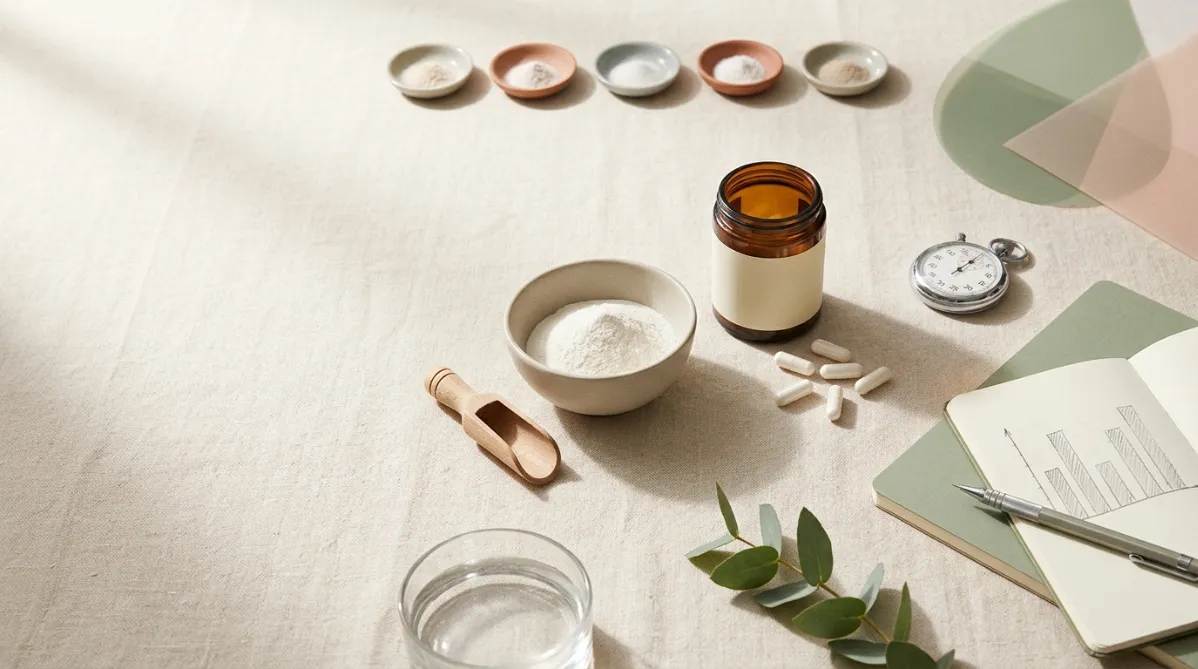
A wide, editorial-style still life photographed from slightly above on a pale oat-colored linen surface, lit by soft morning window light from the left. In the center sits a small matte ceramic bowl holding a mound of fine white powder, with a minimalist wooden scoop resting beside it. Next to the bowl is an open amber glass supplement jar with a plain cream label, and a few white capsules spill across the linen in a loose arc.

To the right, a neatly arranged cluster of analog "study" objects suggests careful measurement: a vintage stopwatch with a clean white face, a slim notebook with a sage-green cover open to a hand-drawn bar chart (blurred, no legible text), and a mechanical pencil lying across the page. A small row of six identical ceramic dishes, each holding a pinch of powder, is lined up along the top edge of the frame to hint at the six-week trial. One dish is slightly out of alignment, a subtle visual cue for ambiguity.

A shallow glass of water and a single sprig of green eucalyptus add a calm, organic note in the foreground. Soft, long shadows fall across the textured linen, and the palette stays restrained: warm cream, soft sage, muted terracotta, pale gray, and touches of amber from the glass jar. A few translucent paper cutouts in two tones (sage and blush) overlap in the upper right corner as a modern graphic accent, evoking overlapping data points without showing any numbers.

Depth of field is shallow, with the bowl and stopwatch in crisp focus and the edges gently softened. The composition leaves generous negative space on the left third for title text overlay. The overall mood is thoughtful, balanced, and quietly skeptical, in the style of a contemporary wellness and science magazine: clean, tactile, minimal, with a subtle film-like grain and natural color grading. No people, no futuristic or sci-fi elements, no readable text or logos.
nutrition

GAA: potenziatore cerebrale? Il risultato della prova di 6 settimane è complesso

BY DR. GYMBRO ·

Il GAA, precursore della creatina commercializzato come potenziatore cerebrale, è stato testato in uno studio doppio cieco di sei settimane su 58 adulti sani. Sono emersi tempi di reazione più rapidi e lievi miglioramenti dell’umore, ma la maggior parte dei test cognitivi è rimasta invariata e molte conclusioni sono solo tendenze.
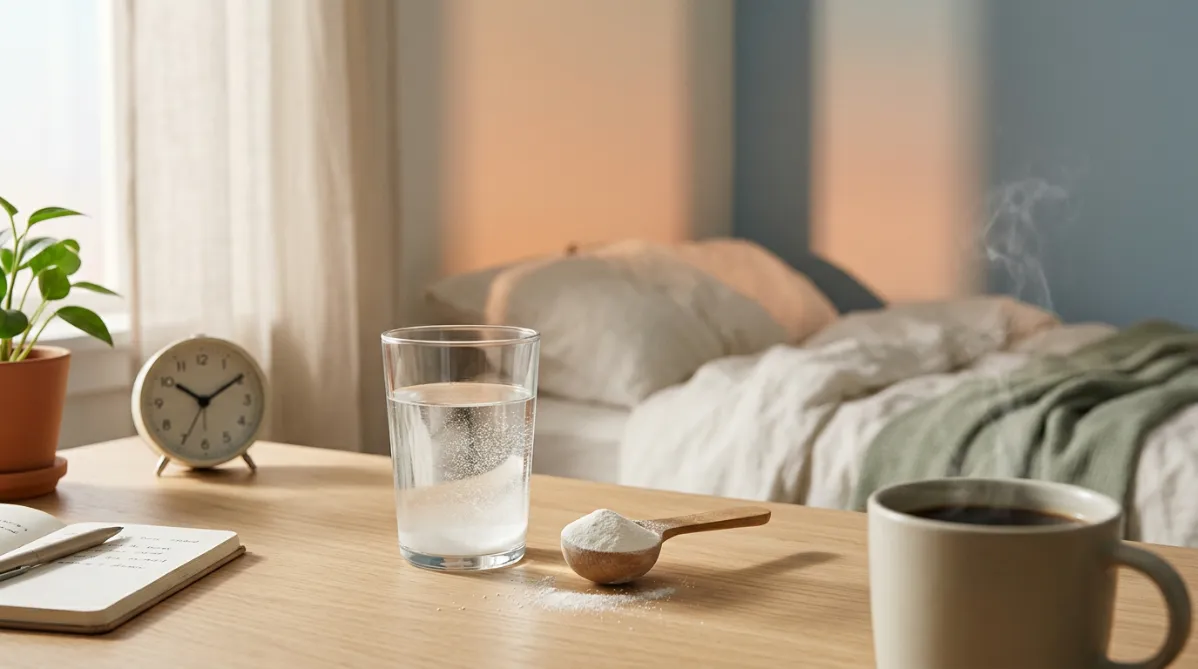
A wide, softly lit morning scene on a pale oak desk beside a window, shot from a slightly elevated three-quarter angle. In the foreground, a clear glass of water is half-filled with dissolved white creatine powder, tiny suspended particles catching the light. A wooden scoop heaped with fine white powder rests beside it, with a few grains scattered across the wood. A matte ceramic mug of black coffee sits slightly out of focus to the right, with a thin curl of steam. Behind them, a rumpled linen-white bed with a muted sage-green throw blanket suggests a sleepless night. Early dawn light spills through sheer curtains and creates long, gentle shadows and a warm peach-and-pale-blue gradient on the wall. On the desk, a minimalist analog alarm clock reads close to 6 a.m., and a small open notebook with a pen lies beside it, its handwriting blurred. A single green plant in a terracotta pot adds a fresh organic touch at the left edge. The color palette is calm and editorial: cream, soft sage, warm oak, dusty peach and muted slate blue. The depth of field is shallow, with crisp focus on the glass and scoop and a creamy bokeh background. The mood is quiet, restorative and contemplative, like a modern wellness magazine or a trendy health journal cover. The composition leaves open negative space in the upper left for title overlay. The image has a natural film-like texture, soft contrast and a clean, minimalist, lifestyle-photography look, with no text, logos or futuristic elements.
nutrition

Una dose di creatina da 0,35 g/kg ha contrastato la nebbia cerebrale dovuta alla privazione del sonno in poche ore

BY DR. GYMBRO ·

La creatina è il supplemento più studiato in palestra, ma uno studio del 2024 suggerisce che possa anche ridurre la nebbia mentale provocata dalla privazione del sonno in poche ore. Una singola assunzione di 0,35 g/kg – circa 25‑28 g per la maggior parte degli adulti – ha modificato i marker energetici cerebrali, impedito un calo del pH nel cervello e migliorato le prestazioni cognitive durante 21 ore senza dormire. Si tratta di una dose cinque volte superiore a quella quotidiana abituale (3‑5 g); lo studio è piccolo, condotto in laboratorio, e le grandi dosi possono provocare disturbi gastrointestinali. Nessuno ha ancora testato l’uso ripetuto di queste mega‑dosi. Ecco cosa dimostra davvero la ricerca e perché non è il momento di cambiare la tua routine quotidiana.

This page is available in