Dr. Gymbro
←

#cbl-514

6 articles
A wide, editorial-style photograph of a clean, bright clinical consultation space with a modern wellness-journal feel. In the foreground, a minimalist matte white tabletop holds a small glass vial with a soft gray label and a sterile syringe laid parallel beside it. Next to them sits a neatly folded stack of printed research pages, with a few subtle sage-green highlighted lines and a simple bar chart in muted tones. A slim stainless steel measuring tape curls loosely nearby, and a fine-point pen rests on the pages.

In the softly blurred midground, the torso of an athletic person in a fitted charcoal training top stands slightly out of focus. One hand rests lightly at the waist, which suggests body composition without showing a face. A weighted matte-black kettlebell and a folded gray gym towel sit on a pale oak bench to one side, a quiet reference to lifters and training.

The background is a calm wall in warm off-white and pale stone, with a tall window to the left. It lets in diffused morning daylight that casts long, gentle shadows across the table. A single green leafy plant in a ceramic pot adds a touch of organic color on the right edge.

The palette is restrained and contemporary: soft whites, warm beige, sage green, charcoal, and a small accent of muted coral. The composition follows the rule of thirds, with the vial and syringe on the left third and open negative space on the right, where headline text could sit. Use shallow depth of field, crisp focus on the vial's glass edges, and subtle highlights on the glass. The mood is thoughtful, credible, and analytical, in the style of a premium health and science magazine. Shoot it as if with a 50mm lens at f/2.8, with natural light, fine grain, and a clean, uncluttered finish.
science research

Iniezioni per la perdita di grasso CBL‑514: lo studio di fase 2 che i sollevatori dovrebbero leggere

BY DR. GYMBRO ·

Un trial di fase 2 controllato con placebo ha mostrato che le iniezioni di CBL‑514 riducono il grasso sottocutaneo addominale all’ecografia senza modificare significativamente il peso corporeo. A otto settimane, il 69,6 % dei partecipanti trattati ha perso almeno 150 mL di grasso, contro lo 0 % del gruppo placebo. Lo studio era single‑blind, quasi la metà dei trattati ha abbandonato e il follow‑up è stato breve. Il farmaco è ancora sperimentale, non è un brucia‑grassi e non è approvato. Ecco cosa i bodybuilder in fase di taglio dovrebbero realmente trarre da questi risultati.
A wide, editorial-style flat lay photographed from above on a pale warm-gray stone surface, bathed in soft diffused natural light from a window at the left. At the center sits a clean white clinical document folder, slightly open, with blurred printed charts and abstract bar graphs peeking out, no readable text. Beside it rests a minimalist glass vial with a pale frosted label and a silver cap, laid on its side, and a sleek stainless steel ruler marked in centimeters running diagonally across the frame, a quiet nod to the "mg/cm²" dosing concept. Three small ceramic dishes in a row at the right hold progressively larger amounts of fine white powder, suggesting graduated dose levels without implying consumer use. A sprig of dried eucalyptus and a matte sage-green fountain pen add organic softness. A thin translucent grid overlay, like tracing paper with a faint 10 x 10 square outline, is partially draped over the surface to evoke a measured treatment area. The palette is muted and modern: ivory, sage green, soft slate blue, and touches of brushed silver, with generous negative space on the left third for a headline. Shadows are gentle and long, depth of field shallow, with the foreground ruler crisp and the background edges melting into a soft blur. The mood is calm, trustworthy, scientific yet approachable, like a contemporary health and science magazine cover. Subtle film grain, high-end editorial photography, 16:9 landscape composition.
science research

Dosaggi di CBL-514 – cosa dice la scienza?

BY DR. GYMBRO ·

Non esiste una “dose consigliata” per i consumatori di CBL‑514, né un protocollo di somministrazione tipo scoop, capsule o mg/kg da palestra. Le uniche dosi note sono quelle utilizzate nei trial clinici, che vengono analizzate qui per spiegare differenze fra gli studi di fase 2 e 2a e chiarire l’origine della spesso citata percentuale del 24,96 %. L’articolo non costituisce consiglio medico né guida fai‑da‑te.
A soft-lit, minimalist editorial still life on a pale warm-gray seamless backdrop. In the center, a sterile glass vial with a clear, faintly golden liquid sits beside a slim syringe, both resting on a smooth matte terracotta ceramic slab. Beside them, a neat arrangement of translucent, pearly fat-like droplets in varying sizes, glistening like water beads, spills across the surface to suggest localized fat volume. Behind the objects, a large, softly blurred arc of cream and blush-pink paper forms a gentle curve suggesting an abdomen silhouette, without showing any human body. In the lower foreground, a slim measuring tape in muted sage green loops casually around the vial base, with legible tick marks hinting at volume reduction. To the right, a minimalist ceramic beaker with fine milliliter markings sits half-filled, catching a sliver of window light. Subtle data-inspired elements appear as flat, tasteful props: two thin stacks of off-white paper cards, one tall and one very short, symbolizing treatment versus placebo outcomes, with a few cards fading out toward the edge of frame to hint at participant dropout. A single small coral-red dot sticker on one card nods to injection-site reactions. Lighting is diffused natural morning light from the left, creating long, gentle shadows and soft highlights on glass and ceramic. The palette is restrained and modern: warm neutrals, soft sage, terracotta, blush, and touches of translucent gold. Shallow depth of field with crisp focus on the vial and syringe, background gently dissolving. Composition follows the rule of thirds with generous negative space on the right for headline overlay. The overall mood is calm, credible, and contemporary, like a premium health-science magazine cover, shot on a medium-format camera with fine grain and a clean, high-end editorial finish.
science research

CBL‑514 brucia davvero i grassi? Ecco cosa sappiamo

BY DR. GYMBRO ·

In una sperimentazione di fase 2, il 69,6 % (16 su 23) dei partecipanti al CBL‑514 ha perso almeno 150 mL di grasso addominale a 8 settimane, contro 0 su 16 nel gruppo placebo. Tuttavia i denominatori si sono ridotti perché quasi la metà dei partecipanti non ha completato lo studio; il trial era single‑blind e il follow‑up è durato solo 8 settimane. Il peso corporeo non è variato, perciò si tratta di una riduzione locale del volume di grasso più che di un vero “bruciare” i grassi. Le reazioni al sito di iniezione sono state quasi universali e il dolore severo ha colpito il 18,4 % dei soggetti trattati. Di seguito i dati precisi, le limitazioni e cosa riescono (o non riescono) a dimostrare.
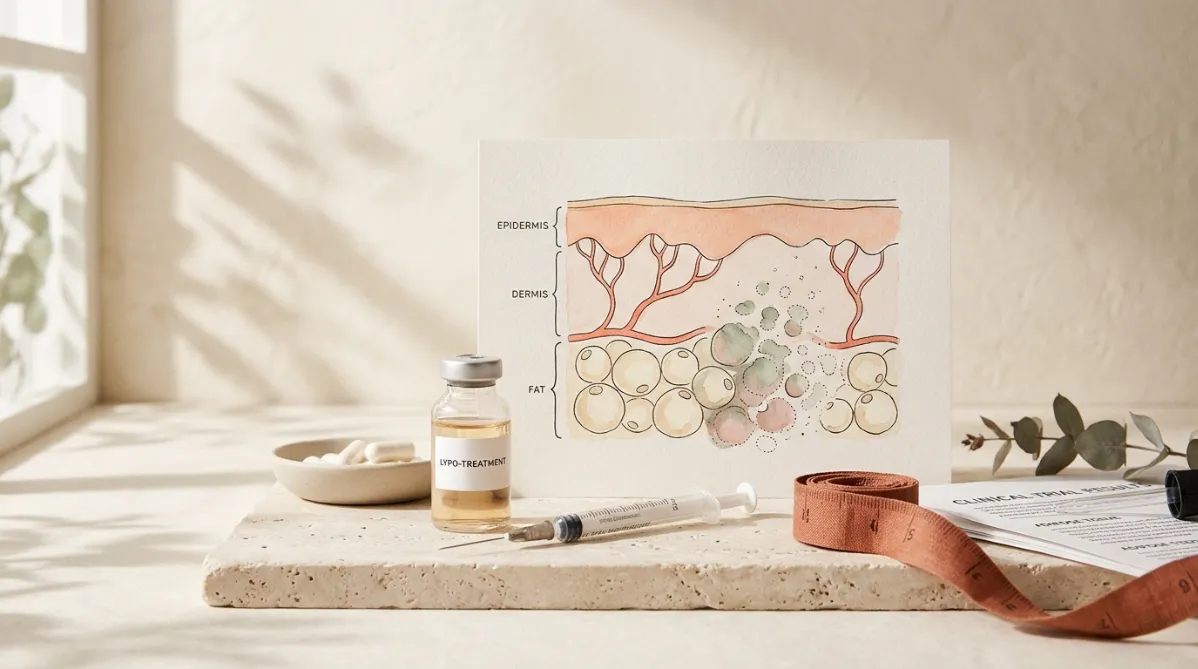
A softly lit, minimalist editorial still life on a warm off-white textured paper backdrop. In the center, a clean glass laboratory vial with a pale amber liquid sits beside a slim, sterile syringe with a fine needle, both placed on a pale travertine stone slab. Behind them, a large translucent cross-section illustration of skin layers is rendered as a delicate, hand-painted watercolor and ink diagram: soft peach epidermis, creamy yellow subcutaneous fat lobules shaped like clustered round cells, and thin coral capillary lines. A few of the fat cells in the diagram are gently fading, with dissolving edges and tiny dotted outlines to suggest cells quietly breaking down, painted in muted sage green and dusty rose.

On the left, a small ceramic dish holds a handful of matte white capsules, set aside and out of focus, hinting at what the treatment is not. On the right, a folded linen measuring tape in soft terracotta drapes across the stone, and a small stack of research papers with blurred text sits beneath a sprig of dried eucalyptus. Subtle botanical shadows from a window fall diagonally across the scene, creating a calm, natural-light atmosphere.

Color palette: warm cream, soft peach, sage green, muted terracotta, dusty rose, and touches of amber. The composition is balanced, with generous negative space on the upper left for title overlay. Shot as if with a 50mm lens, shallow depth of field, crisp focus on the vial and syringe, gentle film grain, and a refined, modern health-journal aesthetic. Contemporary, calm, trustworthy, and tactile. Landscape 16:9 format.
science research

Come funziona CBL‑514? Ecco la scienza

BY DR. GYMBRO ·

CBL-514 non è uno stimolante, né un termogenico, né un GLP‑1. Si tratta di un iniettivo sperimentale proposto per indurre l’apoptosi delle cellule adipose in una zona mirata di grasso sottocutaneo. Il meccanismo, che comprende l’inibizione di DYRK1b e l’aumento di caspasi 3 e Bax/Bcl‑2, proviene da studi pre‑clinici precedenti riportati dallo sponsor. Nello studio di fase 2, il volume del grasso addominale misurato a ultrasuoni è diminuito, mentre il peso corporeo medio è rimasto quasi invariato. Ecco cosa la scienza dimostra e cosa no, e perché le evidenze umane sul meccanismo sono ancora indirette.
A calm, editorial-style still life photographed in soft natural window light on a pale travertine surface. In the foreground, a small clear glass vial with a silver cap and a slim, capped syringe rest beside a folded white linen cloth, their edges catching delicate highlights. Behind them is a minimalist arrangement of translucent frosted acrylic cards in pale sage green and warm sand, staggered like pages of a clinical report. A few of the cards carry abstract bar-chart shapes and simple circle diagrams in muted terracotta and deep teal. One circle is just under half filled, a quiet nod to the participants who did not finish the trial. A slim brass ruler and a rounded ultrasound-style glass paperweight lie diagonally across the middle ground, hinting at measurement without any machinery. On the right, a sprig of dried eucalyptus in a matte ceramic bud vase adds organic softness. The background is a smooth, softly blurred wall in warm cream, with long gentle shadows falling from the left. The palette is restrained: ivory, sage, sand, terracotta, and touches of teal and brass. The composition leaves generous negative space in the upper left for a headline overlay. The mood is thoughtful, trustworthy, and modern, like a contemporary health and science journal. Shot on a 50mm lens at shallow depth of field, with fine film-like grain and a clean, high-end magazine finish. There are no people, no text, no logos, and no futuristic elements.
science research

Iniezioni per la rimozione del grasso CBL-514: cosa dice la scienza

BY DR. GYMBRO ·

CBL-514 è un’iniezione sperimentale per la rimozione del grasso supportata da una sperimentazione clinica di fase 2, randomizzata e controllata con placebo. Lo studio, però, è single‑blind, lo sponsor ha partecipato alla progettazione, all’analisi e alla stesura, e il 49,3 % dei partecipanti trattati (37 su 75) non ha completato il trial. Il gruppo trattato era per il 94 % di donne e per l’86 % di caucasici. Questo riassunto descrive chi è stato arruolato, come è stato eseguito il protocollo e le misurazioni ecografiche, e cosa il disegno dello studio può e non può dimostrare. È solo a scopo educativo, non costituisce consulenza medica.
A soft, editorial still life in a bright, minimalist clinical-meets-wellness setting, shot in landscape format with a shallow depth of field. In the foreground, a single sterile glass vial with a clear liquid and a slim silver-capped syringe rest on a matte, pale sage-green ceramic tray. Next to them is a neatly folded white linen cloth. The vial's label is blank and clean, with no readable text. Behind the tray, slightly out of focus, the torso of a person in a simple cream-colored fitted tank top is visible from the ribs to the hips. A gentle, hand-drawn-style dotted grid of tiny ink dots is marked on the lower abdomen, suggesting localized injection points in a contained patch, not the whole body. A soft hand in a light nitrile glove hovers near the area holding a fine pen.

The background is a warm, creamy off-white wall with a faint, diffused window light casting long, soft shadows across the scene. A small sprig of dried eucalyptus in a minimalist stone vase sits at the far right edge, adding organic texture. Color palette: muted sage green, warm ivory, soft peach skin tones, and brushed silver accents, with a subtle touch of terracotta in a small ceramic dish at the left.

Lighting is natural morning daylight, airy and diffused, with gentle highlights on the glass vial that catch tiny reflections. The composition follows the rule of thirds, with the vial and syringe on the left third and open negative space on the right, which would suit headline overlay. The overall feel is modern, calm, trustworthy, and sophisticated, like a contemporary health and science magazine cover, with fine film-like grain, crisp detail on the glass and a creamy bokeh backdrop. No text, no logos, no futuristic elements.
science research

Cos'è il CBL‑514? Brucia i grassi?

BY DR. GYMBRO ·

"Iniezione brucia‑grassi" richiama un integratore da ciclo di taglio o una puntura alla Ozempic per perdere peso, ma il CBL‑514 non è né l'uno né l'altro. Si tratta di un farmaco sperimentale a piccola molecola, iniettato localmente per indurre la lipolisi in aree di grasso addominale. Uno studio di fase 2 del 2025 ha mostrato una riduzione del volume di grasso misurato a ultrasuoni rispetto al placebo, mentre il peso corporeo è rimasto quasi invariato. Qui trovi i dati, le limitazioni e perché si tratta di un contorno locale, non di una combustione sistemica dei grassi.

This page is available in