Dr. Gymbro
←

#cbl-514

6 articles
A wide, editorial-style photograph of a clean, bright clinical consultation space with a modern wellness-journal feel. In the foreground, a minimalist matte white tabletop holds a small glass vial with a soft gray label and a sterile syringe laid parallel beside it. Next to them sits a neatly folded stack of printed research pages, with a few subtle sage-green highlighted lines and a simple bar chart in muted tones. A slim stainless steel measuring tape curls loosely nearby, and a fine-point pen rests on the pages.

In the softly blurred midground, the torso of an athletic person in a fitted charcoal training top stands slightly out of focus. One hand rests lightly at the waist, which suggests body composition without showing a face. A weighted matte-black kettlebell and a folded gray gym towel sit on a pale oak bench to one side, a quiet reference to lifters and training.

The background is a calm wall in warm off-white and pale stone, with a tall window to the left. It lets in diffused morning daylight that casts long, gentle shadows across the table. A single green leafy plant in a ceramic pot adds a touch of organic color on the right edge.

The palette is restrained and contemporary: soft whites, warm beige, sage green, charcoal, and a small accent of muted coral. The composition follows the rule of thirds, with the vial and syringe on the left third and open negative space on the right, where headline text could sit. Use shallow depth of field, crisp focus on the vial's glass edges, and subtle highlights on the glass. The mood is thoughtful, credible, and analytical, in the style of a premium health and science magazine. Shoot it as if with a 50mm lens at f/2.8, with natural light, fine grain, and a clean, uncluttered finish.
science research

CBL‑514 Vetverliesinjecties: De fase‑2‑studie die lifters moeten lezen

BY DR. GYMBRO ·

Een placebo‑gecontroleerde fase‑2‑studie vond dat CBL‑514‑injecties de buiksubcutane vetlaag verminderden op echografie, terwijl het lichaamsgewicht nauwelijks veranderde. Na 8 weken had 69,6 % van de overgebleven behandelde deelnemers minstens 150 mL vetverlies, tegenover 0 % in de placebogroep. De studie was echter enkel‑blinde, bijna de helft van de behandelde deelnemers stopte voortijdig en de follow‑up was kort. Het medicijn is experimenteel, geen vetverbrander en niet goedgekeurd. Hieronder lees je wat lifters die in een cut zijn hier eigenlijk van moeten meenemen.
A wide, editorial-style flat lay photographed from above on a pale warm-gray stone surface, bathed in soft diffused natural light from a window at the left. At the center sits a clean white clinical document folder, slightly open, with blurred printed charts and abstract bar graphs peeking out, no readable text. Beside it rests a minimalist glass vial with a pale frosted label and a silver cap, laid on its side, and a sleek stainless steel ruler marked in centimeters running diagonally across the frame, a quiet nod to the "mg/cm²" dosing concept. Three small ceramic dishes in a row at the right hold progressively larger amounts of fine white powder, suggesting graduated dose levels without implying consumer use. A sprig of dried eucalyptus and a matte sage-green fountain pen add organic softness. A thin translucent grid overlay, like tracing paper with a faint 10 x 10 square outline, is partially draped over the surface to evoke a measured treatment area. The palette is muted and modern: ivory, sage green, soft slate blue, and touches of brushed silver, with generous negative space on the left third for a headline. Shadows are gentle and long, depth of field shallow, with the foreground ruler crisp and the background edges melting into a soft blur. The mood is calm, trustworthy, scientific yet approachable, like a contemporary health and science magazine cover. Subtle film grain, high-end editorial photography, 16:9 landscape composition.
science research

CBL‑514 Doseringen – wat zegt de wetenschap?

BY DR. GYMBRO ·

Er bestaat geen consumenten‑‘aanbevolen dosis’ voor CBL‑514, geen lepel en geen sportschoolprotocol. De enige doseringen die bekend zijn, komen uit klinische onderzoeken met dit experimentele geneesmiddel. In dit artikel worden het Phase‑2‑regime (2 mg/cm², maximaal 600 mg per sessie over een gebied van 300 cm²) en de eerdere Phase‑2a‑dose‑finding‑studie (1,2, 1,6 en 2,0 mg/cm²) uiteengezet. Ook wordt uitgelegd waarom de cijfers uit beide studies niet door elkaar gehaald mogen worden, inclusief de oorsprong van het vaak geciteerde percentage van 24,96 %. CBL‑514 is niet goedgekeurd; dit artikel biedt geen medisch advies of doe‑het‑zelf‑gids.
A soft-lit, minimalist editorial still life on a pale warm-gray seamless backdrop. In the center, a sterile glass vial with a clear, faintly golden liquid sits beside a slim syringe, both resting on a smooth matte terracotta ceramic slab. Beside them, a neat arrangement of translucent, pearly fat-like droplets in varying sizes, glistening like water beads, spills across the surface to suggest localized fat volume. Behind the objects, a large, softly blurred arc of cream and blush-pink paper forms a gentle curve suggesting an abdomen silhouette, without showing any human body. In the lower foreground, a slim measuring tape in muted sage green loops casually around the vial base, with legible tick marks hinting at volume reduction. To the right, a minimalist ceramic beaker with fine milliliter markings sits half-filled, catching a sliver of window light. Subtle data-inspired elements appear as flat, tasteful props: two thin stacks of off-white paper cards, one tall and one very short, symbolizing treatment versus placebo outcomes, with a few cards fading out toward the edge of frame to hint at participant dropout. A single small coral-red dot sticker on one card nods to injection-site reactions. Lighting is diffused natural morning light from the left, creating long, gentle shadows and soft highlights on glass and ceramic. The palette is restrained and modern: warm neutrals, soft sage, terracotta, blush, and touches of translucent gold. Shallow depth of field with crisp focus on the vial and syringe, background gently dissolving. Composition follows the rule of thirds with generous negative space on the right for headline overlay. The overall mood is calm, credible, and contemporary, like a premium health-science magazine cover, shot on a medium-format camera with fine grain and a clean, high-end editorial finish.
science research

Verbrandt CBL-514 echt vet? Dit weten we

BY DR. GYMBRO ·

In een fase‑2‑studie verloor 69,6 % (16 van 23) van de CBL‑514‑deelnemers binnen acht weken minstens 150 mL buikvet, tegenover 0 van de 16 placebo‑deelnemers. De aantallen krimpen echter doordat bijna de helft van de deelnemers de studie niet afmaakte, de proef enkel blind was en de follow‑up slechts acht weken duurde. Het lichaamsgewicht bleef nagenoeg gelijk, waardoor het gaat om lokale vetreductie en niet om vetverbranding. Bijna alle deelnemers kregen een injectie‑plaatsreactie en 18,4 % ervaarde ernstige pijn. Hieronder de precieze cijfers, kanttekeningen en wat ze wel en niet betekenen.
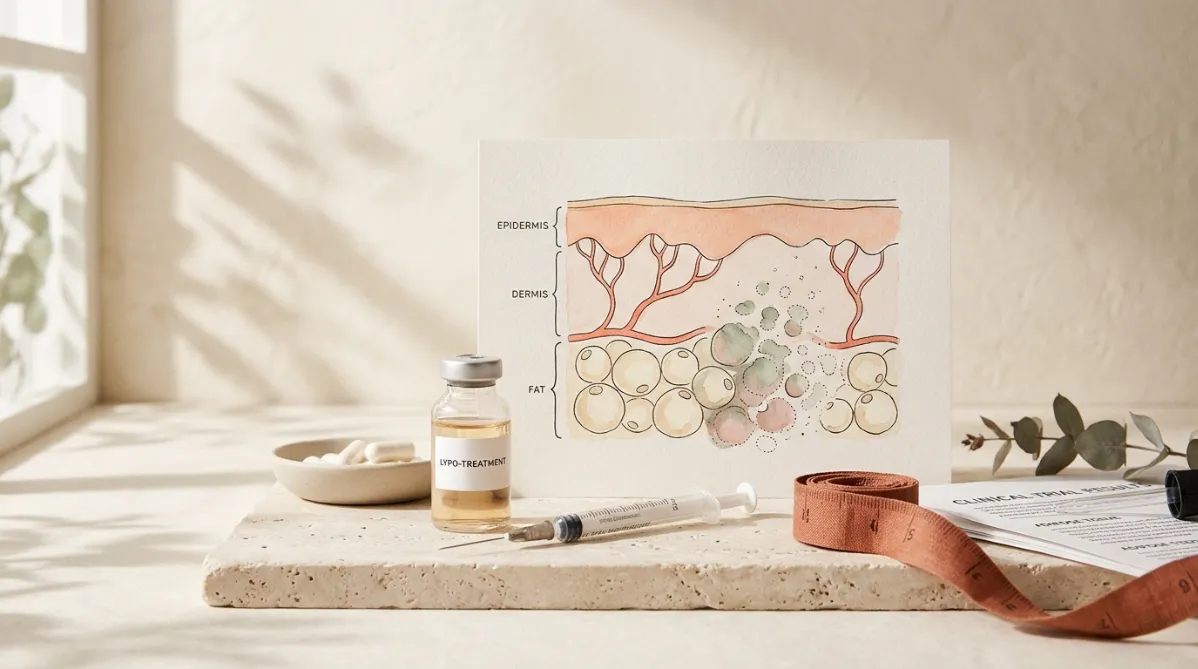
A softly lit, minimalist editorial still life on a warm off-white textured paper backdrop. In the center, a clean glass laboratory vial with a pale amber liquid sits beside a slim, sterile syringe with a fine needle, both placed on a pale travertine stone slab. Behind them, a large translucent cross-section illustration of skin layers is rendered as a delicate, hand-painted watercolor and ink diagram: soft peach epidermis, creamy yellow subcutaneous fat lobules shaped like clustered round cells, and thin coral capillary lines. A few of the fat cells in the diagram are gently fading, with dissolving edges and tiny dotted outlines to suggest cells quietly breaking down, painted in muted sage green and dusty rose.

On the left, a small ceramic dish holds a handful of matte white capsules, set aside and out of focus, hinting at what the treatment is not. On the right, a folded linen measuring tape in soft terracotta drapes across the stone, and a small stack of research papers with blurred text sits beneath a sprig of dried eucalyptus. Subtle botanical shadows from a window fall diagonally across the scene, creating a calm, natural-light atmosphere.

Color palette: warm cream, soft peach, sage green, muted terracotta, dusty rose, and touches of amber. The composition is balanced, with generous negative space on the upper left for title overlay. Shot as if with a 50mm lens, shallow depth of field, crisp focus on the vial and syringe, gentle film grain, and a refined, modern health-journal aesthetic. Contemporary, calm, trustworthy, and tactile. Landscape 16:9 format.
science research

Hoe werkt CBL-514? Hier is de wetenschap

BY DR. GYMBRO ·

CBL‑514 is geen stimulant, geen thermogenic en ook geen GLP‑1‑agonist. Het betreft een experimentele injectie die volgens de fabrikanten vetcel‑apoptose induceert in een gericht subcutaan vetgebied. Het voorgestelde mechanisme – remming van DYRK1b en opwaartse regulatie van caspase‑3 en Bax/Bcl‑2 – is gebaseerd op pre‑klinisch onderzoek van de sponsor. In de fase‑2‑studie daalde het met echografie gemeten buikvetvolume, terwijl het gemiddelde lichaamsgewicht nauwelijks veranderde. Hieronder lees je wat de wetenschap wel en niet aantoont en waarom het bewijs voor een menselijk werkend mechanisme nog indirect is.
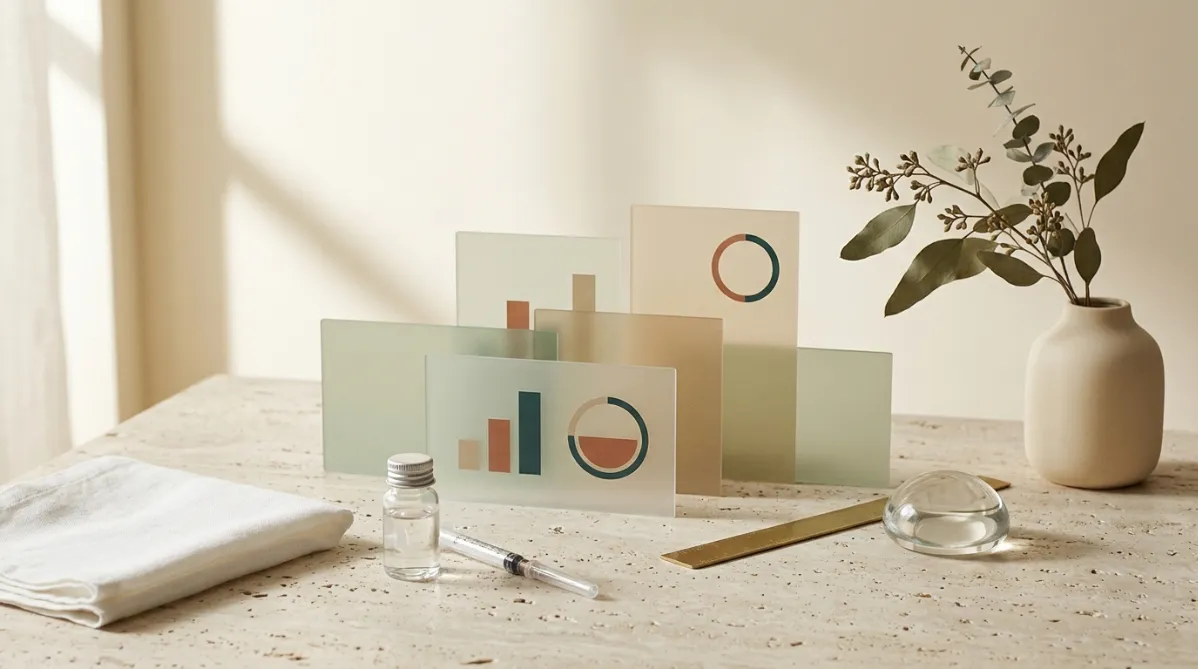
A calm, editorial-style still life photographed in soft natural window light on a pale travertine surface. In the foreground, a small clear glass vial with a silver cap and a slim, capped syringe rest beside a folded white linen cloth, their edges catching delicate highlights. Behind them is a minimalist arrangement of translucent frosted acrylic cards in pale sage green and warm sand, staggered like pages of a clinical report. A few of the cards carry abstract bar-chart shapes and simple circle diagrams in muted terracotta and deep teal. One circle is just under half filled, a quiet nod to the participants who did not finish the trial. A slim brass ruler and a rounded ultrasound-style glass paperweight lie diagonally across the middle ground, hinting at measurement without any machinery. On the right, a sprig of dried eucalyptus in a matte ceramic bud vase adds organic softness. The background is a smooth, softly blurred wall in warm cream, with long gentle shadows falling from the left. The palette is restrained: ivory, sage, sand, terracotta, and touches of teal and brass. The composition leaves generous negative space in the upper left for a headline overlay. The mood is thoughtful, trustworthy, and modern, like a contemporary health and science journal. Shot on a 50mm lens at shallow depth of field, with fine film-like grain and a clean, high-end magazine finish. There are no people, no text, no logos, and no futuristic elements.
science research

CBL-514 vetverwijderingsinjecties: Wat zegt de wetenschap?

BY DR. GYMBRO ·

CBL-514 is een experimentele injectie voor vetverwijdering, onderzocht in een echte fase‑2‑studie bij mensen, gerandomiseerd en placebogecontroleerd. De studie was echter enkelblind, de sponsor was betrokken bij het ontwerp, de analyse en het schrijven, en 37 van de 75 behandelde deelnemers (49,3 %) maakten de proef niet af. De behandelde groep bestond voor 94 % uit vrouwen en voor 86 % uit blanken. Deze uiteenzetting beschrijft wie werden opgenomen, hoe het protocol en de echografiemetingen werkten, en wat het ontwerp wel en niet kan aantonen. Het is uitsluitend educatief en geen medisch advies.
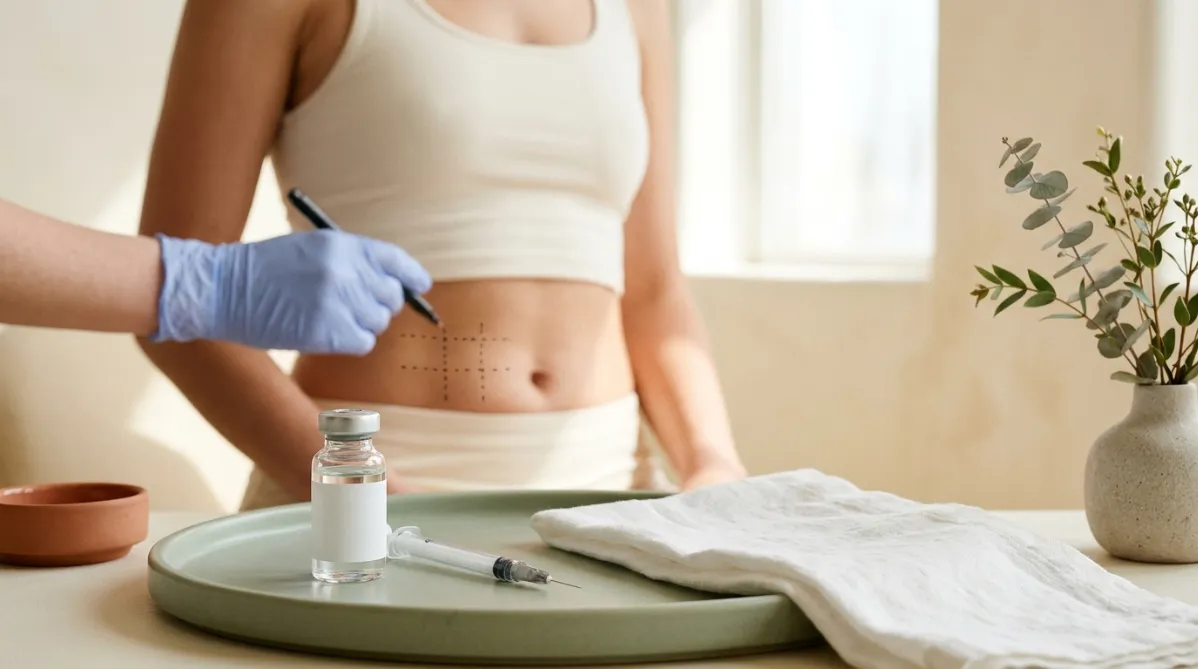
A soft, editorial still life in a bright, minimalist clinical-meets-wellness setting, shot in landscape format with a shallow depth of field. In the foreground, a single sterile glass vial with a clear liquid and a slim silver-capped syringe rest on a matte, pale sage-green ceramic tray. Next to them is a neatly folded white linen cloth. The vial's label is blank and clean, with no readable text. Behind the tray, slightly out of focus, the torso of a person in a simple cream-colored fitted tank top is visible from the ribs to the hips. A gentle, hand-drawn-style dotted grid of tiny ink dots is marked on the lower abdomen, suggesting localized injection points in a contained patch, not the whole body. A soft hand in a light nitrile glove hovers near the area holding a fine pen.

The background is a warm, creamy off-white wall with a faint, diffused window light casting long, soft shadows across the scene. A small sprig of dried eucalyptus in a minimalist stone vase sits at the far right edge, adding organic texture. Color palette: muted sage green, warm ivory, soft peach skin tones, and brushed silver accents, with a subtle touch of terracotta in a small ceramic dish at the left.

Lighting is natural morning daylight, airy and diffused, with gentle highlights on the glass vial that catch tiny reflections. The composition follows the rule of thirds, with the vial and syringe on the left third and open negative space on the right, which would suit headline overlay. The overall feel is modern, calm, trustworthy, and sophisticated, like a contemporary health and science magazine cover, with fine film-like grain, crisp detail on the glass and a creamy bokeh backdrop. No text, no logos, no futuristic elements.
science research

Wat is CBL‑514? Brandt het vet?

BY DR. GYMBRO ·

De term “vetverbrandende injectie” roept vaak de gedachte op aan een shortcut voor een cut‑cycle of een Ozempic‑achtige afslankinjectie, maar CBL‑514 is geen van beide. Het betreft een experimentele kleine‑molecuul‑injectie voor lipolyse die in klinische onderzoeken wordt toegediend als vele injecties in een pleister van buikvet. Een fase‑2‑studie uit 2025 liet zien dat het met echografie gemeten vetvolume verlaagde ten opzichte van placebo, terwijl het lichaamsgewicht nauwelijks veranderde. Hieronder lees je welke data er zijn, welke kanttekeningen belangrijk zijn en waarom dit een lokale contourering is in plaats van een systemische vetverbranding.

This page is available in