Dr. Gymbro
←

#caffeine

10 articles
A wide, editorial-style flat lay photographed from above on a pale oat-colored linen surface in soft morning window light. On the left, a small matte white ceramic cup of black coffee with a delicate swirl of steam, beside a few scattered roasted coffee beans. On the right, a second matte sage-green ceramic cup holding a pale, creamy golden tea-like drink, mirroring the first. Between them, two small glass vials with cork stoppers sit side by side: one holding fine white powder, the other holding slightly warmer cream-colored powder, with a tiny brass measuring spoon resting nearby. In the lower foreground, a slim wooden rowing oar lies diagonally across the frame, its blade edge softly entering from the right, painted a muted navy with a thin terracotta stripe. A minimalist analog stopwatch with a brushed-steel case rests near the oar, and a folded cream notebook with a thin pencil suggests data-taking. In the upper corner, a crescent-shaped dried eucalyptus sprig and a small folded gray wool throw hint at sleep and calm without being literal. The palette is warm and restrained: oat, cream, sage, soft navy, terracotta, and espresso brown. Shadows are long and gentle, with shallow depth of field and subtle film grain, giving a refined, modern wellness-magazine feel. Generous negative space on the left third of the composition leaves room for a headline overlay. Clean, calm, tactile, and contemporary, with no text, logos, or futuristic elements.
science research

Paraxanthine vs cafeïne: de combinatie die won en de slaapbeschermer

BY DR. GYMBRO ·

Paraxanthine, de belangrijkste metaboliet van cafeïne, ging recentelijk de strijd aan met cafeïne in een proef met 14 roeiers. Een combinatie van 200 mg van elk versloeg placebo op een 2000‑m roeitocht, zij het met een klein effect (d = 0,30). Geen van beide stoffen toonde afzonderlijk een duidelijke prestatie‑winst. Paraxanthine alleen leek echter vriendelijker voor de subjectieve slaap. Hier staan de cijfers, de beperkingen en wie er daadwerkelijk van kan profiteren.
A sunlit outdoor running track in late afternoon, shot from a low angle with shallow depth of field. In the foreground, a matte black bottle with a minimal off-white label sits on the edge of a warm terracotta-colored track lane, beside a folded white towel and a small glass of amber liquid catching golden light. Condensation beads on the bottle. A faint heat shimmer rises from the track surface and softens the background.

In the midground, slightly out of focus, a lean athlete in a sage-green tank top and charcoal shorts runs on a treadmill-like stretch of track, a thin sheen of sweat on their shoulders, their expression focused and calm. Their motion is gently blurred, suggesting endurance and rhythm. Long soft shadows stretch across the lane lines.

The background fades into hazy peach, apricot, and pale yellow tones, with the suggestion of tall trees and a distant stadium wall. Warm sun flare enters from the upper right, creating a subtle glow and a few soft light streaks across the frame.

Subtle editorial touches: a small notebook with a pencil and a stopwatch rest beside the bottle, hinting at data and timing without any text legible. The color palette is warm and muted, with terracotta, cream, sage, and charcoal accents, and a fine film-like grain. The composition leaves open negative space on the left third for a headline overlay. The overall mood is clean, modern, and health-journal inspired, natural and aspirational, with a calm scientific curiosity rather than hype.
nutrition

Ketondranken in de hitte: langer uithoudingsvermogen en scherper geheugen?

BY DR. GYMBRO ·

Ketondranken worden vaak gezien als een hulpmiddel voor vetverbrandende biohackers, maar een nieuwe hitte‑stressstudie suggereert dat ze je ook sterker kunnen laten finishen. Bij 17 getrainde mannen verlengde keton‑monoester plus cafeïne de tijd tot uitputting tot 8,9 minuten tegenover 7,0 minuten met koolhydraten plus cafeïne, na een 90‑minuten‑intensieve loopbandtraining bij 34 °C. Het werkgeheugen verbeterde eveneens bij de 1‑back‑taak, terwijl hartslag en kerntemperatuur nauwelijks verschilden. De studie is echter klein, uitsluitend mannelijk en éénmalig, waardoor de resultaten met voorzichtigheid moeten worden geïnterpreteerd.
A wide editorial still life on a pale, warm-toned concrete surface in soft morning window light. In the center-left, a shallow matte ceramic bowl holds a small pile of bright red coffee cherries with glossy skins, a few sliced open to reveal pale mucilage and paired green-tan beans. Beside it, a small glass dish of fine, golden-brown powdered extract with a tiny wooden scoop resting on its edge. A sprig of coffee plant leaves, deep green and waxy, arcs across the foreground.

On the right side, slightly out of focus, a sleek road cyclist's handlebar and a matte black water bottle lean against a light plaster wall, suggesting athletic training without showing a person. A minimalist analog stopwatch with a clean white face and thin black hands sits in the mid-ground, angled toward the camera, its hands paused near the fifteen-minute mark. A folded linen cloth in oatmeal beige and a single small espresso cup with a thin crema ring add quiet texture.

The color palette is restrained and modern: cherry red, sage green, cream, soft terracotta, and charcoal accents. Light comes from the left, casting long, gentle shadows with a subtle warm glow and a hint of dust in the air. Shallow depth of field with crisp focus on the cherries and stopwatch, creamy bokeh in the background. Composition leaves open negative space in the upper right for a headline overlay. The overall feel is a clean, trendy health-and-science magazine cover: tactile, natural, minimal, and calm, shot in a 16:9 landscape frame with fine film-like grain and true-to-life tones.
nutrition

Koffie‑kersextract: 200 mg cafeïne verhoogde fietsprestatie met 4,6 %

BY DR. GYMBRO ·

Een lage dose van 200 mg cafeïne uit een geheel koffie‑kersextract hielp getrainde wielrenners om 4,6 % meer werk te leveren in een tijdrit van 15 minuut. Maar het populaire idee dat het de glycogeen‑herstel versnelt, bleek niet te kloppen. Deze gerandomiseerde, dubbelblinde cross‑over studie betrof slechts 12 wielrenners en werd gefinancierd door de industrie, zonder een zuivere cafeïne‑vergelijkingsgroep. Hier zie je wat de data laten zien, wat ze niet laten zien, en voor wie het interessant kan zijn.
A sleek aluminum energy drink can and a matte scoop of white pre-workout powder sit side by side on a pale concrete gym bench, lit by soft morning window light. The can is slim and minimalist, with a muted sage green label and no legible text. Beside it is a clear glass shaker half full of cloudy, lightly frothy liquid with condensation beading on its surface. A few fine grains of powder are scattered across the bench, catching the light. Behind them, slightly out of focus, a stainless steel barbell rests on a rack, and a folded charcoal gym towel sits at the edge of the frame.

The color palette is warm neutral: oatmeal, soft gray, and sage, with a single accent of pale citrus yellow from a halved lemon wedge placed near the glass. A thin, elegant shadow from the window blinds falls diagonally across the scene, giving it an editorial, magazine-style rhythm. The composition leaves generous negative space on the right third of the frame, a smooth blurred wall in warm off-white, suitable for headline text overlay.

The shot is a low-angle, shallow depth-of-field product-style photograph, as if taken with an 85mm lens at f/2. The foreground objects are tack sharp and the background melts into creamy blur. The mood is calm, clean, and modern, like a wellness or science journal feature. Subtle film grain and gentle contrast add a tactile, contemporary lifestyle feel. There are no people, no logos, and no futuristic or sci-fi elements, just a quiet, considered still life that suggests the choice between a canned drink and a scooped supplement.
nutrition

Je energiedrank werkt misschien als pre‑workout — met één kanttekening

BY DR. GYMBRO ·

Cafeïne en taurine staan vaak naast elkaar in energiedranken en pre‑workouts, maar levert dat echt een prestatie‑boost op? Een nieuwe meta‑analyse van 11 gerandomiseerde studies (234 deelnemers) toonde een bescheiden verbetering in piekvermogen en tijd tot uitputting, plus een lager ervaren inspanningsniveau. De hartslag bleef onveranderd en het resultaat voor reactietijd was te inconsistent om te vertrouwen. Het grote probleem: de onderzoeken waren klein en kunnen niet aantonen of taurine iets extra’s biedt bovenop cafeïne.
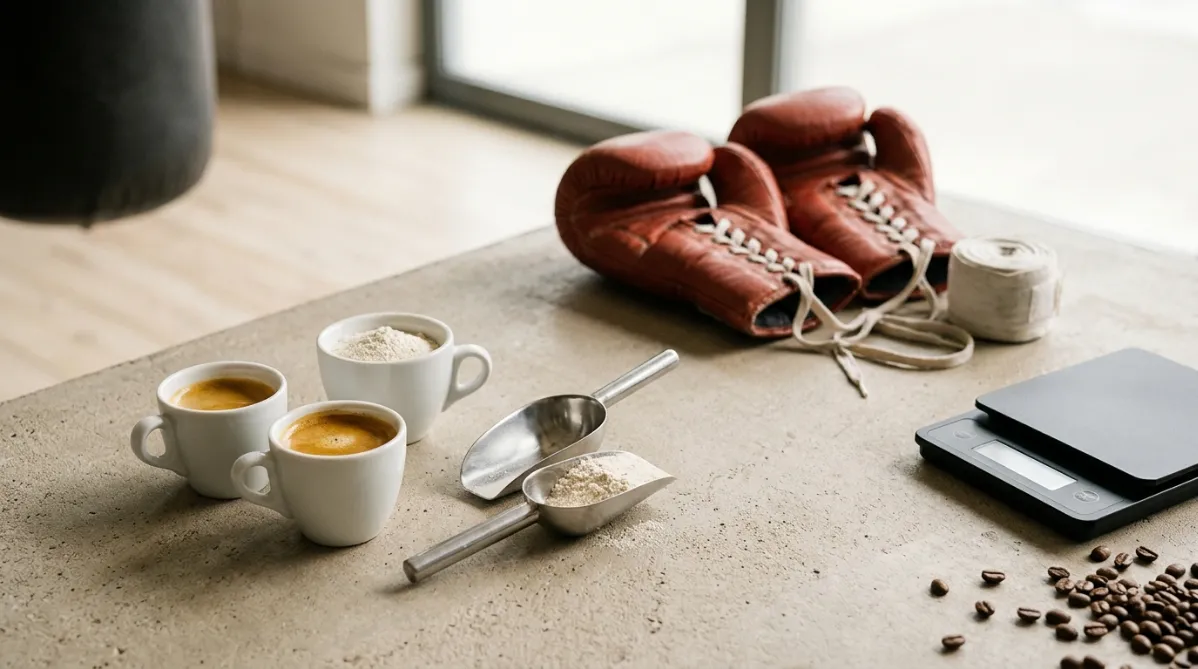
A landscape editorial photograph with a modern, clean magazine feel, shot on a pale warm-gray concrete surface in soft natural window light from the left. In the foreground, two matte white ceramic espresso cups sit side by side. The left cup holds a small amount of dark espresso with golden crema. The right cup is filled twice as high. Beside them, two small stainless steel scoops hold fine coffee-colored powder, one half full and one heaped, suggesting a dose comparison without any text or labels. A pair of worn red leather boxing gloves rests slightly out of focus behind the cups, laces loosely draped, with a white hand wrap rolled neatly beside them. A minimalist digital kitchen scale in matte black sits at the edge of the frame, with a few roasted coffee beans scattered across the surface. In the soft-focus background, a boxing gym corner appears: a hanging heavy bag in muted charcoal, pale wood plank flooring, and a tall window with diffused morning light. The palette is warm cream, espresso brown, brick red, and soft slate gray, with gentle shadows and a shallow depth of field. The composition follows the rule of thirds, with the cups and scoops in the lower left third and open negative space on the right for headline overlay. The look is tactile and refined, like a high-end health and performance journal. It has natural grain, subtle contrast, and a calm, confident mood. There are no people, no text, no logos, and no futuristic elements.
nutrition

Dubbel zo veel cafeïne hielp boksers nauwelijks — dit werkte wel

BY DR. GYMBRO ·

Denk je dat een dubbele schep pre‑workout je prestaties automatisch verdubbelt? Een nieuwe crossover‑studie met 15 competitieve boksers vergeleek 3 mg/kg met 6 mg/kg cafeïne en toonde aan dat de hogere dosis niet consequent beter was. Beide dosissen verhoogden de spronghoogte en kracht na 60 minuten, maar 6 mg/kg leverde alleen bij enkele uitkomsten – zoals de ballistic push‑up en knie‑torque – een extra voorsprong. Hieronder vind je een mg‑per‑kg‑omrekening voor veelvoorkomende lichaamsgewichten, de door de data ondersteunde timing, en enkele kanttekeningen, onder meer dat er geen effect op daadwerkelijke stoten is getest.
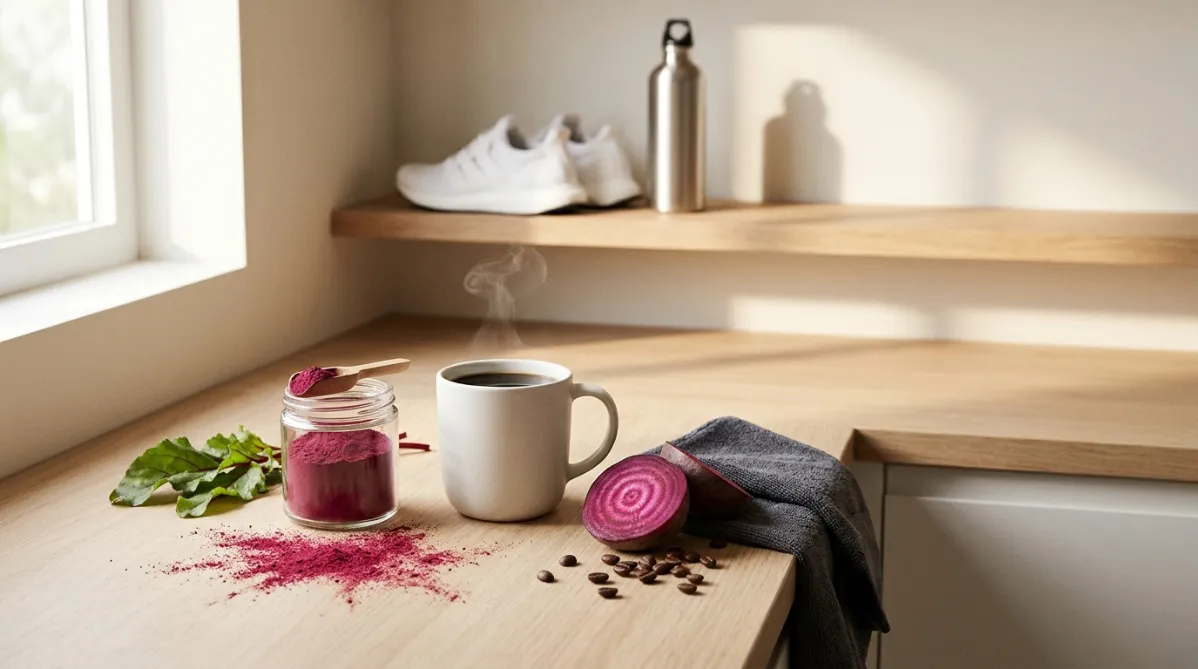
A sunlit, minimalist kitchen counter in a modern home, photographed from a slightly elevated three-quarter angle with soft natural morning light spilling in from a window on the left. In the center sits a matte white ceramic mug of black coffee with a thin curl of steam, beside a small glass jar of deep magenta beetroot powder with a wooden scoop resting on the lid. A scattering of fine crimson powder dusts the pale oak surface in an artful, casual swirl. Nearby, a halved raw beetroot reveals vivid concentric rings of purple and pink, next to a few roasted coffee beans and a neatly folded charcoal gym towel. In the soft-focus background, a pair of clean white running shoes and a stainless steel water bottle sit on a floating shelf, hinting at a pre-workout routine. A single sprig of green beet leaves adds a fresh accent.

The color palette is warm and editorial: creamy neutrals, espresso browns, and rich beet magenta, with gentle highlights and long soft shadows. The composition has generous negative space on the right side for headline text, shallow depth of field, and a crisp, tactile texture on the ceramic, powder, and wood grain. The mood is calm, health-conscious, and contemporary, like a lifestyle feature in a premium wellness magazine or a trendy nutrition journal. Clean, balanced, natural, with subtle film-like grain and a slightly muted, high-end finish.
science research

Pre‑workout cafeïne verhardt slagaders; bietpoeder neutraliseert dit

BY DR. GYMBRO ·

Een gerandomiseerde cross‑over studie toonde aan dat een pre‑workout‑dosis cafeïne (6 mg/kg) binnen 2,5 uur de markers van arteriële stijfheid laat stijgen. Het toevoegen van bietpoeder met 400 mg nitraat zette die markers terug naar placebonaamwaarden. Bloeddruk en endotheliale functie bleven onveranderd, waardoor het een subtiel effect is zonder rode vlaggen. De studie omvatte slechts 24 gezonde jonge volwassenen en één enkele dosis, waardoor er grote vragen blijven over langdurig gebruik en de effecten bij oudere of hypertensieve personen. Hier volgt wat de data laten zien, wat ze niet laten zien, en hoe je de resultaten moet interpreteren als je vóór de training op cafeïne vertrouwt.
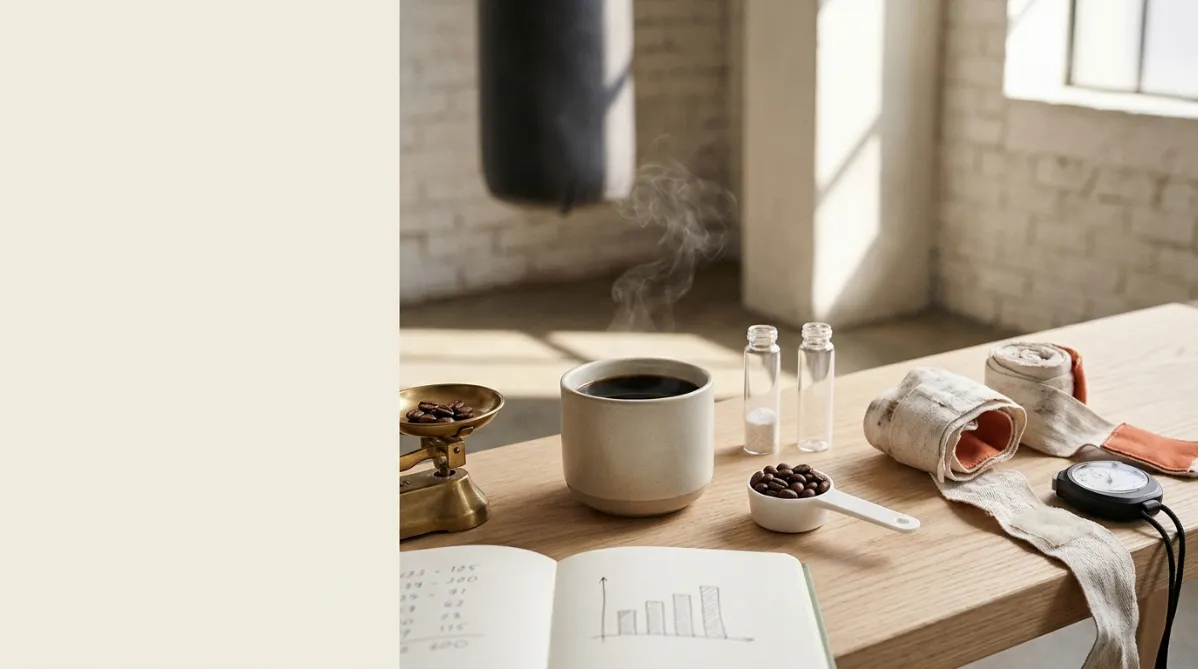
A wide, editorial-style still life shot from a slightly elevated angle on a pale oak gym bench, bathed in soft morning window light. In the center sits a matte ceramic cup of black coffee with delicate steam curling upward, flanked by a small white scoop of coffee beans and two identical glass vials, one filled with a few grains of fine powder and one empty, hinting at dose comparison. Next to the cup rests a pair of worn white boxing hand wraps, loosely coiled, and a slim black stopwatch with its face softly visible. In the foreground, a minimalist notebook lies open with blurred handwritten numbers and a simple pen sketch of a bar graph with bars of equal height, subtle and unreadable, suggesting a null result without any legible text. A small brass kitchen scale sits to the side with a few coffee beans on its tray.

In the soft-focus background, a boxing gym interior is visible: a hanging heavy bag in muted charcoal, exposed brick wall painted off-white, and tall windows casting long diagonal light across the floor. The color palette is warm and restrained: cream, sand, espresso brown, soft charcoal, with a single accent of muted terracotta orange in the hand wraps and a faint sage green in the notebook cover. Shallow depth of field with creamy bokeh, fine film grain, and gentle shadows give it a contemporary lifestyle-magazine and wellness-journal feel. The composition leaves generous negative space on the left third for headline overlay. Clean, calm, trendy, and tactile, with natural textures like wood grain, ceramic glaze, and cotton fabric. No people, no text, no futuristic elements.
science research

Koffie met lage cafeïnedosis gaf elite vechters geen sprintboost

BY DR. GYMBRO ·

Dacht je dat een pre‑workout kop koffie je sprints een boost geeft? Een nieuw, gerandomiseerd, dubbelblind crossover‑onderzoek met 15 nationale vechtsporters vond geen prestatiewinst bij cafeïnedoses van 1,5 mg/kg en 3 mg/kg – ongeveer 100 mg resp. 200 mg voor een sporter van 68 kg. Noch piek‑vermogen, gemiddeld vermogen, vermoeidheidsindex noch de geschatte bijdrage van de verschillende energiesystemen verschilden van decaf. Het betreft echter een kleine nulbevinding, geen bewijs dat cafeïne faalt, en de meeste positieve studies gebruiken capsules met 3–6 mg/kg.
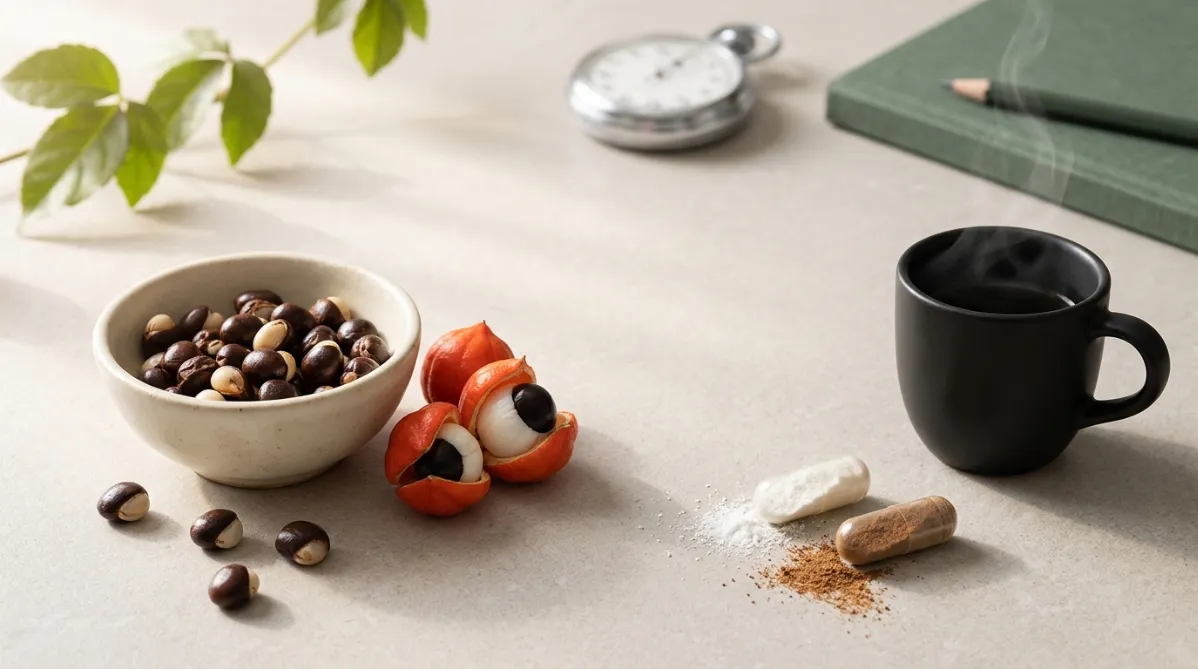
A wide, softly lit editorial flat-lay on a pale warm-gray stone countertop, shot from slightly above. On the left, a small rustic ceramic bowl in matte cream holds a handful of dried guarana seeds, dark glossy brown with pale cream arils, a few spilling onto the surface. Beside it sits a halved fresh guarana fruit in vivid red-orange, split open to show the white flesh and black seed inside, looking like a tiny eye. On the right, two open clear capsules rest side by side. One is filled with fine white caffeine powder, the other with a fine earthy brown guarana powder, and a little of each dusts the stone in delicate, deliberate lines. Between them, a minimalist matte-black espresso cup with a thin ribbon of steam rises on the right edge of the frame. A brushed-steel stopwatch and a slim dark-green linen notebook with a pencil sit in the upper background, slightly out of focus, to hint at performance testing without clutter. A few green leaves of a guarana vine curve in from the top-left corner, catching soft light.

The lighting is natural window light from the left, with gentle long shadows and a subtle warm highlight on the seeds. The palette is muted and modern: warm creams, terracotta red, deep espresso brown, sage green, and charcoal accents. The background is clean with generous negative space on the upper right for headline text. Shallow depth of field, crisp focus on the seeds and capsules, fine grain, and a calm premium magazine look like a contemporary wellness and sports-science journal. No people, no text, no logos, no futuristic elements.
science research

Guarana vs cafeïne: dezelfde dosis, alleen guarana verhoogde het maximale vermogen

BY DR. GYMBRO ·

Met dezelfde hoeveelheid cafeïne, maar een andere capsule, leverde alleen guarana een statistisch significante toename in piekvermogen op. In een gerandomiseerde crossover‑studie met 18 actieve mannen verhief guarana het piekvermogen met 4 % ten opzichte van placebo, terwijl anhydrous cafeïne geen significant effect liet zien. De verschillen tussen guarana en cafeïne waren echter niet statistisch significant – ze blijven beschrijvend. Hieronder vind je de resultaten, de beperkingen van de studie en praktische tips voor dosering op basis van cafeïne‑inhoud.
A wide, editorial-style flat lay on a warm, matte cream stone surface, shot from slightly above in soft natural morning light. On the left, a ceramic espresso cup in muted terracotta holds dark coffee, with a few roasted coffee beans scattered beside it. In the center, a small wooden board holds three bright red chili peppers, one sliced open to show pale seeds, next to a small pile of coarse red pepper flakes. On the right, a pair of minimalist off-white running shoes with sage green accents rests at an angle, and a slim stopwatch with a clean white face lies in front of them. Three small matte white capsules sit in a neat row at the center of the composition, a quiet nod to the placebo and the active doses. Soft shadows fall to the lower right. A sprig of dried eucalyptus and a folded linen cloth in oatmeal tones add texture at the edges. The palette is warm and restrained: terracotta, chili red, cream, sage, and charcoal brown, with a gentle pop of red as the focal accent. The depth of field is shallow, so the foreground beans are slightly soft and the chilies and capsules stay crisp. The mood is clean, modern, and magazine-like, in the style of a contemporary health and science journal. There is no text, no people, and no logos, and plenty of negative space on the upper left and right edges leaves room for a headline overlay.
nutrition

Cafeïne + Capsaïcine verslaat placebo op 10 km; capsaisin alleen werkt niet

BY COACH RYAN ·

Een combinatie van chilipeper-extract en cafeïne was de enige testconditie die een placebo versloeg tijdens een 10‑km‑loop in een crossover‑studie. Alleen capsaisin had geen effect. De statistische significantie werd volledig gedreven door de cafeïne (6 mg/kg ≈ 450 mg voor een loper van 75 kg). Bijwerkingen als slapeloosheid, angst, hoofdpijn en een bonzend hart kwamen vaker voor. Lees hier wat de 20‑lopersstudie aantoonde en voor wie het (niet) geschikt is.
A wide, editorial-style flat lay photographed from slightly above on a pale oak gym bench with a soft matte finish. On the left, a small white ceramic cup of black coffee sits on a matching saucer, with a thin curl of steam rising and catching warm window light. Beside it is a second, slightly larger handleless stoneware mug in muted sage green, also filled with coffee, so the pair suggests one to two cups. In the center-right foreground rests a sleek matte-black steel barbell plate, partly overlapping a brushed-steel dumbbell with fine knurling. A folded charcoal gym towel and a clean white chalk-dusted wrist strap lie casually to one side. A small scatter of whole roasted coffee beans spills across the bench in front of the cups, glossy and deep brown. Near the bottom edge, a minimalist analog kitchen scale in soft cream with a thin black needle hints at precise dosing, without any readable numbers or text.

Soft morning sunlight streams in from the upper left, creating long, gentle shadows and a warm golden glow against cool neutral tones. The background is a softly blurred, airy home gym or boutique training studio with out-of-focus squat rack uprights, pale concrete walls, and a leafy green plant in a terracotta pot adding a touch of organic color. The palette is restrained and modern: warm cream, espresso brown, charcoal, sage green, and hints of brushed silver. Shallow depth of field keeps the cups and beans tack sharp while the background melts into creamy bokeh. The composition leaves generous negative space on the right third for a title overlay, with a balanced, calm, premium magazine feel, like a contemporary wellness and sports science journal. High-resolution, natural color grading, subtle film grain, realistic textures on ceramic, steel, and coffee crema.
nutrition

Hoeveel cafeïne voor gewichtheffen? Een meta‑analyse toont aan dat 1–2 mg/kg nog steeds werkt

BY DR. GYMBRO ·

De gebruikelijke aanbeveling voor cafeïne vóór het gewichtheffen is 3–6 mg per kilogram lichaamsgewicht, wat neerkomt op meerdere koppen koffie of een flinke schep pre‑workout. Een meta‑analyse uit 2022 van 12 onderzoeken liet zien dat al doses van 0,9–2 mg/kg de spierkracht (d ≈ 0,17), spieruithouding (d ≈ 0,21) en gemiddelde staaf‑snelheid (d ≈ 0,56) verbeteren. Voor de gemiddelde lifter komt dat overeen met één tot twee koppen koffie. De effecten zijn bescheiden en komen uit acute, één‑sessie‑studies, maar ze suggereren dat je met minder cafeïne een vergelijkbaar voordeel kunt behalen.

This page is available in