Dr. Gymbro
←

#prebiotics

1 article
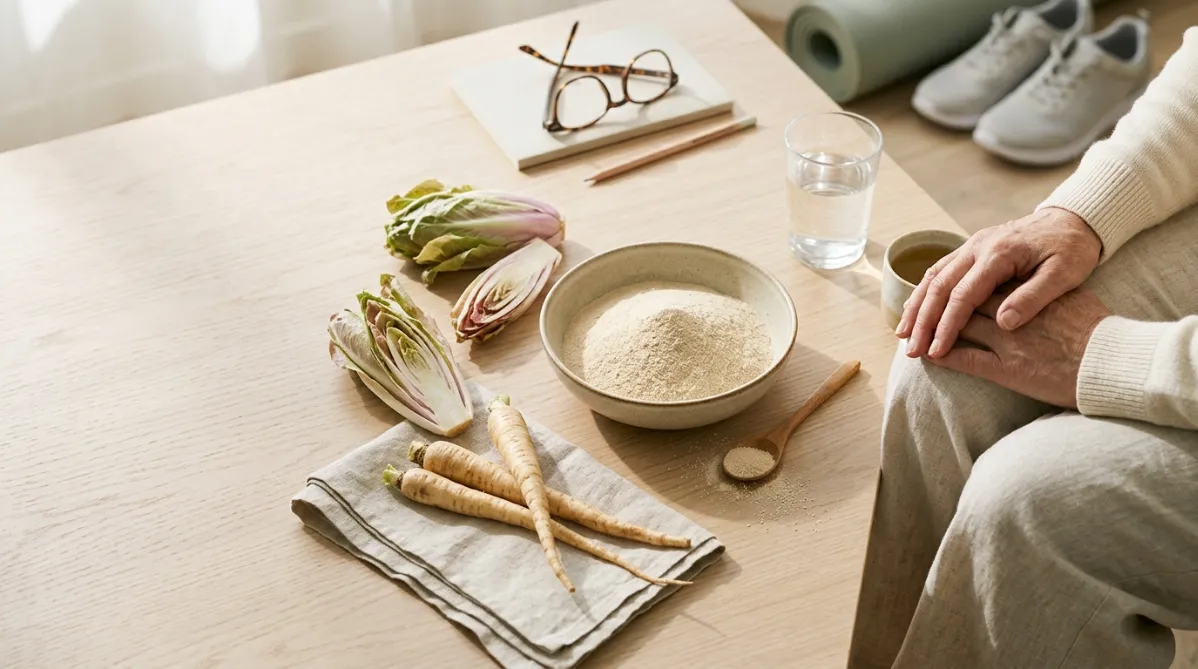
A bright, airy editorial still life photographed from slightly above on a pale oak table in soft morning window light. At the center sits a shallow ceramic bowl in matte oatmeal glaze filled with fine, creamy-beige inulin powder. A wooden spoon rests beside it, with a few fine grains scattered across the wood. Around the bowl, several fresh chicory roots with pale tan skin and delicate taper lie on a folded linen napkin. Next to them are a few crisp, leafy chicory heads in muted green and soft magenta tones, and a halved root that shows its pale, fibrous interior.

On the right side of the frame, a pair of older adult hands in a soft cream knit sleeve rest gently on a knee covered by relaxed linen trousers. A glass of water stands nearby, along with a small ceramic cup of herbal tea. A folded pair of simple tortoiseshell reading glasses and a minimalist notebook with a thin pencil sit in the background, hinting at a considered, research-minded atmosphere. A slim yoga mat edge and a pair of light-gray walking shoes appear softly out of focus in the far corner, suggesting gentle exercise and mobility without overwhelming the scene.

The color palette is calm and modern: warm creams, sage green, soft terracotta, and touches of dusty rose from the chicory leaves. Shadows are gentle and long, with natural light raking across the table and highlighting the textures of powder, linen, wood, and root. The depth of field is shallow, with the bowl and roots in crisp focus and the background melting into a creamy blur. The composition leaves generous negative space on the left third of the frame, suitable for headline overlay, and the overall feel is clean, wholesome, and contemporary, like a lifestyle-meets-science feature in a trendy online health journal. Fine film-like grain, true-to-life color, and a quiet, optimistic mood.
recovery

Una fibra intestinale economica batte il placebo per il dolore al ginocchio: riduzione di 1,11 punti

BY DR. GYMBRO ·

Una fibra di radice di cicoria a basso costo ha superato il placebo nella riduzione del dolore al ginocchio in uno studio randomizzato. Un’assunzione di 20 g al giorno di inulina ha diminuito il dolore di 1,11 punti, superando la soglia clinicamente significativa di 1 punto, e ha anche migliorato la forza di presa. Solo i gruppi che hanno assunto inulina hanno mostrato un aumento di butirrato e GLP‑1, suggerendo un possibile legame intestino‑muscolo. I partecipanti erano adulti anziani con osteoartrosi del ginocchio (età media 67,5 anni); l’esercizio fisico supportato dalla fisioterapia ha ridotto il dolore ancora di più (1,55 punti). Scopri i risultati dello studio, i suoi limiti e come usarli in modo sensato.

This page is available in