Dr. Gymbro
←

#circuit training

1 article
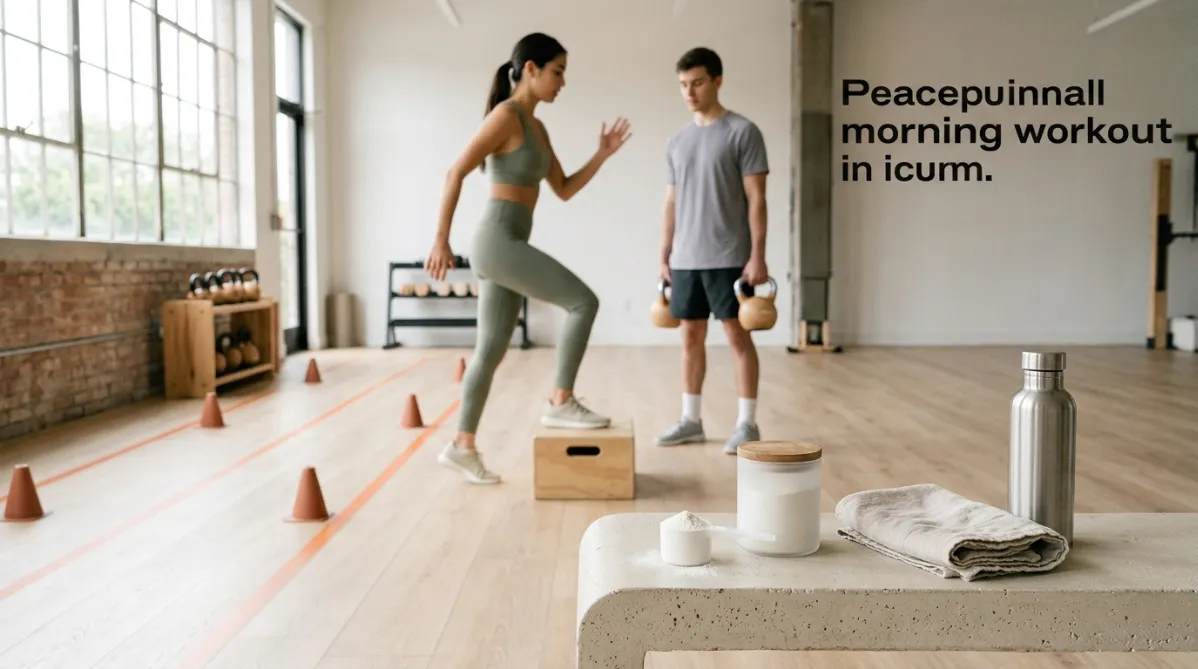
A wide, softly lit editorial photograph of a bright, minimalist gym studio with pale oak flooring and large windows letting in diffuse morning light. In the foreground, a matte white ceramic scoop of fine white powder sits beside a simple frosted glass jar on a light concrete bench. A neutral linen towel and a stainless steel water bottle rest next to them. Slightly out of focus in the midground, a young woman in a sage-green athletic set and a young man in a soft gray tee are mid-circuit, one stepping over a low plyometric box and the other holding a kettlebell. Their motion is captured with a gentle blur. Behind them, a row of painted lines on the floor marks a shuttle-run lane, with small terracotta-colored cones spaced evenly along it. The palette is calm and modern: warm cream, sage, soft terracotta, and muted charcoal, with a touch of pale blue in the shadows. The composition uses generous negative space on the right side of the frame for a title overlay. Depth of field is shallow, the grain is subtle and film-like, and the style is contemporary lifestyle journalism, clean and crisp, with a slightly airy, high-key exposure and natural shadows. No text, no logos, no futuristic elements.
science research

Beta-Alanina podniosła poziom karozyny u początkujących, ale nie poprawiła wydolności

BY DR. GYMBRO ·

Początkujący często słyszą, że beta‑alanina to szybka droga do lepszych treningów. Nowe, randomizowane badanie z grupą placebo u nieprzeszkolonych młodych osób wykazało, że suplement podniósł poziom karozyny we krwi, ale nie przyniósł wymiernych efektów w wydolności. Sześć tygodni treningu obwodowego samo w sobie znacznie polepszyło wyniki w teście shuttle‑run oraz szacowany VO2max (p<0,001). Badanie nie wykazało dodatkowego zysku po zastosowaniu beta‑alaniny. Oto, co odkryto, jakie ma ograniczenia i dla kogo beta‑alanina może rzeczywiście mieć sens.

This page is available in