Dr. Gymbro
←

#circuit training

1 article
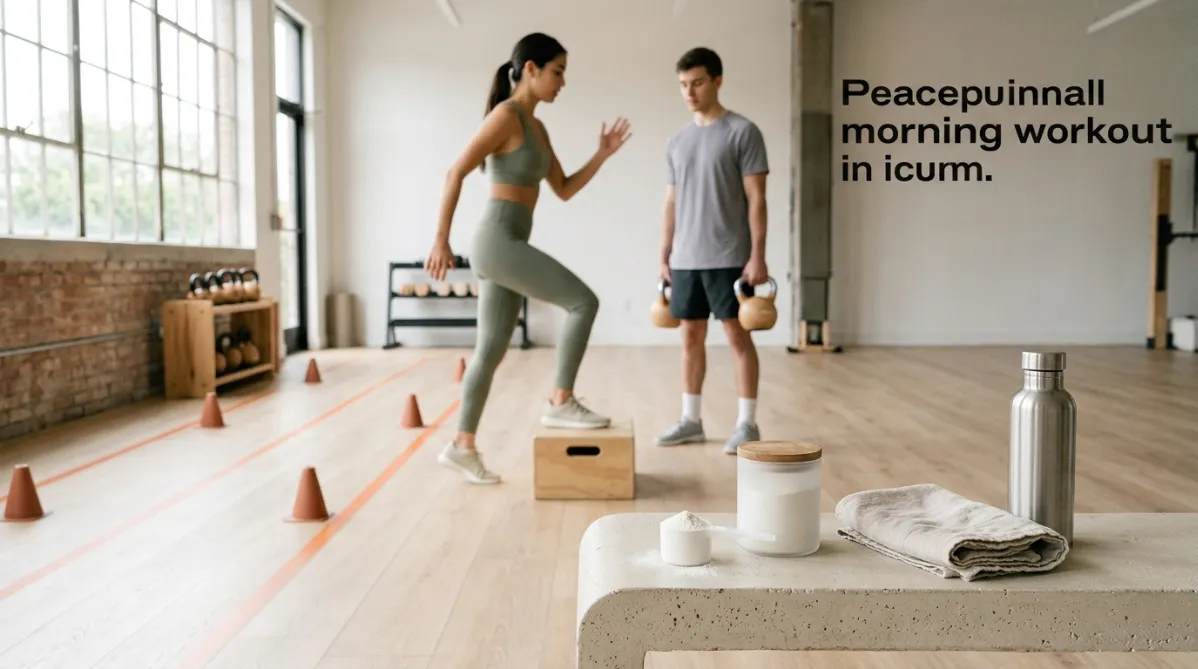
A wide, softly lit editorial photograph of a bright, minimalist gym studio with pale oak flooring and large windows letting in diffuse morning light. In the foreground, a matte white ceramic scoop of fine white powder sits beside a simple frosted glass jar on a light concrete bench. A neutral linen towel and a stainless steel water bottle rest next to them. Slightly out of focus in the midground, a young woman in a sage-green athletic set and a young man in a soft gray tee are mid-circuit, one stepping over a low plyometric box and the other holding a kettlebell. Their motion is captured with a gentle blur. Behind them, a row of painted lines on the floor marks a shuttle-run lane, with small terracotta-colored cones spaced evenly along it. The palette is calm and modern: warm cream, sage, soft terracotta, and muted charcoal, with a touch of pale blue in the shadows. The composition uses generous negative space on the right side of the frame for a title overlay. Depth of field is shallow, the grain is subtle and film-like, and the style is contemporary lifestyle journalism, clean and crisp, with a slightly airy, high-key exposure and natural shadows. No text, no logos, no futuristic elements.
science research

Beta‑alanina aumentó la carnosina en principiantes, pero no mejoró el rendimiento

BY DR. GYMBRO ·

A los principiantes a menudo le dicen que la beta‑alanina es un atajo para mejorar el rendimiento. Un nuevo ensayo aleatorizado y controlado con placebo en adultos jóvenes sin experiencia encontró que el suplemento elevó la carnosina plasmática, pero no aportó mejoras medibles al estado físico. Seis semanas de entrenamiento en circuito, por sí solas, mejoraron significativamente el rendimiento en la carrera de ida‑y‑vuelta y el VO2máx estimado (ambos p<0.001). A continuación se resumen los hallazgos del estudio, sus limitaciones y a quién le puede resultar realmente útil la beta‑alanina.

This page is available in