Dr. Gymbro
←

#older adults

4 articles
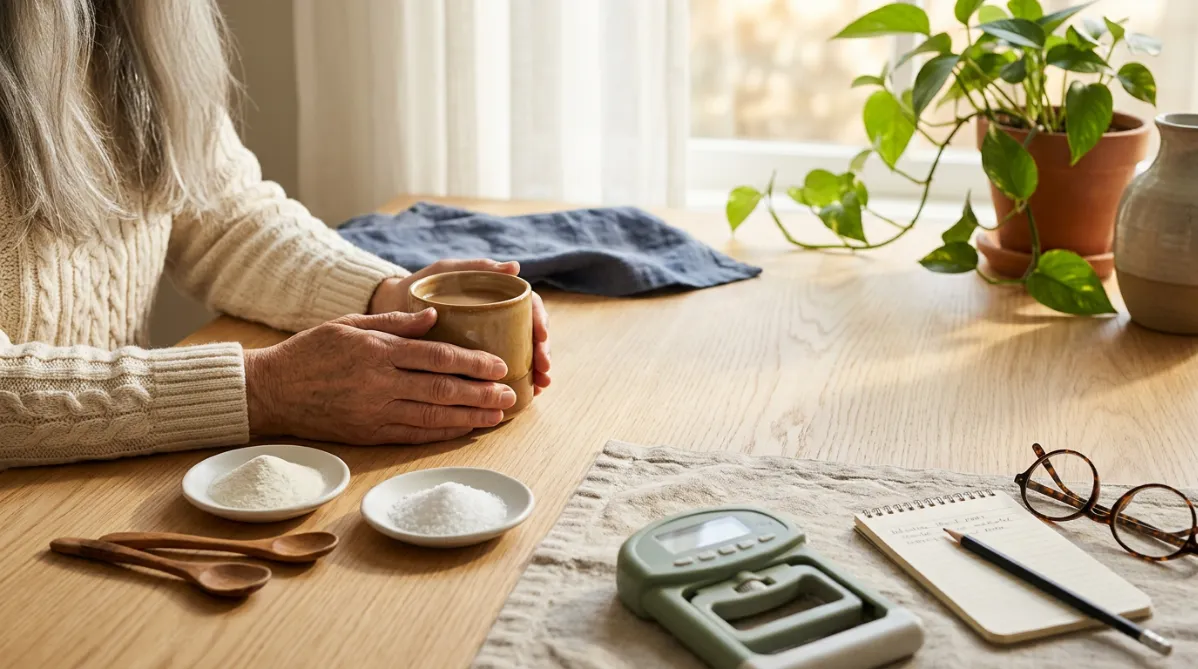
A landscape editorial photograph of a sunlit kitchen table in soft morning light. An older adult's hands, with silver hair and a cream knit sleeve just visible, rest around a ceramic mug. Beside the mug are two small matte white ceramic dishes. One holds a mound of fine white powder, and the other holds a slightly different crystalline white powder. Two wooden spoons lie next to them. A handheld hand-grip dynamometer in muted sage green sits on a linen placemat in the foreground, slightly out of focus. A small open notebook with a pencil and a pair of round tortoiseshell reading glasses sit nearby, with no legible text.

The tabletop is pale oak with a visible grain. Behind it, a window with sheer curtains lets in warm golden light, and the blurred shapes of a trailing green pothos plant and a pale terracotta vase show in the background. The color palette is warm cream, sage green, soft terracotta, and pale wood, with a touch of muted navy from a folded napkin. The mood is calm, thoughtful, and quietly scientific without any laboratory feel.

The composition follows the rule of thirds. The hands and dishes sit in the left-center, and generous negative space on the right is suitable for a title overlay. Shallow depth of field, 50mm lens look, gentle film grain, and soft shadows. Modern lifestyle-magazine and health-journal aesthetic, natural and unstaged, high-end editorial photography.
nutrition

Prekursor kreatyny przewyższa kreatynę pod względem siły chwytu u osób powyżej 65 lat

BY DR. GYMBRO ·

Małe, 8‑tygodniowe badanie przeprowadzone wśród osób starszych niż 65 lat wykazało, że kwas guanidynokarboksylowy (GAA) – bezpośredni prekursor kreatyny – zwiększył siłę chwytu bardziej niż monohydrat kreatyny. Badanie obejmowało jedynie 21 uczestników, nie zawierało programu treningowego, a 95‑procentowy przedział ufności ledwo przekraczał zero. GAA spowodowało także większy spadek miostatyny oraz wyższe wyniki w analizie impedancyjnej (BIA), co może jednak odzwierciedlać zmiany w nawodnieniu. Potencjalne ryzyko podwyższenia homocysteiny wymaga uwagi, ponieważ synteza kreatyny z GAA zużywa grupy metylowe. Poniżej znajdziesz, co badanie wykazało, czego nie może nam powiedzieć oraz dlaczego monohydrat kreatyny pozostaje sprawdzonym wyborem.
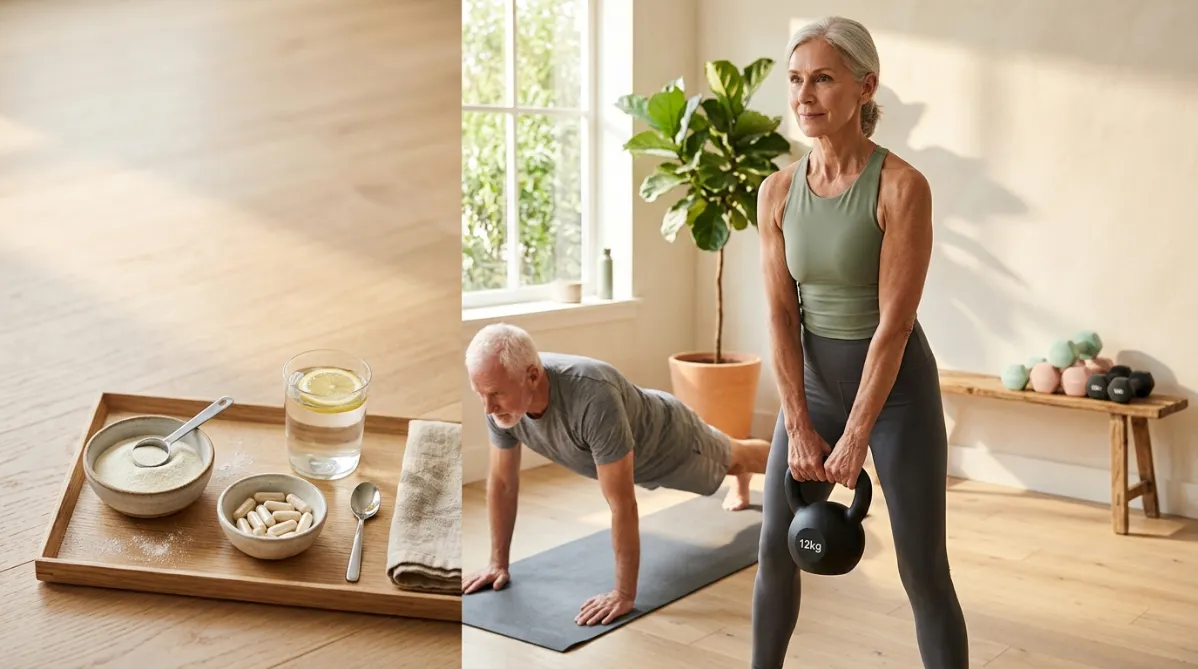
A warm, softly lit modern home gym or sunlit studio, photographed in a clean editorial style. In the center-right of the frame, a silver-haired woman in her mid-60s with a calm, confident expression grips a matte black kettlebell at hip height. She wears a fitted sage-green athletic top and charcoal leggings. Her forearms and shoulders show lean, defined strength rather than bulk. Beside her, slightly out of focus, a man in his late 60s with short white hair and a trim beard performs a controlled bodyweight plank on a pale oak floor.

In the foreground on the left, a minimalist wooden tray holds two small ceramic bowls. One contains fine white powder and the other holds a few cream-colored capsules. Next to them sit a glass of water with a lemon slice and a folded linen towel. A subtle scatter of powder dusts the tray. The foreground is shot with shallow depth of field and a creamy bokeh falloff.

Behind them, tall windows pour in golden morning light, with long soft shadows across the floor. A potted fiddle-leaf fig and a stacked set of pastel-toned dumbbells on a low wooden shelf add texture. The wall is warm off-white plaster with a hint of terracotta in the corner.

The palette is muted and modern: sage green, warm cream, soft terracotta, natural oak, and charcoal, with gentle highlights. The mood is quietly optimistic, focused, and grounded, suggesting strength, vitality, and measured scientific curiosity. The composition leaves clean negative space in the upper-left for a headline overlay. The look is a high-end wellness magazine cover with natural film-like grain, soft contrast, and crisp detail on the hands and kettlebell. There is no text, no logos, and no futuristic elements, only authentic, aspirational realism.
nutrition

Kreatyna + HMB sprawiają, że osoby po 60. roku życia są silniejsze już po 6 tygodniach, ale nie przybierają na masie

BY DR. GYMBRO ·

Suplementacja kreatyną i HMB u osób powyżej 60 lat zwiększyła siłę nóg, pleców i ramion już po sześciu tygodniach, podczas gdy waga oraz masa mięśniowa pozostały praktycznie niezmienione. Badanie, przeprowadzone na 30 aktywnych seniorach w podwójnie zaślepionym, crossoverowym projekcie, wykazało, że przyrosty siły były w dużej mierze niezależne od przyrostu masy mięśniowej, co sugeruje efekt nerwowo‑mięśniowy. Należy jednak pamiętać o krótkim okresie badania, niewielkiej liczbie uczestników i metodzie BIA stosowanej do oceny składu ciała.
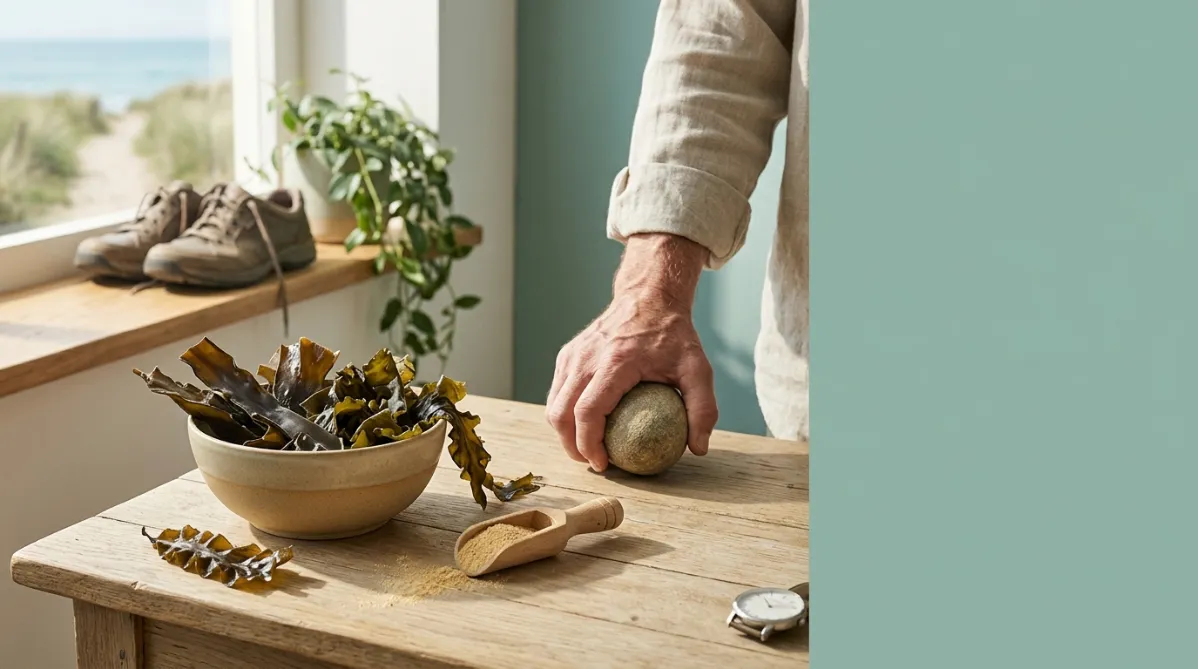
A wide, softly lit editorial photograph of a rustic light-oak table by a sunny window. On it, a handful of dried brown kelp and wakame seaweed fronds spill from a handmade matte ceramic bowl in warm sand tones, their glossy, ruffled edges catching the light. Beside the bowl sits a small wooden scoop holding fine golden-beige powder, with a little of it dusted across the table. In the middle ground, an older adult's weathered but strong hand grips a smooth, rounded river stone, with the knuckles and tendons subtly emphasized to suggest strength and vitality. Only the hand and part of a forearm in a soft oatmeal linen sleeve are visible.

In the background, slightly out of focus, a pair of worn leather walking shoes rests on a windowsill next to a trailing green plant. Beyond the window, a blurred coastal path winds through dune grass toward a pale blue sea, hinting at walking and an active daily life. A simple analog wristwatch lies on the table's edge, a quiet nod to the twelve-week timeline.

The palette is muted and natural: sage green, warm sand, soft ocean teal, and creamy off-white, with deep olive-brown accents from the seaweed. Morning light streams in from the left, casting long, gentle shadows and a faint golden glow. The depth of field is shallow, with crisp focus on the hand and seaweed and a creamy bokeh background. The composition follows the rule of thirds, with the hand and bowl on the left and generous negative space on the right for headline text. The mood is calm and hopeful, with a clean, contemporary wellness-magazine feel. The image is shot as if on a 50mm lens with subtle film grain and a natural, uncluttered, tactile look.
science research

Fucoidan z alg morskich zwiększył siłę chwytu u osób powyżej 60 lat w ciągu 12 tygodni

BY DR. GYMBRO ·

Utrata siły wraz z wiekiem jest jednym z najczęstszych, a jednocześnie najrzadziej omawianych, aspektów starzenia, a trening siłowy nie jest dostępny dla każdego. Nowe, 12‑tygodniowe, randomizowane badanie wykazało, że niskocząsteczkowy fucoidan z alg morskich przyjmowany w dawce 1650 mg dziennie znacząco poprawił siłę chwytu i wynik w teście 6‑minutowego marszu u osób powyżej 60 lat. Ku zaskoczeniu, masa mięśniowa nie uległa zmianie, a dodatki w postaci BCAA i witaminy D nie przyniosły dodatkowych korzyści. Badanie było małe i dotyczyło jednego, konkretnego produktu, więc jest obiecującym tropem, a nie ostatecznym wnioskiem. Oto, co pokazują wyniki i co oznaczają w praktyce.
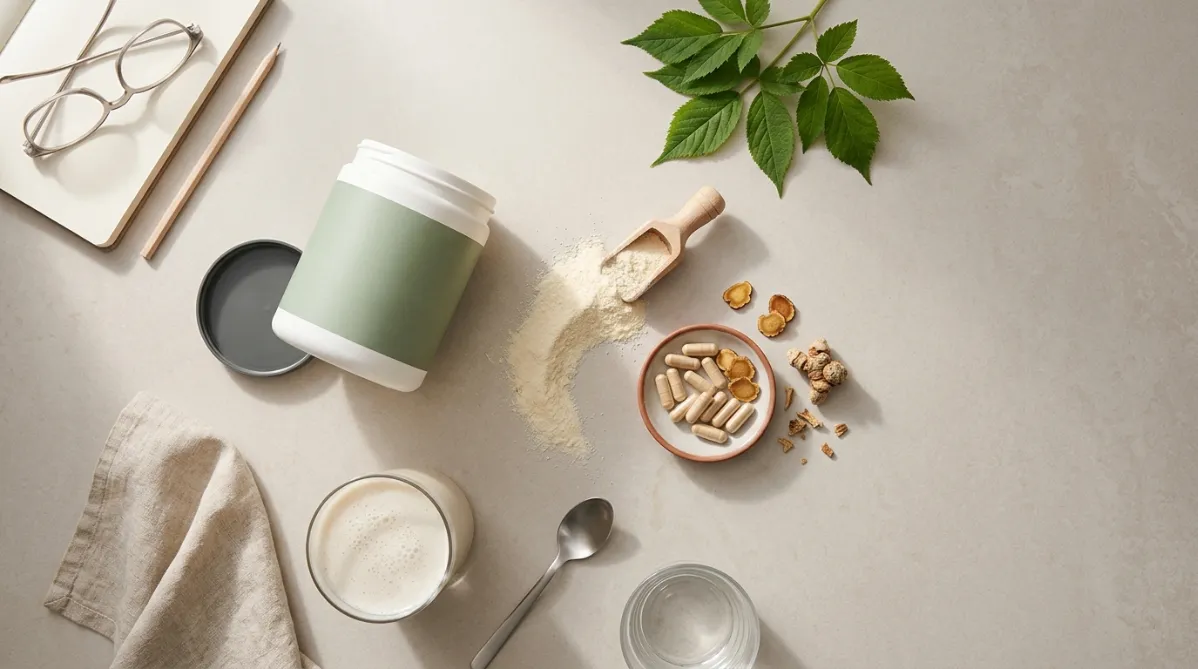
A clean, editorial flat-lay photograph shot from above on a pale warm-grey stone countertop, bathed in soft diffused morning light from the left. At the center sits a matte white supplement tub with a minimal sage-green label, its lid resting beside it. A small wooden scoop spills fine cream-colored whey powder in a gentle arc across the surface, creating delicate natural texture and soft shadows. Next to the powder, a small ceramic dish holds a handful of pale tan capsules and a few tiny golden-brown ginseng root slices and fragments of dried Panax notoginseng root, hinting at the botanical origin of the ingredient. A sprig of fresh green leaves with serrated edges adds a touch of organic color on the upper right.

In the foreground, a tall glass of milky shake with a subtle frothy surface, condensation beads on its sides, sits beside a folded linen napkin in oatmeal tone. A slim brushed-steel spoon and a minimal glass of water complete the arrangement. A pair of simple, elegant reading glasses and a closed notebook with a thin pencil rest at the upper left, suggesting a researcher's desk and a thoughtful review of data, with no legible text visible.

The palette is soft and modern: warm cream, sage green, muted terracotta, pale wood, and gentle off-white, with one small accent of deep amber from the ginseng slices. Composition follows the rule of thirds with generous negative space on the right side for title overlay. Shallow depth of field, crisp focus on the powder and capsules, with the edges gently softened. The mood is calm, trustworthy, and wellness-focused, evoking a contemporary health and science magazine aesthetic. High-resolution, natural color grading, subtle film grain, minimal and airy, 16:9 landscape.
nutrition

AstraGin – ukryty składnik w etykiecie, który zwiększa wchłanianie białka serwatkowego

BY DR. GYMBRO ·

Na etykiecie twojego suplementu przedtreningowego znajduje się maleńki składnik, którego prawdopodobnie nie zauważyłeś – AstraGin. Pilotażowe badanie na ludziach wykazało, że podnosi wchłanianie waliny o 14 %, leucyny o 8 % oraz łącznej liczby niezbędnych aminokwasów o prawie 13 % u osób w wieku 60‑80 lat. Stężenie zonuliny we krwi, będące wskaźnikiem przepuszczalności jelit, spało również o 13 %. Różnice w sile i masie mięśniowej nie były statystycznie istotne, a w badaniu wzięło udział zaledwie 30 osób. Oto, co naprawdę mówią dane na temat skuteczności AstraGin.

This page is available in