Dr. Gymbro
←

#shilajit

1 article
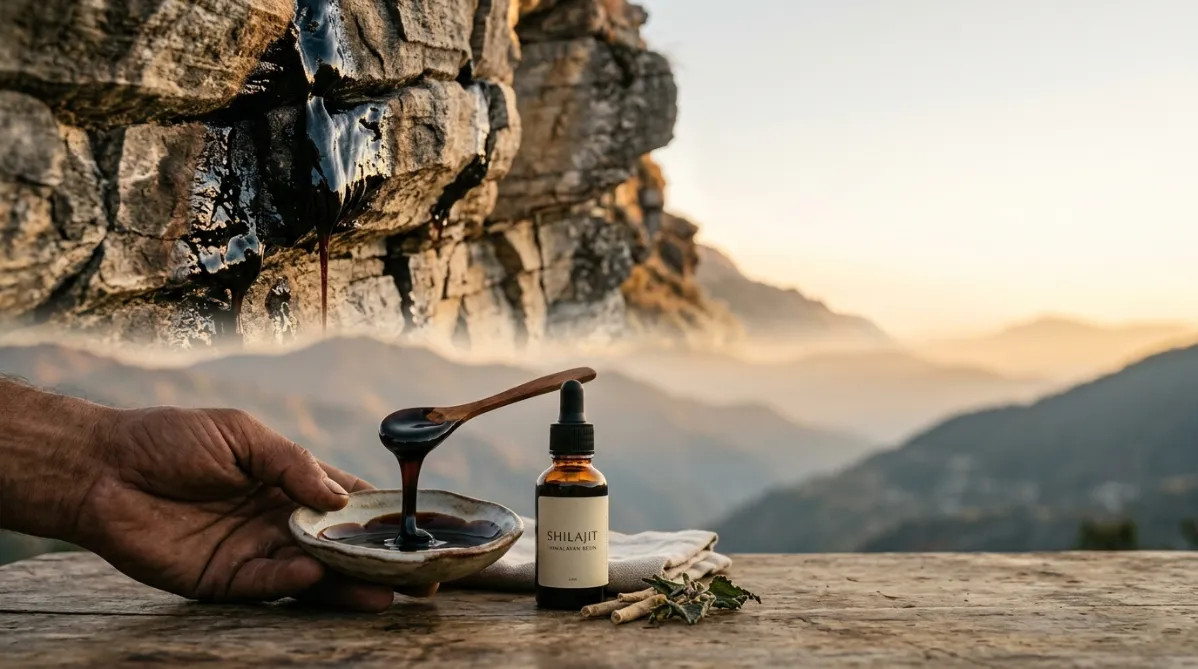
A wide, editorial-style photograph of a rugged Himalayan cliff face at golden hour, with dark, glossy resin seeping from the cracks in the layered stone. Thick, tar-like droplets catch the warm light and shine like polished obsidian. In the foreground, a weathered hand holds a small, rustic ceramic dish with a spoonful of purified Shilajit. The resin is deep brown-black, glossy, and stretches in a slow, viscous ribbon from the spoon. Beside the dish sits a simple, minimalist amber glass dropper bottle with a plain cream label, a folded linen cloth, and a few scattered dried herbs, suggesting a modern wellness ritual. The mid-ground shows soft layers of misty mountain ridges fading into a pale peach and dusty blue sky. The background is gently blurred, with shallow depth of field and creamy bokeh. The color palette is earthy and muted: warm ochre, charcoal, sage green, and soft cream, with a subtle film-grain texture. Natural side lighting creates long, gentle shadows and highlights the textures of the stone, resin, and ceramic. The composition follows the rule of thirds, with the dish and bottle in the lower left and open negative space on the right for headline overlay. The mood is calm, grounded, and credible, like a high-end health and science magazine feature, with a refined, contemporary, slightly documentary look. There is no text, no people's faces, and no futuristic elements.
science research

Shilajit poddany testom: Czy „górna smoła” naprawdę podnosi testosteron?

BY DR. GYMBRO ·

Shilajit, himalajska „górna smoła” sprzedawana jako naturalny booster testosteronu, przeszła randomizowane, podwójnie zaślepione, kontrolowane placebo badanie. U mężczyzn w wieku 45‑55 lat podawano po 250 mg oczyszczonego shilajitu dwa razy dziennie przez 90 dni, co znacząco podniosło całkowity testosteron, wolny testosteron i DHEAS w porównaniu z placebo, przy jednocześnie stabilnym poziomie LH i FSH. Badanie jest obiecujące, ale ograniczone do średnio‑wiekowych mężczyzn i ocenia jedynie hormony, a nie wyniki treningowe. Pokażemy, co naprawdę wynika z badań, czego nie dowodzą oraz dlaczego czystość i testy pod kątem metali ciężkich są tak ważne przy zakupie.

This page is available in