Dr. Gymbro
←

#shilajit

1 article
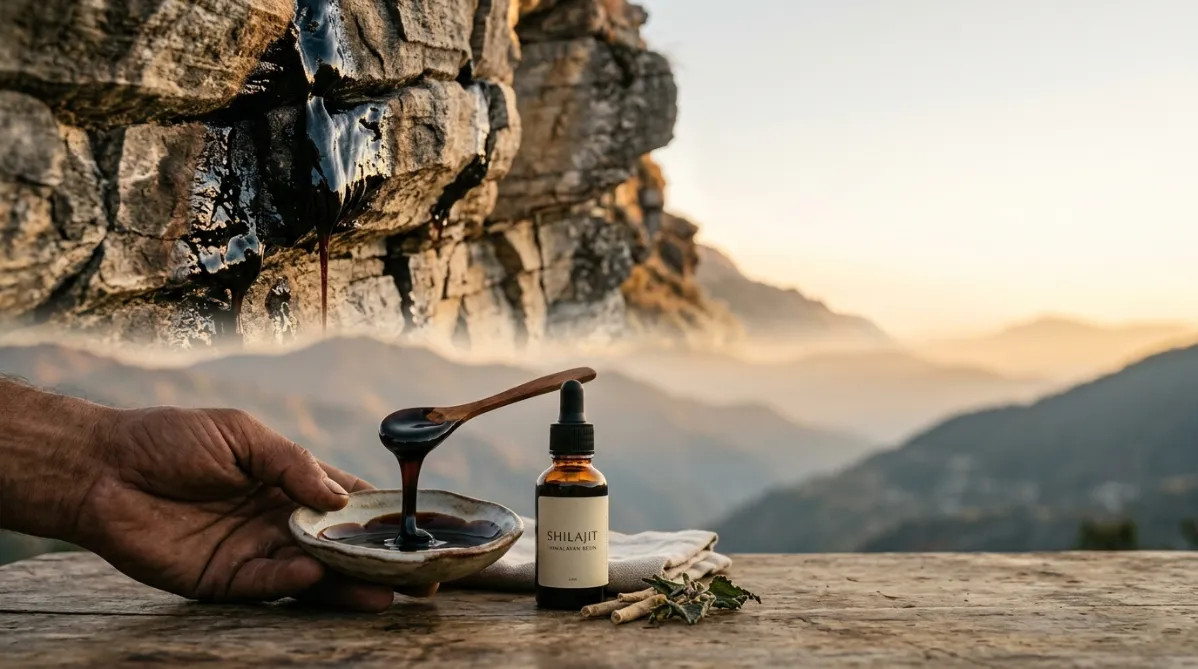
A wide, editorial-style photograph of a rugged Himalayan cliff face at golden hour, with dark, glossy resin seeping from the cracks in the layered stone. Thick, tar-like droplets catch the warm light and shine like polished obsidian. In the foreground, a weathered hand holds a small, rustic ceramic dish with a spoonful of purified Shilajit. The resin is deep brown-black, glossy, and stretches in a slow, viscous ribbon from the spoon. Beside the dish sits a simple, minimalist amber glass dropper bottle with a plain cream label, a folded linen cloth, and a few scattered dried herbs, suggesting a modern wellness ritual. The mid-ground shows soft layers of misty mountain ridges fading into a pale peach and dusty blue sky. The background is gently blurred, with shallow depth of field and creamy bokeh. The color palette is earthy and muted: warm ochre, charcoal, sage green, and soft cream, with a subtle film-grain texture. Natural side lighting creates long, gentle shadows and highlights the textures of the stone, resin, and ceramic. The composition follows the rule of thirds, with the dish and bottle in the lower left and open negative space on the right for headline overlay. The mood is calm, grounded, and credible, like a high-end health and science magazine feature, with a refined, contemporary, slightly documentary look. There is no text, no people's faces, and no futuristic elements.
science research

Shilajit Testato: Il “catrame di montagna” può davvero aumentare il testosterone?

BY DR. GYMBRO ·

Lo Shilajit, il “catrame di montagna” himalayano pubblicizzato come stimolatore naturale del testosterone, è stato testato in uno studio randomizzato, in doppio cieco e controllato con placebo. In uomini di età compresa tra 45 e 55 anni, 250 mg di Shilajit purificato due volte al giorno per 90 giorni hanno aumentato in modo significativo il testosterone totale, quello libero e il DHEAS rispetto al placebo, mentre LH e FSH sono rimasti stabili. I risultati sono incoraggianti ma modesti, limitati a una fascia d’età media e si basano solo su livelli ormonali, non su performance in palestra. Ecco cosa dimostra la ricerca, cosa non dimostra, e perché è fondamentale controllare la purezza e i test sui metalli pesanti quando si acquista il prodotto.

This page is available in