Dr. Gymbro
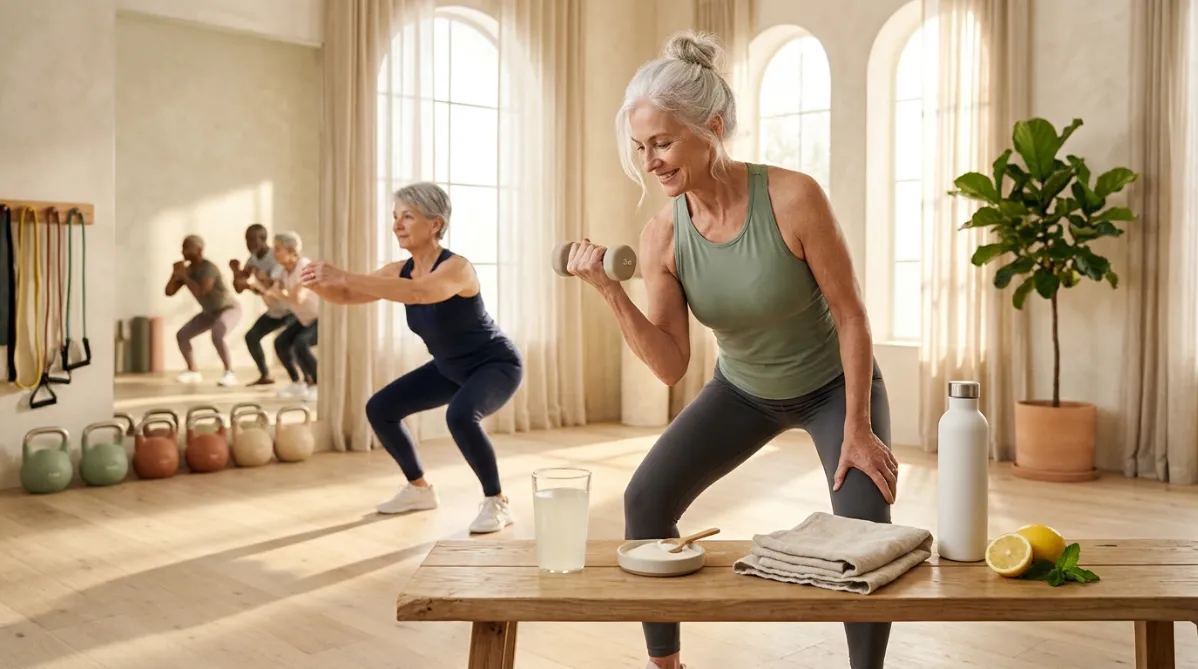
A warm, sunlit boutique fitness studio in soft morning light, shot in wide landscape composition. In the foreground, a woman in her late 60s with silver-white hair in a loose bun and a relaxed, confident smile holds a light dumbbell mid-curl. She wears a sage green athletic top and charcoal leggings. Her posture is strong and graceful. Beside her, slightly out of focus, a second older woman with short gray hair performs a bodyweight squat. Both are part of a small circuit training class.

On a pale oak wooden bench in the sharp foreground, a minimalist glass tumbler holds a cloudy, pale lemon-colored drink. Next to it is a small ceramic dish of white powder with a tiny wooden scoop, a folded linen towel, and a matte white water bottle. Scattered nearby are a few fresh lemon slices and a sprig of mint for a clean, editorial still-life touch.

The studio has tall arched windows with sheer white curtains, letting in golden diffused light that creates long soft shadows on a light blonde wood floor. Background details include neatly arranged pastel-colored kettlebells and rubber resistance bands in muted terracotta, sand, and sage hanging on a minimalist wall rack. A leafy fiddle-leaf fig plant sits in a terracotta pot in the corner.

The color palette is calm and modern: warm creams, soft sage green, terracotta, muted peach, and gentle gold highlights. Shallow depth of field with a creamy bokeh background, shot as if on a 50mm lens at f/2. Natural film-like grain, subtle warmth, high-end wellness magazine aesthetic, clean negative space on the right side of the frame for title overlay. The mood is optimistic, vital, and grounded, celebrating healthy aging, strength, and community. Photorealistic, editorial lifestyle photography.
Nutrition

Aminoácidos + Treinamento Reduzem a Myostatina em Mulheres com 65+ Anos

Dr. Gymbro · · 4 min read

Seu corpo tem um freio interno ao crescimento muscular – e um novo ensaio randomizado liderado por pesquisadores coreanos sugere que mulheres mais velhas podem desacelerá‑lo

O estudo combinou treinamento de resistência em formato de circuito com um suplemento simples de aminoácidos essenciais (EAA). Essa combinação alterou o equilíbrio entre a myostatina, que impede o crescimento, e a follistatina, que a antagoniza, mais do que cada intervenção isolada.

Os detalhes são importantes, então veja o que foi testado, o que mudou e o que os dados não podem afirmar.

O freio muscular em linguagem simples

A myostatina é uma miocina – um sinal proteico que restringe o aumento da massa muscular. A follistatina age como antagonista. Pesquisadores costumam analisar a proporção follistatina/myostatina como um indicativo geral de que o organismo está mais inclinado a construir músculo ou a mantê‑lo estagnado.

Grande parte do que sabemos sobre o poder da myostatina vem de estudos em animais e em bancada, onde a interrupção dessa via produz ganhos musculares drásticos. Este novo estudo difere: trata‑se de um ensaio clínico randomizado em humanos publicado no Journal of the International Society of Sports Nutrition (2026). Contudo, as medições hormonais permanecem como marcadores sanguíneos – sugerem um mecanismo, mas não o comprovam de forma conclusiva.

Quem foi avaliado

O ensaio recrutou 96 mulheres saudáveis com 65 anos ou mais sem resistência à insulina. Elas foram randomizadas em quatro grupos, que seguiram o protocolo por 12 semanas:

  • Controle;
  • Exercício de resistência (ER) apenas;
  • Suplementação de EAA apenas;
  • ER + EAA.

Portanto, os achados se aplicam a mulheres idosas saudáveis. O estudo não incluiu homens, adultos mais jovens ou mulheres com distúrbios metabólicos.

Protocolo: dose e treinamento

Dose de EAA: 5,5 g de aminoácidos essenciais, ingeridos duas vezes ao dia, totalizando 11 g/dia. Essa dose foi usada nos grupos EAA e ER + EAA.

Treinamento: circuito de resistência, três sessões semanais, cada uma com 60 min de intensidade moderada, ao longo de 12 semanas.

O resumo não especifica o momento exato da ingestão dos EAAs em relação ao treino, nem a composição detalhada da fórmula (por exemplo, teor de leucina). Caso queira reproduzir o protocolo, consulte o artigo completo para esses pormenores.

Principais resultados

  • A maior mudança na proporção ocorreu no grupo combinado. A relação follistatina/myostatina aumentou significativamente no grupo ER + EAA, com diferença estatística em relação ao controle (p < 0,001) e ao grupo EAA isolado (p < 0,05). O resumo não relata diferença significativa frente ao exercício sozinho, portanto, não se pode afirmar que a combinação superou o treino naquele marcador.

  • Myostatina diminuiu e follistatina aumentou. A myostatina reduziu (p < 0,05). A follistatina subiu tanto no grupo ER (p < 0,05) quanto no grupo ER + EAA (p < 0,001).

  • Massa muscular aumentou no grupo combinado. O grupo ER + EAA apresentou aumento significativo da massa muscular (η² parcial = 0,174) e melhores resultados nos testes de aptidão sênior, com valores‑p variando de < 0,05 a < 0,001, conforme a medida.

  • Inflamação recuou. IL‑6 e IL‑1β caíram de forma significativa em ambos os grupos de exercício. O TNF‑α diminuiu apenas no grupo ER + EAA (p < 0,05). A inflamação crônica de baixo grau está associada à perda muscular na idade avançada, reforçando a narrativa geral do estudo.

Os autores concluíram que a combinação foi superior a cada intervenção isolada quanto à massa muscular, desempenho e perfil de miocinas em mulheres idosas saudáveis.

Por que os EAAs podem ser importantes

Músculos envelhecidos tendem a responder menos à proteína – um fenômeno chamado resistência anabólica. Os EAAs fornecem os blocos de construção que o corpo não produz. Emparelhá‑los ao estímulo do treino é, portanto, uma estratégia lógica para dar ao músculo envelhecido um impulso maior. Este ensaio sustenta essa lógica em um programa próximo da prática real, embora não tenha investigado o motivo exato da sinergia.

Dicas práticas

  • Dose usada: 5,5 g de EAAs, duas vezes ao dia, por 12 semanas.
  • Treino usado: circuitos de 60 min, intensidade moderada, 3 vezes por semana.
  • Público‑alvo ideal: mulheres saudáveis com 65 anos ou mais que desejam preservar massa muscular e funcionalidade. Mulheres nos primeiros 60 anos podem se interessar, mas não fazem parte da faixa etária estudada.
  • O exercício é o motor. O grupo que recebeu apenas suplemento não atingiu os mesmos resultados nos marcadores principais. O pó isolado não conta a história completa.

Quem deve evitar ou consultar primeiro

  • Pessoas com doença renal, hepática ou condição que exija restrição de proteínas. Consulte um profissional de saúde antes de iniciar suplementos de aminoácidos.
  • Indivíduos com resistência à insulina ou diabetes. O estudo excluiu quem tinha resistência à insulina; logo, os resultados não se aplicam a eles.
  • Quem tem problemas cardíacos, articulares ou limitações de mobilidade. Obtenha liberação médica antes de iniciar um novo regime de exercícios.
  • Homens e adultos jovens. Não foram testados neste ensaio.

O fine print

Algumas ressalvas são necessárias. O ensaio foi registrado retroativamente (julho de 2025), o que reduz a transparência. A duração foi de apenas 12 semanas, em voluntários saudáveis, e mediu marcadores sanguíneos em vez de desfechos a longo prazo, como quedas, fraturas ou independência. As estatísticas relatam 72 graus de liberdade de erro, sugerindo que menos de 96 participantes foram analisados. Verifique o texto completo para detalhes sobre desistências. Ainda não sabemos se as alterações na myostatina são causa dos ganhos musculares ou apenas um efeito colateral.

Conclusão

Para mulheres saudáveis com 65 anos ou mais, este ensaio acrescenta evidência de que um programa de treinamento moderado e consistente, aliado a cerca de 11 g diários de EAAs, melhora massa muscular, função e diversos marcadores hormonais e inflamatórios. É um sinal encorajador, mas não definitivo. Considere‑o como um roteiro promissor para discutir com seu médico ou treinador, e não como uma fórmula garantida para desligar o freio muscular.

Original study

Read the original research on pubmed.ncbi.nlm.nih.gov →

This article summarizes published research for general information. It is not medical advice.

DG

Written by

Dr. Gymbro

Dr. Gymbro writes for Dr. Gymbro: science-backed fitness, nutrition & performance.

Related Articles

A softly lit, minimalist gym interior photographed in a modern editorial style. In the foreground, a muscular lifter in a fitted charcoal tank top is mid-set at a cable station, forearm and shoulder muscles defined, a light dusting of chalk on their hands. The frame is shot at a slight low angle with shallow depth of field, so the background gym equipment melts into creamy blur. On a matte concrete-textured bench beside them sits a clean, unbranded matte-white scoop container of white powder, a stainless steel shaker bottle, and a small analog stopwatch, arranged with careful, magazine-style composure. A few loose grains of white powder catch the light on the bench surface.

Warm golden late-afternoon sunlight pours through tall industrial windows on the left, creating long diagonal light streaks, gentle lens flare, and a subtle haze of floating chalk dust that glows in the beams. The palette is restrained and sophisticated: warm sand, soft cream, muted terracotta, deep charcoal, and a single accent of sage green from a potted plant on a shelf. Rows of neatly racked dumbbells in dark metal repeat in the mid-ground, adding rhythm and depth.

The composition follows the rule of thirds: the lifter and supplement still life occupy the right two-thirds, while the left third remains calm, with a smooth, softly blurred wall and window light, leaving generous negative space for headline text. Subtle film grain, natural color grading, and a slightly desaturated, high-end lifestyle photography look evoke a contemporary health and science journal. No text, logos, or graphics. Clean, aspirational, grounded, and tactile, with a sense of focused effort and quiet intensity.
nutrition

Beta‑Alanina Finalmente Funciona para Levantadores — Se Você Treinar Assim

BY DR. GYMBRO ·

A beta‑alanina tem um histórico nebuloso quando o assunto é musculação, mas um novo ensaio clínico randomizado pode explicar o porquê. Quando levantadores treinados tomaram 6,4 g por dia durante quatro semanas, o total de repetições aumentou 17,3 % em drop sets e 18,2 % em bi‑sets, enquanto o grupo placebo não apresentou ganhos significativos. O esforço percebido, a motivação e o afeto não diferiram entre os grupos, indicando que o ganho foi físico e não psicológico. Aqui estão a dose, o período de carga, a quem os dados se aplicam e quem ainda deve manter o ceticismo.

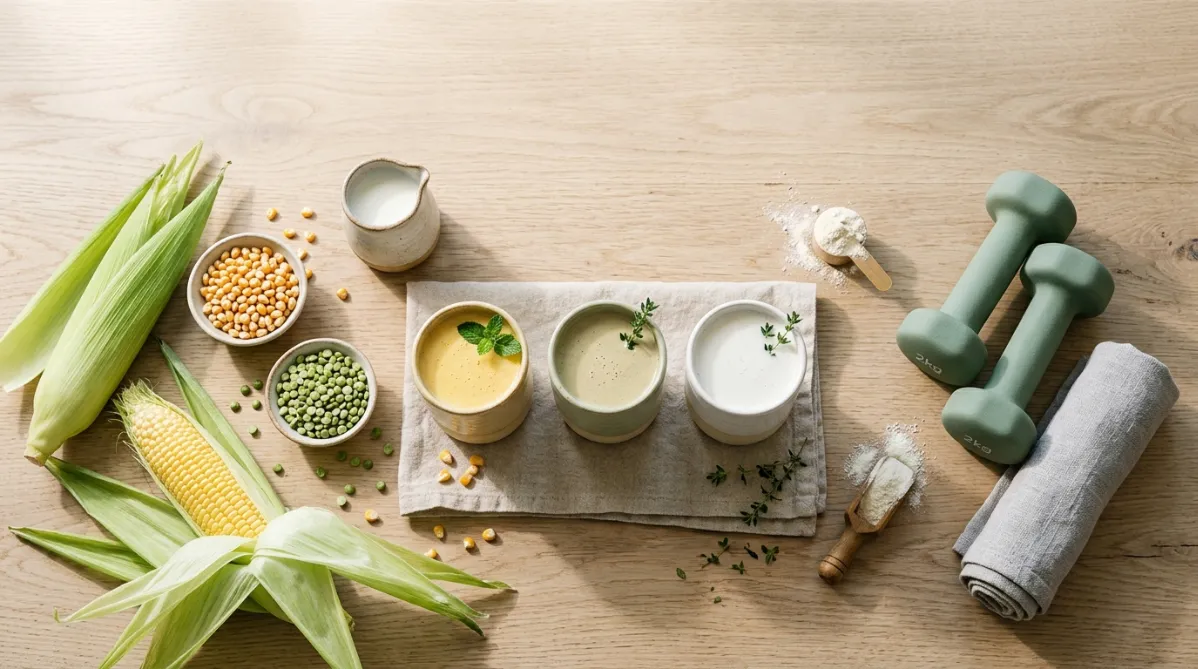
A bright, airy overhead flat-lay on a pale oak wooden table in soft morning daylight. At the center, three matching ceramic glasses in a neat row, each holding a creamy shake in a slightly different tone: one warm golden-yellow, one soft sage green-beige, one pure milky white. Beside the glasses, small shallow ceramic bowls hold the raw sources: dried yellow corn kernels, split green peas, and a small pitcher of fresh milk. A few fresh corn husks and a single ear of corn with pale green leaves are arranged diagonally across the left side of the frame, while a sprig of fresh herbs adds a touch of green. On the right, a pair of matte sage-green dumbbells and a rolled linen towel suggest light resistance exercise, placed with calm, editorial restraint. A linen napkin, a wooden scoop dusted with fine powder, and a few scattered kernels add natural texture. The color palette is warm cream, butter yellow, muted sage, and soft white, with gentle natural shadows falling to the lower right. Shallow depth of field, clean negative space at the top for headline overlay, minimalist modern magazine styling, crisp food-photography look, subtle film-like grain, wide landscape composition.
nutrition

A proteína vegetal que acabou de igualar o leite na síntese muscular

BY DR. GYMBRO ·

A proteína vegetal costuma ser considerada inferior ao leite na construção muscular, mas um novo estudo com idosos mostrou que a proteína de milho não recebeu esse alerta. Em um ensaio randomizado com 48 adultos saudáveis, em média com 68 anos, 20 g de proteína de milho, uma mistura de ervilha e milho e a proteína do leite aumentaram a síntese de proteína muscular muito além do placebo, sem diferenças entre os grupos de proteína. O exercício de resistência potencializou a resposta em todos os grupos. A seguir, a dose, os números, quem pode se beneficiar e as ressalvas antes de trocar seu shake.

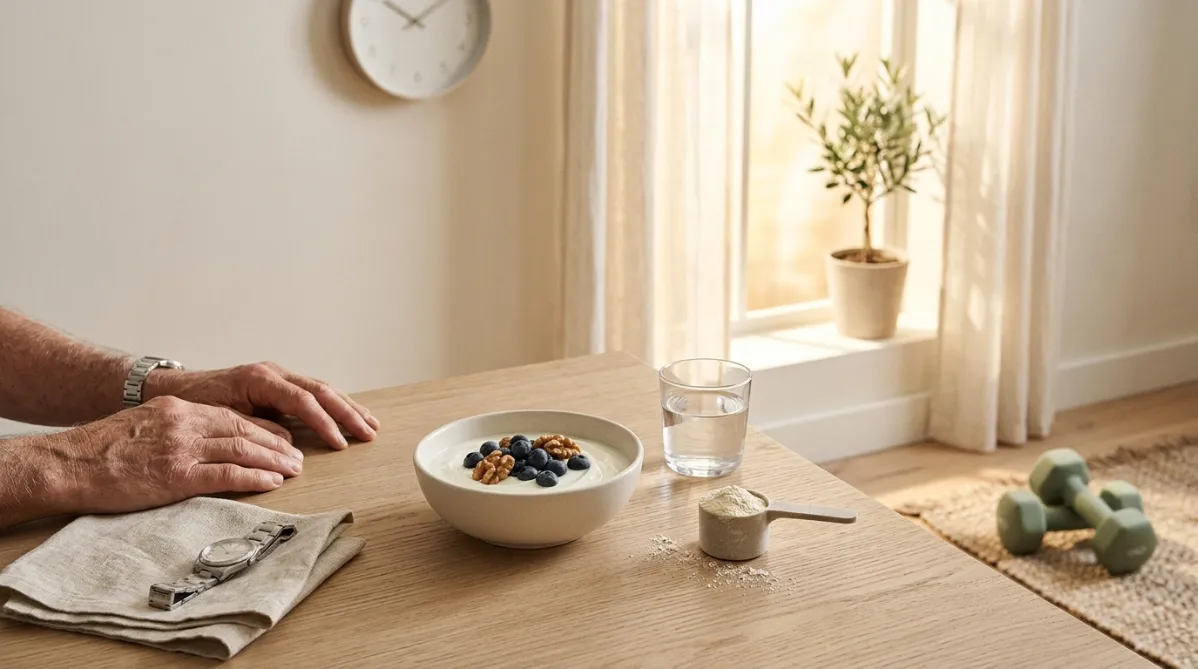
A landscape editorial photograph of a sunlit kitchen table in soft morning light, styled like a modern wellness journal cover. In the center sits a simple white ceramic bowl of plain Greek yogurt topped with walnuts and blueberries. Beside it are a small glass of water and a matte stone scoop holding a pale powder, with a few loose grains scattered on a light oak surface. To the left, a pair of weathered hands, clearly an older man's with silver hair on the wrist, rests near a neatly folded linen napkin and a slim stainless steel wristwatch. To the right, a pair of modest hex dumbbells in muted sage green sits on a woven rug at the edge of the frame, slightly out of focus, hinting at strength training. In the background, a tall window with sheer curtains lets in warm golden light, and a small potted olive plant stands on the sill. A minimalist analog clock on the wall is softly blurred, suggesting fasting windows without being literal. The palette is calm and earthy: warm cream, oatmeal, sage green, soft terracotta, and pale wood tones. The composition uses generous negative space on the upper left for headline overlay, shallow depth of field, and gentle natural shadows. The style is clean, contemporary, and slightly muted, like a lifestyle magazine or health journal feature, shot on a 50mm lens with soft film-like grain. Calm, thoughtful, and quietly authoritative, with no text, logos, or futuristic elements.
nutrition

Leucina vs Proteína em Dietas de Jejum: Resultado Surpreendente em Homens Mais Velhos

BY DR. GYMBRO ·

A leucina costuma ser chamada de “interruptor mestre” dos músculos, por isso se esperava que protegesse os atletas mais velhos em dietas de jejum. Contudo, em um estudo randomizado de 28 dias com 61 homens mais velhos submetidos a jejum em dias alternados, os suplementos de leucina e de proteína não apresentaram vantagem sobre o grupo controle. Todos os grupos melhoraram força, função, pressão arterial e marcadores de colesterol. Veja as doses testadas, quem ainda pode se beneficiar, quem pode dispensar e as limitações do estudo.

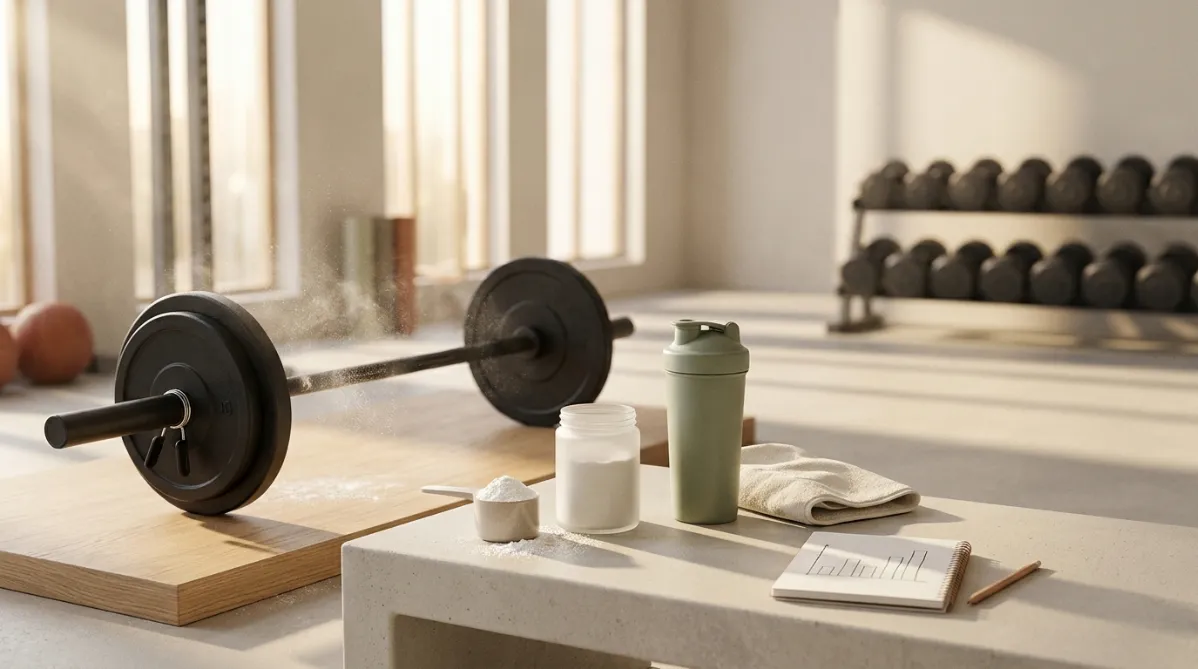
A softly lit, minimalist strength-training studio photographed in a modern editorial style. In the foreground, a matte black barbell loaded with weight plates rests on a light oak platform, with fine chalk dust floating in warm morning light. Beside it on a pale concrete bench sits a simple ceramic scoop of white creatine powder, with a small spill of fine crystals catching the light, next to a minimal frosted glass jar with no label. A matte sage-green shaker bottle and a folded cream towel sit nearby. In the soft-focus background, tall windows let in diffused golden sunlight, casting long, gentle shadows across the floor. A rack of neatly arranged dumbbells is blurred in muted charcoal tones.

The color palette is calm and sophisticated: warm off-white, sand, sage green, soft charcoal, and touches of terracotta. A small open notebook with a pencil lies on the bench, suggesting research and data tracking, with abstract hand-drawn bar graph lines faintly visible on the page but not legible. The composition follows the rule of thirds, with the barbell and powder on the left and generous negative space on the right for headline text. Shallow depth of field, crisp textures on the metal knurling and powder grains, subtle film grain, and a contemporary wellness-magazine look. Clean, airy, and editorial, with a grounded, scientific yet approachable mood. Landscape 16:9 composition.
science research

Creatina e Levantamento: Mais Força, sem Estratégia de Dosagem Vencedora

BY DR. GYMBRO ·

Uma meta‑análise de 63 estudos com 1.489 participantes investigou quanto a creatina acrescenta ao treinamento de resistência. O ganho de força foi moderado e consistente tanto na parte superior quanto na inferior do corpo, enquanto o aumento da massa magra foi menor e a massa de gordura não mudou significativamente. Surpreendentemente, a estratégia de dosagem, a dose diária e o protocolo não influenciaram os resultados. A idade foi o único indício exploratório, com efeitos de força maiores em participantes mais jovens. Veja o que o estudo realmente encontrou e o que ele não pode afirmar.

This page is available in