Dr. Gymbro
A softly lit, minimalist gym interior photographed in a modern editorial style. In the foreground, a muscular lifter in a fitted charcoal tank top is mid-set at a cable station, forearm and shoulder muscles defined, a light dusting of chalk on their hands. The frame is shot at a slight low angle with shallow depth of field, so the background gym equipment melts into creamy blur. On a matte concrete-textured bench beside them sits a clean, unbranded matte-white scoop container of white powder, a stainless steel shaker bottle, and a small analog stopwatch, arranged with careful, magazine-style composure. A few loose grains of white powder catch the light on the bench surface.

Warm golden late-afternoon sunlight pours through tall industrial windows on the left, creating long diagonal light streaks, gentle lens flare, and a subtle haze of floating chalk dust that glows in the beams. The palette is restrained and sophisticated: warm sand, soft cream, muted terracotta, deep charcoal, and a single accent of sage green from a potted plant on a shelf. Rows of neatly racked dumbbells in dark metal repeat in the mid-ground, adding rhythm and depth.

The composition follows the rule of thirds: the lifter and supplement still life occupy the right two-thirds, while the left third remains calm, with a smooth, softly blurred wall and window light, leaving generous negative space for headline text. Subtle film grain, natural color grading, and a slightly desaturated, high-end lifestyle photography look evoke a contemporary health and science journal. No text, logos, or graphics. Clean, aspirational, grounded, and tactile, with a sense of focused effort and quiet intensity.
Nutrition

Beta‑Alanina Finalmente Funciona para Levantadores — Se Você Treinar Assim

Dr. Gymbro · · 4 min read

Beta‑alanina tem um problema de reputação na academia. É um suplemento bem conhecido para esforços de alta intensidade, mas seus benefícios para o treinamento de resistência permanecem obscuros. Um novo ensaio clínico randomizado sugere que a peça que faltava pode ser como você treina. No estudo, levantadores que tomaram beta‑alanina por quatro semanas conseguiram aproximadamente 17‑18 % a mais de repetições totais em dois protocolos extenuantes e de alta fadiga: drop sets e bi‑sets.

Fonte: Colini et al., Journal of Strength and Conditioning Research. PubMed | DOI

A Grande Descoberta: +17,3 % e +18,2 % Mais Rep

Os pesquisadores randomizaram 22 jovens (homens e mulheres) treinados em resistência para beta‑alanina (6,4 g por dia, n = 12) ou placebo de maltodextrina (n = 10). O estudo foi duplo‑cego e durou quatro semanas. Antes e depois da suplementação, todos completaram dois protocolos difíceis e tiveram o total de repetições contado.

O grupo beta‑alanina melhorou em ambos:

  • Drop sets: total de repetições aumentou 17,3 % (tamanho do efeito 0,74, p = 0,007).
  • Bi‑sets: total de repetições aumentou 18,2 % (tamanho do efeito 0,98, p < 0,0001).

O grupo placebo não apresentou melhorias significativas em nenhum dos protocolos. As repetições em drop set variaram –0,98 % (p = 0,988) e as de bi‑set subiram 5,6 % (p = 0,406).

Por Que Esses Treinos? A Teoria do “Ácido Insuficiente”

Os autores partem de um quebra‑cabeça. Os benefícios de desempenho da beta‑alanina são amplamente reconhecidos, mas seus efeitos no exercício de resistência permanecem incertos. Eles levantam a hipótese de que estudos anteriores usaram protocolos que não eram suficientemente “acidóticos”. Drop sets e bi‑sets são desenhados para levar o músculo a uma fadiga profunda com descanso mínimo.

Veja como cada protocolo foi estruturado no ensaio:

  • Drop set: três séries a 80 % de 1‑RM, com três reduções sucessivas de carga de 20 % dentro de cada série.
  • Bi‑set: três séries a 70 % de 1‑RM, combinando supino inclinado com supino plano.

Uma ressalva: essa é a justificativa dos pesquisadores, não algo explícito no resumo. Os resultados são compatíveis com a ideia de que a beta‑alanina ajuda mais quando o treino é suficientemente duro, porém o resumo não traz medições que confirmem o mecanismo.

O Jogo Mental: Nada Mudou

O estudo também acompanhou a percepção de esforço, motivação e afeto (o quão bom ou ruim o exercício pareceu). A percepção de esforço aumentou ao longo das séries em ambos os protocolos (p < 0,0001), o que é esperado à medida que a fadiga se acumula. Mas não houve diferenças entre os grupos (p > 0,05). As demais medidas psicológicas não foram influenciadas por série, grupo ou tempo (todos p > 0,05).

Em termos simples, a beta‑alanina não tornou as sessões mais fáceis nem mais motivadoras. Os levantadores simplesmente completaram mais repetições. Os autores concluem que o ganho de desempenho veio “sem mudança concomitante nas respostas psicológicas”.

Dicas Práticas

Dose e Período de Carga

O ensaio utilizou 6,4 g de beta‑alanina por dia durante 4 semanas. Esse é o único protocolo respaldado por este estudo, portanto mantenha‑se próximo a ele em vez de presumir que doses menores ou períodos mais curtos gerarão os mesmos resultados.

Cronograma

O resumo não informa como a dose diária foi fracionada ou cronometrada em relação aos treinos. Não afirme uma estratégia de timing específica a partir deste paper. Consulte o texto completo antes de copiar qualquer esquema.

E os Formigamentos?

O resumo não relata efeitos colaterais, portanto este artigo não fornece dados sobre parestesia. O formigamento (sensação de alfinetes) é amplamente mencionado na literatura geral sobre beta‑alanina, mas isso vem de conhecimento de base, não deste estudo. Se o desconforto for incômodo, uma abordagem prática é ler a seção de métodos do artigo completo para ver como a dose foi administrada e conversar com um profissional qualificado.

Para Quem É Indicado

A evidência aplica‑se mais diretamente a jovens treinados em resistência, homens e mulheres, que utilizam treinos tipo drop set ou bi‑set e se importam com o total de repetições em trabalho de alta fadiga. Se o seu programa depende dessas técnicas para hipertrofia ou resistência muscular, este é o grupo ao qual os dados se referem.

Quem Pode Pular (ou Manter o Ceticismo)

  • Levantadores que nunca usam técnicas de alta fadiga. O estudo testou apenas drop sets e bi‑sets, não demonstrando benefícios para séries simples com longos descansos.
  • Pessoas fora do grupo estudado. Idosos, iniciantes e outras populações não foram testados.
  • Quem espera um impulso na motivação. As respostas psicológicas não mudaram.
  • Quem busca aumento de força máxima. O desfecho medido foi resistência isotônica (total de repetições), não um novo 1‑RM.

O Direto ao Ponto

Trata‑se de um estudo pequeno, com 22 participantes, e os grupos foram desiguais (12 vs 10). Durou quatro semanas e avaliou apenas dois protocolos. Os tamanhos de efeito foram moderados a grandes para a beta‑alanina, mas amostras pequenas podem exagerar ou subestimar efeitos reais. O tamanho de efeito do grupo placebo em bi‑set (relatado como 0,01 ao lado de um aumento de 5,6 %) parece inconsistente, o que ressalta a necessidade de analisar os dados completos. Ensaios maiores e com populações mais variadas seriam necessários para confirmar a abrangência da descoberta.

Conclusão

Se você busca um suplemento que ajude a cumprir mais repetições quando o treino é brutal, este ensaio oferece o melhor caso de beta‑alanina para treinamento de resistência até agora. Com 6,4 g por dia por quatro semanas, levantadores treinados fizeram cerca de 17‑18 % a mais de repetições totais em drop sets e bi‑sets, enquanto o grupo placebo não mostrou ganhos significativos. Considere isso promissor, não definitivo, e alinhe suas expectativas ao tipo de treino que realmente realiza.
Original study

Read the original research on pubmed.ncbi.nlm.nih.gov →

This article summarizes published research for general information. It is not medical advice.

DG

Written by

Dr. Gymbro

Dr. Gymbro writes for Dr. Gymbro: science-backed fitness, nutrition & performance.

Related Articles

A clean, editorial still life shot from a slightly elevated angle on a pale oatmeal-colored stone countertop, lit by soft natural window light from the left that casts long, gentle shadows. In the center sits an open, unlabeled amber glass supplement bottle on its side, with a small scatter of cream and white capsules spilling toward the viewer. Beside it, a matte ceramic dish holds a few capsules and a pinch of coarse sea salt. To the right, a neatly arranged group of whole foods that are natural zinc and magnesium sources: halved oysters on a small slate board, a small bowl of pumpkin seeds, a handful of raw cashews, and a few dark green spinach leaves. In the left foreground, a worn leather gym notebook lies open with minimal handwritten tally marks and a simple hand-drawn flat line graph in dark ink, with a brass pen resting across it. A single chrome dumbbell handle edges into the frame at the far left, softly out of focus, and a folded charcoal gym towel sits at the top right corner. The palette is warm and muted: sand, cream, sage green, amber, and charcoal, with a subtle terracotta accent in the ceramic dish. The depth of field is shallow, with the capsules and bottle in crisp focus and the background gently blurred into a soft beige haze. The mood is calm, thoughtful, and skeptical, like a modern health and science magazine feature. The composition leaves generous negative space on the upper right for headline text. The texture is tactile and fine-grained, with a subtle film-like softness and natural contrast. Wide landscape 16:9 framing.
science research

ZMA e Testosterona? O que 8 semanas de estudo em levantadores revelaram

BY DR. GYMBRO ·

O ZMA ganhou notoriedade com promessas ousadas sobre aumento de testosterona, ligações ao escândalo BALCO e um estudo precoce em futebol americano que sugeria grandes ganhos. Depois, pesquisadores fizeram um teste mais rigoroso: 42 homens treinados, duplo‑cego, oito semanas de treinamento padronizado. O zinco sérico subiu 11‑17 %, porém sem significância, e hormônios, força, composição corporal, resistência e potência anaeróbica não se diferenciaram do placebo. Aqui explicamos o que o estudo mostrou e o que não mostrou, por que a deficiência é outra questão, e o que os praticantes devem fazer em vez disso.

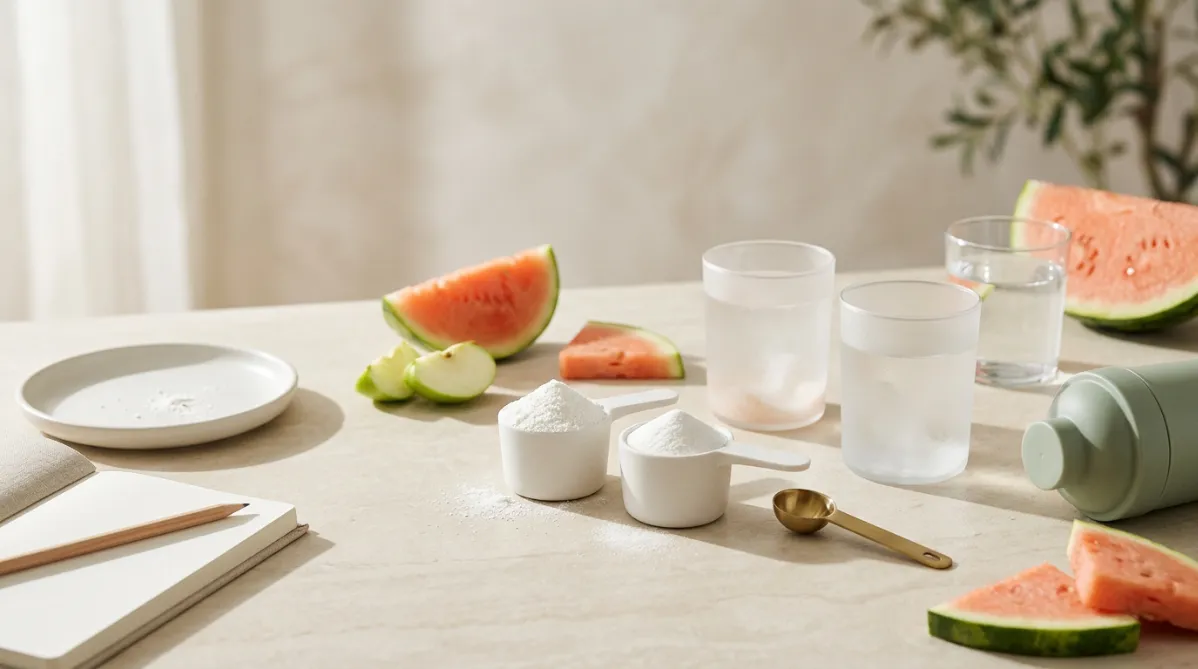
A bright, minimalist editorial still life shot from a slightly elevated three-quarter angle on a pale oat-colored stone countertop, bathed in soft natural window light with gentle long shadows. In the center sit two matching matte white supplement scoops, side by side. One is heaped with fine white crystalline powder, the other holds an almost identical pile, so the viewer is invited to compare them. Beside them are two simple frosted glass tumblers of cloudy water, each with a small whisper of powder swirling at the bottom. A third glass of clear water sits slightly apart, as a quiet nod to the placebo.

Scattered around the scene are fresh, sliced watermelon wedges with vivid coral-pink flesh and pale green rinds, and a few sliced green apples with crisp white interiors, hinting at the natural sources of citrulline and malic acid. A small brushed-brass measuring spoon and a minimalist matte sage-green shaker bottle rest at the edge of the frame. Off to one side, a clean ceramic dish holds a few loose grains of powder, and a slim linen notebook with a pencil lies open to a blank page, suggesting data and study notes without any legible text.

The color palette is soft and modern: warm cream, blush coral, sage green, and touches of brass, with a faintly blurred background of a sunlit kitchen or studio with a pale plaster wall. Shallow depth of field keeps the scoops tack sharp while the background melts into a creamy bokeh. The composition leaves generous negative space on the left third of the frame for a title overlay. The overall mood is calm, trustworthy, and trendy, like a contemporary wellness and science journal cover, with crisp detail, subtle film-like grain, and a clean, airy, balanced feel.
science research

Citrulina Malato vs L‑Citrulina: o Malato Realmente Importa?

BY DR. GYMBRO ·

Citrulina malato ou L‑citrulina pura? Um ensaio clínico randomizado, duplo‑cego e cruzado, com 43 praticantes treinados comparou as duas formas ao placebo. Nenhuma delas melhorou força, potência, salto, repetições ou a percepção de esforço, e o malato não trouxe nenhum benefício adicional à citrulina. Confira o que foi medido, as doses usadas e as limitações que impedem conclusões definitivas. Se ainda está em dúvida sobre o que colocar no shaker, este é o ponto de partida.

A softly lit, minimalist strength-training studio photographed in a modern editorial style. In the foreground, a matte black barbell loaded with weight plates rests on a light oak platform, with fine chalk dust floating in warm morning light. Beside it on a pale concrete bench sits a simple ceramic scoop of white creatine powder, with a small spill of fine crystals catching the light, next to a minimal frosted glass jar with no label. A matte sage-green shaker bottle and a folded cream towel sit nearby. In the soft-focus background, tall windows let in diffused golden sunlight, casting long, gentle shadows across the floor. A rack of neatly arranged dumbbells is blurred in muted charcoal tones.

The color palette is calm and sophisticated: warm off-white, sand, sage green, soft charcoal, and touches of terracotta. A small open notebook with a pencil lies on the bench, suggesting research and data tracking, with abstract hand-drawn bar graph lines faintly visible on the page but not legible. The composition follows the rule of thirds, with the barbell and powder on the left and generous negative space on the right for headline text. Shallow depth of field, crisp textures on the metal knurling and powder grains, subtle film grain, and a contemporary wellness-magazine look. Clean, airy, and editorial, with a grounded, scientific yet approachable mood. Landscape 16:9 composition.
science research

Creatina e Levantamento: Mais Força, sem Estratégia de Dosagem Vencedora

BY DR. GYMBRO ·

Uma meta‑análise de 63 estudos com 1.489 participantes investigou quanto a creatina acrescenta ao treinamento de resistência. O ganho de força foi moderado e consistente tanto na parte superior quanto na inferior do corpo, enquanto o aumento da massa magra foi menor e a massa de gordura não mudou significativamente. Surpreendentemente, a estratégia de dosagem, a dose diária e o protocolo não influenciaram os resultados. A idade foi o único indício exploratório, com efeitos de força maiores em participantes mais jovens. Veja o que o estudo realmente encontrou e o que ele não pode afirmar.

A softly lit, editorial-style flat lay on a pale oat-colored linen surface, shot from slightly above at a gentle angle. On the left, a matte ceramic bowl in warm cream holds a small mound of fine white collagen peptide powder, with a wooden scoop resting beside it and a light dusting of powder on the linen. In the center, a tall frosted glass of water with a faint swirl of dissolving powder catches soft window light. On the right, a single brushed-steel dumbbell with a muted charcoal grip sits partly in frame, with a rolled sage-green gym towel beside it. A small, clean, minimalist notebook lies open near the bottom edge with a thin pen and a few handwritten lines and a simple hand-drawn bar chart showing two bars of different heights. This subtly hints at data and scrutiny without any legible text. A sprig of dried eucalyptus adds an organic touch in the upper corner.

The light is warm morning sunlight from the left, producing long, soft shadows and a gentle golden glow, with a shallow depth of field that blurs the background edges into creamy neutrals. The palette is restrained and modern: oat, cream, sage, soft terracotta, and charcoal accents. The composition leaves open negative space on the upper right for title overlay. The overall mood is calm, thoughtful, and wellness-meets-science, in the style of a contemporary health and nutrition magazine, with crisp textures, natural grain, and a clean, trendy, slightly muted film-like finish.
science research

Peptídeos de Colágeno Triplicam o Aumento de Colágeno Tipo I no Músculo. Qual a Pegadinha?

BY DR. GYMBRO ·

Doze semanas de treinamento intenso combinadas com 15 g diários de peptídeos de colágeno específicos elevaram o colágeno tipo I no quadríceps em 29,8 %, contra 9,9 % no grupo placebo. O aumento foi confirmado por biópsia em um estudo randomizado, algo raro no universo dos suplementos. Contudo, o resumo não mostrou ganhos de força ou tamanho muscular, os tipos III e IV aumentaram em ambos os grupos e um dos co‑autores possui patentes relacionadas ao colágeno. Aqui analisamos o que o estudo realmente demonstra, o que ele não prova e quem pode se interessar.

This page is available in