Dr. Gymbro
A softly lit, minimalist gym interior photographed in a modern editorial style. In the foreground, a muscular lifter in a fitted charcoal tank top is mid-set at a cable station, forearm and shoulder muscles defined, a light dusting of chalk on their hands. The frame is shot at a slight low angle with shallow depth of field, so the background gym equipment melts into creamy blur. On a matte concrete-textured bench beside them sits a clean, unbranded matte-white scoop container of white powder, a stainless steel shaker bottle, and a small analog stopwatch, arranged with careful, magazine-style composure. A few loose grains of white powder catch the light on the bench surface.

Warm golden late-afternoon sunlight pours through tall industrial windows on the left, creating long diagonal light streaks, gentle lens flare, and a subtle haze of floating chalk dust that glows in the beams. The palette is restrained and sophisticated: warm sand, soft cream, muted terracotta, deep charcoal, and a single accent of sage green from a potted plant on a shelf. Rows of neatly racked dumbbells in dark metal repeat in the mid-ground, adding rhythm and depth.

The composition follows the rule of thirds: the lifter and supplement still life occupy the right two-thirds, while the left third remains calm, with a smooth, softly blurred wall and window light, leaving generous negative space for headline text. Subtle film grain, natural color grading, and a slightly desaturated, high-end lifestyle photography look evoke a contemporary health and science journal. No text, logos, or graphics. Clean, aspirational, grounded, and tactile, with a sense of focused effort and quiet intensity.
Nutrition

Beta‑alanina funciona para levantadores: si entrenas así

Dr. Gymbro · · 5 min read

Beta‑alanina funciona para levantadores: si entrenas así

Excerpt: La beta‑alanina ha tenido una reputación ambivalente en el entrenamiento con pesas, pero un nuevo ensayo aleatorizado controlado ayuda a aclarar el panorama. Cuando levantadores experimentados tomaron 6,4 g al día durante cuatro semanas, sus repeticiones totales aumentaron un 17,3 % en series descendentes y un 18,2 % en bi‑series, mientras que el grupo placebo no mostró mejoras significativas. La percepción de esfuerzo, la motivación y el ánimo no cambiaron entre los grupos, de modo que el beneficio es puramente físico y no psicológico. Aquí tienes la dosis, el periodo de carga, a quiénes aplican los datos y quién debería seguir escéptico.


La beta‑alanina tiene una reputación complicada en el gimnasio. Es un suplemento bien conocido para esfuerzos de alta intensidad, pero sus efectos sobre el entrenamiento de fuerza siguen sin estar claros. Un nuevo ensayo aleatorizado controlado sugiere que la pieza que faltaba podría ser cómo entrenas.

En el estudio, los levantadores que tomaron beta‑alanina durante cuatro semanas lograron alrededor de un 17‑18 % más de repeticiones totales en dos protocolos extenuantes y de alta fatiga: series descendentes y bi‑series.

Fuente: Colini et al., Journal of Strength and Conditioning Research. PubMed | DOI

El gran hallazgo: +17,3 % y +18,2 % más repeticiones

Los investigadores asignaron aleatoriamente a 22 jóvenes entrenados en resistencia (hombres y mujeres) a beta‑alanina (6,4 g/día, n = 12) o a un placebo de maltodextrina (n = 10). El estudio fue doble‑ciego y duró cuatro semanas. Antes y después de la suplementación, todos realizaron los dos protocolos y se contabilizó el número total de repeticiones.

Los resultados fueron claros:

  • Series descendentes: las repeticiones totales aumentaron un 17,3 % (tamaño del efecto = 0,74, p = 0,007).
  • Bi‑series: las repeticiones totales subieron un 18,2 % (tamaño del efecto = 0,98, p < 0,0001).

El grupo placebo no mostró mejoras significativas en ninguno de los dos protocolos: las series descendentes cambiaron –0,98 % (p = 0,988) y las bi‑series subieron un 5,6 % (p = 0,406).

¿Por qué estos entrenamientos? La teoría del "no suficientemente ácido"

Los autores parten de un enigma. Los beneficios de la beta‑alanina en el rendimiento están ampliamente reconocidos, pero sus efectos en ejercicios de resistencia siguen siendo inciertos. Proponen que los estudios anteriores podrían haber usado protocolos que no eran lo suficientemente "ácidos". Las series descendentes y las bi‑series están diseñadas para llevar al músculo a una fatiga profunda con muy poco descanso entre series.

Cada protocolo se estructuró así:

  • Series descendentes: tres series al 80 % de 1‑RM, con tres reducciones sucesivas del 20 % de la carga en cada serie.
  • Bi‑series: tres series al 70 % de 1‑RM, combinando press de banca inclinado con press de banca plano.

Esta es la lógica que los investigadores explican; el resumen del artículo no incluye mediciones directas que confirmen el mecanismo, pero los resultados encajan con la hipótesis de que la beta‑alanina ayuda más cuando el entrenamiento es realmente duro.

El componente mental: nada cambió

El estudio también midió la percepción de esfuerzo, la motivación y el afecto (qué tan agradable o desagradable se sintió el ejercicio). La percepción de esfuerzo aumentó de serie en serie en ambos protocolos (p < 0,0001), lo cual es esperado a medida que la fatiga se acumula. Sin embargo, no hubo diferencias entre grupos (p > 0,05). Las demás variables psicológicas tampoco se vieron afectadas por el grupo ni por el tiempo (todos p > 0,05).

En términos simples, la beta‑alanina no hizo que las sesiones se sintieran más fáciles ni más motivadoras; simplemente permitió realizar más repeticiones.

Conclusiones prácticas

Dosis y periodo de carga

El ensayo utilizó 6,4 g de beta‑alanina al día durante 4 semanas. Esa es la única pauta respaldada por este estudio, así que es aconsejable mantenerte cerca de ella en lugar de asumir que una dosis menor o un periodo más corto producirán los mismos resultados.

Cronometraje

El resumen no especifica cómo se dividió la dosis diaria ni cuándo se tomó respecto al entrenamiento. No saques conclusiones sobre una estrategia de timing concreta a partir de este artículo; revisa el texto completo antes de copiar cualquier esquema.

¿Y el hormigueo?

El resumen no menciona efectos secundarios, por lo que este trabajo no aporta datos sobre la parestesia (sensación de hormigueo) que suele asociarse a la beta‑alanina. Si el hormigueo te resulta molesto, revisa la sección de métodos del artículo para ver cómo administraron la dosis y consulta a un profesional de la salud.

A quién va dirigido

La evidencia se aplica principalmente a jóvenes adultos entrenados en resistencia, hombres y mujeres, que utilizan entrenamientos tipo series descendentes o bi‑series y que buscan maximizar el número total de repeticiones bajo alta fatiga. Si tu programa incluye esas técnicas para hipertrofia o resistencia muscular, los datos son relevantes para ti.

Quién podría omitirlo (o mantener el escepticismo)

  • Levantadores que nunca emplean técnicas de alta fatiga. El estudio solo probó series descendentes y bi‑series, por lo que no demuestra beneficio para series tradicionales con descansos largos.
  • Personas fuera del grupo estudiado. Adultos mayores, principiantes y otras poblaciones no fueron evaluados.
  • Quienes buscaban un impulso motivacional. Las respuestas psicológicas no cambiaron.
  • Quienes buscan mejorar la fuerza máxima. La variable medida fue la resistencia isotónica (repeticiones totales), no el 1‑RM.

La letra pequeña

Fue un estudio pequeño, con 22 participantes y grupos desiguales (12 vs 10). Duró cuatro semanas y solo evaluó dos protocolos. Los tamaños del efecto fueron moderados a grandes para la beta‑alanina, pero las muestras pequeñas pueden inflar o subestimar los efectos reales. Además, el tamaño del efecto reportado para el grupo placebo en bi‑series (informado como 0,01 junto a un aumento del 5,6 %) parece inconsistente, lo que subraya la necesidad de revisar los datos originales. Ensayos más amplios y con poblaciones más diversas aclararían cuán generalizable es este hallazgo.

Conclusión

Si buscas un suplemento que te ayude a conseguir más repeticiones cuando el "quemado" es brutal, este ensayo ofrece el mejor caso hasta ahora para la beta‑alanina en entrenamientos de resistencia. Con 6,4 g al día durante cuatro semanas, los levantadores entrenados realizaron alrededor de un 17‑18 % más de repeticiones totales en series descendentes y bi‑series, mientras que el grupo placebo no mostró mejoras significativas. Tómatelo como una promesa más que como una certeza, y alinea tus expectativas con el tipo de entrenamiento que realmente realizas.
Original study

Read the original research on pubmed.ncbi.nlm.nih.gov →

This article summarizes published research for general information. It is not medical advice.

DG

Written by

Dr. Gymbro

Dr. Gymbro writes for Dr. Gymbro: science-backed fitness, nutrition & performance.

Related Articles

A clean, editorial still life shot from a slightly elevated angle on a pale oatmeal-colored stone countertop, lit by soft natural window light from the left that casts long, gentle shadows. In the center sits an open, unlabeled amber glass supplement bottle on its side, with a small scatter of cream and white capsules spilling toward the viewer. Beside it, a matte ceramic dish holds a few capsules and a pinch of coarse sea salt. To the right, a neatly arranged group of whole foods that are natural zinc and magnesium sources: halved oysters on a small slate board, a small bowl of pumpkin seeds, a handful of raw cashews, and a few dark green spinach leaves. In the left foreground, a worn leather gym notebook lies open with minimal handwritten tally marks and a simple hand-drawn flat line graph in dark ink, with a brass pen resting across it. A single chrome dumbbell handle edges into the frame at the far left, softly out of focus, and a folded charcoal gym towel sits at the top right corner. The palette is warm and muted: sand, cream, sage green, amber, and charcoal, with a subtle terracotta accent in the ceramic dish. The depth of field is shallow, with the capsules and bottle in crisp focus and the background gently blurred into a soft beige haze. The mood is calm, thoughtful, and skeptical, like a modern health and science magazine feature. The composition leaves generous negative space on the upper right for headline text. The texture is tactile and fine-grained, with a subtle film-like softness and natural contrast. Wide landscape 16:9 framing.
science research

¿ZMA y testosterona? 8 semanas en levantadores sin resultados

BY DR. GYMBRO ·

El ZMA se ganó la fama con atrevidas promesas de elevar la testosterona, un vínculo con el escándalo de BALCO y un estudio preliminar en fútbol americano que parecía mostrar enormes ganancias. Luego los investigadores lo pusieron a prueba de forma más rigurosa: 42 hombres entrenados, doble ciego y ocho semanas de entrenamiento estandarizado. El zinc sérico subió entre un 11 % y un 17 %, pero sin significación estadística, y ni las hormonas, ni la fuerza, ni la composición corporal, ni la resistencia y potencia anaeróbica se diferenciaron del placebo. Aquí se explica qué demostró el estudio, qué no, por qué la deficiencia es un tema aparte y qué deberían hacer los levantadores en su lugar.

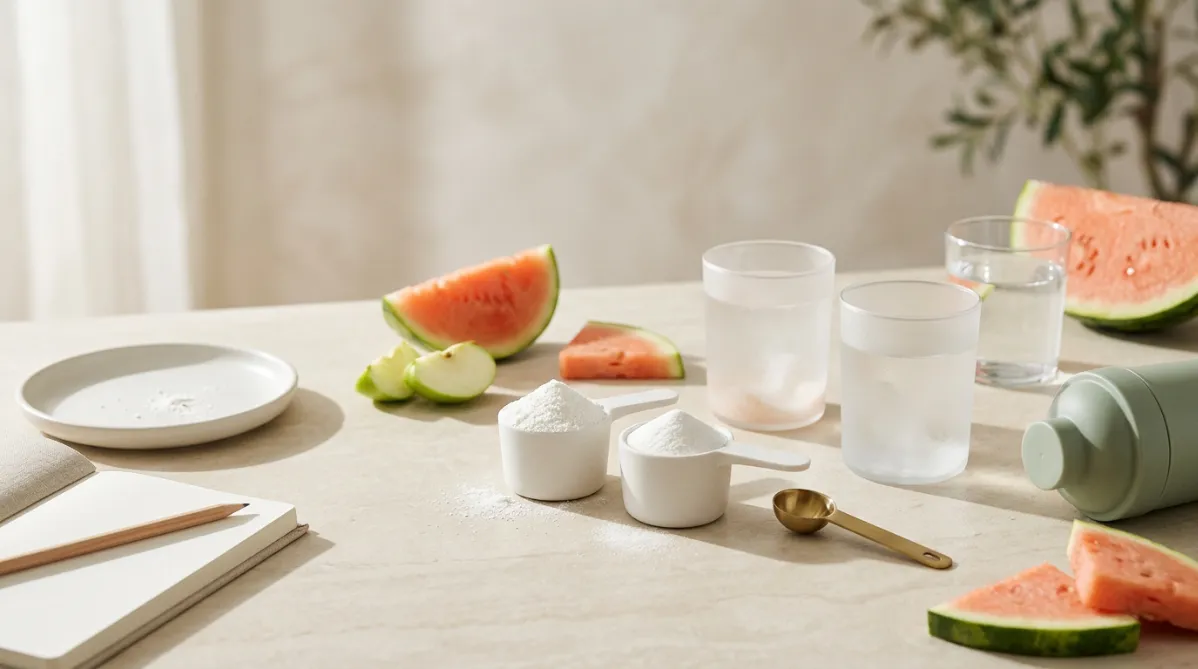
A bright, minimalist editorial still life shot from a slightly elevated three-quarter angle on a pale oat-colored stone countertop, bathed in soft natural window light with gentle long shadows. In the center sit two matching matte white supplement scoops, side by side. One is heaped with fine white crystalline powder, the other holds an almost identical pile, so the viewer is invited to compare them. Beside them are two simple frosted glass tumblers of cloudy water, each with a small whisper of powder swirling at the bottom. A third glass of clear water sits slightly apart, as a quiet nod to the placebo.

Scattered around the scene are fresh, sliced watermelon wedges with vivid coral-pink flesh and pale green rinds, and a few sliced green apples with crisp white interiors, hinting at the natural sources of citrulline and malic acid. A small brushed-brass measuring spoon and a minimalist matte sage-green shaker bottle rest at the edge of the frame. Off to one side, a clean ceramic dish holds a few loose grains of powder, and a slim linen notebook with a pencil lies open to a blank page, suggesting data and study notes without any legible text.

The color palette is soft and modern: warm cream, blush coral, sage green, and touches of brass, with a faintly blurred background of a sunlit kitchen or studio with a pale plaster wall. Shallow depth of field keeps the scoops tack sharp while the background melts into a creamy bokeh. The composition leaves generous negative space on the left third of the frame for a title overlay. The overall mood is calm, trustworthy, and trendy, like a contemporary wellness and science journal cover, with crisp detail, subtle film-like grain, and a clean, airy, balanced feel.
science research

Citrulina malato vs L‑citrulina: ¿realmente importa el malato?

BY DR. GYMBRO ·

¿Citrulina malato o L‑citrulina pura? Un ensayo aleatorizado, doble ciego y cruzado en 43 adultos entrenados comparó ambas formas contra placebo, y la respuesta podría ahorrarte dinero. Ninguna de las dos mejoró la fuerza, la potencia, el salto, el número de repeticiones ni la percepción de esfuerzo, y el malato no aportó nada extra a la citrulina. Aquí describimos qué se midió, qué dosis se usaron y los matices que impiden considerarlo la palabra final. Si estás decidiendo qué poner en tu shaker, empieza por aquí.

A softly lit, minimalist strength-training studio photographed in a modern editorial style. In the foreground, a matte black barbell loaded with weight plates rests on a light oak platform, with fine chalk dust floating in warm morning light. Beside it on a pale concrete bench sits a simple ceramic scoop of white creatine powder, with a small spill of fine crystals catching the light, next to a minimal frosted glass jar with no label. A matte sage-green shaker bottle and a folded cream towel sit nearby. In the soft-focus background, tall windows let in diffused golden sunlight, casting long, gentle shadows across the floor. A rack of neatly arranged dumbbells is blurred in muted charcoal tones.

The color palette is calm and sophisticated: warm off-white, sand, sage green, soft charcoal, and touches of terracotta. A small open notebook with a pencil lies on the bench, suggesting research and data tracking, with abstract hand-drawn bar graph lines faintly visible on the page but not legible. The composition follows the rule of thirds, with the barbell and powder on the left and generous negative space on the right for headline text. Shallow depth of field, crisp textures on the metal knurling and powder grains, subtle film grain, and a contemporary wellness-magazine look. Clean, airy, and editorial, with a grounded, scientific yet approachable mood. Landscape 16:9 composition.
science research

Creatina y entrenamiento de fuerza: mayores ganancias sin que la dosificación importe

BY DR. GYMBRO ·

Un meta‑análisis de 63 estudios con 1.489 participantes evaluó el efecto de la creatina en el entrenamiento con pesas. El aumento de fuerza fue moderado y consistente tanto en la parte superior como inferior del cuerpo, mientras que la ganancia de masa magra fue menor y la grasa corporal no cambió de forma significativa. Sorprendentemente, la estrategia de dosificación, la cantidad diaria y el protocolo no influyeron significativamente en los resultados. La edad surgió como la única pista exploratoria, mostrando efectos mayores en participantes más jóvenes.

A softly lit, editorial-style flat lay on a pale oat-colored linen surface, shot from slightly above at a gentle angle. On the left, a matte ceramic bowl in warm cream holds a small mound of fine white collagen peptide powder, with a wooden scoop resting beside it and a light dusting of powder on the linen. In the center, a tall frosted glass of water with a faint swirl of dissolving powder catches soft window light. On the right, a single brushed-steel dumbbell with a muted charcoal grip sits partly in frame, with a rolled sage-green gym towel beside it. A small, clean, minimalist notebook lies open near the bottom edge with a thin pen and a few handwritten lines and a simple hand-drawn bar chart showing two bars of different heights. This subtly hints at data and scrutiny without any legible text. A sprig of dried eucalyptus adds an organic touch in the upper corner.

The light is warm morning sunlight from the left, producing long, soft shadows and a gentle golden glow, with a shallow depth of field that blurs the background edges into creamy neutrals. The palette is restrained and modern: oat, cream, sage, soft terracotta, and charcoal accents. The composition leaves open negative space on the upper right for title overlay. The overall mood is calm, thoughtful, and wellness-meets-science, in the style of a contemporary health and nutrition magazine, with crisp textures, natural grain, and a clean, trendy, slightly muted film-like finish.
science research

Los péptidos de colágeno triplicaron el aumento del colágeno tipo I en el músculo. ¿Cuál es el truco?

BY DR. GYMBRO ·

Doce semanas de entrenamiento con cargas pesadas más 15 g de péptidos de colágeno específicos al día aumentaron el colágeno tipo I dentro del cuádriceps en un 29,8 %, frente a un 9,9 % con placebo. Es un resultado confirmado por biopsia de un ensayo aleatorizado, algo raro en el mundo de los suplementos. Sin embargo, el resumen no reporta mejoras en fuerza ni tamaño muscular, y los tipos de colágeno III y IV subieron en ambos grupos. Además, uno de los coautores posee patentes relacionadas con el colágeno. Aquí se explica lo que realmente muestra el estudio, lo que no demuestra y a quién le puede interesar.

This page is available in