Dr. Gymbro
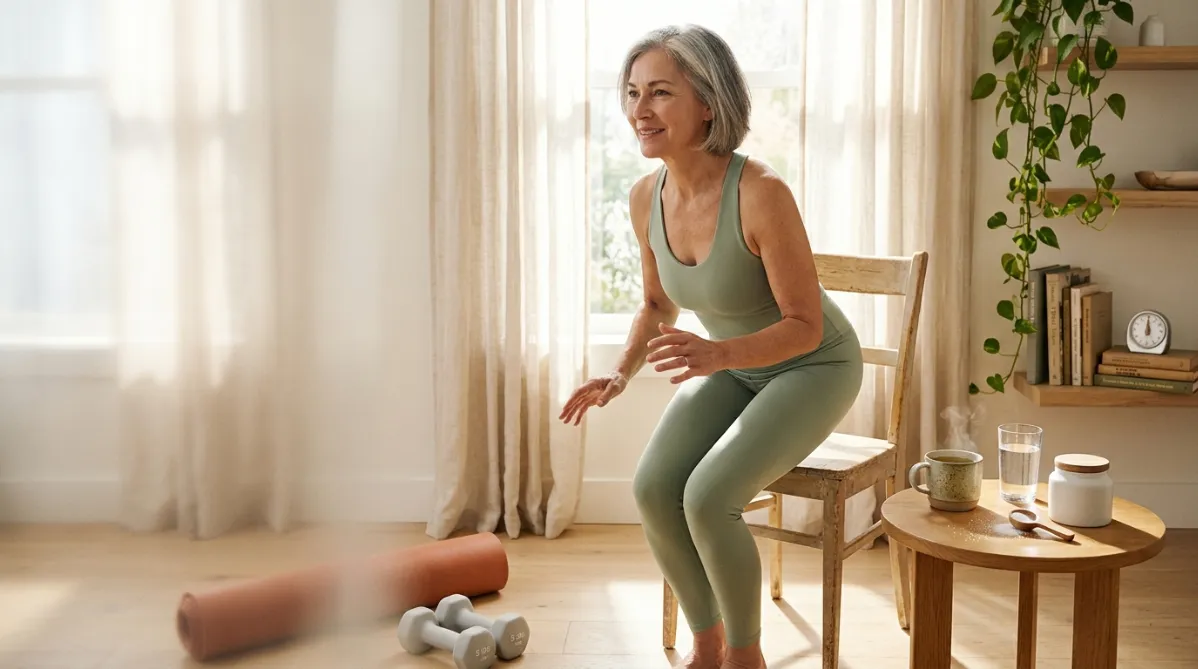
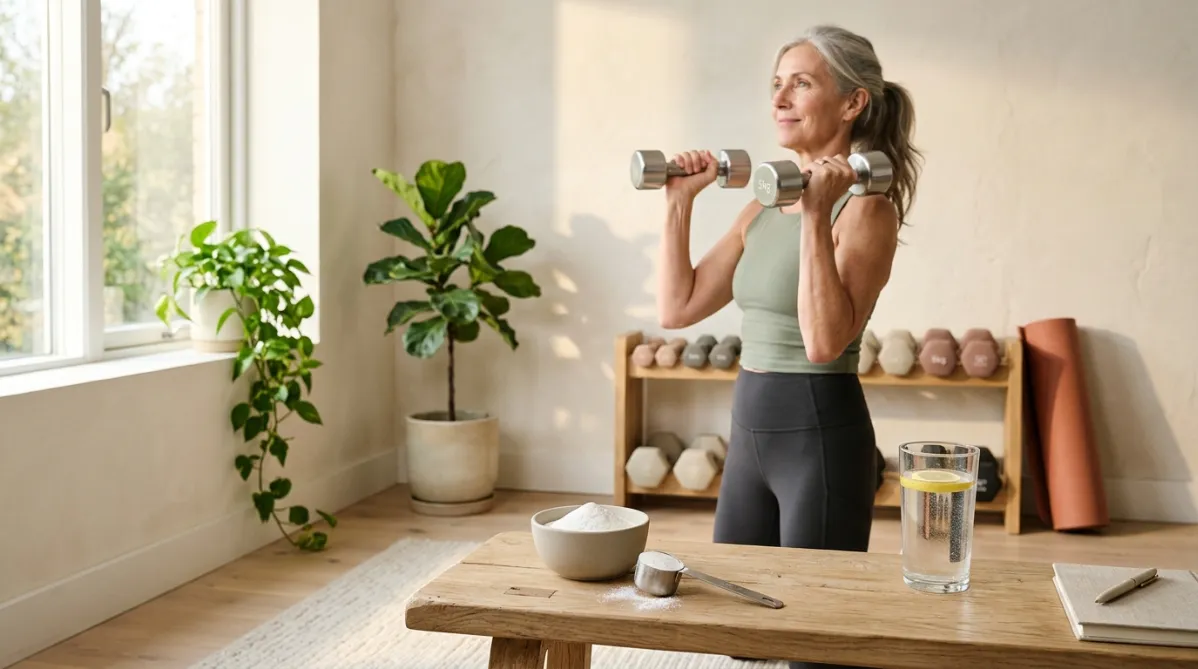
A softly lit, airy home gym corner in warm morning light, photographed in a modern editorial style. In the foreground on a pale oak wooden bench sits a small matte ceramic bowl of fine white creatine powder, with a stainless steel measuring scoop resting beside it, leveled and slightly dusted. Next to it is a tall glass of water with a lemon slice, condensation beading on the surface. In the middle ground, a woman in her late 50s with silver-streaked hair tied loosely back, wearing a sage green athletic top and charcoal leggings, is mid-motion lifting a brushed steel dumbbell in a controlled shoulder press. She looks calm and focused, with a faint smile. Her posture is strong and natural. Behind her, a tidy rack holds dumbbells in muted tones, and a rolled terracotta yoga mat leans against a cream plaster wall. A large window on the left pours diffused golden sunlight across the floor, casting long soft shadows. A leafy fiddle-leaf fig and a trailing pothos add organic green accents. A small linen notebook and a pen sit on the bench, hinting at tracking progress. The palette is warm neutrals with sage, terracotta, soft cream, and touches of brushed metal. Shallow depth of field keeps the powder and scoop crisp, with the woman slightly softened behind. Composition follows the rule of thirds, with the powder bowl in the lower left and the woman on the right, leaving breathing room at the top for a headline overlay. The mood is empowering, grounded, and quietly scientific, like a contemporary wellness magazine cover with natural film-like grain and gentle contrast.
Science & Research

Creatina na Pós‑Menopausa: O Truque da Dose por Trás dos Ganhos

Dr. Gymbro · · 4 min read

Creatina na Pós‑Menopausa: O Truque da Dose por Trás dos Ganhos

A creatina monohidratada está entre os suplementos mais estudados em nutrição esportiva, porém as mulheres na pós‑menopausa raramente são o foco das pesquisas. Uma revisão sistemática e meta‑análise de 2026, publicada no Journal of the International Society of Sports Nutrition (JISSN), oferece a visão mais clara até agora. Ela também revela um detalhe crucial: os benefícios só surgiram quando a dose e o treinamento estavam adequados, não quando estavam fora de sintonia.

O que os pesquisadores fizeram

A equipe, liderada por Naddafha, Antonio, Kreider e Stout, buscou nos bancos MEDLINE, Embase, Scopus, Web of Science, SPORTDiscus e Cochrane CENTRAL de 2000 a agosto de 2025. Incluíram apenas ensaios randomizados, controlados por placebo, em mulheres pós‑menopáusicas, com creatina administrada com ou sem treinamento de resistência (RT). As análises principais exigiam intervenções de, no mínimo, seis semanas.

Sete ensaios controlados randomizados foram elegíveis, totalizando 608 mulheres com idade média de cerca de 62 anos. A duração dos estudos variou de 12 a 104 semanas, com mediana de 38 semanas. Os desfechos avaliados foram massa magra medida por DXA, força máxima em uma repetição (1RM), densidade mineral óssea, função física e segurança. A triagem e a extração de dados foram feitas em duplicata, e o risco de viés foi avaliado com o Cochrane RoB 2.

Números de destaque

  • Massa magra (5 ensaios, n = 338): a creatina superou o placebo com diferença média de +0,37 kg (IC 95 % +0,05 a +0,69; I² = 25 %).
  • 1RM no leg‑press (3 ensaios, n = 111): diferença média de +7,5 kg (IC 95 % +2,2 a +12,8; I² = 0 %).

São ganhos modestos, que os autores descrevem como “pequenos, porém relevantes”. Um ponto de cautela: o intervalo de predição de 95 % para a massa magra variou de ‑0,10 a +0,84 kg. Ou seja, um futuro estudo poderia não encontrar benefício algum; o efeito médio não deve ser interpretado como garantia.

O truque da dose

A conclusão mais prática diz respeito ao modo de uso da creatina. Os benefícios apareceram quando 5 g ou mais por dia foram combinados com treinamento de resistência. Estudos que usaram 3 g ou menos por dia sem treinamento não mostraram efeito mensurável.

Isso importa porque muitas pessoas tomam uma colher pequena diariamente e pulam a academia, esperando resultados. Na base de evidências analisada, essa combinação não produziu nenhum efeito detectável. O achado está alinhado ao que se sabe sobre o mecanismo da creatina: ela ajuda os músculos a regenerar energia durante esforços intensos, funcionando melhor como potencializador do treino e pouco como uma pílula isolada.

A análise não consegue separar completamente dose de treinamento – ambas estavam agrupadas nos ensaios, e a meta‑regressão de dose e duração foi exploratória. A leitura honesta é que a combinação eficaz foi 5 g ou mais + levantamento de peso, sem que os dados indiquem qual dos dois fez mais trabalho.

Densidade óssea não mudou

A menopausa traz perda de densidade óssea além da perda muscular, então muitos esperavam que a creatina ajudasse o esqueleto também. No geral, a densidade mineral óssea permaneceu inalterada. Os autores concluem que os efeitos sobre o osso ainda são incertos. Mulheres que tomam creatina visando a saúde óssea não devem esperar resultados a partir desta evidência; quem tem preocupação com osteoporose ainda precisa de cuidados padrão – ingestão adequada de cálcio e vitamina D e orientação médica.

Achados de segurança

Os eventos adversos foram leves e semelhantes ao placebo. Os indicadores renais permaneceram estáveis, o que tranquiliza, já que preocupações renais são a objeção mais comum à creatina. Ainda assim, mulheres com doença renal preexistente ou que utilizam fármacos que afetam a função renal devem consultar um médico antes de iniciar, pois os estudos incluíram, em sua maioria, participantes saudáveis.

Limitações da evidência

O risco de viés foi majoritariamente classificado como "algumas preocupações". Apenas um grande ensaio randomizado, pré‑registrado e duplo‑cego foi considerado de baixo risco. A revisão em si não foi registrada prospectivamente, embora os dados e materiais suplementares tenham sido depositados posteriormente no OSF. Vários autores divulgaram vínculos com pesquisas sobre creatina e organizações financiadas pela indústria, como o papel de Kreider no Creative for Health Scientific Advisory Board apoiado pela Alzchem, e a posição de Antonio como CEO da ISSN, que ocasionalmente recebe apoio de empresas de creatina. Eles declararam não haver conflito de interesse relativo a este trabalho, mas o leitor deve ponderar esse contexto.

Pontos práticos

  • Dose: os benefícios foram observados com 5 g por dia ou mais. Doses de 3 g ou menos sem treinamento não mostraram efeito.
  • Combine com treinamento de resistência: creatina isolada, sem levantamento, não produziu ganhos mensuráveis.
  • Expectativas realistas: +0,37 kg de massa magra e +7,5 kg no 1RM do leg‑press são melhorias pequenas, porém reais, não transformações dramáticas.
  • Não conte com benefícios ósseos: a densidade óssea não mudou.
  • Segurança: efeitos colaterais foram semelhantes ao placebo e marcadores renais permaneceram estáveis nos estudos analisados.

Para mulheres pós‑menopausa que já praticam musculação, 5 g de creatina monohidratada diariamente parecem ser uma estratégia de baixo risco para ganhar um pequeno extra. Para quem ainda não treina, o retorno maior provavelmente vem de iniciar o treinamento de resistência antes de pensar em suplementação.
Original study

Read the original research on pubmed.ncbi.nlm.nih.gov →

This article summarizes published research for general information. It is not medical advice.

DG

Written by

Dr. Gymbro

Dr. Gymbro writes for Dr. Gymbro: science-backed fitness, nutrition & performance.

Related Articles

A calm, sunlit bedroom scene in soft editorial photography style, shot in landscape format. In the foreground, a rumpled bed with crisp oatmeal-colored linen sheets and a cream waffle-knit blanket, morning light spilling across it through sheer curtains. On a light oak nightstand sits a clear glass of water beside a small ceramic bowl holding a loose scoop of fine white powder, a wooden spoon resting next to it. A minimalist fabric wristband in muted sage green lies casually on the nightstand, suggesting sleep tracking without any screens or glowing displays. A slim open notebook with a pencil rests beside it, hinting at research and reflection. A potted olive branch in a terracotta vase adds an organic touch. The wall behind is warm off-white plaster with soft, gently shifting shadows of leaves. Color palette: warm sand, muted sage, soft blush, creamy white, and touches of terracotta. The mood is quiet, restorative, and thoughtful, like a modern wellness journal feature. Shallow depth of field, a soft film-like grain, natural diffused light, and generous negative space on the right side of the frame for title overlay. The composition is balanced and uncluttered, with a gentle golden-hour glow. The style is contemporary lifestyle editorial, tactile and understated, with no text, no people's faces, and no futuristic elements.
science research

Creatina não acelera o cérebro de perimenopáusicas; sono, porém, conta outra história

BY DR. GYMBRO ·

A creatina prometia aguçar o cérebro de mulheres perimenopáusicas, mas o teste principal de velocidade de pensamento não mostrou vantagem. Entretanto, um estudo exploratório com 51 participantes revelou maior oxigenação pré‑frontal, 7,4 pontos percentuais a mais de consistência do sono na sexta semana e menos dias de sensibilidade à temperatura. Todos, inclusive o grupo placebo, ficaram mais rápidos no teste de Stroop. O desenho, a dosagem, as limitações e os vínculos dos autores com a creatina e a WHOOP são detalhados aqui, para que você avalie o peso dos achados.

A softly lit, minimalist strength-training studio photographed in a modern editorial style. In the foreground, a matte black barbell loaded with weight plates rests on a light oak platform, with fine chalk dust floating in warm morning light. Beside it on a pale concrete bench sits a simple ceramic scoop of white creatine powder, with a small spill of fine crystals catching the light, next to a minimal frosted glass jar with no label. A matte sage-green shaker bottle and a folded cream towel sit nearby. In the soft-focus background, tall windows let in diffused golden sunlight, casting long, gentle shadows across the floor. A rack of neatly arranged dumbbells is blurred in muted charcoal tones.

The color palette is calm and sophisticated: warm off-white, sand, sage green, soft charcoal, and touches of terracotta. A small open notebook with a pencil lies on the bench, suggesting research and data tracking, with abstract hand-drawn bar graph lines faintly visible on the page but not legible. The composition follows the rule of thirds, with the barbell and powder on the left and generous negative space on the right for headline text. Shallow depth of field, crisp textures on the metal knurling and powder grains, subtle film grain, and a contemporary wellness-magazine look. Clean, airy, and editorial, with a grounded, scientific yet approachable mood. Landscape 16:9 composition.
science research

Creatina e Levantamento: Mais Força, sem Estratégia de Dosagem Vencedora

BY DR. GYMBRO ·

Uma meta‑análise de 63 estudos com 1.489 participantes investigou quanto a creatina acrescenta ao treinamento de resistência. O ganho de força foi moderado e consistente tanto na parte superior quanto na inferior do corpo, enquanto o aumento da massa magra foi menor e a massa de gordura não mudou significativamente. Surpreendentemente, a estratégia de dosagem, a dose diária e o protocolo não influenciaram os resultados. A idade foi o único indício exploratório, com efeitos de força maiores em participantes mais jovens. Veja o que o estudo realmente encontrou e o que ele não pode afirmar.

A wide landscape editorial photograph of a bright, airy sunlit living room with pale oak floors and a large window with sheer linen curtains. In the center, a woman in her late 50s with silver-streaked hair, wearing soft sage-green athletic wear, rises from a simple wooden chair, caught mid-motion with a calm, determined expression. Her hands are lightly extended forward for balance. Beside her on a small round oak side table sits a ceramic mug of tea, a glass of water, and a small matte white jar with a wooden scoop resting beside it, a few fine white crystalline grains scattered on the tabletop. In the soft-focus foreground, a pair of light-gray dumbbells and a rolled terracotta-colored yoga mat rest on the floor. A trailing green pothos plant spills from a shelf in the background, with a stack of books and a small analog kitchen timer nearby.

The color palette is warm and muted: cream, sage green, soft terracotta, natural wood, and gentle morning-gold light. Light streams diagonally across the scene, creating long soft shadows and a subtle glow on the woman's shoulders. Shallow depth of field blurs the background gently, while the woman and the table remain crisp. The composition follows the rule of thirds, with the woman on the right and generous negative space on the left, suited for headline overlay. The mood is hopeful, grounded, and modern, like a high-end wellness magazine or a trendy health journal. Natural film-like grain, soft contrast, and a slight matte finish give it a contemporary lifestyle photography feel. There are no futuristic elements, no digital overlays, and no text.
science research

Creatina ajuda mulheres com joelho comprometido a levantar‑se melhor – mas não da forma que você imagina

BY DR. GYMBRO ·

A creatina costuma ser associada a jovens levantadores, mas um ensaio randomizado, duplo‑cego, avaliou seu efeito em mulheres pós‑menopáusicas com osteoartrite de joelho. Após 12 semanas de treino de pernas, o escore do teste de ficar em pé cronometrado do grupo que recebeu creatina subiu de 15,7 para 18,1, enquanto o placebo praticamente não mudou (15,0 para 15,2). A creatina também melhorou rigidez, massa magra e qualidade de vida, mas alívio da dor e força máxima no leg press não foram superiores ao placebo. Veja o que os números realmente indicam e quem pode se beneficiar.

A wide, editorial-style still life photographed on a pale warm-gray concrete surface in soft, diffused morning window light. On the left side, a tall clear glass filled with deep magenta-crimson beetroot juice sits beside two halved raw beetroots, their concentric rings of vivid fuchsia and purple clearly visible, with a few small green-and-red-veined leaves draped casually nearby. On the right side, a matching clear glass of cloudy white creatine solution rests next to a small matte ceramic bowl heaped with fine white powder and a minimal wooden scoop, a light dusting of powder scattered across the surface. In the center, between the two sides, a simple matte black barbell grip and a single chalk-dusted weight plate edge rise into the frame at a low angle, hinting at lifting without showing a person. The composition is split in a balanced, symmetrical way, with a subtle vertical shadow line dividing the saturated magenta tones on the left from cool, neutral whites and creams on the right. The background is softly blurred with a muted sage-green and oatmeal-toned wall, with plenty of negative space at the top for a headline overlay. Shallow depth of field, crisp focus on the glasses' condensation droplets and the textured beetroot flesh. The color palette is limited and refined: magenta, cream, charcoal, and soft sage. The mood is clean, modern, and health-journal chic, like a contemporary wellness magazine cover, with natural shadows, a tactile matte finish, and subtle film-like grain. No text, no logos, no futuristic elements.
nutrition

Suco de Beterraba vs. Creatina: Quem Vence no Levantamento em 72 horas?

BY DR. GYMBRO ·

Um ensaio randomizado cruzado comparou suco de beterraba e creatina durante cerca de 72 h de suplementação em levantadores iniciantes. A creatina foi a única que aumentou as repetições no supino a 80 % de 1RM, enquanto o suco de beterraba se destacou em velocidade da barra, oxigenação muscular, frequência cardíaca máxima e recuperação de HRV. O resumo não informa doses nem timing, então apontamos o que falta. Confira o placar completo e descubra quem deve escolher qual suplemento.

This page is available in