Dr. Gymbro
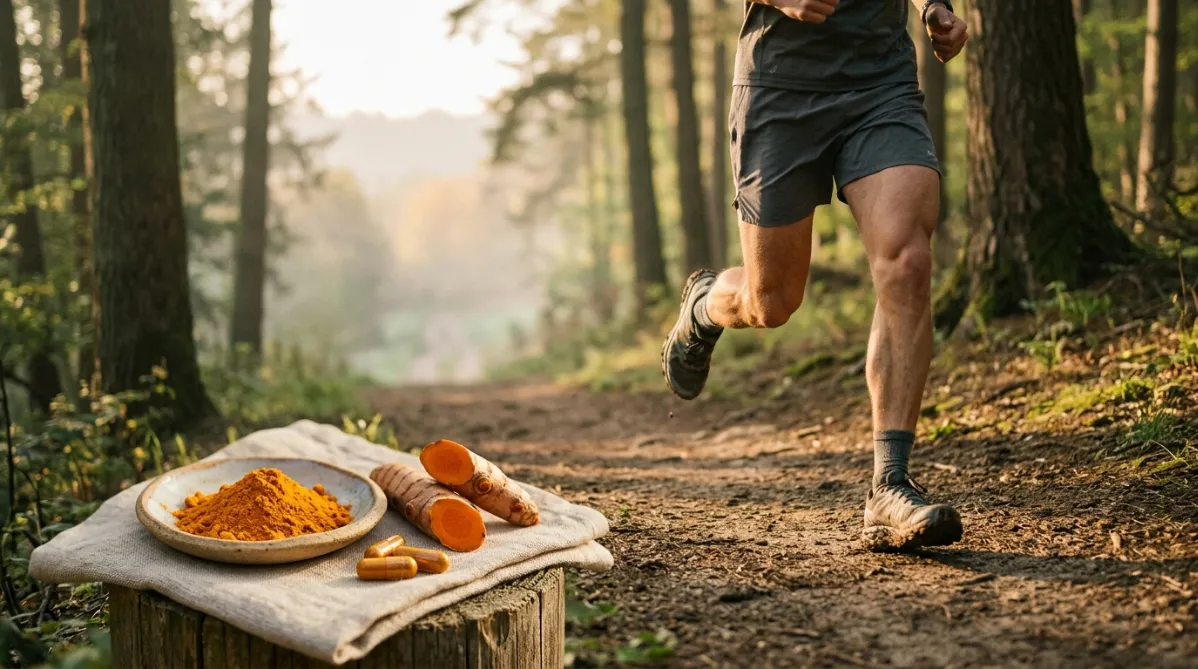
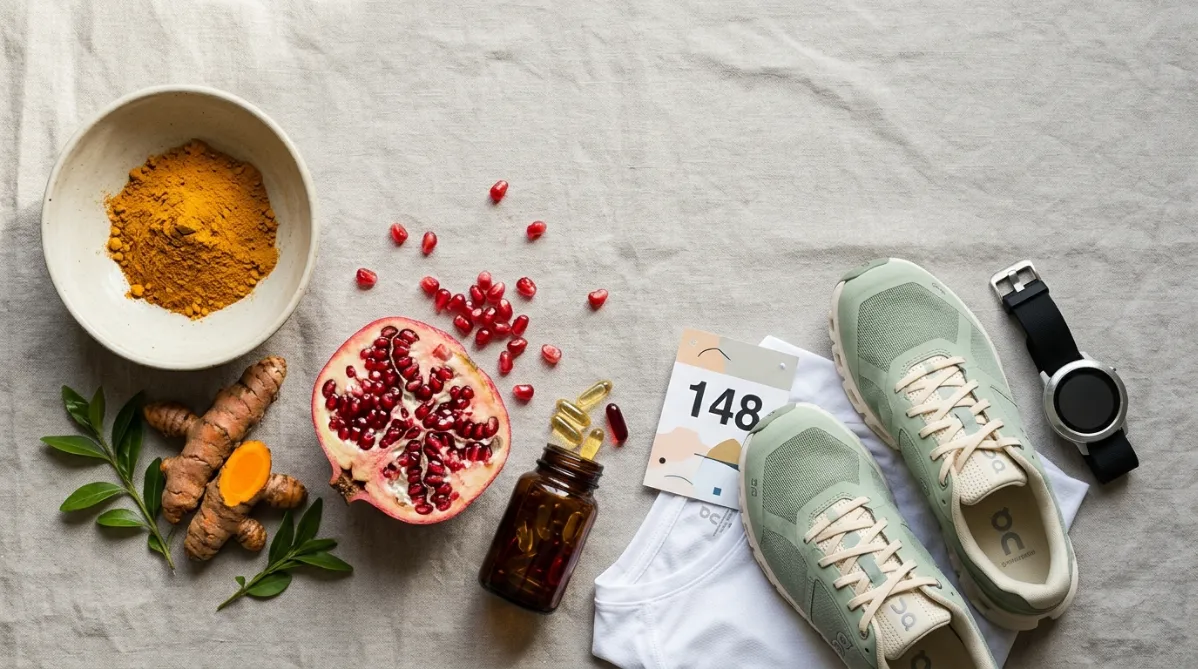
A wide, editorial-style flat lay photographed from above on a pale, warm-gray linen surface lit by soft morning window light. On the left, a rustic ceramic bowl in matte cream holds a small mound of golden-orange curcumin powder, with a few fresh turmeric roots, one cut open to show its vivid saffron interior, resting beside it. In the center, a halved pomegranate shows glossy ruby-red arils spilling across the surface, a few individual seeds scattered with delicate highlights. A small amber glass supplement bottle with a minimal unlabeled cream cap and a few capsules in translucent gold and deep red sit nearby.

On the right, a pair of lightweight running shoes in soft sage green and off-white rests at a slight angle, with a thin race bib with simple abstract numbers pinned to a folded white technical shirt. A simple silver sports watch curls loosely beside them. A sprig of green leaves and a few loose turmeric flecks add organic texture.

The palette is warm and harmonious: turmeric gold, pomegranate crimson, sage green, cream, and soft gray. Shadows are long, gentle, and diffused, with shallow depth of field so the foreground pomegranate seeds are crisp and the edges fall softly out of focus. Generous negative space on the upper right of the frame gives breathing room for a headline overlay. The composition feels modern, clean, and trendy, like a health and wellness magazine or a boutique science journal feature. The mood is calm, fresh, and athletic, with a natural, tactile, premium feel and subtle film-like grain.
Science & Research

Esta mistura de cúrcuma e romã reprogramou os genes do sistema imunológico dos corredores

Dr. Gymbro · · 4 min read

Vinte e sete corredores. Um meio‑maratona. Vinte e oito dias de cápsulas de cúrcuma e romã ou placebo. Então, os pesquisadores analisaram o que a corrida fez a 774 genes relacionados ao sistema imunológico no sangue. A resposta genética do grupo suplementado foi diferente. Mas, antes de correr para a prateleira de suplementos, você precisa saber o que este estudo mediu e o que não mediu.

Os números principais

O estudo, publicado em Genes & Nutrition em 2026 por Brian McFarlin e colegas, testou um blend de polifenóis de marca chamado Restoridyn, produzido pela Verdure Sciences. Ele combina curcuminoides padronizados com elagitaninos de romã. O artigo completo está em acesso aberto em https://doi.org/10.1186/s12263-026-00825-9.

Dois pontos se destacam:

  • Aos 2 horas pós‑corrida: a mudança média de expressão diferencial no grupo suplementado refletiu 25 % menos supressão das vias imunológicas em comparação ao grupo placebo.
  • Aos 4 horas pós‑corrida: a mudança média refletiu um aumento de 232 % na ativação das vias ligadas à recuperação.

Esses são os números que um repórter de capa adora. Eles também são médias de variações na expressão gênica, não medidas de como os corredores se sentiram ou de como performaram.

Como o estudo foi conduzido

Os participantes foram randomizados para receber o blend (1.000 mg por dia, n = 13) ou um placebo (n = 14) durante 28 dias antes de correr um meio‑maratona. Sangue foi coletado antes da corrida (PRE), duas horas depois (2 h) e quatro horas depois (4 h). A equipe extraiu RNA e analisou a expressão de 774 mRNAs mapeados para 40 vias de resposta imune usando um painel padronizado.

Isso é uma fotografia molecular da reação do sistema imune inato ao esforço prolongado. Não se trata de um ensaio sobre se os corredores se recuperaram mais rápido.

O que mudou em 2 horas

Exercício intenso e prolongado costuma agitar a sinalização imune: algumas vias são ativadas e outras suprimidas. Aos 2 h, o grupo suplementado mostrou um padrão mais moderado:

  • Ativação atenuada: ativação de células T e citotoxicidade de células NK.
  • Sinalização reduzida: interferon tipo 1.
  • Supressão reduzida: vias JAK‑STAT, inflamação, metabolismo de lipídios e resposta ao estresse/DNA.

Em termos simples, o blend pareceu suavizar o choque genético imediato da corrida, com oscilações menos dramáticas em qualquer direção.

O que mudou em 4 horas

É aqui que aparece o número de 232 %. Aos 4 h, o grupo suplementado apresentou maior ativação de interferon, JAK‑STAT, sinalização de crescimento, regulação da apoptose, recuperação metabólica, mTOR/sensoriamento de nutrientes e regulação transcricional. Essas são vias associadas à limpeza, reparo e retorno ao estado basal.

Os autores interpretam isso como melhora na responsividade imune após um evento longo, o que pode se traduzir em resolução mais rápida da inflamação e retorno à função normal. A palavra‑chave é pode. O artigo mostra um padrão de expressão gênica consistente com essa ideia, mas não demonstra que os corredores realmente se recuperaram mais rápido.

As cautelas necessárias

É aqui que o click‑bait precisa parar e o texto fino começa.

  • Biomarcadores, não resultados clínicos. O estudo mediu expressão de mRNA. Não foram relatados dor muscular, dano muscular ou desempenho na corrida como desfechos.
  • Amostra pequena. Com 13 pessoas no suplemento e 14 no placebo, os achados são exploratórios e precisam ser replicados em grupos maiores.
  • Janela curta. O sangue foi colhido apenas até 4 h pós‑corrida, portanto não sabemos o que aconteceu nos dias seguintes.
  • Percentuais são médias. Os valores de 25 % e 232 % resumem mudanças médias de expressão diferencial entre vias. Não representam uma melhora de 232 % na recuperação.
  • Produto de marca. Restoridyn é um produto da Verdure Sciences; os resultados se aplicam a esse blend específico. Verifique as divulgações de financiamento e conflitos de interesse no artigo, e não presuma que cúrcuma em pó ou suco de romã tenham o mesmo efeito.
  • Apenas corredores. Os autores sugerem implicações mais amplas para outros estressores físicos, mas isso é hipótese, não achado.

A introdução do artigo menciona que blends semelhantes já foram associados à melhoria da recuperação por reduzir lesões musculares e otimizar a inflamação. Este estudo acrescenta uma camada molecular a essa história, mas não fecha o ciclo.

Dicas práticas

Dose e cronograma usados no estudo: 1.000 mg por dia do blend padronizado de curcuminoides e elagitaninos de romã, durante 28 dias até a corrida. O desenho do artigo não informa se um período de carregamento mais curto funcionaria, nem se tomá‑lo após a prova traz algum benefício.

Quem pode achar interessante: atletas de resistência, sobretudo aqueles que se preparam para provas longas, que queiram experimentar um suplemento baseado em evidências, ainda que preliminares. Pesquisadores e treinadores que acompanham a ciência da recuperação também vão querer seguir essa linha.

Quem deve ser cauteloso ou evitar: quem busca uma solução comprovada para desempenho ou dor muscular, pois o estudo não testou nenhum desses desfechos. Também é recomendável que gestantes, pessoas com problemas de vesícula biliar ou sangramento, ou que utilizem anticoagulantes ou outros medicamentos consultem um profissional de saúde antes de iniciar suplementos concentrados de cúrcuma ou polifenóis.

Abordagem inteligente: trate isso como um sinal promissor, não como garantia de recuperação. Sono adequado, ingestão de carboidratos e proteínas, e carga de treino sensata continuam sendo as bases comprovadas da recuperação.

Conclusão

O blend de cúrcuma e romã alterou mensuravelmente como os genes do sistema imunológico dos corredores responderam a um meio‑maratona, com menos supressão às 2 h e maior ativação de vias ligadas à recuperação às 4 h. Esse é um resultado real e interessante. O que ainda não se provou é que você se sentirá melhor, se recuperará mais rápido ou correrá mais rápido. O próximo passo são ensaios maiores que relacionem esses indicadores genéticos com os resultados que os atletas realmente valorizam.
Original study

Read the original research on doi.org →

This article summarizes published research for general information. It is not medical advice.

DG

Written by

Dr. Gymbro

Dr. Gymbro writes for Dr. Gymbro: science-backed fitness, nutrition & performance.

Related Articles

A warm, softly lit editorial scene of an older woman in her early seventies, with short silver hair and a calm, focused expression. She sits on the edge of a light oak bench in a bright, airy home gym, one hand resting on her thigh as she pauses between sets. She wears a muted sage-green athletic top and charcoal leggings. A well-worn leg extension machine sits blurred in the background, and a tall window floods the room with golden morning light.

In the foreground, slightly out of focus, a small ceramic dish on a pale wooden surface holds two translucent amber softgel capsules. Next to it sit a glass of water and a folded linen towel in warm cream. A single sprig of green algae-like seaweed rests beside the dish as a quiet nod to the algae-oil source. The sprig is delicate and natural, with no laboratory elements.

The color palette is earthy and modern: sage green, warm amber, oatmeal beige, and soft terracotta accents, with gentle highlights on the capsules. The composition follows the rule of thirds. The woman sits on the right, and the capsules and water fill the lower left. Negative space in the upper left keeps the layout clean for a headline overlay.

The photographic style is contemporary lifestyle editorial, shot on a 50mm lens at f/2, with shallow depth of field, soft natural grain, and subtle film-like tones. The mood is thoughtful, reassuring, and quietly skeptical. The scene suggests curiosity about whether a popular supplement delivers, with no drama and no clinical coldness. The image should look like the cover of a trendy health and wellness journal: clean, minimal, human, and sophisticated, with realistic textures in the skin, fabric, wood, and glass.
nutrition

Ômega-3 para pernas doloridas após os 65? O estudo revelou uma surpresa

BY DR. GYMBRO ·

Os suplementos de ômega‑3 são frequentemente divulgados como forma de aliviar a dor muscular e acelerar a recuperação. Um novo ensaio randomizado, controlado por placebo, testou essa afirmação em 43 adultos saudáveis de 65 a 85 anos, após uma exigente sessão de extensões excêntricas de perna. Depois de oito semanas consumindo 2 g de ômega‑3 de óleo de algas, a recuperação funcional não foi melhor que a do placebo e a força ficou menor aos 24 e 72 horas. A resposta bioquímica foi diferente, mas diferença não significa melhora. A seguir, veja exatamente o que mudou, o que permaneceu igual e o que os praticantes mais velhos devem tirar disso.

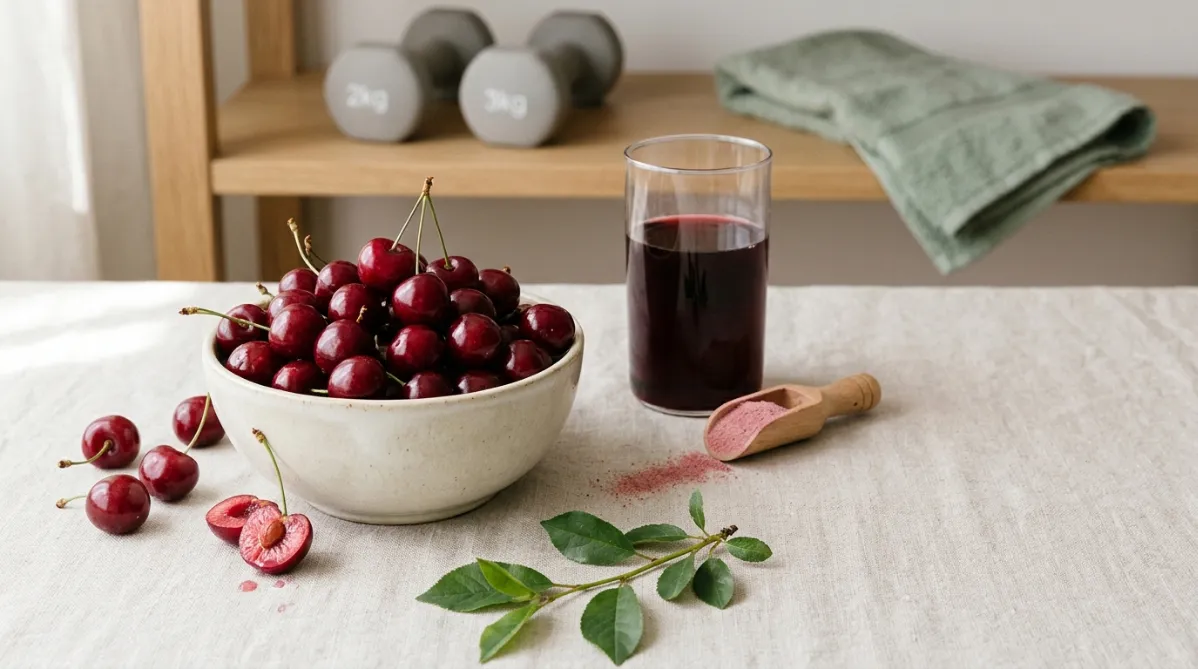
A wide, softly lit editorial still life on a pale oatmeal linen surface. In the center-left, a rustic ceramic bowl in matte cream glaze holds a generous heap of glossy deep-crimson tart cherries, some with stems still attached, a few spilling onto the table. Beside the bowl, a halved cherry reveals its pit and bright ruby flesh, with tiny droplets of juice catching the light. To the right, a tall clear glass of dark burgundy cherry juice sits beside a small wooden scoop holding fine rose-colored cherry powder, a light dusting of which trails across the linen in a gentle arc.

In the soft-focus background, a pair of neutral gray dumbbells and a folded sage-green towel sit on a light oak shelf, hinting at exercise without dominating the scene. A single sprig of green cherry leaves lies diagonally across the foreground, adding a fresh contrast.

Natural morning window light enters from the upper left, casting long, gentle shadows and warm highlights on the cherry skins. The palette is restrained and modern: deep crimson, blush pink, cream, sage green, and warm oak, with plenty of negative space on the right third for title overlay. Shallow depth of field, crisp focus on the cherries, creamy bokeh behind. A subtle film-like grain and slightly muted tones give it a contemporary wellness-magazine feel, clean, tactile, and calm. Shot from a slightly elevated three-quarter angle, composed with an off-center balance and an airy, minimalist layout.
supplements

Cereja Ácida Reconfigura Proteínas Musculares — Mas Não Acelera a Recuperação

BY DR. GYMBRO ·

A cereja ácida tem fama de atalho para a recuperação, mas um novo estudo publicado na *Frontiers in Nutrition* revelou algo mais inesperado. Sete dias de suplementação antes de um exercício excêntrico lesivo aumentaram os ácidos fenólicos circulantes e modificaram profundamente o equilíbrio entre as proteínas estruturais e contráteis do músculo. Também alteraram a infiltração de macrófagos no tecido exercitado, porém não aceleraram a recuperação da função muscular. O ácido hipúrico plasmático ainda mostrou correlação com a função muscular em homens jovens e ativos. Confira o que a evidência molecular realmente indica – e o que não indica.

A wide, editorial-style photograph of a male runner mid-stride on a gently sloping forest trail at early morning, shot from a low three-quarter angle. Soft golden light filters through tall trees and casts long dappled shadows across the packed dirt path. The runner is captured from the waist down and slightly from the side, wearing charcoal running shorts and worn trail shoes, with the quadriceps and thigh muscles defined and naturally lit. A fine mist hangs in the background, and the slope descends toward a blurred, softly glowing horizon.

In the foreground, slightly out of focus on a weathered wooden post or flat mossy stone at the trail's edge, rests a small ceramic dish holding a pile of vivid golden-orange turmeric powder. Beside it sit two fresh turmeric roots, one cut open to show a deep saffron interior, and a few amber capsules. A thin linen cloth is draped beneath them. The saturated yellow-orange of the turmeric contrasts with the cool green and muted brown tones of the forest, creating a strong color anchor on the left third of the frame.

The composition follows the rule of thirds, with the turmeric in the lower left foreground and the runner in the right two-thirds, leaving open negative space in the upper left for headline text. Shallow depth of field, creamy bokeh, and natural film-like grain give it a refined, modern health-and-science magazine feel. The palette is warm and earthy: golden amber, moss green, soft cream, and deep umber. The lighting is natural and gentle, with subtle rim light on the runner's calves and hamstrings. No text, no logos, no graphics, and no futuristic elements. The result should feel clean, calm, and aspirational, like a cover image for a premium wellness and sports-nutrition journal.
recovery

Curcumina Meriva Reduz Danos Musculares Visíveis por RM após Corrida em Descida

BY DR. GYMBRO ·

Um pequeno ensaio randomizado de 2014 mostrou que a curcumina Meriva – forma baseada em lecitina produzida pela Indena – reduziu lesões musculares de coxa visíveis por RM após uma corrida em descida. Vinte homens tomaram 1 g duas vezes ao dia, começando 48 h antes do teste e continuando 24 h depois. A diferença nas imagens foi marcante, embora o benefício na dor tenha sido significativo apenas nas partes anteriores das coxas. Marcadores de estresse oxidativo e histologia muscular não apresentaram diferenças. A seguir, a dose, o timing, os cuidados com a indústria e o que os dados podem – e não podem – nos dizer.

A wide, editorial still life photographed in soft natural window light on a pale oatmeal linen surface. At the center sits a small matte ceramic dish holding a modest scoop of fine off-white powder, with a few loose capsules in muted sage green and cream scattered beside it. A slim wooden scoop rests at the dish's edge. To the left, a minimalist smart ring in brushed titanium sits on a folded stone-gray cloth, catching a thin highlight. To the right, a glass of water with soft refraction and a sprig of fresh rosemary add a touch of organic color.

In the background, a softly blurred bedside scene: a rumpled cream bedsheet, a ceramic mug, and an open notebook with a pencil, suggesting sleep tracking and cognitive testing without any readable text. A single sculptural brain-shaped form carved from pale travertine stone sits slightly behind the dish, cool and understated, with subtle veining that echoes the linen texture. Long, gentle shadows stretch across the table from a morning sun source on the upper left.

The palette is calm and modern: warm neutrals, sage green, soft sand, and muted terracotta accents, with a hint of dusty blue in the shadows. Shallow depth of field, crisp focus on the powder and ring, creamy bokeh in the background. Generous negative space on the right third for headline overlay. The mood is quiet, thoughtful, and trustworthy, like a contemporary health and science journal's cover photograph, clean, tactile, and airy, with fine film-like grain and balanced contrast.
science research

Magnésio L‑Treonato: 6 semanas, 7,5 anos mais jovem na idade cerebral?

BY DR. GYMBRO ·

Seis semanas de magnésio L‑treonato (Magtein) foram associadas a melhora geral da cognição, da memória de trabalho e episódica, a um tempo de reação mais rápido e a uma redução estimada de 7,5 anos na “idade cognitiva cerebral”, em um ensaio randomizado com 100 participantes. O anel Oura também registrou frequência cardíaca noturna mais baixa e maior variabilidade da frequência cardíaca (HRV), embora o sono medido não tenha mudado. O estudo utilizou 2 g/dia do composto – cerca de 144 mg de magnésio elementar – em adultos de 18 a 45 anos com baixa satisfação com o sono. Contudo, foi financiado pelo fabricante do produto, vários p‑values ficam próximos de 0,05 e muitos desfechos de sono foram nulos. A seguir, o que é promissor, o que é hype e quem realmente pode se interessar.

This page is available in