Dr. Gymbro
←

#creatine pyruvate

1 article
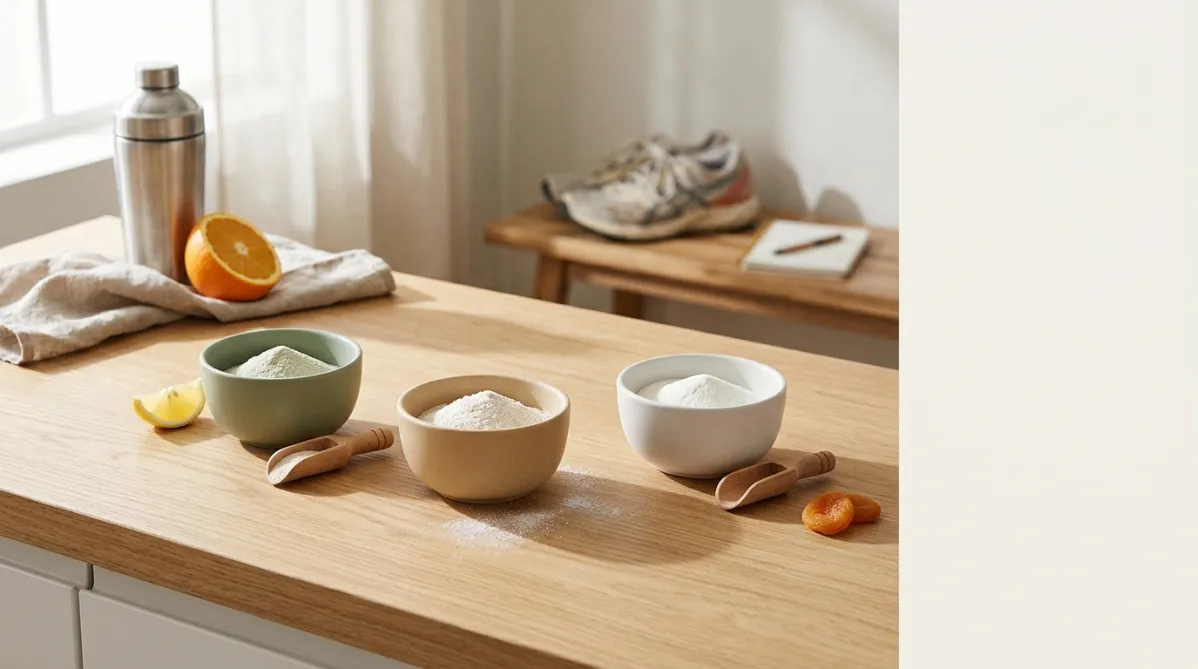
A landscape editorial photograph of a clean, sunlit kitchen-counter or light oak table, shot from slightly above at a gentle angle. Three small matte ceramic bowls in muted sage green, warm sand, and soft white sit in a loose row. Each holds a different fine white powder, and each has a small wooden scoop resting beside it. The middle bowl is slightly closer to the camera and sharper in focus, with a faint dusting of powder spilling onto the surface. In the soft-focus background, a stainless steel shaker bottle and a half-peeled orange sit beside a folded linen napkin, suggesting citrus without being literal. A single lemon wedge sits near the left bowl, and a small dried apricot sits near the right, a subtle visual nod to citrate and pyruvate.

In the background, a blurred athletic scene: a running shoe resting on a wooden bench and a small notebook with a pen, suggesting a training log. Soft diffused morning light enters from the left through a window and casts long, gentle shadows. The palette is warm neutrals, creamy whites, soft greens, and a hint of terracotta orange. The look is a modern wellness magazine with a shallow depth of field, a fine-grain film feel, and generous negative space on the right third of the frame for title text. The mood is calm, trustworthy, and scientific yet approachable, with no text, labels, or logos.
nutrition

Creatine Pyruvate vs Citrate: One Form Kept Force Up Longer

BY DR. GYMBRO ·

Two fancy creatine forms beat placebo in a 28-day trial, but one kept muscle force elevated through all ten all-out intervals while the other faded. Creatine pyruvate raised force in every interval (p < 0.001), whereas creatine citrate's benefit disappeared by the sixth interval. Only pyruvate also improved relaxation velocity and resting oxygen consumption. Before you ditch your tub, there's a major catch: the study had no creatine monohydrate group. Here's what the numbers show, what they can't, and how to choose.

This page is available in