
Dr. Gymbro
←

#exercise-induced muscle damage

2 articles
A wide, bright editorial photograph of a male athlete captured mid-jump in a minimalist, sunlit indoor training studio with pale concrete floors and tall windows. He is suspended at the peak of a plyometric box jump, knees tucked, with soft natural light and gentle motion blur at his feet. In the foreground, slightly out of focus, sits a small matte amber glass jar with a plain cream label, its lid resting beside it. Next to it are a few creamy white capsules spilled on a light oak wooden plyo box. A clear glass of water and a folded gray towel sit nearby.

The color palette is fresh and modern: warm off-white, sage green, soft sand, and touches of muted terracotta. A few green leaves of a potted fiddle-leaf plant in the corner add an organic feel. Shadows are long and soft, and the atmosphere is calm, clean, and health-focused, like a high-end wellness magazine spread.

The composition follows the rule of thirds. The jumping figure sits on the right third, and the supplement jar and capsules anchor the lower left. Negative space in the upper left leaves room for a headline overlay. The depth of field is shallow with a creamy bokeh background, shot on a 50mm lens with a subtle film-like grain. The overall look is crisp, airy, and contemporary, a lifestyle science journal cover aesthetic with no text, no logos, and no futuristic elements.
recovery

This Probiotic Strain Cut Muscle Damage After 100 Max Jumps

BY DR. GYMBRO ·

A new randomized trial suggests a specific probiotic, L. plantarum GKK1, may soften the blow of a brutal plyometric session. After four weeks at 1.0 × 10^11 CFU per day, 48 untrained men did 100 maximal jumps and the supplemented group lost less jump, strength, and Wingate performance than placebo. Muscle damage markers like CK and myoglobin, plus hs-CRP, TBARS, and urinary 3-methylhistidine, also looked better. But the study is small, limited to untrained men, and involves authors from the strain's manufacturer. Here is what the data show and who might actually benefit.
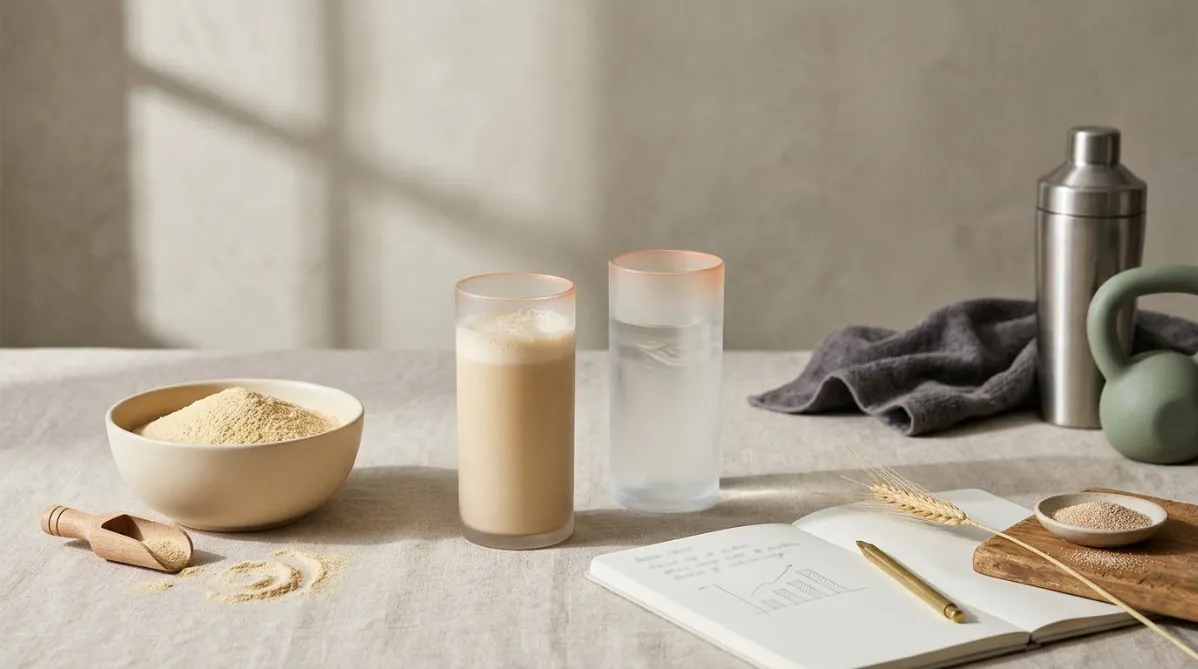
A wide, softly lit editorial still life on a pale oat-colored linen surface, shot from a slightly elevated three-quarter angle. On the left, a matte ceramic bowl in warm cream holds fine, pale golden-beige yeast protein powder, with a small wooden scoop resting beside it and a few loose dusty swirls on the linen. In the center, two tall frosted glass tumblers stand side by side. One holds a creamy, light tan shake with a delicate froth, and the other holds clear water with a faint ripple, creating a quiet visual contrast. On the right, a loosely folded charcoal gym towel, a brushed-steel shaker bottle, and a single small kettlebell in muted sage green sit slightly out of focus.

A few elements hint at the science without looking clinical. A minimalist matte-white notebook lies open with soft, blurred handwriting and a hand-drawn bar chart in thin pencil. Beside it rests a slim brass pen. A single sprig of dried wheat and a small dish of baker's yeast granules on a wooden board nod to the ingredient's fermentation origin.

Natural morning window light enters from the upper left, casting long, gentle shadows and a warm highlight along the glass rims. The palette is earthy and calm: oat, cream, soft terracotta, sage, and warm gray, with a subtle peachy glow in the background. The backdrop is a smooth plaster wall in muted putty tone, with a faint shadow of a window frame across it.

The composition leaves generous negative space in the upper third for a title overlay. Shallow depth of field keeps the glasses and bowl crisp while the gym props melt softly into the background. The overall mood is modern, wholesome, and trustworthy, with the feel of a contemporary health and nutrition magazine. The photograph has fine film-like grain and natural texture, and no text, logos, or labels appear anywhere.
recovery

Yeast Protein Blend Rivals Whey for Soreness and CK—With a Catch

BY DR. GYMBRO ·

Yeast protein is showing up in protein powders as a whey alternative, and a new randomized trial in well-trained athletes put a yeast-whey blend to the test after a punishing eccentric workout. Versus water, the blend lowered creatine kinase and, in men, soreness, while behaving much like plain whey. But the control was water only, not calorie-matched, and many findings were exploratory after multiple-comparison correction. Here's what the data show, what they don't, and who might want to try it.

This page is available in