Dr. Gymbro
←

#exercise-induced muscle damage

2 articles
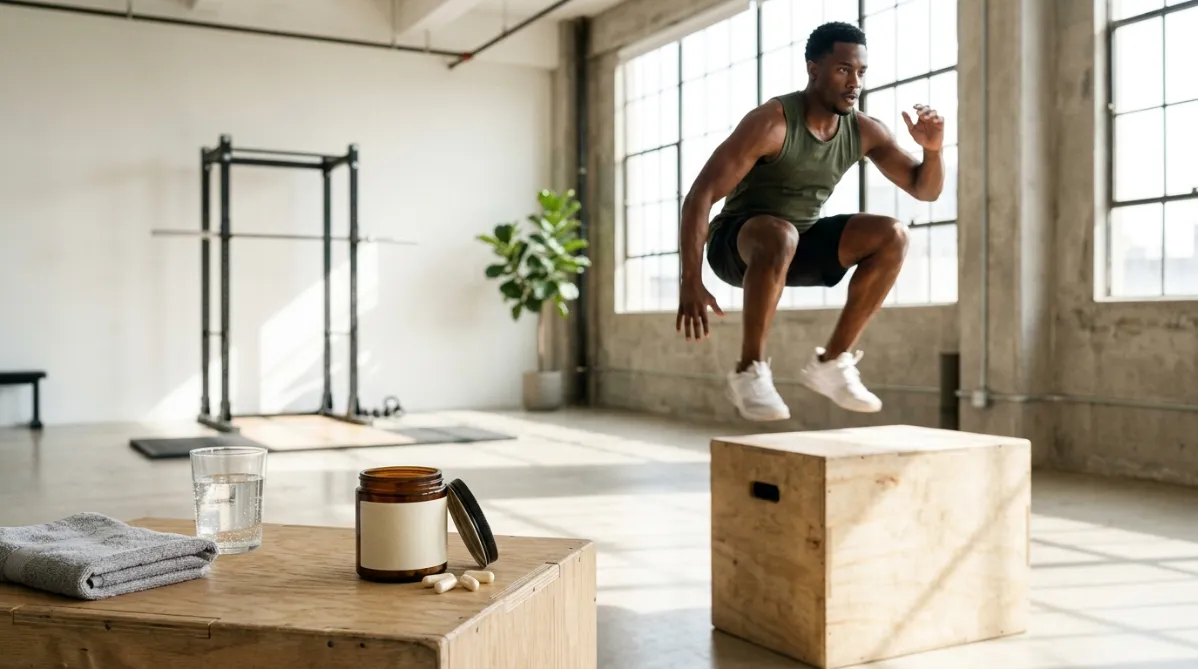
A wide, bright editorial photograph of a male athlete captured mid-jump in a minimalist, sunlit indoor training studio with pale concrete floors and tall windows. He is suspended at the peak of a plyometric box jump, knees tucked, with soft natural light and gentle motion blur at his feet. In the foreground, slightly out of focus, sits a small matte amber glass jar with a plain cream label, its lid resting beside it. Next to it are a few creamy white capsules spilled on a light oak wooden plyo box. A clear glass of water and a folded gray towel sit nearby.

The color palette is fresh and modern: warm off-white, sage green, soft sand, and touches of muted terracotta. A few green leaves of a potted fiddle-leaf plant in the corner add an organic feel. Shadows are long and soft, and the atmosphere is calm, clean, and health-focused, like a high-end wellness magazine spread.

The composition follows the rule of thirds. The jumping figure sits on the right third, and the supplement jar and capsules anchor the lower left. Negative space in the upper left leaves room for a headline overlay. The depth of field is shallow with a creamy bokeh background, shot on a 50mm lens with a subtle film-like grain. The overall look is crisp, airy, and contemporary, a lifestyle science journal cover aesthetic with no text, no logos, and no futuristic elements.
recovery

Esta cepa probiótica redujo el daño muscular después de 100 saltos máximos

BY DR. GYMBRO ·

Un nuevo ensayo aleatorizado sugiere que un probiótico específico, L. plantarum GKK1, podría amortiguar el impacto de una dura sesión pliométrica. Tras cuatro semanas de suplementación con 1,0 × 10¹¹ CFU al día, 48 hombres sedentarios realizaron 100 saltos máximos y el grupo que recibió el probiótico perdió menos rendimiento en salto, fuerza y prueba Wingate que el grupo placebo. Los marcadores de daño muscular como CK y mioglobina, así como hs‑CRP, TBARS y 3‑metilhistidina urinaria, también mostraron valores más favorables. Sin embargo, el estudio es pequeño, solo incluye a hombres no entrenados y cuenta con autores vinculados al fabricante de la cepa. A continuación se presentan los hallazgos y a quién podría beneficiar realmente.
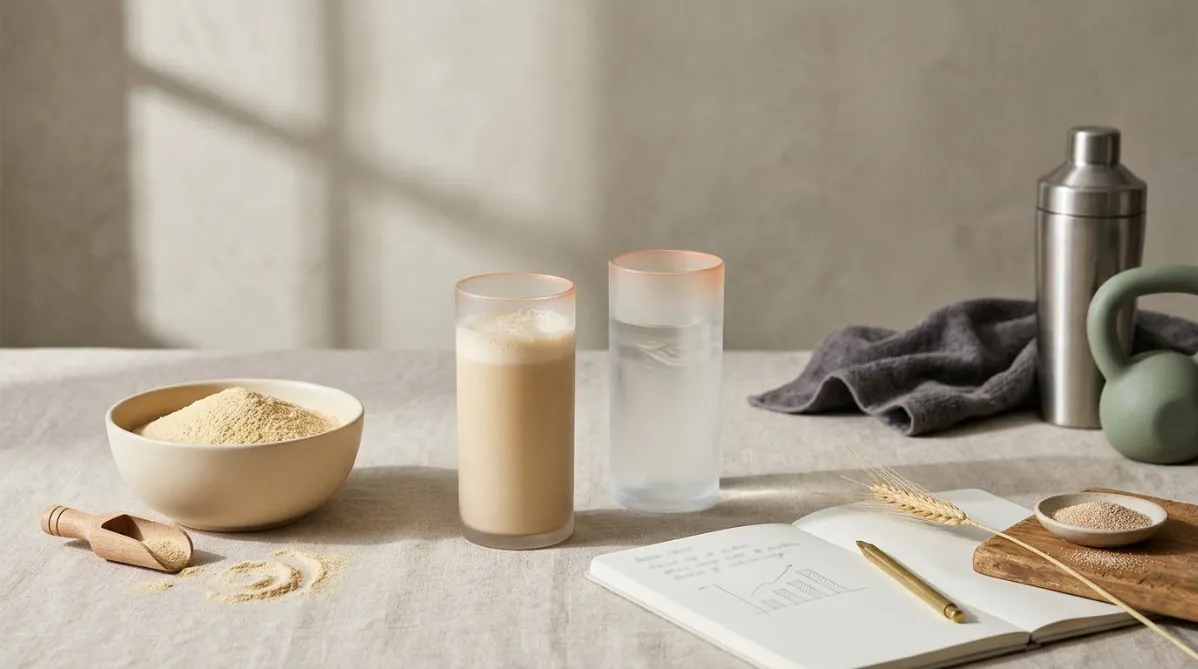
A wide, softly lit editorial still life on a pale oat-colored linen surface, shot from a slightly elevated three-quarter angle. On the left, a matte ceramic bowl in warm cream holds fine, pale golden-beige yeast protein powder, with a small wooden scoop resting beside it and a few loose dusty swirls on the linen. In the center, two tall frosted glass tumblers stand side by side. One holds a creamy, light tan shake with a delicate froth, and the other holds clear water with a faint ripple, creating a quiet visual contrast. On the right, a loosely folded charcoal gym towel, a brushed-steel shaker bottle, and a single small kettlebell in muted sage green sit slightly out of focus.

A few elements hint at the science without looking clinical. A minimalist matte-white notebook lies open with soft, blurred handwriting and a hand-drawn bar chart in thin pencil. Beside it rests a slim brass pen. A single sprig of dried wheat and a small dish of baker's yeast granules on a wooden board nod to the ingredient's fermentation origin.

Natural morning window light enters from the upper left, casting long, gentle shadows and a warm highlight along the glass rims. The palette is earthy and calm: oat, cream, soft terracotta, sage, and warm gray, with a subtle peachy glow in the background. The backdrop is a smooth plaster wall in muted putty tone, with a faint shadow of a window frame across it.

The composition leaves generous negative space in the upper third for a title overlay. Shallow depth of field keeps the glasses and bowl crisp while the gym props melt softly into the background. The overall mood is modern, wholesome, and trustworthy, with the feel of a contemporary health and nutrition magazine. The photograph has fine film-like grain and natural texture, and no text, logos, or labels appear anywhere.
recovery

Mezcla de proteína de levadura compite con el suero en dolor muscular y CK, pero con reservas

BY DR. GYMBRO ·

La proteína de levadura está ganando terreno como alternativa sostenible al suero. Un estudio aleatorizado en atletas bien entrenados comparó una mezcla de levadura‑suero con agua y suero puro tras un entrenamiento excéntrico muy intenso. La mezcla redujo la creatina quinasa y, en hombres, el dolor muscular, comportándose de forma similar al suero. Sin embargo, el control consistió solo en agua, sin igualar calorías, y muchos hallazgos fueron exploratorios tras correcciones por comparaciones múltiples. Aquí analizamos qué demuestran los datos, qué dudas quedan y quién podría estar interesado en probarla.

This page is available in