Dr. Gymbro
←

#gut microbiome

2 articles
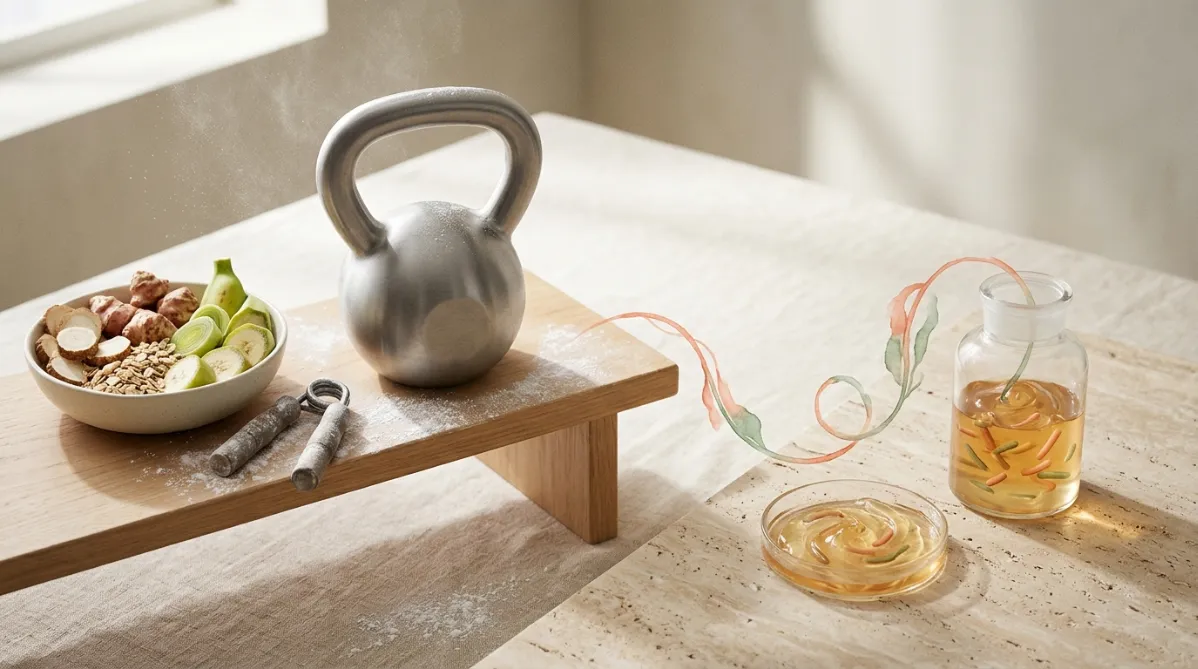
A landscape editorial still life on a soft, warm-neutral background of pale oat linen and light travertine stone. In the center-left, a matte brushed-steel kettlebell and a pair of worn chalk-dusted hand grippers rest on a low pale wooden bench. Beside them sits a shallow ceramic bowl of fermented and fiber-rich foods: sliced chicory root, Jerusalem artichokes, oats, leeks, and a few green banana slices. Soft powdery chalk drifts in the air like fine dust in a sunbeam.

On the right, a minimalist glass apothecary jar and a delicate petri-style glass dish hold a swirl of translucent amber-gold gel with tiny, organic rod-shaped forms. They are rendered as abstract, elegant botanical-looking filaments in soft coral and sage green, like watercolor ink bleeding through water. A single fine thread of this ink-like color curls out of the jar and gently loops across the surface toward the kettlebell, suggesting a quiet connection between gut and muscle without literal anatomy.

Late-morning window light enters from the upper left and casts long, soft shadows with gentle highlights on the metal and glass. Sage green, terracotta, cream, and muted gold make up the palette, with a subtle film-grain finish. The composition is airy, with generous negative space on the far right and top for headline overlay. The shallow depth of field, crisp focus on the foreground objects, and creamy blur behind them give it the polished, modern feel of a wellness and science magazine cover.
science research

The Gut Bug Linked to Stronger Lifts: Roseburia inulinivorans

BY DR. GYMBRO ·

One gut bacterium, Roseburia inulinivorans, tracked with stronger handgrip, leg press and bench press in people, and giving it to mice boosted their grip strength. Other Roseburia species didn't show the same effect, and the bug was less abundant in older adults than in young ones. But the proof of cause and effect is mouse-only, and no probiotic product exists yet. Here's what the Gut study found, how it might work, and the speculative, low-risk way to support your gut while the science catches up.
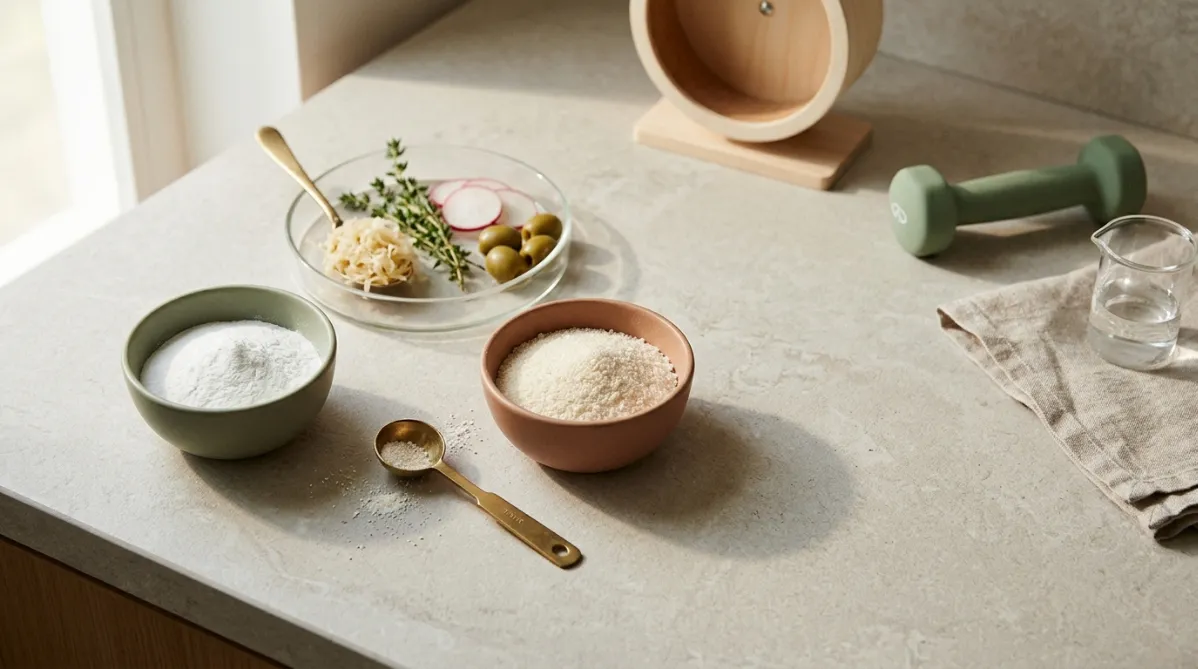
A wide editorial still life on a pale warm-gray stone countertop, lit by soft natural window light from the left. In the center, two small matte ceramic bowls sit side by side. One holds fine white creatine powder, and the other holds a slightly coarser, creamy off-white crystalline powder. Between them, a delicate brass measuring spoon rests at a slight angle, dusted with a few grains. Behind the bowls, a shallow glass dish holds a handful of whole food ingredients that suggest gut health: fermented sauerkraut, a few sprigs of fresh thyme, sliced radishes, and a small cluster of green olives. Their colors are soft and natural. To the right, a minimalist wooden mouse running wheel stands out of focus as a quiet visual nod to the exercise study. Beside it, a small, slim dumbbell in muted sage green rests on the counter. A folded linen napkin in oatmeal tone and a single glass beaker with clear water add a subtle lab-meets-kitchen feel without looking clinical. The palette is calm and modern: sage green, terracotta, cream, soft sand, and touches of warm brass. Shadows are gentle and elongated, with a shallow depth of field that keeps the powders crisp and the background creamy. The composition leaves generous negative space on the right third for title text. The overall mood is clean, thoughtful, and trendy, like a contemporary wellness and science magazine, with fine film-like grain, natural textures, and a refined editorial look.
science research

Gut-Microbe Compound PAS Beat Creatine in Mice—But There's a Catch

BY DR. GYMBRO ·

A new mouse study says a pair of gut-microbe-derived molecules, pipecolic acid and succinate (PAS), outperformed creatine monohydrate on grip strength and muscle force after seven weeks of weighted wheel running. The surprise is that neither compound increased muscle mass or fiber size, so the edge was in function, not size. Both supplements did improve running performance versus control. But this is mice-only, exploratory research with no human dose or safety data. Here is what the study found and what you should (and shouldn't) take from it.

This page is available in