Dr. Gymbro
←

#judo

2 articles
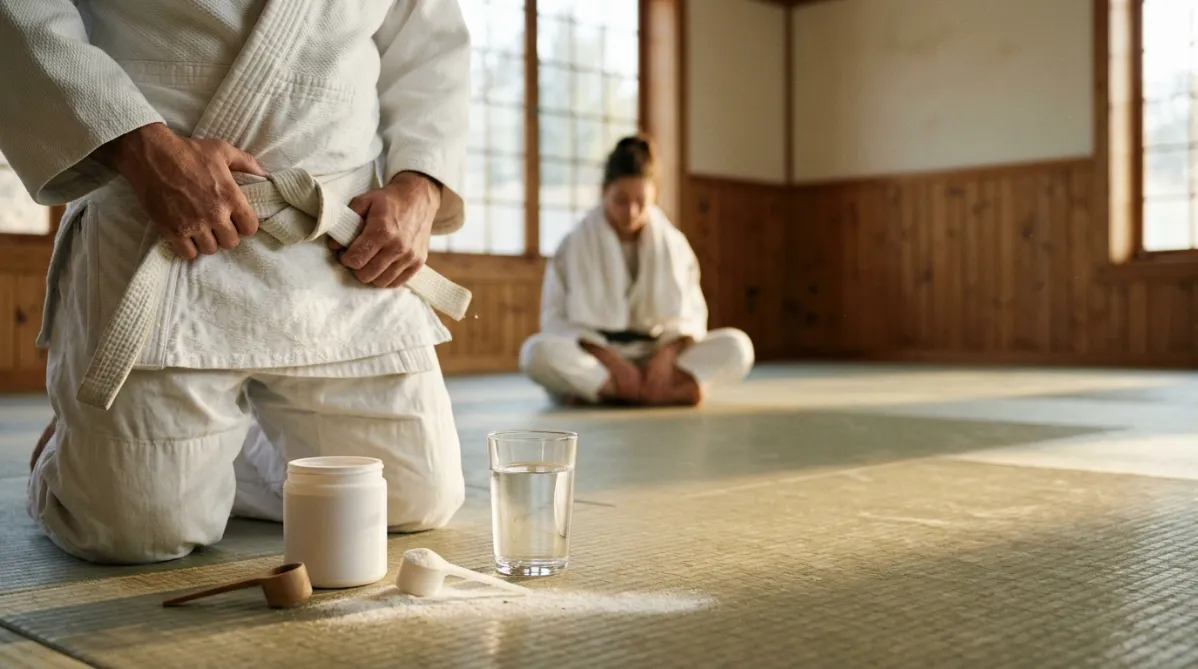
A cinematic, editorial-style photograph of a judoka's hands adjusting a worn white judo gi belt on a tatami mat, shot in soft late-afternoon light streaming through tall dojo windows. In the foreground on the mat sits a small matte white supplement tub with a wooden scoop resting beside it. A single level scoop of fine white powder is spilled in a gentle arc across the straw-colored tatami texture. Beside it is a clear glass of water catching warm golden highlights, with delicate condensation on the surface.

In the softly blurred background, a second athlete in a crisp white gi sits cross-legged, towel draped over the shoulders, head slightly bowed in post-training stillness. Warm wood paneling and a pale plaster wall create a calm, minimalist backdrop. A subtle muted sage-green and cream color palette dominates, with accents of warm amber from the light and a soft terracotta tone from a folded towel.

Composition follows the rule of thirds, with the supplement and spilled powder at lower left and negative space on the right for a title overlay. Shallow depth of field, 50mm lens look, gentle film grain, natural color grading reminiscent of a modern wellness or sports-science magazine. Clean, tactile, understated, and contemplative. Dust motes float in the sunbeams. There is no text, no logos, and no digital effects, just authentic materials: cotton, wood, straw, glass, and powder.
recovery

One HMB Dose After Judo Fights Spiked Antioxidant Enzymes—Not CK

BY DR. GYMBRO ·

Everyone assumes HMB is a recovery booster, so researchers tested a single post-fight dose in elite judoka. The muscle damage marker CK didn't change, and LDH actually fell less than in the placebo group. But three antioxidant enzymes, catalase, GPX, and SOD, rose more in the HMB group, with catalase up 54%. This was a small pilot with one 1.0 g dose, so the headline is intriguing but far from proof. Here's what it means before you spend money.
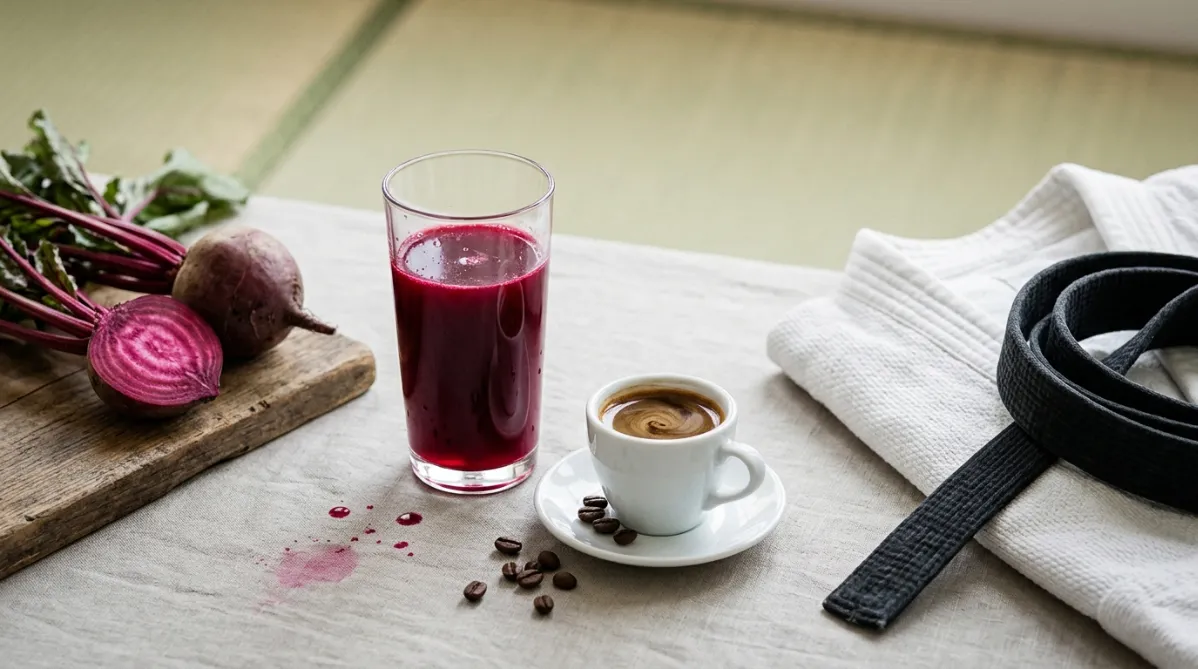
A wide landscape editorial still life on a pale warm-gray linen surface, shot from a slightly elevated three-quarter angle in soft diffused morning window light. At center-left, a tall clear glass filled with deep magenta-crimson beetroot juice catches the light, its edges glowing ruby with a few condensation droplets on the surface. Beside it sits a small white ceramic espresso cup with dark, glossy coffee and a delicate swirl of crema. A few roasted coffee beans are scattered casually near the cup's saucer. To the left, two whole raw beetroots with their leafy burgundy-veined greens still attached rest on a rustic wooden board, with one beet sliced in half to reveal concentric rings of vivid fuchsia and pale pink. A folded white judo gi sleeve with a worn black belt loosely coiled on top is draped along the right side of the frame, the cotton weave texture visible, hinting at the sport without any people. In the background, a soft-focus tatami mat texture in muted straw-green creates a subtle horizontal band, blurred into creamy bokeh. A small scattering of beet juice droplets and a faint magenta stain on the linen add an organic, lived-in touch. The palette is restrained and modern: magenta, espresso brown, off-white, muted sage, and warm beige. Composition leaves generous negative space on the upper right for headline overlay. The mood is clean, calm, and contemporary, like a premium health and science magazine cover, with shallow depth of field, crisp focus on the glass and cup, fine natural shadows, and subtle film-like grain.
nutrition

Beet Juice + Caffeine: The Judo Trick That Beat Caffeine Alone

BY DR. GYMBRO ·

Caffeine is the go-to pre-fight boost, but a new randomized trial in 35 judo athletes suggests its edge fades by the fifth bout of a simulated competition day. Beetroot juice did the opposite and helped late, while the combination covered both early and late performance. In trial 5, both beet juice and the combo beat caffeine alone on judo-specific fitness, neuromuscular function and cognition. Here is what the study found, who it may help, who should be careful, and what the abstract does not tell us.

This page is available in