Dr. Gymbro
←

#l-arginine

3 articles
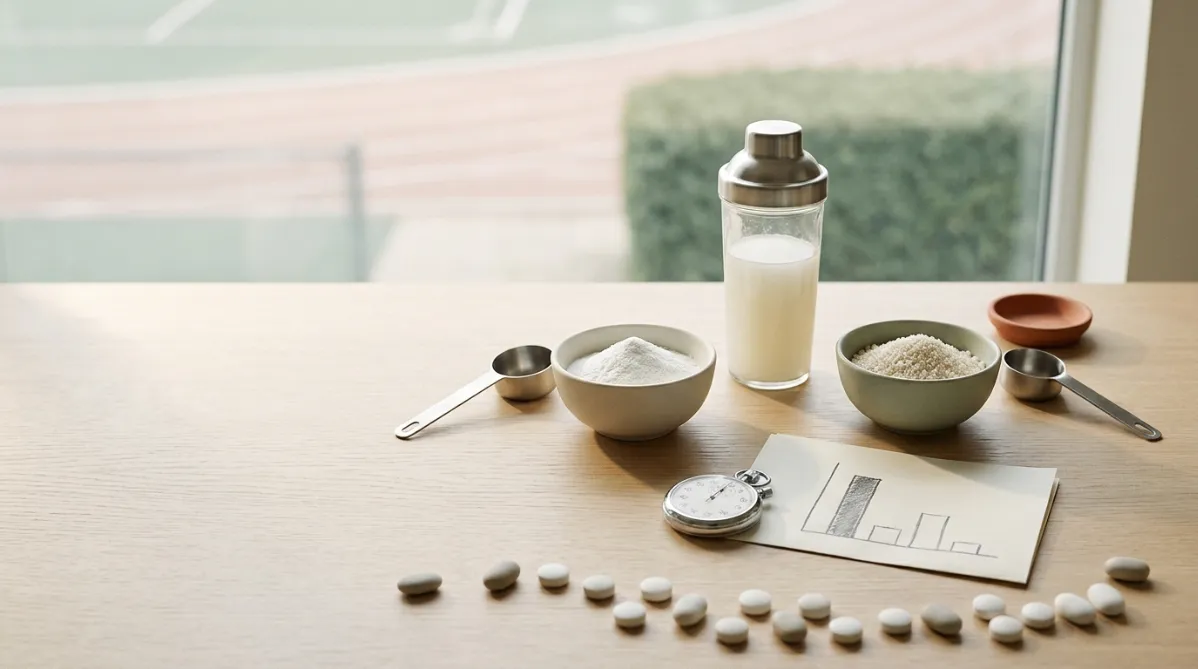
A wide, editorial-style still life shot from a slightly elevated angle on a pale oak laboratory-meets-kitchen countertop, bathed in soft, diffused morning window light. In the center, two small matte ceramic bowls sit side by side: one holds fine white creatine powder, the other holds slightly coarser off-white L-arginine crystals. A brushed steel scoop rests beside each. Between and slightly behind them stands a clear glass shaker bottle filled with a cloudy, pale liquid, catching a gentle highlight. In the foreground, a minimalist analog stopwatch lies on the wood surface, its face crisp and legible, next to a folded sheet of off-white paper with a hand-drawn simple bar chart in charcoal pencil, with one tall bar and a few shorter ones, no text or numbers. In the soft-focus background, a blurred gym-style window view shows a pale running track and a muted sage-green hedge, suggesting sprinting and athletic testing without any people. Eighteen small smooth stones or white pills are arranged in a neat loose arc across the lower edge of the frame, a subtle nod to the small sample size, with one stone set slightly apart. The color palette is calm and modern: warm cream, bone white, soft sage, muted terracotta accents from a small clay dish, and thin touches of brushed metal. Shadows are long and gentle, the depth of field shallow, with a fine film-like grain. The composition leaves generous negative space on the left third for a title overlay. The mood is clean, thoughtful, and trustworthy, like a contemporary health and science journal cover, with no futuristic elements, no glowing effects, and no text.
nutrition

Creatine Plus L-Arginine Added ~99 W Peak Power. Here's the Catch

BY DR. GYMBRO ·

A new crossover trial found that taking creatine and L-arginine together an hour before testing raised peak sprint power by about 99 W over placebo. The stack also beat each supplement alone on peak power and countermovement jump height. But the researchers couldn't prove the two work synergistically, and the study had only 18 men. Here's what the numbers show, how the doses worked, and who should be cautious.
A wide landscape editorial photograph of a minimalist wooden desk by a large window in soft morning light. On the left, two small matte ceramic bowls sit side by side on a pale oak surface. One holds a modest mound of fine white amino acid powder, and the other holds a visibly larger mound, a quiet visual echo of two different doses. Beside them rest two brushed-brass measuring spoons, one slightly larger than the other. A glass of water with delicate condensation stands nearby, catching the light.

In the middle ground, a linen-bound notebook lies open with blurred handwritten columns and a simple hand-drawn line chart. A thin pen rests across the page. A pair of clean white running shoes sits on the floor at the edge of the frame, laces loosened, suggesting a recent jog. A soft green plant, such as a eucalyptus sprig in a small ceramic vase, adds an organic touch on the right.

The background is a softly blurred bright interior with sheer curtains and a hint of a leafy city street outside. The palette is warm and muted: cream, sand, soft sage green, pale terracotta, and touches of brushed brass. Gentle diffused sunlight casts long, delicate shadows across the desk, with a shallow depth of field that keeps the bowls crisp and the rest dreamy. The mood is calm and contemplative, with a modern wellness-journal aesthetic, generous negative space at the top and right for headline overlay, and subtle film grain. Shot as if on a 50mm lens at eye level with the tabletop, with a slightly desaturated, editorial color grade.
science research

The L-Arginine Dose That Cut Fatigue—And the One That Didn't

BY DR. GYMBRO ·

Not all L-arginine doses are equal. In an 8-week randomized trial of 120 fatigued working-age adults, 6 g/day cut fatigue scores more than placebo (-6.41 vs -2.23) and lowered lactate after a 30-minute run, while 3 g/day did nothing for fatigue. Sleep quality improved nominally at both doses, and resting nitrite didn't budge. But even the winning dose reduced fatigue rather than resolving it, and the research was supported by industry.
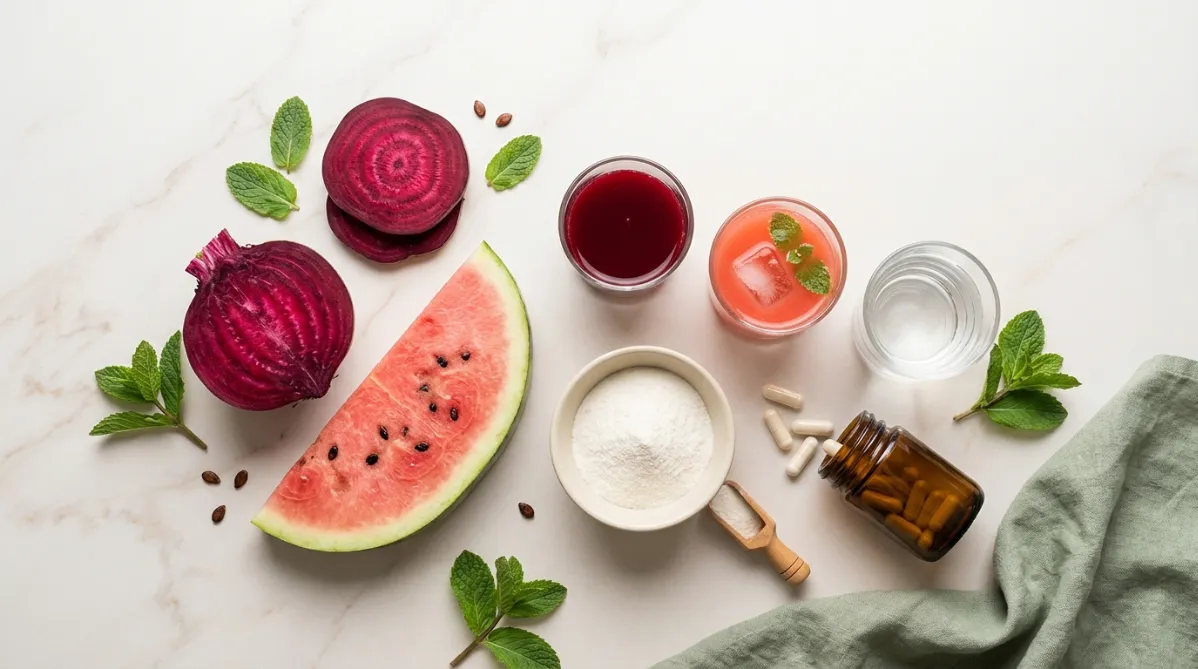
A bright, editorial flat-lay photograph shot from directly above on a pale warm-white marble surface with soft diffused morning light. In the center-left, a halved deep magenta beetroot sits beside a thick wedge of watermelon with vivid pink-red flesh and a crisp green rind. A few scattered black watermelon seeds add contrast. To the right, a small matte ceramic bowl holds fine white citrulline powder, with a minimal wooden scoop resting beside it. Next to it, a few loose off-white capsules spill from a small amber glass jar. Three small glass tumblers in a neat diagonal row hold beetroot juice, watermelon juice, and clear water, each catching soft highlights. Thin sprigs of mint and a few sliced rounds of beetroot showing concentric ruby rings are arranged organically around the edges. A folded linen napkin in muted sage green adds a calm, textural accent. The palette is magenta, coral pink, sage green, and cream, with gentle natural shadows and shallow depth of field at the edges. The composition leaves clean negative space in the upper right for title text. The mood is fresh, modern, and clean, like a contemporary health and nutrition magazine cover, with crisp detail, subtle grain, and a refined, minimalist styling.
recovery

Beetroot vs Watermelon vs Citrulline: Who Wins Soreness Day 2?

BY DR. GYMBRO ·

A new network meta-analysis of 19 trials pitted beetroot, watermelon, citrulline malate and L-arginine against each other for muscle soreness, and the winner changed by the day. Watermelon plus added citrulline led at 24 hours and beat isolated amino acid pills. Beetroot nitrate was the only option still working at 48 hours, but seemingly only in trained people. By 72 hours, nothing beat placebo. The evidence is low certainty, so here is what to take seriously and what not to.

This page is available in