Dr. Gymbro
←

#muscle protein synthesis

1 article
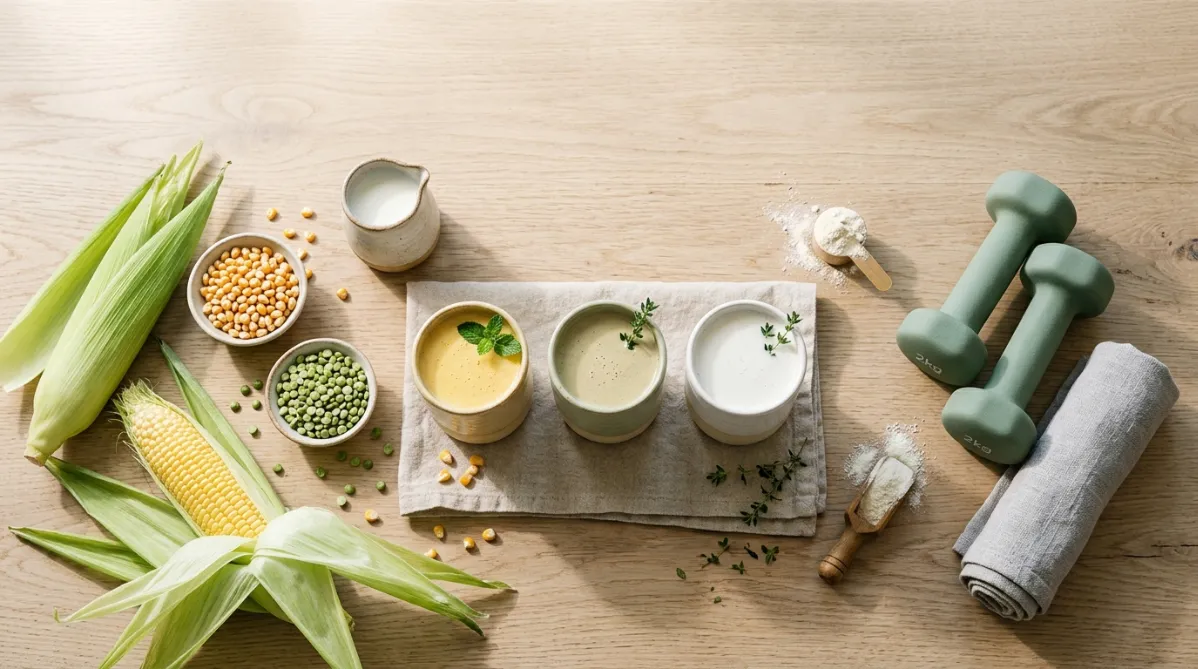
A bright, airy overhead flat-lay on a pale oak wooden table in soft morning daylight. At the center, three matching ceramic glasses in a neat row, each holding a creamy shake in a slightly different tone: one warm golden-yellow, one soft sage green-beige, one pure milky white. Beside the glasses, small shallow ceramic bowls hold the raw sources: dried yellow corn kernels, split green peas, and a small pitcher of fresh milk. A few fresh corn husks and a single ear of corn with pale green leaves are arranged diagonally across the left side of the frame, while a sprig of fresh herbs adds a touch of green. On the right, a pair of matte sage-green dumbbells and a rolled linen towel suggest light resistance exercise, placed with calm, editorial restraint. A linen napkin, a wooden scoop dusted with fine powder, and a few scattered kernels add natural texture. The color palette is warm cream, butter yellow, muted sage, and soft white, with gentle natural shadows falling to the lower right. Shallow depth of field, clean negative space at the top for headline overlay, minimalist modern magazine styling, crisp food-photography look, subtle film-like grain, wide landscape composition.
nutrition

The Plant Protein That Just Matched Milk for Muscle Synthesis

BY DR. GYMBRO ·

Plant protein is supposed to lose to milk when it comes to building muscle, but a new trial in older adults says corn protein didn't get the memo. In a randomized study of 48 healthy adults around age 68, 20 g of corn protein, a pea-corn blend, and milk protein all boosted muscle protein synthesis well above placebo, with no differences between protein groups. Resistance exercise amplified the response in every group. Here is the dose, the numbers, who it may suit, and the caveats you need before swapping your shake.

This page is available in