Dr. Gymbro
←

#paraxanthine

1 article
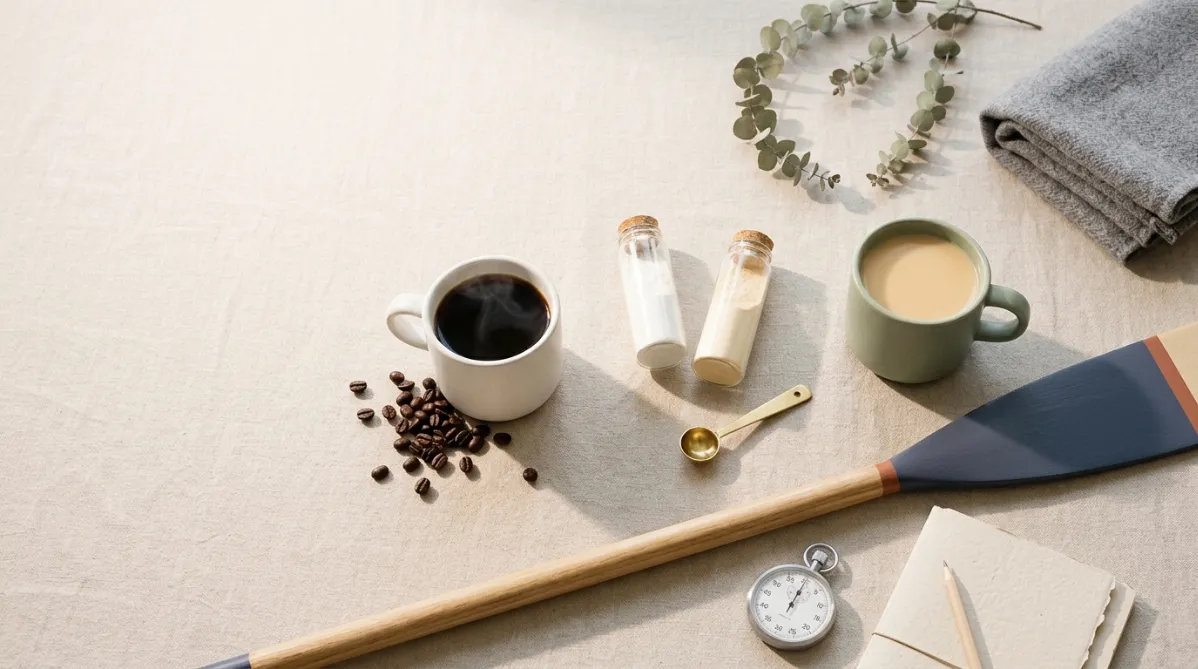
A wide, editorial-style flat lay photographed from above on a pale oat-colored linen surface in soft morning window light. On the left, a small matte white ceramic cup of black coffee with a delicate swirl of steam, beside a few scattered roasted coffee beans. On the right, a second matte sage-green ceramic cup holding a pale, creamy golden tea-like drink, mirroring the first. Between them, two small glass vials with cork stoppers sit side by side: one holding fine white powder, the other holding slightly warmer cream-colored powder, with a tiny brass measuring spoon resting nearby. In the lower foreground, a slim wooden rowing oar lies diagonally across the frame, its blade edge softly entering from the right, painted a muted navy with a thin terracotta stripe. A minimalist analog stopwatch with a brushed-steel case rests near the oar, and a folded cream notebook with a thin pencil suggests data-taking. In the upper corner, a crescent-shaped dried eucalyptus sprig and a small folded gray wool throw hint at sleep and calm without being literal. The palette is warm and restrained: oat, cream, sage, soft navy, terracotta, and espresso brown. Shadows are long and gentle, with shallow depth of field and subtle film grain, giving a refined, modern wellness-magazine feel. Generous negative space on the left third of the composition leaves room for a headline overlay. Clean, calm, tactile, and contemporary, with no text, logos, or futuristic elements.
science research

Paraxanthine vs Caffeine: The Combo That Won, and the Sleep-Saver

BY DR. GYMBRO ·

Paraxanthine, caffeine's main metabolite, just went head-to-head with caffeine in a trial of 14 rowers. The combo of 200 mg each beat placebo on a 2000-m row, but only with a small effect (d = 0.30). Neither compound alone clearly improved performance. Paraxanthine alone, however, looked friendlier to subjective sleep. Here are the numbers, the limits, and who might actually benefit.

This page is available in