20 g of Whey Didn't Switch On Muscle Building in Older Men
Whey, plant protein, and leucine-boosted plant protein all failed the same test in a new Maastricht trial of 45 men around age 69. Blood amino acid levels differed as expected, with whey highest overall and the leucine blend peaking highest for leucine. Yet muscle protein synthesis was identical across groups and no higher than fasting levels. The takeaway is that dose may matter more than protein source for older adults. Here is what the study did and didn't test, and how to apply it.

3 g HMB + 40 g Whey: The Surprise Boost Hit Women, Not Men
Everyone assumed a muscle-building add-on would help older men most. A new tracer study found the opposite: adding 3 g of calcium-HMB to a 40 g whey shake boosted muscle protein synthesis in older women, but not men. HMB also reduced late-fed muscle breakdown across the group. But this was a 3-hour acute study of just 24 adults with Abbott Nutrition co-authors, so it's no proof of long-term muscle gain. Here's the dose, timing, who might benefit, and who should skip it.
Protein Farts? Probiotic BB536 Cut Odor, But Only in Some Guts
Gassy, smelly gut trouble from all that whey? A new trial tested the probiotic Bifidobacterium longum BB536 in athletes on high-protein diets and spotted drops in odor compounds like methyl mercaptan and ammonia. The catch: the overall group showed no significant difference from placebo, and the promising results came from post hoc subgroups. The study was small, exploratory, and tied to the probiotic's maker. Here's what BB536 is, why your baseline microbiome may decide who benefits, and the cheaper fixes to try first.
Collagen Beat Whey for Muscle in a 78-Trial Analysis?
A 2026 network meta-analysis of 78 randomized trials and 4,755 people ranked collagen first for strength and fat-free mass gains with resistance training, ahead of whey. Stranger still, no other protein supplement beat placebo. But collagen is an incomplete, low-leucine protein, and the confidence intervals are wide. Here is what the numbers actually show, why the result needs head-to-head confirmation, and what to do with your supplement stack in the meantime.
Fermented Whey Serum Grew Muscle Cells More Than Regular Whey
Blood drawn after people drank fermented whey made muscle cells grow bigger than blood drawn after regular whey, but the muscle cells were mouse cells in a dish. In this Japanese crossover trial, serum from young and older men was applied to C2C12 myotubes, boosting diameter, S6K1 (mTOR) signaling, and oxidative-metabolism markers. Muscle protein synthesis was greater with serum from older donors, a hint for those facing anabolic resistance. Here is what the findings really mean, why regular whey remains the proven choice, and what to watch for next.
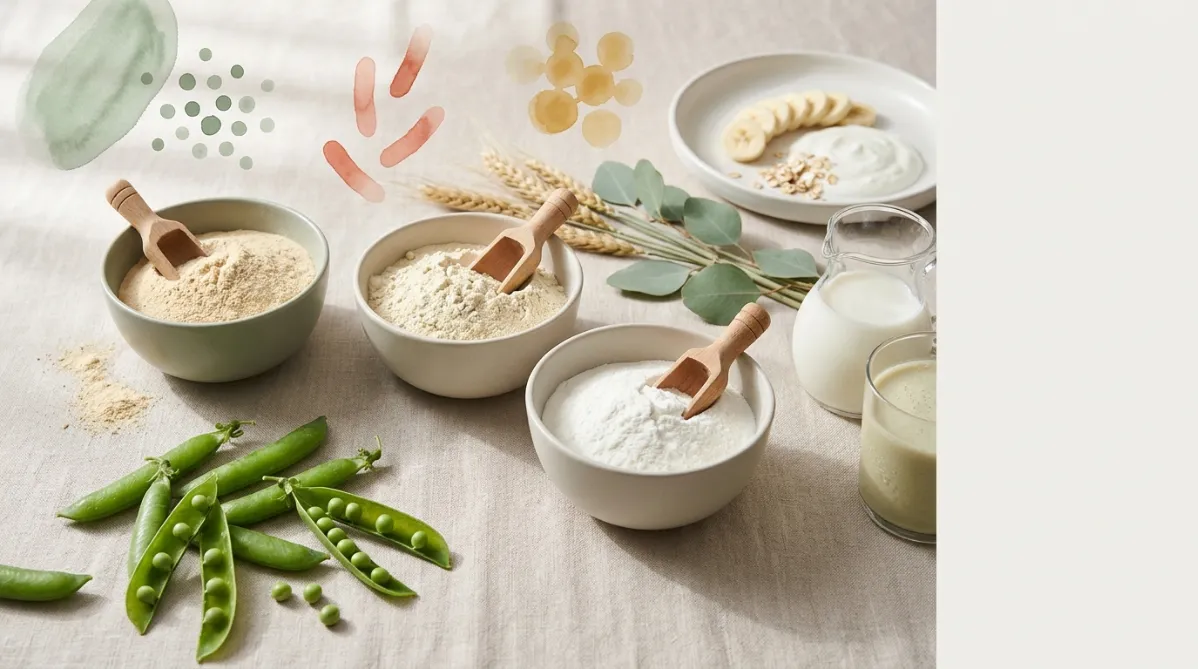
Which Protein Powder Reshapes Your Gut? Pea Did It in 4 Weeks
A four-week Swedish trial put pea protein concentrate, pea protein isolate and whey protein isolate head to head, with gut bacteria as the main outcome. Both pea proteins significantly changed gut diversity, and each form boosted different beneficial species. Concentrate lifted Bifidobacterium longum and Anaerobutyricum hallii, while isolate raised Lactobacillus crispatus and Limosilactobacillus frumenti. But the researchers say we still don't know what those shifts mean for function. Here's what it means for your next tub of powder.
Yeast Protein Blend Rivals Whey for Soreness and CK—With a Catch
Yeast protein is showing up in protein powders as a whey alternative, and a new randomized trial in well-trained athletes put a yeast-whey blend to the test after a punishing eccentric workout. Versus water, the blend lowered creatine kinase and, in men, soreness, while behaving much like plain whey. But the control was water only, not calorie-matched, and many findings were exploratory after multiple-comparison correction. Here's what the data show, what they don't, and who might want to try it.
Whey Isn't Special for Beginners? Soy and Pea Just Matched It
Think you need whey to build muscle as a beginner? A new meta-analysis of five DEXA trials found that soy and pea protein didn't significantly trail whey for lean mass or fat mass changes in untrained adults. But the authors warn that "no significant difference" isn't proof of equivalence, and the evidence base is small. Here's what the data show, what they don't, and how to choose and dose your protein. Chia protein fans, you'll want to read the part about the single trial.
Does Whey Wreck Your Liver? 59 Athletes Say the Opposite
Think whey protein is hard on your liver? A randomized, double-blind trial in 59 trained athletes found the opposite trend: after 8 weeks of 30 g/day, ALT, AST and CK dropped, while placebo groups stayed flat or rose. Only ALT showed a true difference between power and endurance athletes, and the CRP result was just a within-group trend. Here's what the study really shows, what the markers can't prove, and who should still be cautious.
Your Whey Shake May Underperform If You Train Dehydrated
You crushed your workout and chugged a big whey shake, but did your body get the full amino acid payoff? A new randomized trial in Nutrients found that men who lost about 2.2% of body mass without drinking had a weaker amino acid response 60 minutes after 45 g of whey than men who replaced fluids. Leucine, BCAAs, and total amino acids all came in lower. The study was small and measured blood markers, not muscle growth, so the real-world impact is still unproven. Still, the practical fix is simple, and this article breaks down who it applies to and how to hydrate smarter.
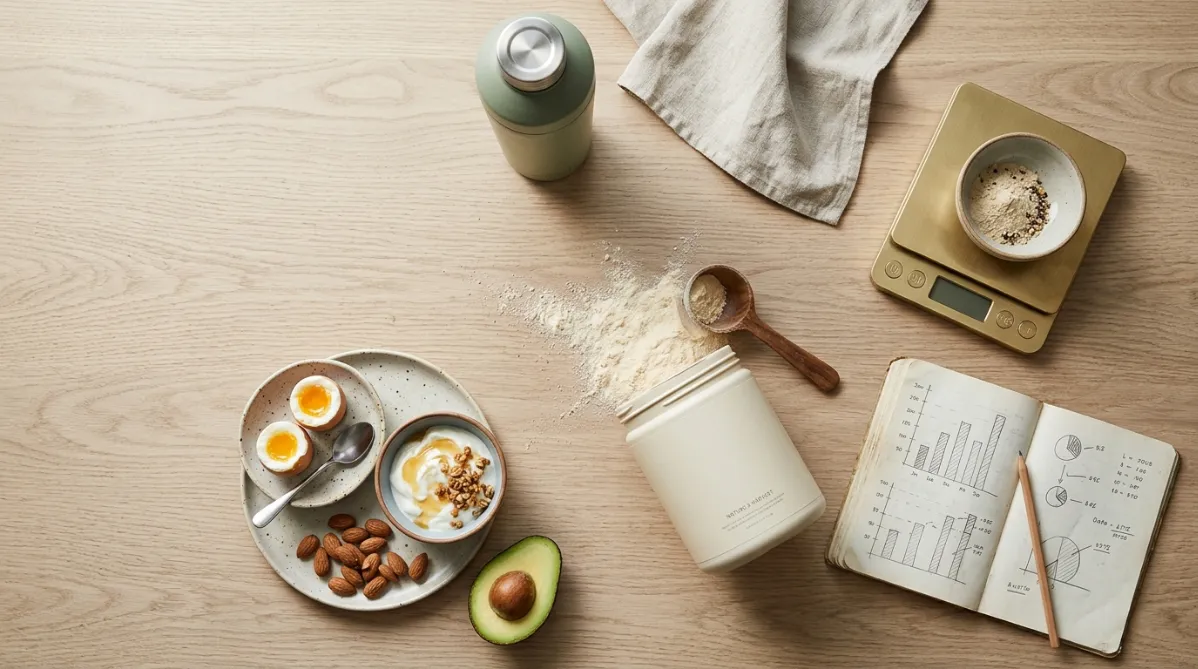
Protein Powder's Dirty Secret: Gains Fade When Calories Match
Does protein powder really make you perform and recover better, or are you just eating more calories? A Bayesian meta-analysis of 75 randomized trials and 1,206 athletes found real but limited benefits. The twist is that every significant result came from studies where energy intake wasn't matched between groups. The paper's most concrete advice is about dose: about 1 g/kg/day extra from supplements, for roughly 2 g/kg/day total. Here is what the data supports, what it doesn't say about timing and protein source, and who should skip the tub.

Whey Before Bed Halved Time to Fall Asleep. Casein Didn't
Everyone says casein is the bedtime protein, but a new randomized, double-blind crossover trial in humans found something odd. After resistance training, 40 g of whey taken 30 minutes before bed cut median sleep-onset time to 9 minutes versus 19 with a carb control, and also reduced next-day soreness. Casein did not significantly beat control. The catch: only nine people took part, and whey wasn't statistically better than casein head-to-head. Here's what the numbers show and what they can't prove.
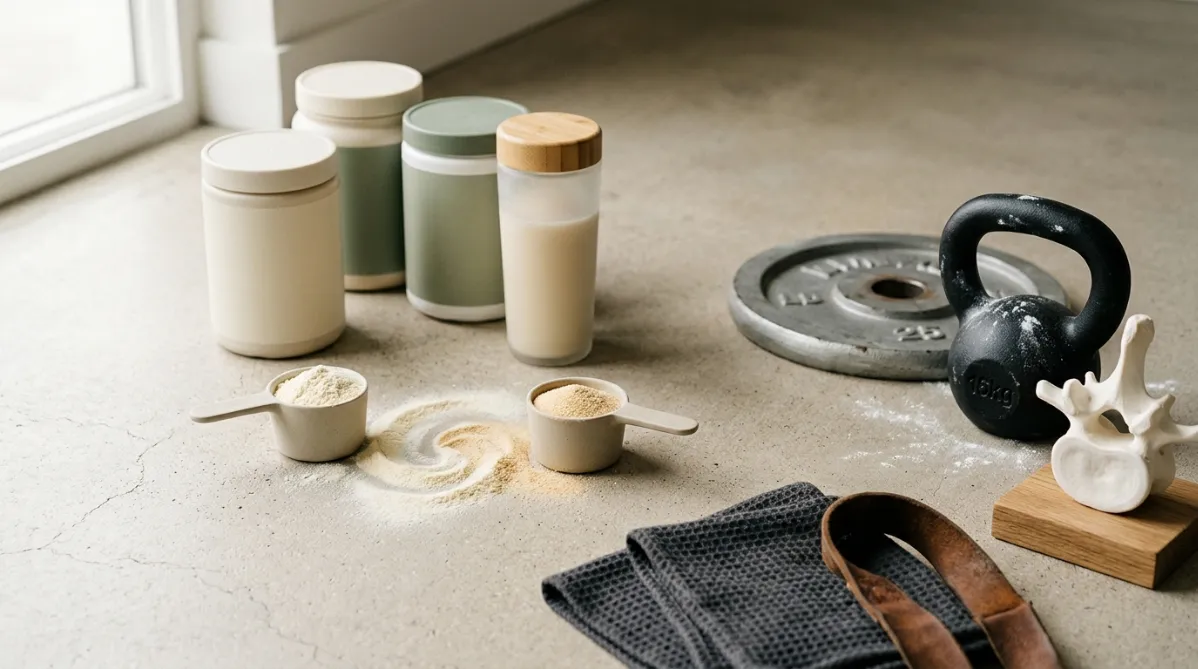
Whey Plus Collagen Beat Either Alone in Lifters—With a Catch
Mixing 30 g of whey with 10 g of collagen beat whey alone, collagen alone and placebo on every outcome in a new 8-week trial of resistance-trained men. The stack added 2.66 kg of muscle (by BIA), lifted lumbar spine BMD and improved squat, bench and bone turnover markers. Collagen alone moved bone, and whey alone moved muscle. But with only 40 participants, unmatched protein totals and a surprisingly big BMD jump, there is a catch. Here is what the stack won, who it may suit and who should skip it.
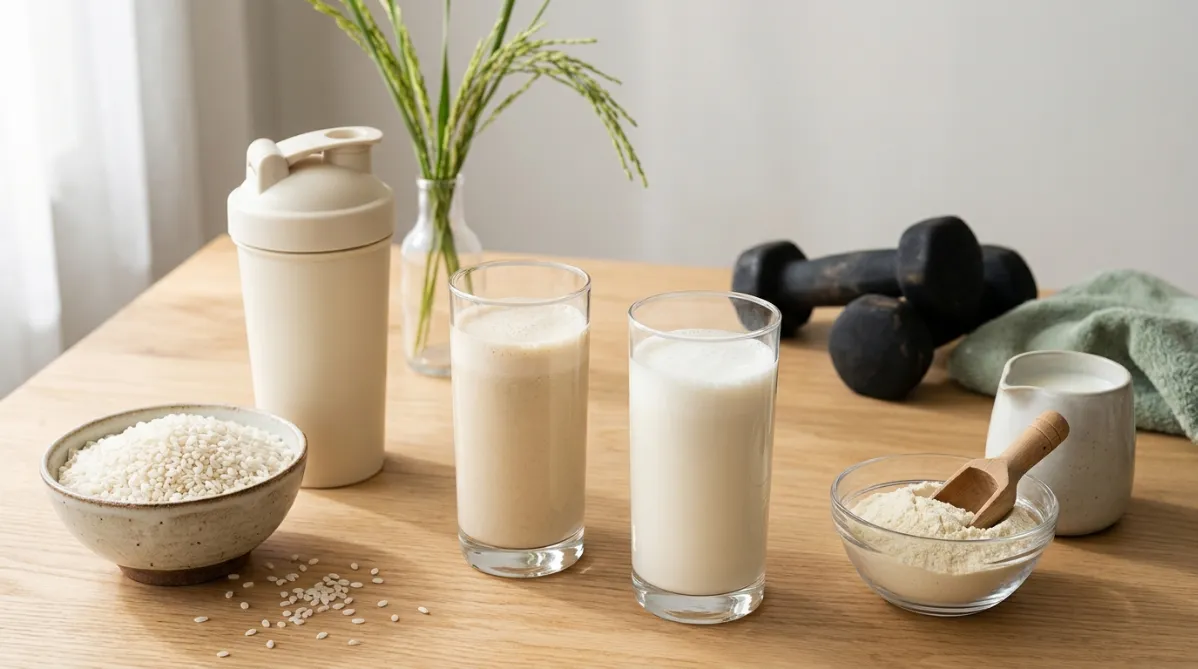
48 g of Rice Protein Matched Whey for Muscle and Strength in 8 Weeks
Plant protein is supposed to lose to whey, but a 2013 trial in trained men found otherwise at a big dose. In 24 resistance-trained males, 48 g of rice protein isolate after training produced the same gains in lean mass, muscle thickness, strength, and power as 48 g of whey over eight weeks. Why did rice keep up? The large dose may have closed the leucine gap. Here is what the study showed, where its limits lie, and how vegans and dairy-intolerant lifters can use it.

The 'Sleep Protein' That Left Bad Sleepers Waking More Often
Alpha-lactalbumin is marketed as the "sleep protein," and earlier acute studies hinted it could help athletes sleep and perform. A new randomized crossover trial put it to the test in 24 athletes who actually sleep badly. After a week of 40 g taken 2 hours before bed, there was no sleep benefit, awakenings rose slightly (11.01 vs 10.25), and jump height dipped (27.68 vs 28.58 cm). The one upside was reduced negative mood in the evening. Here's what was tested, what the numbers show, and who should skip it.
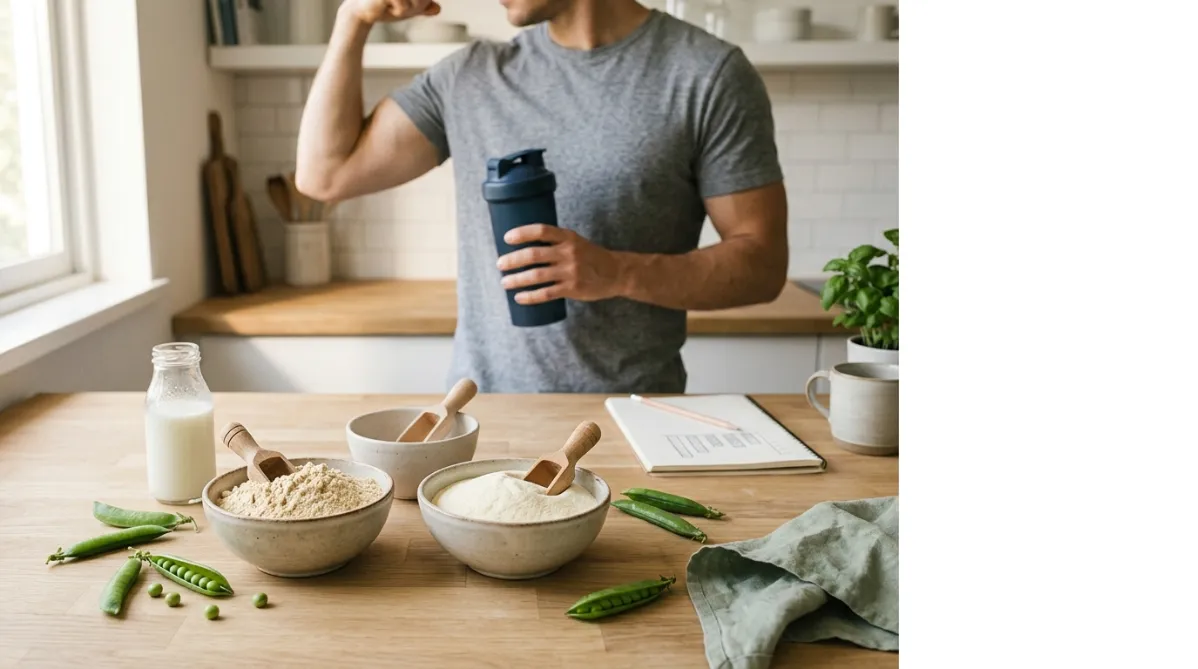
Pea Protein vs Whey: The Beginner Result Nobody Expected
Can plant protein really build muscle like whey? A 12-week trial of 161 men put pea protein, whey, and placebo head-to-head, and the beginner results turned heads: +20.2% biceps thickness for pea versus +8.6% for placebo. But the full-group difference was only a trend, and the standout finding came from a subgroup analysis. Here's what the study found, what it didn't prove, and how vegan or lactose-intolerant lifters can use it.
AstraGin: The Hidden Label Ingredient That Boosted Whey Absorption
There's a tiny ingredient on your pre-workout label you've probably ignored: AstraGin. A new human pilot trial found it boosted absorption of valine by 14%, leucine by 8%, and total essential amino acids by nearly 13% in adults aged 60-80. Blood zonulin, a gut-permeability marker, also dropped 13%. But strength and muscle mass differences weren't statistically significant, and the study had just 30 participants. Here's what the data really says about whether AstraGin works.
How Much Protein Actually Maximizes Muscle? The 1.6 g/kg Plateau, Explained
Think you need 2+ grams of protein per pound to grow? A meta-analysis of 49 trials and 1,863 adults found muscle-building benefits leveled off around 1.6 g/kg per day. The upper confidence limit reached about 2.2 g/kg, giving lifters a practical range instead of an arbitrary mega-dose. Trained lifters gained the most from supplementation, while the benefit shrank with age. Here is what the numbers mean for your plate, your shaker bottle and your budget.