Dr. Gymbro
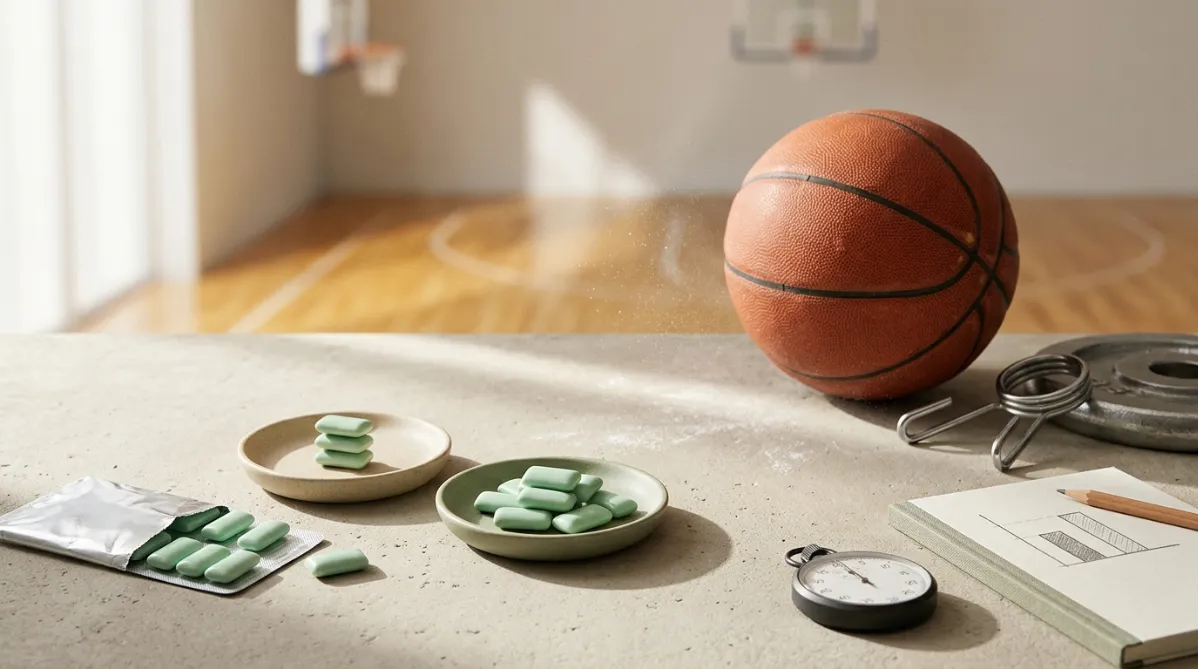
A landscape editorial still life on a pale warm-gray concrete surface, shot from a slightly elevated three-quarter angle in soft diffused morning window light. In the foreground left, a small open foil blister pack of mint-green caffeine gum sits beside two neatly arranged piles of gum pieces, one with three pieces and one with six, each on a small matte ceramic dish in oat and sage tones. The pieces are slightly glossy, rounded rectangles with crisp shadows. In the center-right, a worn leather basketball rests on the surface with deep amber-orange tones and visible pebbled texture. Next to it is a loosely chalked barbell collar and a single steel weight plate edge, partly out of focus. A minimalist analog stopwatch with a matte white face and a thin black hand lies at the lower right, and a slim notebook with a pencil rests nearby. The page shows a simple hand-drawn bar graph of two equal bars, with no legible text. In the soft-focus background, a blurred indoor basketball court with warm honey-colored hardwood and distant hoop lines fades into creamy bokeh. A narrow band of sunlight crosses the scene diagonally and picks out chalk dust particles in the air. The palette is muted and modern: sage green, warm oat, terracotta orange, charcoal, and cream. The composition leaves open negative space on the upper left for title overlay. Shallow depth of field, fine film grain, and a calm, clean magazine aesthetic like a contemporary health and science journal. No people, no text, no futuristic elements.
Science & Research

咖啡因口香糖对当天表现的影响:为何3 mg/kg 与6 mg/kg 效果相当

Dr. Gymbro · · 1 min read

咖啡因口香糖对当天表现的影响:为何3 mg/kg 与6 mg/kg 效果相当

摘要:一项针对篮球运动员的交叉试验发现,咖啡因口香糖在 3 mg/kg 时能够在当天提升力量、爆发力、冲刺速度和反应灵敏度,效果几乎与 6 mg/kg 相当。两种剂量同样加快了深蹲预热时的杠铃速度,但这种优势在 24–48 小时后消失。研究未进行基线测试,也没有仅含咖啡因的对照组,解读结果需格外谨慎。以下说明这对剂量、时机以及可能受益人群的意义。

内容

一项发表在 Journal of the International Society of Sports Nutrition 的交叉试验进一步证明,咖啡因并非剂量越大越好。来自成都体育学院的研究者将 3 mg/kg 与 6 mg/kg 的咖啡因口香糖与安慰剂进行比较,受试者为男性篮球运动员。结果显示,较低剂量在当天的神经肌肉表现提升上几乎与双倍剂量一样。该研究设计存在真实的局限,24‑48 小时的结果呈平坦状态。

研究者做了什么

十五名男性篮球运动员完成了三种随机、双盲、安慰剂对照的实验条件:安慰剂、3 mg/kg 咖啡因口香糖(CAF3)和 6 mg/kg 咖啡因口香糖(CAF6)。在每次实验中,运动员咀嚼口香糖 15 分钟后进行标准化热身,随后进行阻力预热方案——三组每组三次的深蹲,负荷为其单次最大重量的 85%。

性能测试分别在 1 小时、24 小时和 48 小时后进行。测试项目包括:等长中大腿拉力峰值、200 ms 力量发展率、Countermovement Jump(纵向跳)高度、20 米冲刺、Y 型反应敏捷测试以及 Lane 敏捷测试。还记录了深蹲期间的平均向心杠铃速度。数据采用线性混合效应模型分析,并对实验期间和给药顺序进行校正,以降低交叉设计中的顺序效应。

关键结果:3 mg/kg 已足够

在 1 小时的测点上,两种咖啡因条件均显著优于安慰剂,提升了等长力量、爆发力、冲刺成绩和反应敏捷。关键在于,3 mg/kg 与 6 mg/kg 之间没有出现统计学显著差异,剂量翻倍没有带来可测量的额外收益。

杠铃速度在预热深蹲中也在两种咖啡因条件下高于安慰剂,这表明咖啡因使运动员在相同 85% 负荷下动作更快,可能提升了预热工作的质量。唯一未出现剂量×时间交互作用的指标是 Lane 敏捷测试。

为何低剂量更具价值

实际价值体现在副作用上。高剂量咖啡因更容易导致紧张、胃肠不适、心率升高以及睡眠质量下降,而这些因素会削弱比赛表现。如果 3 mg/kg 能带来与 6 mg/kg 相同的急性提升,那么没有必要摄入更大剂量。对体重 90 kg 的运动员而言,3 mg/kg 约为 270 mg,6 mg/kg 则约为 540 mg——摄入量差距巨大,尤其是那些还会喝咖啡或服用其他兴奋剂的运动员。

口香糖是一种有趣的递送方式。咀嚼可以让咖啡因通过口腔黏膜部分吸收,可能比胶囊进入血液更快。该研究并未比较不同递送方式,因此这种优势仍是合理的推测,而非确定的发现。

24‑48 小时的结果,诚实面对

研究还考察了咖啡因预热是否会在后续几天持续作用。结果显示没有。24 h 和 48 h 时,两种咖啡因剂量均未表现出相对于安慰剂的优势。希望通过赛前咖啡因获得持久提振或加速恢复的想法在此未得到支持。益处似乎仅限于使用当天。

同样重要的是,这并不等同于“有害”。咖啡因并未导致次日表现低于安慰剂,结果仅为中性。

设计限制不可忽视

作者坦诚了研究的局限,读者也应如此。研究缺乏干预前的基线测试、没有单独的咖啡因组,也没有不进行阻力预热的对照组。因此,研究只能说明咖啡因在预热情境下产生的差异,无法分离咖啡因本身的独立效应。

样本量也很小,仅 15 名男性篮球运动员,结果可能不适用于女性、其他运动或训练水平较低的人群。咖啡因反应因基因、习惯摄入量及耐受性差异甚大,小规模交叉试验难以捕捉这些变异。1 小时的测试窗口也仅代表特定情境,不能推广到整场比赛或完整训练日。

实际建议

  • 剂量:从约 3 mg/kg 开始。本研究未提供使用 6 mg/kg 提升急性神经肌肉表现的理由。
  • 时机:按方案,在热身前咀嚼约 15 分钟,使咖啡因在开始重负荷或爆发性动作时已起效。
  • 适用人群:力量型、间歇性运动(如篮球)以及希望在关键训练、比赛或高强度预热阶段获得短暂提升的运动员。
  • 需谨慎人群:对咖啡因敏感、睡眠问题、焦虑或心律不齐的运动员,以及晚间训练者。任何剂量都应先在训练中尝试,绝不可在比赛当天首次使用。
  • 期望:将其视为同日工具,不要指望它能在 24‑48 小时后提升恢复或表现。

总结

这项交叉试验支持一种简单且成本低廉的策略:在热身前使用适中剂量的咖啡因口香糖,可在短期内提升力量、爆发力、冲刺速度和反应敏捷,且剂量越高并无额外好处。考虑到样本小且缺乏基线或单独咖啡因组,这仅是有价值的数据点,而非最终答案。仍需更大规模、更完善的研究来区分咖啡因本身与预热工作的独立作用。
Original study

Read the original research on pubmed.ncbi.nlm.nih.gov →

This article summarizes published research for general information. It is not medical advice.

DG

Written by

Dr. Gymbro

Dr. Gymbro writes for Dr. Gymbro: science-backed fitness, nutrition & performance.

Related Articles

A landscape editorial photograph of a volleyball net in a softly lit indoor gym, shot from a low angle on the court. In the foreground, a pair of athletic hands in mid-block reach above the net, fingers spread, caught in crisp focus. The athlete's face is out of frame, so the attention stays on the hands and the net. In the lower left foreground, a small open foil pack of caffeine chewing gum sits on the polished maple floor, with two mint-green gum pieces beside it and a clear water bottle. The pack is unbranded and minimal.

The background is a warm blur of honey-toned hardwood, pale gym walls, and tall windows with diffused late-afternoon light streaming in. Dust motes glow in the light shafts. The palette is muted and modern: warm wood amber, soft cream, sage green, and a touch of deep navy from the athlete's jersey. Shallow depth of field and gentle film grain give the image a refined, magazine-like feel. The composition follows the rule of thirds, with the hands and net on the right and open negative space on the left, where headline text could sit.

The mood is calm, focused, and slightly cinematic, like a feature in a contemporary sports science journal. The lighting is soft and natural, with long gentle shadows across the court lines. No futuristic or digital elements, no charts, no text. The overall look is clean, tactile, and editorial.
nutrition

疲劳导致反应慢18%,咖啡因口香糖将其控制在3%

BY DR. GYMBRO ·

在一次高强度的重复拦网疲劳实验中,服用安慰剂的精英排球运动员拦网反应时间下降了18.4%。使用6 mg/kg咖啡因口香糖时,下降幅度仅为3.0%,3 mg/kg则为6.4%。样本仅有15名运动员,盲法不完全,较高剂量的副作用更常见,且尚未确定唯一的最佳剂量。下面给出实际用量以及可能受益的人群。

A wide, editorial-style photograph of a sprinter crouched in starting blocks on a deep terracotta-red running track, shot from a low angle at the side as the first morning light rakes across the lanes. The athlete is mid-set, hips lifted, hands poised behind crisp white lane lines, with a soft focus on their muscular calves and spiked shoes in the foreground. Warm golden sunlight creates long, elegant shadows and subtle lens flare, while the distant lanes fade into a creamy bokeh.

In the lower right foreground, slightly out of focus, sits a minimalist still life on a matte concrete ledge beside the track: a small ceramic cup of black coffee with a thin wisp of steam, two loose roasted coffee beans, and a simple stopwatch with a clean white face. The ceramic is a muted sand color, adding a refined, modern lifestyle touch.

The color palette is restrained and trendy: terracotta, warm cream, soft charcoal, and a hint of sage green from trees blurred in the far background. The composition uses generous negative space across the upper left, ideal for headline text overlay. The look is similar to a contemporary health and sports science magazine: natural film-like grain, gentle contrast, shallow depth of field, and a calm, focused mood. No text, no logos, no graphics, and no futuristic elements, just a realistic, tactile, sunlit scene that suggests precision, preparation, and explosive speed.
science research

双倍咖啡因,冲刺更快?6 mg/kg 真能带来什么

BY DR. GYMBRO ·

一项随机、双盲、交叉设计的试验比较了 3 mg/kg 与 6 mg/kg 咖啡因对 21 名受训男性短跑运动员的影响。两种剂量均优于安慰剂,但只有更高剂量在前 30 米和 60 米出现显著加速,10 米则没有差异。高剂量还能提升跳高和起跑块力量,但对反应时间和 Wingate 峰值功率没有额外帮助。文中给出了不同体重运动员的实际摄入量、服用时机及适用人群,并说明该研究未提供高剂量副作用的直接证据。

A landscape editorial photograph in a bright, modern gym studio with soft natural light pouring through tall windows. In the foreground, a matte ceramic cup and a small glass jar of plain white powder sit on a light oak bench, with a wooden scoop resting beside them and a few loose grains dusted across the wood. The jar has no label, which hints at mystery without being heavy-handed. Slightly out of focus behind them, a female athlete in a sage green athletic set stands at a barbell, chalked hands gripping the bar, her expression calm and focused. A male cyclist on a stationary bike is blurred in the far background. The palette is warm neutrals: cream, soft sand, pale oak, muted sage, and a touch of terracotta, with gentle golden-hour highlights and soft shadows. The composition follows the rule of thirds, with the cup and jar in the lower left, the athlete on the right, and open negative space in the upper area for headline text. The depth of field is shallow, with a creamy bokeh background. The mood is contemplative, curious, and trendy, like a contemporary health and science magazine cover. Fine film grain, subtle matte finish, clean minimalist styling, and no text or logos.
science research

安慰剂咖啡因仍能让运动员更强更快

BY DR. GYMBRO ·

如果训练前的动力来源于大脑而非咖啡因本身,会怎样?2026 年对 17 项研究的荟萃分析显示,运动员即使只服用了标称为咖啡因的安慰剂,也能提升表现(d=0.49),涉及卧推、骑行计时赛和反复冲刺。盲法设计和女性比例较高的研究中效应更大,但证据可信度低且偏倚风险高。本文解读了具体数据并提示哪些人需格外谨慎。

A wide landscape editorial still life on a pale warm-gray linen surface, shot from a slightly elevated three-quarter angle in soft diffused morning window light. At center-left, a tall clear glass filled with deep magenta-crimson beetroot juice catches the light, its edges glowing ruby with a few condensation droplets on the surface. Beside it sits a small white ceramic espresso cup with dark, glossy coffee and a delicate swirl of crema. A few roasted coffee beans are scattered casually near the cup's saucer. To the left, two whole raw beetroots with their leafy burgundy-veined greens still attached rest on a rustic wooden board, with one beet sliced in half to reveal concentric rings of vivid fuchsia and pale pink. A folded white judo gi sleeve with a worn black belt loosely coiled on top is draped along the right side of the frame, the cotton weave texture visible, hinting at the sport without any people. In the background, a soft-focus tatami mat texture in muted straw-green creates a subtle horizontal band, blurred into creamy bokeh. A small scattering of beet juice droplets and a faint magenta stain on the linen add an organic, lived-in touch. The palette is restrained and modern: magenta, espresso brown, off-white, muted sage, and warm beige. Composition leaves generous negative space on the upper right for headline overlay. The mood is clean, calm, and contemporary, like a premium health and science magazine cover, with shallow depth of field, crisp focus on the glass and cup, fine natural shadows, and subtle film-like grain.
nutrition

甜菜汁+咖啡因:超越单一咖啡因的柔道提升技巧

BY DR. GYMBRO ·

咖啡因是赛前常用的提神剂,但一项针对 35 名柔道选手的随机对照试验显示,它在模拟比赛的第 5 场对决时已失效。相反,甜菜根汁在比赛后期发挥作用,两者合用则兼顾赛前与赛后表现。研究发现,甜菜汁或甜菜+咖啡因的组合在柔道专项体能、神经肌肉功能和认知方面均优于单独使用咖啡因。下面我们详细解读研究结果、适用人群、使用注意事项以及摘要未透露的关键信息。

This page is available in