Dr. Gymbro
←

#soy protein

1 article
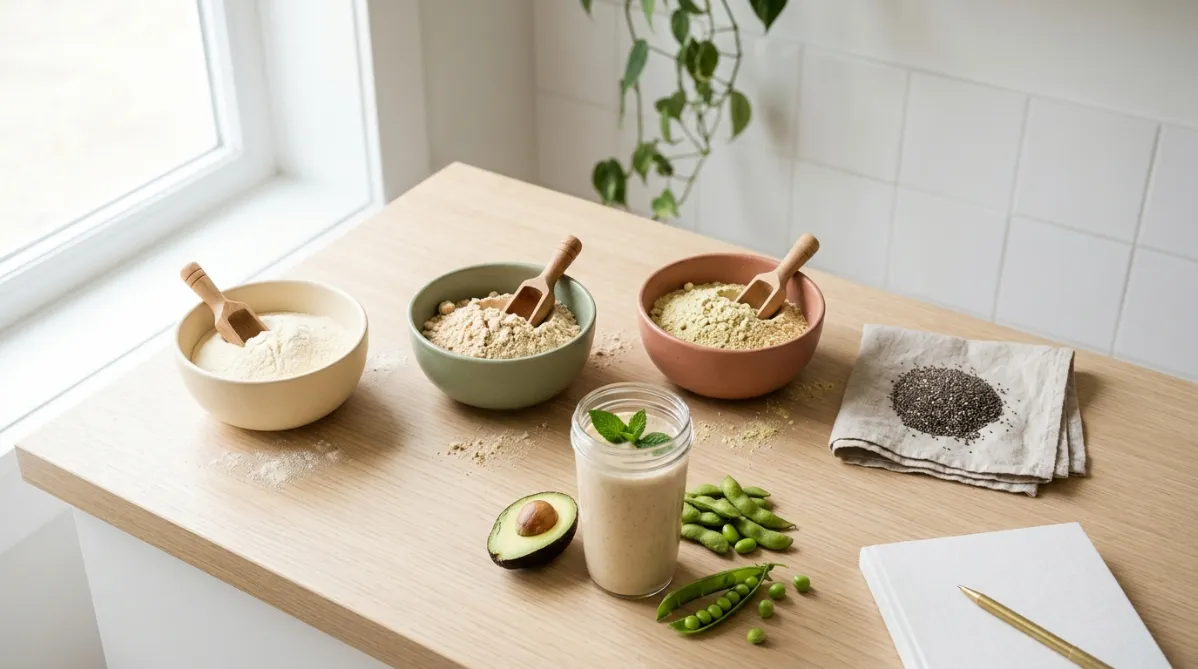
A wide landscape editorial photograph shot from above at a slight angle, showing a bright, minimalist kitchen counter of pale oak wood. Three matching ceramic bowls in soft matte tones (warm cream, sage green, and muted terracotta) sit in a loose row. Each holds a different protein powder: fine ivory whey, slightly coarser beige soy, and speckled pale yellow-green pea protein. A small fourth pile of tiny gray-black chia seeds sits apart on a folded linen napkin, off to the side, to suggest the lone outlier. Wooden scoops rest in each bowl, with a few soft dustings of powder on the surface. In the foreground, a clear glass shaker with a creamy blended drink and a single sprig of fresh mint stands beside a small stack of fresh produce: a halved avocado, a handful of edamame pods, and a few green peas in an open pod. A matte white notebook and a thin brass pen are tucked at the edge of the frame, suggesting research and note-taking. Natural morning light pours in from the left through an unseen window, casting long, soft shadows and gentle highlights on the powder textures. The color palette is calm and earthy, with creams, sage, soft terracotta, and warm wood tones, and a clean, slightly muted editorial grade. Shallow depth of field keeps the bowls crisp while the background, a blurred white tiled wall and a hint of a trailing green plant, melts away. Plenty of negative space on the right side of the frame leaves room for a headline overlay. The overall mood is fresh, trustworthy, and modern, like a contemporary wellness and science journal.
nutrition

乳清蛋白对初学者未必更优,大豆与豌豆恰好可替代

BY DR. GYMBRO ·

你可能认为初学者必须靠乳清蛋白增肌,但最新的元分析显示,植物蛋白(大豆、豌豆)在未受训的成年人中对瘦体重和脂肪的改变并不逊色于乳清。作者提醒,“没有显著差异”并不等同于等效,证据仍然有限。本文阐述了数据的含义、局限以及如何选择和剂量蛋白。若你想了解奇亚蛋白的情况,也别错过相应的章节。

This page is available in