Dr. Gymbro
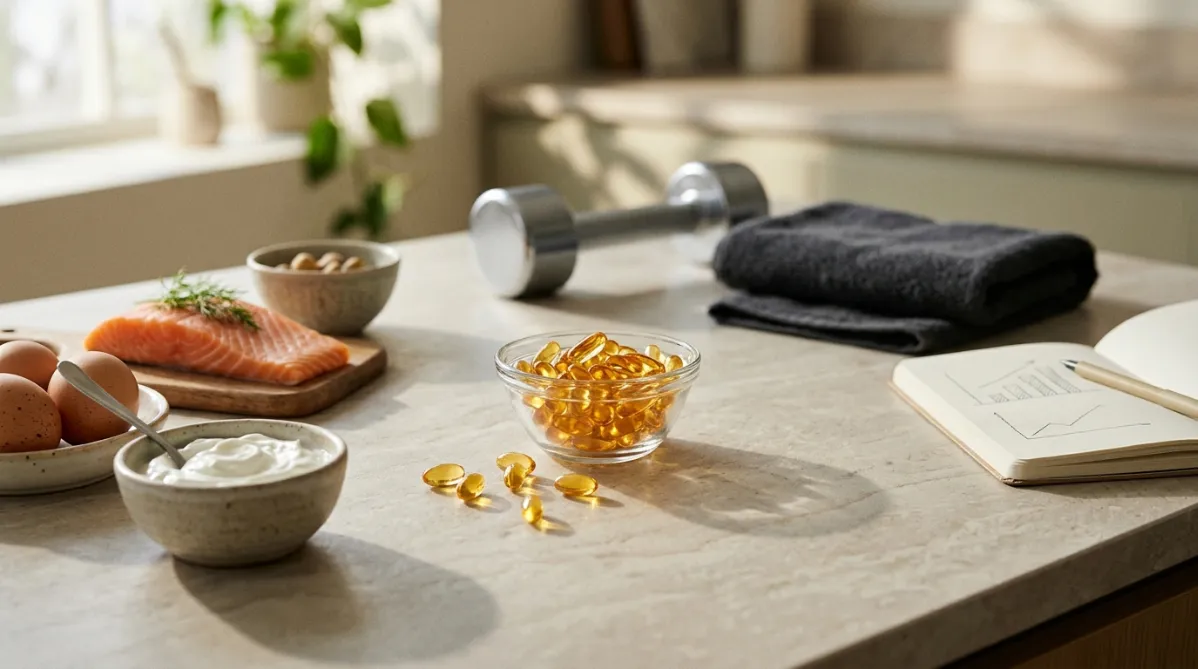
A bright, modern editorial still life shot from a slightly elevated angle on a pale warm-gray stone countertop, bathed in soft natural window light with gentle diffused shadows. In the center, a small glass bowl holds a scatter of translucent golden-amber fish oil softgel capsules, a few spilled casually onto the surface and catching the light like tiny glowing beads. Beside the bowl sits a single chrome dumbbell with a matte finish, slightly out of focus, and a neatly folded charcoal gym towel. To the left, a clean arrangement of alternative "better spent" items: a ceramic dish of raw eggs, a wedge of salmon fillet on a wooden board with a sprig of dill, and a small bowl of Greek yogurt with a spoon, all styled with restraint. A minimalist notebook with a thin pen lies at the right edge, with faint, abstract pencil-drawn bar charts and a flat horizontal line suggesting "no effect," legible only as soft shapes with no readable text. The color palette is muted and sophisticated: warm cream, soft sage green, sandy beige, and pops of golden amber from the capsules, with a single accent of coral from the salmon. Shallow depth of field keeps the capsules crisp while the background melts into a creamy blur of a sunlit kitchen with a hint of green plant leaves. The composition leaves generous negative space on the right third for title overlay, in a 16:9 landscape format. The mood is calm, thoughtful, and quietly skeptical, in the style of a contemporary health and science magazine, with a crisp editorial photography look, fine grain, and natural color grading. No people, no futuristic elements, and no text.
Science & Research

¿Aceite de pescado para ganar músculo? 8 estudios dicen que no cuentes con él

Dr. Gymbro · · 4 min read

Has escuchado la historia: los omega‑3 reducen la inflamación, favorecen la síntesis de proteína muscular y aceleran la recuperación. Por eso, una botella de aceite de pescado en el armario parece estar trabajando en silencio para tus ganancias, ¿no? Una reciente revisión sistemática y meta‑análisis publicado en Nutrition sugiere que no deberías contar con él. En los ensayos aleatorizados disponibles en adultos sanos sin obesidad, la suplementación con omega‑3 no mostró un beneficio claro ni en la masa libre de grasa ni en la fuerza muscular.

Qué se evaluó realmente

El equipo de investigación, liderado por Silva junto a sus colegas Simões y Artioli de universidades brasileñas, se planteó una pregunta concreta: ¿la suplementación con ácidos grasos omega‑3 aislados altera la masa libre de grasa (FFM) o la fuerza muscular en adultos sanos que no son obesos? Buscaron en PubMed, Embase, CINAHL y Web of Science desde sus inicios hasta el 25 de febrero de 2026.

Solo fueron elegibles los ensayos aleatorizados, controlados con placebo, que usaran suplementos de omega‑3 puro. Eso elimina confusores como combinaciones de suplementos o cambios drásticos en la dieta. El riesgo de sesgo se evaluó con la herramienta Cochrane RoB 2, y la certeza de la evidencia se calificó con GRADE, los estándares habituales para este tipo de trabajos.

Los números

En cuanto a la masa libre de grasa, cuatro estudios fueron incluidos en el meta‑análisis. El resultado combinado fue una diferencia media estandarizada (SMD) de 0,26, con un intervalo de confianza del 95 % de -1,14 a 1,66 (p = 0,60). Ese intervalo es enorme: abarca desde una pérdida significativa hasta una gran ganancia, de modo que los datos simplemente no pueden determinar un efecto.

Para la fuerza muscular, ocho estudios aportaron 22 efectos dependientes, analizados con un modelo de efectos aleatorios de tres niveles. La SMD fue -0,02 (IC 95 % -0,38 a 0,34; p = 0,92). Esencialmente cero, y aunque el intervalo es más estrecho que el de la FFM, sigue permitiendo un pequeño efecto en cualquier dirección. Los autores calificaron la certeza de la evidencia como muy baja para estos hallazgos.

Por qué surgió el hype

El entusiasmo no nace de la nada. Los ácidos grasos omega‑3 son grasas poliinsaturadas que forman parte de los fosfolípidos de la membrana celular, y se ha propuesto que ejercen efectos anabólicos y antiinflamatorios. En teoría, cambiar la composición de la membrana podría influir en cómo las células musculares responden a los nutrientes y al entrenamiento. Menos inflamación, a su vez, podría favorecer la recuperación.

Esa es una historia ordenada, y el marketing de suplementos adora los relatos claros. Pero un mecanismo plausible no equivale a un beneficio real. La biología que parece prometedora en estudios celulares o en poblaciones específicas —por ejemplo, adultos mayores o pacientes clínicos— a menudo no se traduce en personas sanas, entrenadas o activas de forma recreativa. Este meta‑análisis recuerda que el salto del mecanismo a un aumento muscular significativo es donde muchos suplementos tropiezan.

“Sin evidencia clara” no significa “cero probado”

La conclusión de los autores está redactada con cautela: la evidencia actual es insuficiente para afirmar que los omega‑3 mejoran la FFM o la fuerza. Eso no es lo mismo que probar que los omega‑3 no hacen nada.

El análisis de la FFM se basa en solo cuatro ensayos, y su intervalo de confianza es tan amplio que no se puede descartar un beneficio o un daño real. La certeza de la evidencia es muy baja, lo que implica que futuros estudios mejor diseñados podrían cambiar el panorama. Las diferencias en dosis, duración, nivel de entrenamiento y métodos de medición entre los ensayos también pueden empañar los resultados. La interpretación justa es la siguiente: no hay una razón sólida para esperar un retorno en músculo o fuerza, y la investigación no lo ha demostrado.

Quién podría seguir tomando omega‑3

Esto no vuelve al aceite de pescado inútil. La gente lo consume por razones que no tienen nada que ver con levantar pesas. Quienes comen poca cantidad de pescado graso pueden querer cubrir una brecha nutricional, y los omega‑3 se discuten habitualmente en el contexto de la salud cardiovascular y general. Esta revisión no evaluó esos resultados y no debe interpretarse como un veredicto al respecto.

Si ya disfrutas del salmón, las sardinas o una cápsula de aceite de pescado por motivos de salud general, este estudio no es motivo para entrar en pánico o desechar el frasco. El punto es más limitado: no gastes dinero en él esperando que construya músculo o aumente tu sentadilla.

Conclusiones prácticas

  • No compres aceite de pescado para músculo o fuerza. La mejor evidencia disponible en adultos sanos no obesos no la respalda.
  • Prioriza la proteína. Alcanzar un objetivo diario sólido de proteína sigue siendo la base para construir y mantener masa magra.
  • Entrena duro y de forma progresiva. El entrenamiento de resistencia con sobrecarga progresiva impulsa la fuerza y la FFM mucho más que cualquier cápsula.
  • Considera la creatina. Tiene un historial mucho más sólido para la fuerza y la masa magra que los omega‑3, y es económica.
  • El sueño y el total de calorías importan. La recuperación y la ingesta energética deciden en silencio si el entrenamiento se traduce en progreso.
  • Mantén los omega‑3 para otros motivos, si los tomas. Úsalos como una opción de salud general, no como herramienta de ganancias.

La conclusión

Ocho ensayos y 22 efectos mostraron que la fuerza se mantiene prácticamente plana, y cuatro ensayos no pudieron establecer ningún efecto en la FFM. Con una certeza muy baja y una base de evidencia limitada, la puerta no está cerrada de golpe, pero la carga de la prueba ahora recae firmemente en el suplemento. Hasta que ensayos más sólidos digan lo contrario, destina tu dinero y esfuerzo a los fundamentos que realmente funcionan: proteína, entrenamiento progresivo y creatina.
Original study

Read the original research on pubmed.ncbi.nlm.nih.gov →

This article summarizes published research for general information. It is not medical advice.

DG

Written by

Dr. Gymbro

Dr. Gymbro writes for Dr. Gymbro: science-backed fitness, nutrition & performance.

Related Articles

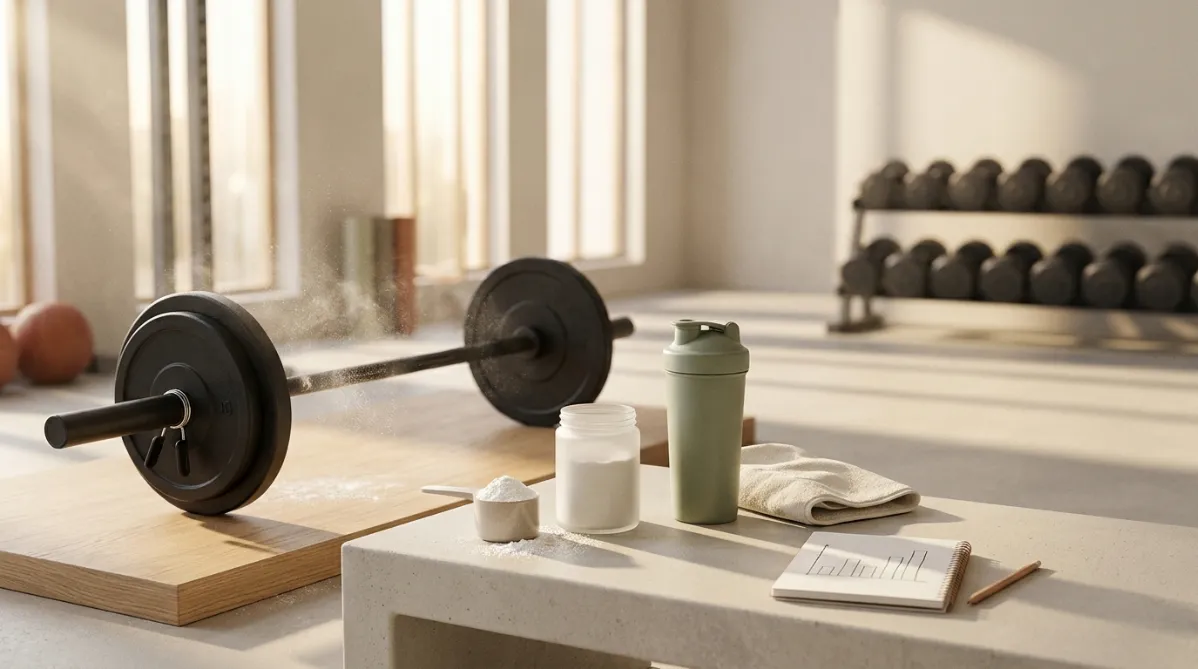
A softly lit, minimalist strength-training studio photographed in a modern editorial style. In the foreground, a matte black barbell loaded with weight plates rests on a light oak platform, with fine chalk dust floating in warm morning light. Beside it on a pale concrete bench sits a simple ceramic scoop of white creatine powder, with a small spill of fine crystals catching the light, next to a minimal frosted glass jar with no label. A matte sage-green shaker bottle and a folded cream towel sit nearby. In the soft-focus background, tall windows let in diffused golden sunlight, casting long, gentle shadows across the floor. A rack of neatly arranged dumbbells is blurred in muted charcoal tones.

The color palette is calm and sophisticated: warm off-white, sand, sage green, soft charcoal, and touches of terracotta. A small open notebook with a pencil lies on the bench, suggesting research and data tracking, with abstract hand-drawn bar graph lines faintly visible on the page but not legible. The composition follows the rule of thirds, with the barbell and powder on the left and generous negative space on the right for headline text. Shallow depth of field, crisp textures on the metal knurling and powder grains, subtle film grain, and a contemporary wellness-magazine look. Clean, airy, and editorial, with a grounded, scientific yet approachable mood. Landscape 16:9 composition.
science research

Creatina y entrenamiento de fuerza: mayores ganancias sin que la dosificación importe

BY DR. GYMBRO ·

Un meta‑análisis de 63 estudios con 1.489 participantes evaluó el efecto de la creatina en el entrenamiento con pesas. El aumento de fuerza fue moderado y consistente tanto en la parte superior como inferior del cuerpo, mientras que la ganancia de masa magra fue menor y la grasa corporal no cambió de forma significativa. Sorprendentemente, la estrategia de dosificación, la cantidad diaria y el protocolo no influyeron significativamente en los resultados. La edad surgió como la única pista exploratoria, mostrando efectos mayores en participantes más jóvenes.

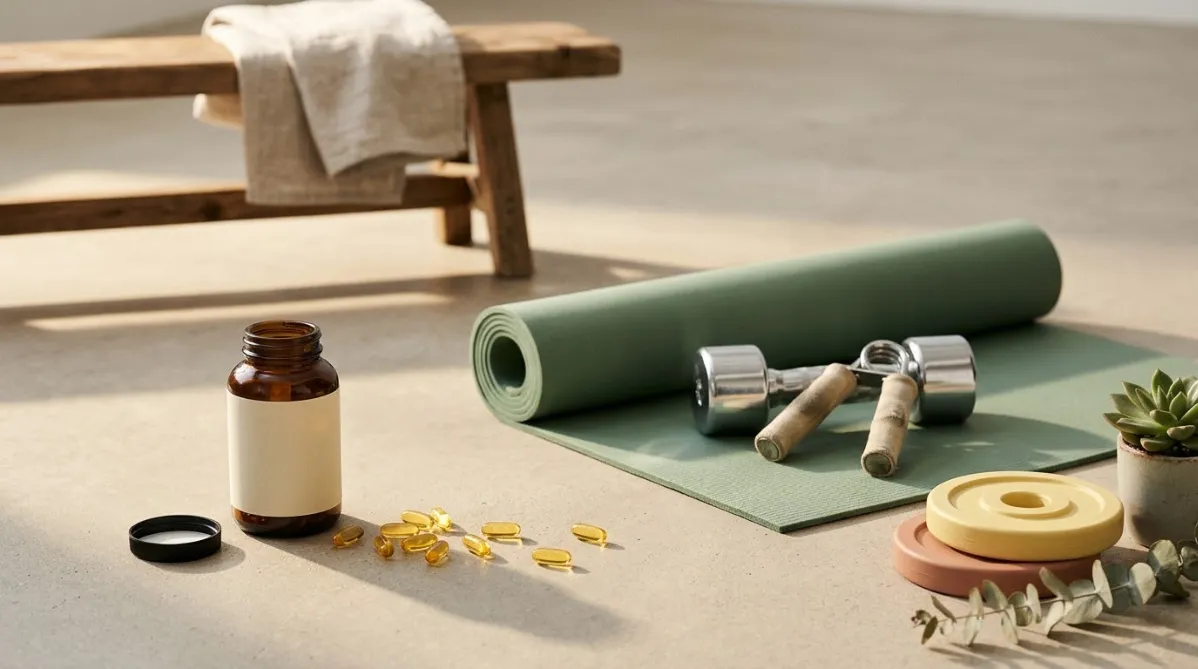
A soft-lit editorial still life on a pale warm-gray concrete surface, shot from a slightly elevated three-quarter angle in a wide landscape frame. On the left, a single amber glass supplement bottle with a minimalist cream label, its lid set beside it. A few golden-yellow softgel capsules are scattered in a loose arc across the surface, catching the light like small drops of honey. At the center-right, a matte sage-green yoga mat is partly unrolled, with a polished chrome dumbbell resting on it. Next to the dumbbell sits a worn canvas hand gripper, a nod to the handgrip finding. Behind them, a wooden gym bench is slightly out of focus, and a folded linen towel sits on top of it.

Warm morning sunlight enters from the upper left through a large window. It casts long, gentle diagonal shadows and a faint golden glow across the scene, a quiet reference to vitamin D and sunshine. A sprig of dried eucalyptus or a small potted succulent adds an organic touch near the bottom right. A small, neatly stacked pile of two or three matte pastel-toned weight plates in butter yellow and dusty terracotta adds color blocking.

The palette is muted and modern: butter yellow, sage, warm sand, soft terracotta, and off-white, with a single strong amber accent from the bottle. The depth of field is shallow, with crisp focus on the capsules and bottle and a creamy blur falling off toward the background. The negative space on the upper right is clean and uncluttered, which leaves room for a headline overlay. The overall feel is calm, minimalist, and contemporary, like a premium health and wellness magazine or a trendy online journal. The grain is subtle, the contrast gentle, and the textures tactile: brushed metal, frosted glass, linen, and concrete. There are no people, no text, and no futuristic elements.
science research

La vitamina D no te hará perder grasa ni ganar músculo, salvo una excepción

BY DR. GYMBRO ·

Un meta‑análisis de dosis‑respuesta que incluyó 28 ensayos aleatorios y 1.675 adultos evaluó si la suplementación con vitamina D junto al ejercicio superaba al entrenamiento solo. Los niveles sanguíneos de vitamina D aumentaron alrededor de 34 nmol/L, pero el peso corporal, el IMC, la masa grasa, el porcentaje de grasa corporal y la masa libre de grasa no mejoraron más que con el ejercicio únicamente. La fuerza en la prensa de piernas tampoco mostró cambios. La única excepción fueron modestos incrementos en la extensión de rodilla (+4,36 kg) y mejoras en la fuerza de agarre en adultos mayores y con dosis más altas. Aquí quién podría beneficiarse y qué hacer antes de comprar otro frasco.

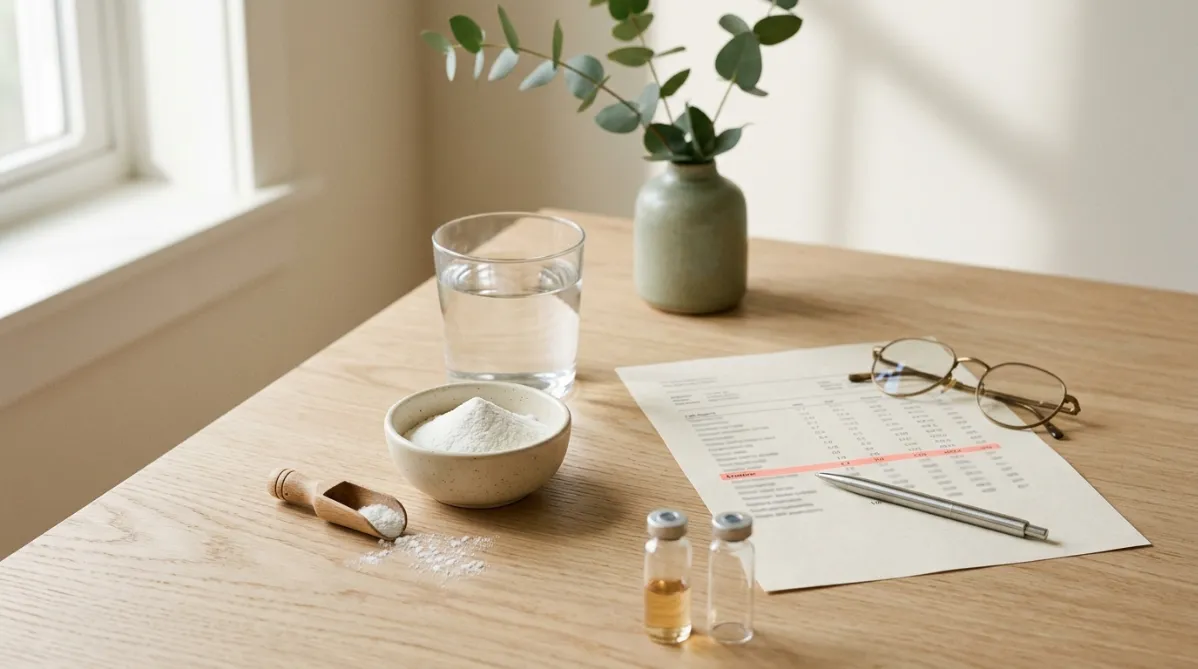
A calm, modern editorial still life shot from a slightly elevated angle on a pale oak tabletop, bathed in soft natural window light from the left. At center sits a clear glass of water beside a small matte ceramic bowl holding a mound of fine white creatine powder, with a wooden scoop resting next to it and a few loose grains dusted across the surface. To the right, a neatly arranged printed lab report on cream paper, with blurred rows of numbers and a single line highlighted in soft coral pink marker, partially overlapped by a minimalist silver pen. A folded pair of thin-framed glasses sits at the edge of the paper. In the foreground, a small glass vial with a pale amber liquid sample and a second empty vial stand upright, suggesting blood and urine testing, with gentle refraction and soft caustic light on the wood. Behind them, a sprig of eucalyptus in a small stone vase adds a touch of green. The background is a softly blurred, warm off-white wall with a gentle gradient shadow and a hint of a window frame. The palette is muted and refined: warm creams, sage green, soft coral, pale amber, and light oak, with crisp whites in the powder. Shallow depth of field, with the powder bowl and highlighted lab line in sharp focus and the edges falling away into creamy blur. Generous negative space on the right third of the composition for text overlay. The overall feel is clean, trendy health-journal photography, tactile and editorial, with subtle film-like grain, natural shadows, and a quiet, reassuring mood. No people, no text legible, no futuristic elements.
supplements

La creatina elevó los marcadores renales en 26 ensayos. Probablemente no hay daño

BY DR. GYMBRO ·

Empiezas a tomar creatina, te haces los análisis de sangre y la creatinina está elevada mientras tu eGFR parece peor. Un meta‑análisis de 2026 que incluyó 26 ensayos aleatorizados (1 036 participantes) encontró exactamente eso: la creatinina subió 0,14 mg/dL y la tasa de filtración glomerular estimada basada en creatinina cayó alrededor de 10,75 mL/min. Sin embargo, cuando la filtración renal se midió con Cr‑EDTA, esa disminución no se observó y la urea, la albuminuria y la proteinuria permanecieron sin cambios. Aquí explicamos por qué ese número de laboratorio puede inducir a error, qué decirle a tu médico y quién debería consultar primero a un nefrólogo.

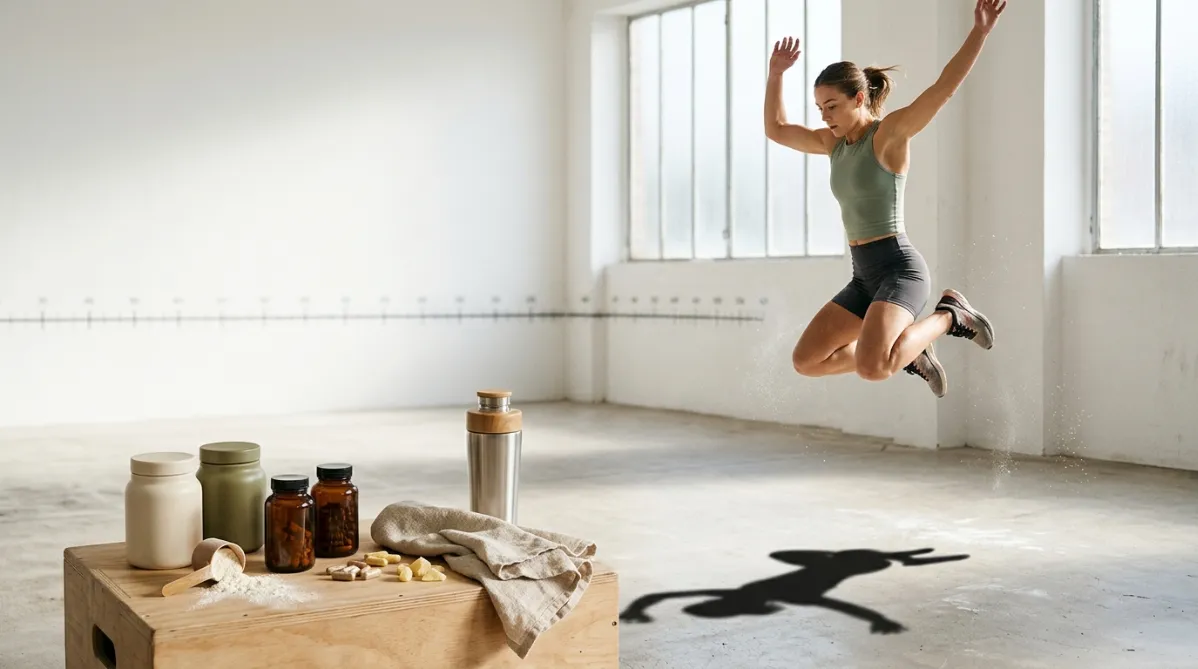
A wide, editorial-style photograph of a female athlete captured mid-jump in a bright, minimalist indoor training space with pale concrete floors and tall frosted windows that let in soft diffused morning light. She is frozen at the peak of a countermovement jump, knees tucked slightly, arms swinging upward, wearing a fitted sage-green training top and charcoal shorts. Her shadow stretches long on the floor below her, which emphasizes the height of the leap.

In the foreground at the lower left, a clean arrangement of supplement items sits on a light oak wooden plyo box: several matte, unlabeled ceramic jars and small amber glass bottles in cream, terracotta, and muted olive tones. Loose white powder is spilled in a soft arc beside a wooden scoop. A few capsules and a small pile of pale yellow beet-colored crystals add texture. Beside them are a folded linen towel and a stainless steel shaker bottle. The items are slightly out of focus, which creates shallow depth of field and leads the eye toward the athlete in the mid-ground.

The color palette is warm and modern: creamy off-white, soft sand, sage green, and subtle terracotta accents, with gentle natural shadows. The background is a clean, slightly blurred wall with a thin horizontal line of light, which suggests a measuring-stick rhythm without literal numbers. Fine particles of chalk dust hang in the air around her feet, lit by a shaft of sunlight.

The composition follows the rule of thirds, with the athlete on the right third and open negative space on the upper left, suitable for headline overlay. The style is contemporary lifestyle and sports-science journal photography, with a crisp, high-resolution, soft-contrast, matte finish and a subtle film-like grain. The mood is calm, premium, and trustworthy, in the spirit of a modern health and performance publication.
science research

Los mejores suplementos para la altura del salto y la potencia: la sorpresa del HMB y la betaína

BY DR. GYMBRO ·

Un meta‑análisis de red bayesiano que reunió 119 ensayos encontró que el HMB lidera la potencia máxima y la betaína la altura del salto con contramovimiento, mientras que la creatina sigue siendo una opción sólida. Los resultados son intrigantes, pero la evidencia es, en su mayoría, de baja certeza. El mayor aumento reportado, +6,81 cm con hierro, proviene de un solo estudio. En resumen, HMB y betaína merecen atención, aunque la creatina no pierde protagonismo.

This page is available in