Dr. Gymbro
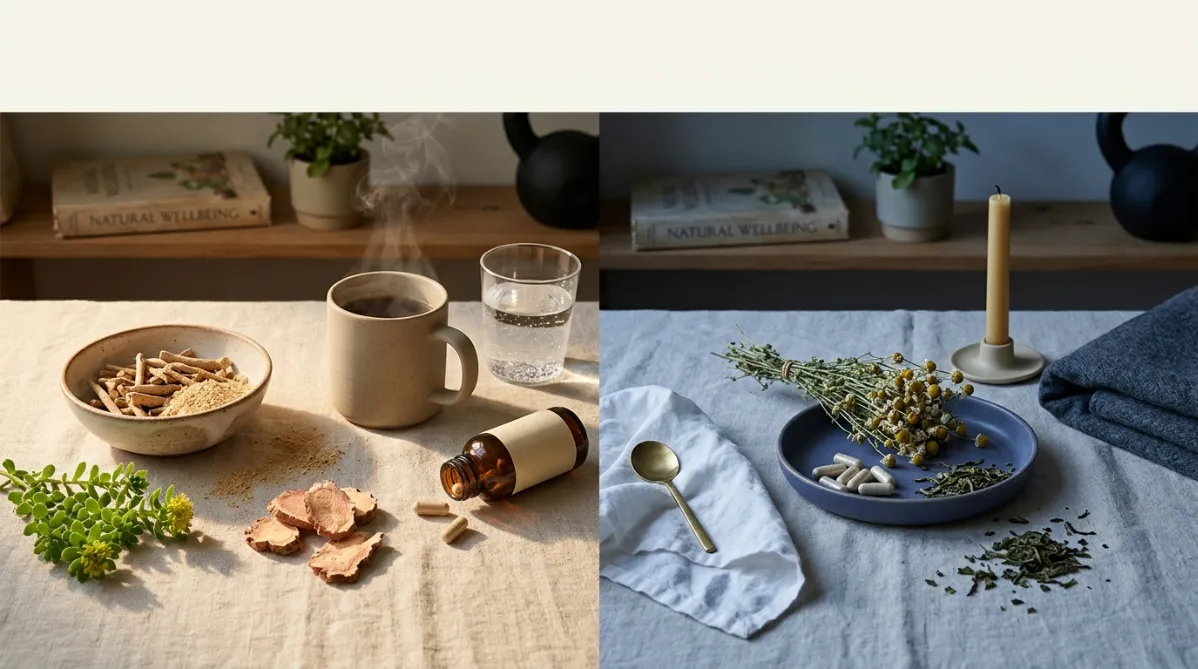
A landscape editorial still life shot from slightly above on a pale oat-colored linen surface, lit by soft morning window light with gentle long shadows. On the left, in warm golden sunlight, sits a small ceramic bowl of dried ashwagandha root pieces and a scatter of fine tan powder. Beside it are a few rough, rosy-gold slices of Rhodiola rosea root and a sprig of tiny succulent-like green leaves with yellow blossoms. A matte sand-colored stoneware mug of steaming tea and a simple glass of water stand nearby. A small amber glass bottle with a minimal unbranded label tips out two capsules.

The right side of the frame is cooler and bluer, as if dusk is arriving. It holds a muted indigo ceramic dish with a few pale capsules, a small bundle of dried chamomile flowers (the source of apigenin), and a few green tea leaves. A slim, unlit beeswax candle and a folded charcoal wool blanket suggest evening. The warm and cool halves meet softly in the center, where a rumpled white cotton napkin sits beneath a small brass spoon.

In the background, out of focus, a wooden shelf holds a worn paperback, a small potted plant, and the edge of a kettlebell in matte black, hinting at an active lifestyle. Subtle film grain, shallow depth of field, and a muted palette of cream, terracotta, sage green, and deep indigo give it a clean, modern wellness-magazine feel. Leave generous negative space in the upper third for a headline overlay. No text, no logos, no people.
Recovery

Ashwagandha + Rhodiola funcionó. El stack nocturno para dormir no lo hizo.

Dr. Gymbro · · 5 min read

Aquí está el giro que nadie esperaba: en un nuevo ensayo de cuatro brazos, el suplemento que movió la aguja en estrés y sueño fue el matutino. Ashwagandha más Rhodiola rosea ayudó. El popular stack nocturno de magnesio L‑treonato, L‑teanina y apigenina no añadió nada al respecto. Tomar ambos, en cambio, pareció empeorar una medida del ánimo.

Si levantas pesas, corres o entrenas duro mientras combinas el estrés laboral con un sueño irregular, este estudio merece una mirada más de cerca.

Qué hizo el estudio

Investigadores de la Universidad de South Carolina y colaboradores publicaron un ensayo aleatorizado, doble ciego y controlado con placebo en el Journal of the International Society of Sports Nutrition (2026). Inscribieron a 103 adultos sanos y físicamente activos (53 mujeres, edad media 34,8 años) y los dividieron en cuatro grupos:

  • Solo AM (n = 26): 600 mg de ashwagandha + 300 mg de Rhodiola rosea por la mañana; placebo por la noche.
  • Solo PM (n = 25): placebo por la mañana, y 2 g de magnesio L‑treonato (que entregan 145 mg de magnesio), 200 mg de L‑teanina y 50 mg de apigenina por la noche.
  • AM + PM (n = 25): ambos stacks activos.
  • Placebo (n = 27): placebo en ambos momentos.

Todo el estudio duró cuatro semanas: una semana de línea base, solo dos semanas de suplementación y una semana de wash‑out. Los participantes completaron cuestionarios diarios de estrés y PROMIS semanales que cubrían estrés percibido, afecto y sueño. También realizaron el Pittsburgh Sleep Quality Index (PSQI) al inicio y al final del wash‑out. Un dispositivo wearable registró el sueño de forma objetiva cada noche.

Qué encontró

El grupo de adaptógenos matutinos fue el que más destacó. Estos son los números reportados en el artículo:

  • El estrés percibido semanal disminuyó en el grupo AM (p = 0,034; η² = 0,020). El estrés diario no mostró diferencias.
  • La alteración del sueño relacionada con el estrés disminuyó en el grupo AM (p = 0,032; d = 2,74).
  • El tiempo despierto después del inicio del sueño se redujo en el grupo AM (p = 0,047; η² = 0,020), según los datos del wearable.
  • La calidad del sueño según el PSQI mejoró en el grupo AM comparado con el grupo AM + PM (diferencia media = 0,66 AU, p < 0,001, d = 1,45).
  • El afecto positivo aumentó en el grupo AM al final del periodo de cesación (p = 0,003; d = 1,68) y siguió subiendo. El grupo AM + PM mostró una tendencia contraria, con una disminución (p = 0,009; d = 0,16).

Los autores concluyeron que la ashwagandha y la Rhodiola administradas por la mañana se asociaron con mejoras en el estrés subjetivo, la calidad del sueño y el afecto positivo después de 14 días, en comparación con el placebo.

El stack nocturno de sueño, ya fuera solo o añadido, no aportó beneficio en los resultados destacados. Para quien ha invertido en un ritual costoso de suplementos nocturnos, esa es la parte incómoda.

Por qué la combinación pudo no haber sumado beneficios

El artículo no propone un mecanismo que explique por qué añadir el stack nocturno no ayudó, así que cualquier explicación aquí es especulativa. Algunas posibilidades son:

  1. Poco margen de mejora. Personas sanas y activas pueden tener ya buenas rutas de regulación del estrés y del sueño, de modo que es difícil observar efectos adicionales.
  2. Efecto saturador. Más ingredientes no necesariamente implican mayor beneficio; pueden incluso interferir entre sí.
  3. Interacciones no exploradas. Algunos componentes del stack nocturno podrían contrarrestar sutilmente los efectos de los adaptógenos matutinos.

En cualquier caso, el enfoque de "apilar todo" no superó a los adaptógenos matutinos solos, y en el caso del afecto positivo pareció empeorar.

Limitaciones

Antes de reorganizar tu estantería de suplementos, ten en cuenta las siguientes limitaciones:

  • Duración breve. La suplementación duró solo dos semanas.
  • Muestra sana y activa. Los participantes eran adultos físicamente activos sin trastorno de estrés ni de sueño. Los autores sugieren que los efectos modestos pueden reflejar el escaso margen de mejora en este tipo de población.
  • Tamaño de los grupos. Cada brazo contó con alrededor de 25 personas, y se analizaron numerosos desdoblamientos.
  • Efectos marginales. Varios p‑valores clave están justo bajo 0,05 (0,032; 0,034; 0,047) y los valores de η² de 0,020 son pequeños.
  • Tamaños de efecto heterogéneos. Los d de Cohen varían de 0,16 a 2,74; los valores más altos son inusualmente grandes para la investigación de suplementos y deben interpretarse con cautela.
  • Afecto positivo tardío. El aumento significativo se observó al final del periodo de wash‑out, no durante la fase de suplementación.

Los autores piden ensayos más largos y poblaciones con mayor estrés basal y alteraciones del sueño.

Cómo usarlo (prácticamente)

  • Dosis: 600 mg de ashwagandha y 300 mg de Rhodiola rosea al día.
  • Momento: Por la mañana. Esa fue la condición activa del brazo que mostró beneficios.
  • Duración: El ensayo contempló 14 días; no hay evidencia sobre efectos a más largo plazo.
  • Forma: El resumen no especifica el tipo de extracto ni la estandarización. Busca productos que declaren claramente el proceso de extracción y su grado de estandarización, y que coincidan con las dosis indicadas.
  • Población objetivo: Adultos sanos y físicamente activos que perciben estrés y desean mejorar la calidad del sueño y el estado de ánimo.
  • Contraindicaciones / precauciones: Esta es una recomendación general, no del artículo. Mujeres embarazadas o lactantes, personas con afecciones tiroideas, hepáticas o autoinmunes, usuarios de sedantes, antidepresivos u otros fármacos con receta, o quienes tengan un trastorno del sueño diagnosticado, deberían consultar a un profesional de la salud antes de iniciar la suplementación. El estudio no incluyó a estos grupos.

Conclusión para los atletas

Este ensayo no prueba que el stack matutino sea un milagro, ni que el magnesio L‑treonato, la L‑teanina o la apigenina sean inútiles. Lo que muestra es que, en 103 adultos sanos y activos durante dos semanas, un protocolo sencillo de ashwagandha + Rhodiola por la mañana generó las señales más consistentes, mientras que añadir el stack nocturno de sueño no aportó beneficio adicional. Si estás considerando ampliar tu caja de suplementos, los datos sugieren que un enfoque más minimalista puede ser igualmente eficaz. La higiene del sueño, la carga de entrenamiento y la recuperación siguen siendo los factores que hacen el trabajo pesado.
Original study

Read the original research on pubmed.ncbi.nlm.nih.gov →

This article summarizes published research for general information. It is not medical advice.

DG

Written by

Dr. Gymbro

Dr. Gymbro writes for Dr. Gymbro: science-backed fitness, nutrition & performance.

Related Articles

A softly lit bedroom nightstand scene in landscape format, photographed in a modern editorial lifestyle style. In the center of the frame sits a handmade ceramic mug in warm oatmeal tones, filled with a pale creamy drink. A thin wisp of steam rises from it. Beside the mug, a small wooden scoop rests on a matte linen-textured surface with a fine dusting of white collagen powder. A minimal amber glass jar with a cream label stands just behind, with no readable text. The nightstand is pale oak with subtle grain.

To the left, a neatly folded pair of gray cotton athletic socks and a worn leather-bound training journal with a pen on top hint at a lifter's routine. A small brass alarm clock reads about 9:30 and is slightly out of focus. On the right side, a sheer curtain filters the last blue-violet twilight from a window, while a warm bedside lamp with a linen shade casts a honey-colored glow across the scene. The glow contrasts gently with the cool dusk tones.

Behind the nightstand, the edge of a rumpled bed with soft white and sand-colored bedding is visible, with a dumbbell resting quietly on the floor in the soft-focus background to suggest recovery after training. The depth of field is shallow, with the mug and scoop in crisp focus and the background dissolving into creamy bokeh.

The palette is calm and earthy: warm beige, soft cream, muted terracotta, and dusk blue accents. The lighting is cinematic and low-key, with gentle highlights on the ceramic rim and a subtle rim light on the steam. The composition follows the rule of thirds, with the mug placed on the left third and generous negative space on the right for title overlay. The mood is serene, restorative, and quietly scientific without any clinical elements. The finish is clean, high-end, and magazine-worthy, with fine film grain and natural color grading, like a wellness feature in a contemporary online journal.
recovery

El truco del colágeno de 15 g antes de dormir que redujo los despertares nocturnos en un 27 %

BY DR. GYMBRO ·

Despertarse una y otra vez durante la noche puede sabotear silenciosamente tu recuperación, incluso cuando el entrenamiento y la nutrición están afinados. Un pequeño ensayo encontró que 15 g de péptidos de colágeno tomados una hora antes de acostarse redujeron los despertares registrados por polisomnografía de 29,3 a 21,3, aproximadamente un 27 % menos. Los participantes también obtuvieron mejores puntuaciones en una prueba Stroop matutina. Sin embargo, el tiempo total de sueño, la latencia y métricas como la eficiencia no cambiaron, y el estudio solo involucró a 13 hombres durante 7 noches con un producto provisto por la industria.

A sunlit, minimalist home gym corner photographed in soft golden morning light, with a young athletic man seated on a wooden bench, leaning forward with his elbows resting on his knees, catching his breath after a hard leg session. He wears a muted sage-green t-shirt and charcoal shorts, his face turned slightly away from the camera, calm and focused. A matte ceramic dish in the foreground holds a few small, translucent golden softgel capsules, with a glass of water beside it catching the light and casting a soft caustic shadow across a pale oak floor. Behind him, a loaded barbell rests on a squat rack, slightly out of focus, and a tall window pours warm sunlight diagonally across the scene, creating long gentle shadows and a hazy glow. A small potted green plant sits on a shelf at the edge of the frame. The color palette is warm and editorial: cream, soft gold, sage green, pale wood, and charcoal accents. Shallow depth of field, with crisp focus on the capsules and glass in the lower third and a creamy bokeh background. The composition leaves generous negative space on the right side for a headline overlay. The mood is clean, modern, and aspirational, like a high-end wellness magazine or a trendy health journal feature. Shot on a 50mm lens, natural light, fine film grain, subtle matte finish, landscape 16:9 framing.
recovery

Vitamina D acelera la recuperación de la fuerza en hombres con niveles suficientes

BY DR. GYMBRO ·

Hombres con niveles de vitamina D perfectamente normales recuperaron la fuerza más rápido tras una sesión intensa de piernas al tomar 4 000 UI diarias. En este ensayo aleatorizado, controlado con placebo, con 28 hombres activos, la fuerza isométrica máxima se recuperó aproximadamente un 8 % más a las 24 horas. Los marcadores de daño muscular ALT y AST también aumentaron menos. La sorpresa es que la sensación de dolor muscular no mejoró en absoluto. A continuación se detallan los hallazgos del estudio, sus limitaciones y a quién podría interesar.

A softly lit bedside table in a calm, modern bedroom at dusk, photographed in wide landscape format with shallow depth of field. In the foreground, a matte white shaker bottle sits beside a tall frosted glass of creamy, pale vanilla-colored protein shake, with a few condensation droplets catching warm light. Next to the glass rests a slim fitness band on a dark charcoal fabric strap, its small LED glowing a gentle green, lying casually on a light oak wooden surface. A small scoop of fine white protein powder rests on a ceramic dish nearby, with a light dusting of powder on the wood.

In the soft-focus background, a neatly made bed with oatmeal-colored linen bedding and a textured knit throw blanket. A sheer curtain filters the last peach and lavender light of evening from a large window. A small potted olive branch in a terracotta vase and a closed paperback book add a quiet editorial touch. A bedside lamp with a warm, cream-colored shade casts a golden glow across the scene and creates gentle highlights on the glass.

The palette is muted and harmonious: warm cream, soft sand, oatmeal beige, faint sage green accents, and touches of dusty lavender in the window light. The mood is peaceful, reassuring, and clean, like a contemporary wellness magazine or a trendy health journal feature. Lighting is natural and cinematic, with soft shadows and a subtle film-like grain. The composition follows the rule of thirds, with the shake and band on the left third and open negative space on the right for headline overlay. Minimalist, Scandinavian-inspired styling, high-end lifestyle photography, crisp details, and a tranquil, premium editorial feel.
recovery

La caseína antes de acostarse no estropeará tu sueño, según datos de WHOOP

BY DR. GYMBRO ·

¿Un batido de 40 g de caseína antes de dormir sabotea tu sueño? Un estudio aleatorizado, doble ciego y cruzado con 21 atletas universitarias de la División I, que midió el sueño con pulseras WHOOP 4.0, no halló efectos adversos en la duración, la eficiencia, la frecuencia cardíaca en reposo ni la variabilidad de la frecuencia cardíaca. La alfa‑lactalbumina y el carbohidrato produjeron resultados idénticos. Ningún suplemento mejoró el sueño, de modo que, aunque no lo perjudican, tampoco son la solución milagrosa para dormir mejor.

A wide, editorial-style still life shot from a slightly elevated angle on a pale oatmeal-colored linen surface in soft, diffused morning light. At the center, a shallow matte ceramic bowl in warm terracotta holds a small mound of fine, golden-tan ashwagandha root powder. Beside it lie a few gnarled, dried ashwagandha roots and a sprig of green leaves with tiny orange-red berries in their papery husks. To the left, a minimalist amber glass supplement bottle sits with a few capsules spilled beside it, label blank and clean. A wooden scoop rests on the surface, dusted with powder.

On the right side of the frame, a pair of sleek, muted sage-green running shoes sits slightly off-center. A folded cream towel and a stainless steel water bottle sit just behind them, with a single brushed-steel kettlebell partly out of focus in the background to hint at strength training without dominating the scene. The running shoes and the botanical elements share equal visual weight, suggesting the endurance theme.

A thin, curved line of scattered powder sweeps across the linen from the bowl toward the shoes, like a gentle path or track. Soft shadows fall to the left, and a warm sunbeam crosses the surface and picks out the texture of the powder and the roots.

The palette is restrained and modern: warm terracotta, sage green, cream, soft gold, and touches of charcoal. The background is a blurred pale plaster wall with a hint of a window shadow. Shallow depth of field, crisp focus on the bowl and roots, and generous negative space in the upper left for a headline. Contemporary wellness magazine aesthetic, calm, natural, tactile, high-end lifestyle photography, no text, no people, no futuristic elements.
science research

La sorpresa de la ashwagandha: favorece la resistencia más que la fuerza

BY DR. GYMBRO ·

La ashwagandha suele promocionarse como potenciadora de fuerza y músculo, pero un metaanálisis reciente muestra que su mayor beneficio está en la resistencia aeróbica. Analizando 13 ensayos aleatorizados con 599 participantes, los autores hallaron un efecto medio de g = 0.54 para la resistencia, mientras que los incrementos de fuerza fueron positivos pero inciertos. La dosis que parece más eficaz se sitúa entre 500‑600 mg al día, aunque con importantes advertencias. Aquí se resume la evidencia, quién podría beneficiarse y quién debería pensarlo dos veces.

This page is available in