Dr. Gymbro
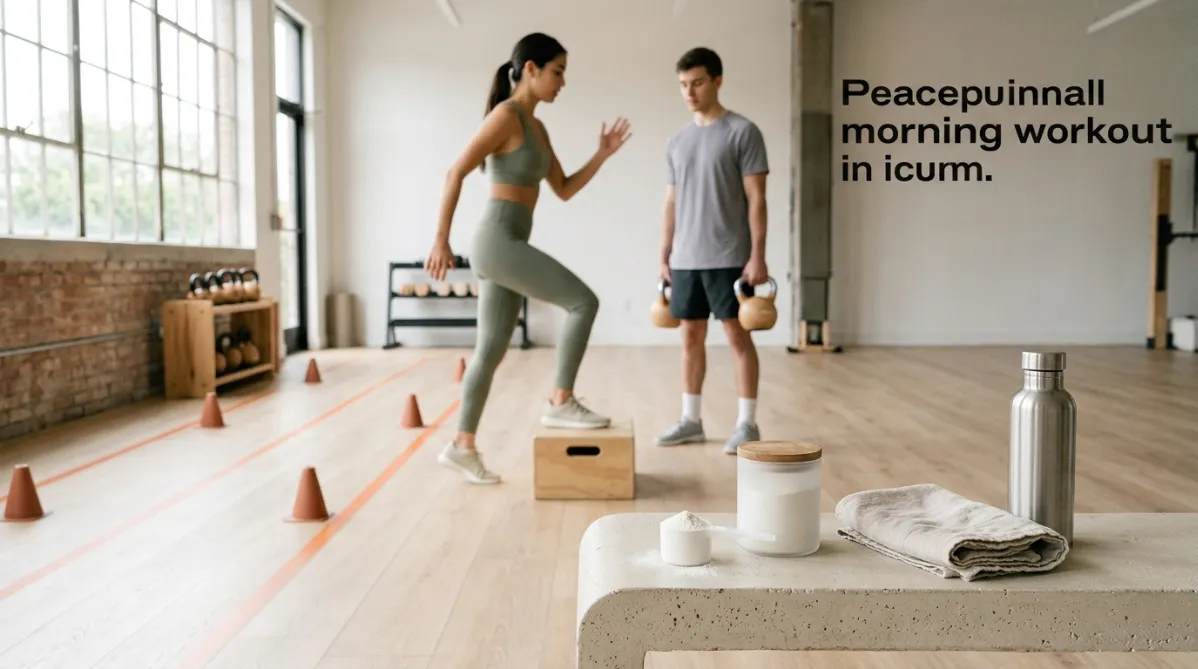
A wide, editorial-style flat lay on a pale warm-gray stone surface, shot from slightly above in soft natural window light with gentle diagonal shadows. On the left, a matte white ceramic bowl holds fine white baking soda powder, with a wooden scoop resting beside it and a light dusting of powder across the stone. In the center, a small glass jar of white beta-alanine powder sits next to a clear glass of water that catches the light. To the right, a neatly folded charcoal gym towel lies under a single brushed-steel dumbbell, and a sleek matte black stopwatch sits nearby. A printed anatomical cross-section of a thigh, in muted sage green and soft terracotta line-art tones, is tucked under the items like an elegant editorial illustration. It shows quad muscle groups in a stylized, minimalist way and is not clinical or futuristic. A few sprigs of dried eucalyptus and a lemon wedge add organic texture and a pop of soft yellow. The palette is cream, sage, warm gray, and charcoal, with small terracotta accents. The composition leaves generous negative space at the upper left for a title overlay. Shallow depth of field blurs the background edges, and the mood is calm, modern, and trustworthy, like a contemporary health and fitness journal. The look is high-end magazine photography with subtle film grain, clean and minimal.
Nutrition

Beta‑alanina + Bicarbonato de sodio: Crecimiento del cuádriceps en resonancia magnética. ¿La trampa?

Dr. Gymbro · · 4 min read

¿Qué pasaría si dos suplementos baratos y de fácil acceso pudieran impulsar el crecimiento de tus cuádriceps hasta un 21‑24 % en ocho semanas, frente a un 5‑9 % con placebo? Un reciente estudio publicado en International Journal of Exercise Science reporta exactamente eso para la combinación de beta‑alanina (BA) y bicarbonato de sodio (BS). Antes de que te apresures a comprar, hay varios detalles que vale la pena considerar.

Qué hicieron los investigadores

Un equipo de la Universidad Kharazmi (Irán) y la Universidad de Calgary reclutó a 20 hombres activos, de entre 18 y 35 años. Los asignaron de forma equitativa a un grupo de suplemento (SUP, n=10) y a un grupo placebo (PL, n=10). Todos realizaron ocho semanas de entrenamiento de resistencia supervisado: tres sesiones semanales, tres series por ejercicio, ejecutando el número máximo de repeticiones posible al 70 % de una repetición máxima (1RM).

El grupo de suplemento consumió entre 3‑6 g/día de beta‑alanina y 4‑6 g/día de bicarbonato de sodio durante todo el periodo. Los investigadores midieron la sección transversal muscular (CSA) mediante resonancia magnética (RM). También evaluaron los niveles séricos de myostatin e interleucina‑15, además de la fuerza y potencia de la parte superior e inferior del cuerpo.

Los números principales

Los resultados de la RM fueron llamativos. El segmento central del cuádriceps creció más en el grupo SUP en ambas piernas:

  • Pierna derecha: ≈ 21 % en SUP (de 452,47 a 548,21 mm²) versus ≈ 5 % en PL (de 443,81 a 466,42 mm²).
  • Pierna izquierda: ≈ 24 % en SUP (de 456,81 a 566,71 mm²) versus ≈ 9 % en PL (de 438,12 a 479,06 mm²).

Ambas diferencias fueron estadísticamente significativas (p < 0,01). El resumen del artículo alterna entre mm² y mm³, por lo que conviene revisar el texto original antes de citar valores absolutos; lo esencial son los porcentajes.

Probable motor: mayor volumen de entrenamiento

El hallazgo quizá más útil es el relativo al volumen de entrenamiento. El número total de repeticiones por sesión aumentó alrededor de un 29 % en el grupo SUP, frente a un 13 % en el grupo placebo (p = 0,014). Los autores sugieren que el aumento de CSA podría deberse a este mayor volumen de trabajo. En otras palabras, la combinación quizá no esté construyendo músculo de forma directa; simplemente permite realizar más repeticiones, y más repeticiones impulsan más crecimiento.

Esta interpretación encaja con la lógica de ambos suplementos, que se conocen por favorecer esfuerzos de alta intensidad. El estudio no estuvo diseñado para probar el mecanismo, así que considéralo una explicación plausible, no una confirmación.

Lo que no mejoró

Los incrementos de masa no se tradujeron en mejoras de todas las variables evaluadas:

  • Fuerza y potencia: la sentadilla 1RM, el press de banca 1RM y el salto de contramovimiento mejoraron con el tiempo, pero no hubo diferencias entre los grupos.
  • Interleucina‑15: sus concentraciones disminuyeron en ambos grupos (efecto de tiempo, p < 0,001), sin distinción entre suplemento y placebo.
  • Myostatin: el resumen no reporta resultados para este marcador, por lo que no se puede extraer ninguna conclusión.

En resumen, cuádriceps más grandes en la RM no se tradujeron en una ventaja de fuerza medible en ocho semanas.

Limitaciones honestas

Este es un ensayo en humanos, lo cual es positivo, pero presenta varias advertencias importantes:

  1. Muestra pequeña: diez personas por grupo es insuficiente para generalizar; los resultados de estudios con pocos participantes tienden a sobreestimar los efectos.
  2. Sólo hombres jóvenes y activos: la aplicabilidad a mujeres, adultos mayores o deportistas de élite es limitada.
  3. Rangos de dosis amplios: se usaron 3‑6 g/día de BA y 4‑6 g/día de BS, por lo que no se puede precisar una dosis óptima.
  4. Diseño de combinación: al probar ambos suplementos juntos, no se puede saber si el efecto proviene de la beta‑alanina, del bicarbonato o de su interacción.
  5. Única región muscular: el efecto se reportó únicamente para el segmento central del cuádriceps, no para el músculo completo ni para otros grupos musculares.

Los autores afirman que la combinación "puede" aumentar la CSA, y esa redacción es apropiada.

Conclusiones prácticas

  • Dosis: el rango utilizado fue de 3‑6 g/día de beta‑alanina y 4‑6 g/día de bicarbonato de sodio. El artículo no especifica el momento de la ingesta ni cómo se distribuyeron las dosis a lo largo del día; revisa el texto completo antes de replicar el protocolo.
  • Hormigueo: la beta‑alanina es conocida por provocar una sensación inofensiva de hormigueo (parestesia) en algunas personas. Dividir la dosis diaria en porciones más pequeñas es una práctica habitual para mitigarlo, aunque no se reportó en el estudio.
  • Comodidad gastrointestinal: el bicarbonato de sodio puede irritar el estómago. Estrategias comunes incluyen iniciar en el extremo bajo del rango, espaciar las tomas y consumirlo con comida y líquidos. Quienes tengan problemas de presión arterial, función renal o restricción de sodio deben consultar a un profesional antes de usarlo, ya que aporta sodio.
  • A quién podría convenir: levantadores que entrenan cerca del fallo en series de repeticiones moderadas (este estudio utilizó repeticiones máximas al 70 % de 1RM) y que buscan aumentar su volumen productivo. Los autores también mencionan posibles aplicaciones en entornos atléticos y de rehabilitación clínica, pero esto sigue siendo especulativo.

Conclusión final

Este pequeño ensayo ofrece una señal intrigante: beta‑alanina más bicarbonato de sodio asociado con mayor volumen de entrenamiento y mayor crecimiento del cuádriceps medido por resonancia magnética. No obstante, con solo 20 participantes, sin ventaja adicional de fuerza y sin un mecanismo demostrado, sigue siendo una pista prometedora más que una evidencia concluyente. Serían necesarios ensayos más amplios y diseños que aíslen cada suplemento para determinar si la combinación merece un lugar permanente en tu rutina.
Original study

Read the original research on pubmed.ncbi.nlm.nih.gov →

This article summarizes published research for general information. It is not medical advice.

DG

Written by

Dr. Gymbro

Dr. Gymbro writes for Dr. Gymbro: science-backed fitness, nutrition & performance.

Related Articles

A wide, editorial-style still life photographed on a pale warm-gray concrete surface in soft morning window light. In the center sits an open, matte white supplement tub with a scoop resting beside it, a small mound of fine white powder spilling onto the surface. Next to it is a clear glass of water with a faint cloudy swirl of dissolved powder. A few loose capsules in muted coral and cream tones are scattered casually in the foreground. Behind them, slightly out of focus, is a clean running track lane in terracotta red with crisp white lines curving across the background. A pair of minimalist off-white sprint spikes rests on the edge of the track, laces loosely undone. A stopwatch with a brushed metal casing lies partially in frame at the right, its face reading a blurred, indistinct time.

The composition uses generous negative space on the left third, leaving a calm area of soft gray and cream for headline text. Shadows are long, gentle, and slightly cool, contrasting with the warm terracotta of the track. The palette is restrained: terracotta, bone white, soft sage green accents from a small leaf sprig tucked near the tub, and charcoal gray details. Shallow depth of field with a crisp focus on the scoop and powder, creamy bokeh behind. The mood is thoughtful, skeptical, and calm, like a modern wellness or science journal cover. Subtle film grain, natural color grading, and a tactile, tangible feel, with no text, no logos, and no futuristic elements.
nutrition

Beta‑alanina: presente en casi todos los pre‑entrenamientos, pero los datos de sprint indican que quizá no funcione

BY DR. GYMBRO ·

La beta‑alanina se encuentra en casi todos los pre‑entrenamientos y el hormigueo que provoca suele hacer creer que está funcionando. Sin embargo, un meta‑análisis multinivel de 2026 que reunió 17 ensayos controlados aleatorios no mostró ningún beneficio en la capacidad de sprint repetido, sea cual sea la métrica analizada. La dosis, la duración de la suplementación y el nivel de entrenamiento no modificaron el resultado. Los autores explican que, en sprints repetidos, el factor limitante es la recuperación de fosfocreatina más que la acidosis que la beta‑alanina intenta contrarrestar.

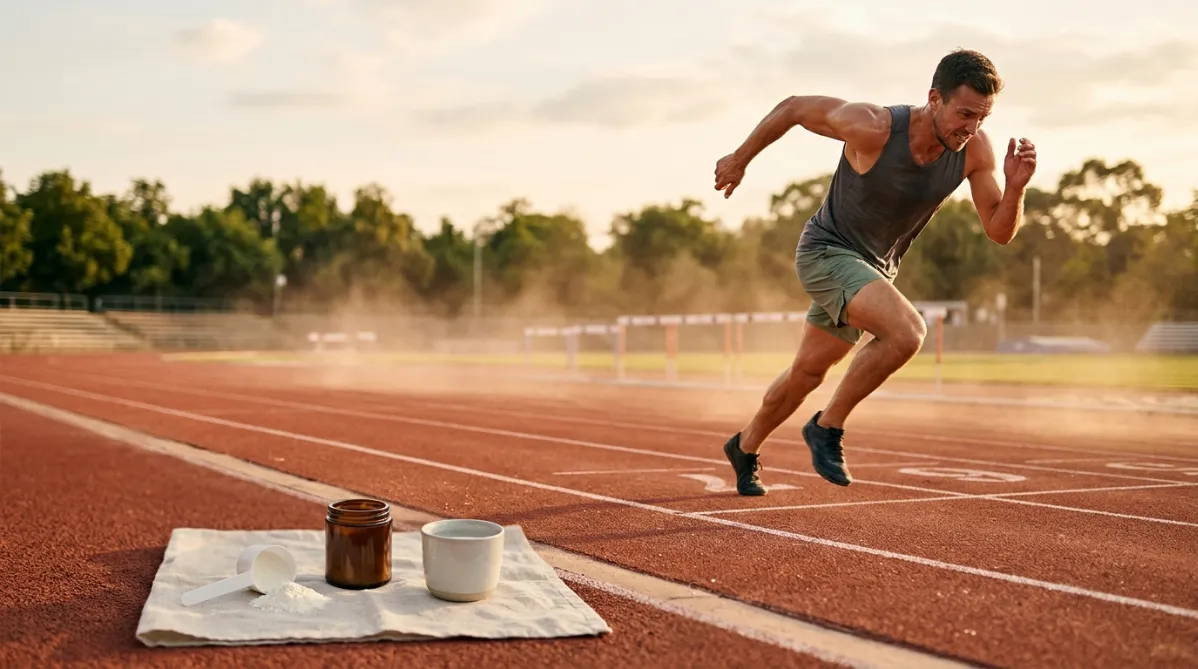
A wide editorial photograph of a lone runner captured mid-stride in the final stretch of a sunlit outdoor track, shot from a low angle with a shallow depth of field. The runner wears a fitted charcoal singlet and sage-green shorts. Their face is tense with effort, and their stride is long and powerful as they lean toward the finish line. Soft golden-hour light rakes across the scene and creates long shadows on the terracotta-red track. A faint haze of warm dust hangs in the air behind them.

In the lower left foreground, slightly out of focus, a minimalist still life sits on the edge of the track. A matte white scoop rests beside a small pile of fine white powder on a pale linen cloth. Next to it are a small amber glass jar and a ceramic cup of water. The objects are arranged with restraint, like a modern wellness magazine layout. They hint at supplements without any branding or text.

The background is a gentle blur of white lane lines, distant green trees, and a pale peach and cream sky. The color palette is warm and muted: terracotta, sand, sage, soft cream, and touches of deep charcoal. The mood is calm and focused, with a sense of restrained power and a decisive moment. The composition follows the rule of thirds. The runner sits on the right third, the still life anchors the lower left, and generous negative space in the upper left leaves room for a headline overlay.

The style is contemporary, clean, and slightly cinematic, like a high-end sports and science journal. It has fine film grain, natural color grading, crisp detail on the athlete, and creamy bokeh elsewhere. There is no text, no logos, no futuristic elements, and no digital interfaces. The scene is purely natural and tactile.
supplements

La creatina y la beta‑alanina no aumentarán el VO2max, pero pueden mejorar los sprints

BY DR. GYMBRO ·

Una revisión de 2026 en Translational Sports Medicine analiza a fondo la creatina y la beta‑alanina en atletas de resistencia. Concluye que ninguno es una forma fiable de elevar el VO2max, el umbral de lactato ni el tiempo hasta el agotamiento. Ambos pueden ser útiles en los momentos decisivos de una carrera, como acelerones, subidas y sprints finales. El aumento de peso que produce la creatina puede ser una desventaja importante para los corredores. A continuación, se muestra la evidencia, sus limitaciones y las dosis habituales que utilizan los atletas.

A wide, softly lit editorial photograph of a bright, minimalist gym studio with pale oak flooring and large windows letting in diffuse morning light. In the foreground, a matte white ceramic scoop of fine white powder sits beside a simple frosted glass jar on a light concrete bench. A neutral linen towel and a stainless steel water bottle rest next to them. Slightly out of focus in the midground, a young woman in a sage-green athletic set and a young man in a soft gray tee are mid-circuit, one stepping over a low plyometric box and the other holding a kettlebell. Their motion is captured with a gentle blur. Behind them, a row of painted lines on the floor marks a shuttle-run lane, with small terracotta-colored cones spaced evenly along it. The palette is calm and modern: warm cream, sage, soft terracotta, and muted charcoal, with a touch of pale blue in the shadows. The composition uses generous negative space on the right side of the frame for a title overlay. Depth of field is shallow, the grain is subtle and film-like, and the style is contemporary lifestyle journalism, clean and crisp, with a slightly airy, high-key exposure and natural shadows. No text, no logos, no futuristic elements.
science research

Beta‑alanina aumentó la carnosina en principiantes, pero no mejoró el rendimiento

BY DR. GYMBRO ·

A los principiantes a menudo le dicen que la beta‑alanina es un atajo para mejorar el rendimiento. Un nuevo ensayo aleatorizado y controlado con placebo en adultos jóvenes sin experiencia encontró que el suplemento elevó la carnosina plasmática, pero no aportó mejoras medibles al estado físico. Seis semanas de entrenamiento en circuito, por sí solas, mejoraron significativamente el rendimiento en la carrera de ida‑y‑vuelta y el VO2máx estimado (ambos p<0.001). A continuación se resumen los hallazgos del estudio, sus limitaciones y a quién le puede resultar realmente útil la beta‑alanina.

A softly lit, minimalist gym interior photographed in a modern editorial style. In the foreground, a muscular lifter in a fitted charcoal tank top is mid-set at a cable station, forearm and shoulder muscles defined, a light dusting of chalk on their hands. The frame is shot at a slight low angle with shallow depth of field, so the background gym equipment melts into creamy blur. On a matte concrete-textured bench beside them sits a clean, unbranded matte-white scoop container of white powder, a stainless steel shaker bottle, and a small analog stopwatch, arranged with careful, magazine-style composure. A few loose grains of white powder catch the light on the bench surface.

Warm golden late-afternoon sunlight pours through tall industrial windows on the left, creating long diagonal light streaks, gentle lens flare, and a subtle haze of floating chalk dust that glows in the beams. The palette is restrained and sophisticated: warm sand, soft cream, muted terracotta, deep charcoal, and a single accent of sage green from a potted plant on a shelf. Rows of neatly racked dumbbells in dark metal repeat in the mid-ground, adding rhythm and depth.

The composition follows the rule of thirds: the lifter and supplement still life occupy the right two-thirds, while the left third remains calm, with a smooth, softly blurred wall and window light, leaving generous negative space for headline text. Subtle film grain, natural color grading, and a slightly desaturated, high-end lifestyle photography look evoke a contemporary health and science journal. No text, logos, or graphics. Clean, aspirational, grounded, and tactile, with a sense of focused effort and quiet intensity.
nutrition

Beta‑alanina funciona para levantadores: si entrenas así

BY DR. GYMBRO ·

La beta‑alanina ha tenido una reputación ambivalente en el entrenamiento con pesas, pero un nuevo ensayo aleatorizado controlado ayuda a aclarar el panorama. Cuando levantadores experimentados tomaron 6,4 g al día durante cuatro semanas, sus repeticiones totales aumentaron un 17,3 % en series descendentes y un 18,2 % en bi‑series, mientras que el grupo placebo no mostró mejoras significativas. La percepción de esfuerzo, la motivación y el ánimo no cambiaron entre los grupos, de modo que el beneficio es puramente físico y no psicológico. Aquí tienes la dosis, el periodo de carga, a quiénes aplican los datos y quién debería seguir escéptico.

This page is available in