Dr. Gymbro
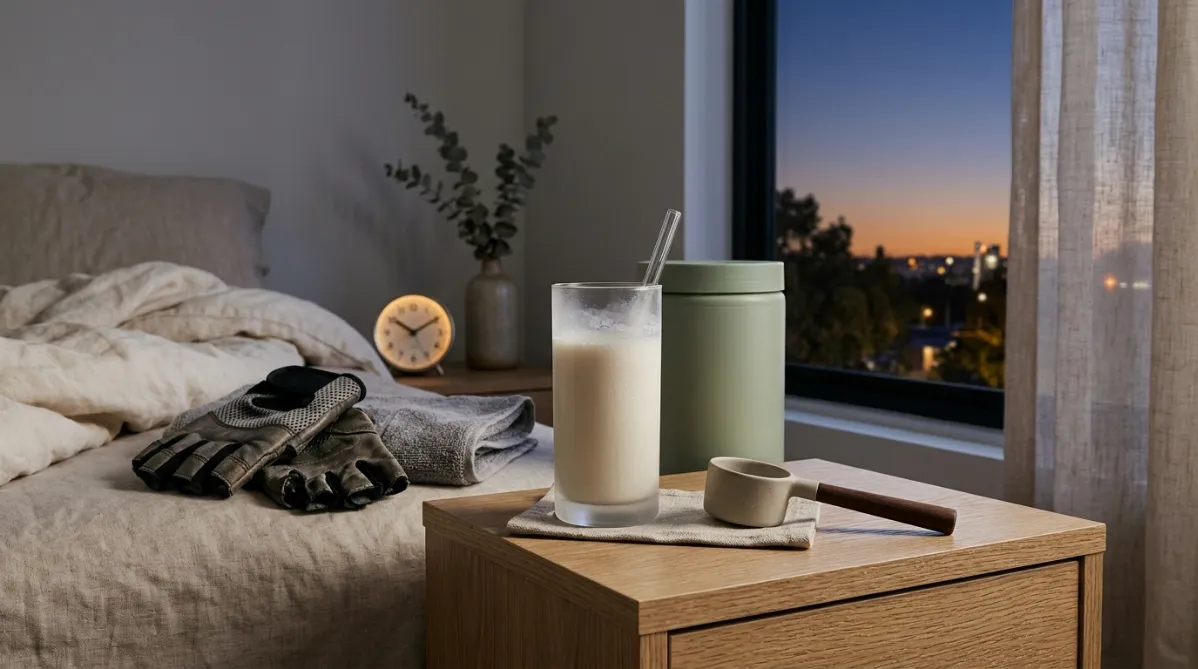
A softly lit bedside table in a calm, modern bedroom at dusk, photographed in wide landscape format with shallow depth of field. In the foreground, a matte white shaker bottle sits beside a tall frosted glass of creamy, pale vanilla-colored protein shake, with a few condensation droplets catching warm light. Next to the glass rests a slim fitness band on a dark charcoal fabric strap, its small LED glowing a gentle green, lying casually on a light oak wooden surface. A small scoop of fine white protein powder rests on a ceramic dish nearby, with a light dusting of powder on the wood.

In the soft-focus background, a neatly made bed with oatmeal-colored linen bedding and a textured knit throw blanket. A sheer curtain filters the last peach and lavender light of evening from a large window. A small potted olive branch in a terracotta vase and a closed paperback book add a quiet editorial touch. A bedside lamp with a warm, cream-colored shade casts a golden glow across the scene and creates gentle highlights on the glass.

The palette is muted and harmonious: warm cream, soft sand, oatmeal beige, faint sage green accents, and touches of dusty lavender in the window light. The mood is peaceful, reassuring, and clean, like a contemporary wellness magazine or a trendy health journal feature. Lighting is natural and cinematic, with soft shadows and a subtle film-like grain. The composition follows the rule of thirds, with the shake and band on the left third and open negative space on the right for headline overlay. Minimalist, Scandinavian-inspired styling, high-end lifestyle photography, crisp details, and a tranquil, premium editorial feel.
Recovery

La caseína antes de acostarse no estropeará tu sueño, según datos de WHOOP

Dr. Gymbro · · 4 min read

La caseína antes de acostarse no estropeará tu sueño, según datos de WHOOP

Probablemente hayas escuchado la advertencia: un batido de proteína abundante justo antes de acostarte te mantendrá despierto y retrasará tu recuperación. Un nuevo ensayo aleatorizado en atletas femeninas de élite puso a prueba esa idea con los dispositivos wearables WHOOP. El resultado es más interesante que un simple sí o no: el batido no arruinó el sueño, pero tampoco lo mejoró.

El mito bajo la lupa

La ingesta antes de dormir se ha convertido en una táctica popular de recuperación. Las proteínas de digestión lenta, como la caseína, son la opción habitual, ya que supuestamente suministran aminoácidos durante la noche. La preocupación es que las calorías nocturnas puedan alterar el sueño, elevar la frecuencia cardíaca o atenuar la recuperación nocturna.

Investigadores de la Universidad Estatal de Florida, en colaboración con la Universidad Estatal de Dakota del Sur, se propusieron verificarlo. Su artículo, publicado en el Journal of the International Society of Sports Nutrition (Paterson et al., 2026), señala que los ensayos aleatorizados, doble ciego y cruzados que comparan macronutrientes pre‑sueño en atletas femeninas de élite son escasos.

Cómo se diseñó el estudio

Se reclutaron veinticinco atletas universitarias de la División I (edad 18‑25 años) y 21 completaron el estudio. Cada atleta pasó por cuatro condiciones en un diseño cruzado, aleatorizado, doble ciego y con placebo:

  • 40 g de caseína (160 kcal)
  • 40 g de alfa‑lactalbumina, una proteína láctea derivada del suero (160 kcal)
  • 40 g de carbohidrato (160 kcal)
  • 40 g de placebo (≈5 kcal)

Cada condición duró tres noches consecutivas, con al menos tres días de lavado entre ellas. El protocolo completo se extendió de 4 a 8 semanas. Las atletas tomaron el suplemento aproximadamente 2 horas después de su última comida y unos 30 minutos antes de acostarse, convirtiéndose en la última ingesta calórica del día.

Qué se midió

Los datos objetivos provinieron de una pulsera WHOOP 4.0: tiempo total de sueño, latencia del inicio, eficiencia del sueño, frecuencia cardíaca en reposo y variabilidad de la frecuencia cardíaca (HRV). Cada mañana las atletas completaron cuestionarios sobre la calidad subjetiva del sueño, el tiempo que tardaron en quedarse dormidas y cuán recuperadas se sentían. En un pequeño subgrupo de seis atletas, monitores continuos de glucosa (ciegos) registraron la glucemia nocturna.

Los números: básicamente sin efecto

No surgieron efectos de tratamiento significativos en ninguna métrica objetiva de sueño o recuperación (todos p > 0,05). Entre las cuatro condiciones:

  • Tiempo total de sueño: 7,47‑7,62 h
  • Eficiencia del sueño: 91,5 %‑92,0 %
  • Frecuencia cardíaca en reposo: 53,5‑54,1 bpm
  • HRV: 98,2‑103,9 ms

Los datos subjetivos contaron la misma historia. Las puntuaciones de calidad del sueño oscilaron entre 69 % y 75 %, el tiempo auto‑reportado para dormir entre 16 y 20 minutos, y la percepción de recuperación entre 61 % y 66 %. Ninguna diferencia fue estadísticamente significativa entre los tratamientos.

En el sub‑análisis de glucosa, la glucemia nocturna cambió con el tiempo (p = 0,008), como era de esperarse. Sin embargo, no hubo diferencia entre tratamientos (p = 0,187) ni interacción tratamiento‑tiempo (p = 0,550).

Los autores concluyeron que tres noches de caseína, alfa‑lactalbumina o carbohidrato antes de dormir no perjudicaron ni el sueño objetivo ni el subjetivo, ni la recuperación, en comparación con el placebo.

Giro inesperado: tampoco mejoró el sueño

Esta no es una historia de que la proteína antes de acostarse mejore el sueño. Ninguna condición activa superó al placebo en ninguna medida de sueño. Si buscas caseína para la síntesis de proteína muscular, adherencia o alcanzar tus metas diarias de proteína, este estudio sugiere que no tienes que preocuparte por el sueño. Si esperabas que fuera un somnífero natural, los datos no lo respaldan.

El estudio tampoco midió resultados musculares, rendimiento o composición corporal, por lo que no puede decir si la proteína pre‑sueño ayuda a la recuperación a nivel muscular.

Limitaciones que debes conocer

  • Exposición corta: Cada condición duró solo tres noches. Los efectos a más largo plazo siguen sin conocerse.
  • Datos de sueño basados en wearables: WHOOP es práctico, pero no es polisomnografía, el estándar de laboratorio para la clasificación del sueño.
  • Población muy específica: Todas las participantes eran jóvenes atletas universitarias de élite que ya dormían bien (≈7,5 h y > 91 % de eficiencia). Los resultados pueden no extrapolarse a personas con sueño deficiente, adultos mayores, varones o no atletas.
  • Sub‑muestra de CGM muy pequeña: Solo seis atletas usaron monitores de glucosa, por lo que esos hallazgos son preliminares.
  • Tamaño de muestra: 21 completadoras es modestamente bajo para detectar efectos pequeños.
  • Divulgación: Un autor es miembro no remunerado del International Protein Board.

Conclusiones prácticas

Dosis: El estudio utilizó 40 g de proteína o carbohidrato (160 kcal). Esa es la cantidad con datos respaldados aquí.

Momento: Las atletas lo consumieron unos 30 minutos antes de acostarse, aproximadamente 2 horas después de su última comida, como su última ingesta calórica del día.

Para quién es: Atletas y personas activas que quieren usar la alimentación pre‑sueño para cumplir metas de proteína o energía. En este grupo de jóvenes atletas femeninas con buen sueño, no afectó negativamente el sueño, la HRV ni la frecuencia cardíaca en reposo.

Quién debería evitarlo o ser cauteloso:

  • Personas con alergia a la leche o que no toleren proteínas lácteas, ya que ambas proteínas probadas provienen de la leche.
  • Aquellos que, de forma personal, noten que comer tarde interfiere con su sueño. Estos son promedios grupales y pueden existir diferencias individuales.
  • Personas que no necesiten las calorías o la proteína extra. El estudio no mostró beneficio en el sueño, así que no hay razón para añadirlo solo por ese motivo.

Conclusión final: La afirmación de que "el batido de proteína antes de dormir estropea tu sueño" no se sostiene en este ensayo. Trata un batido nocturno como una herramienta nutricional, no como un truco para dormir mejor, y revisa tus propios datos de WHOOP o de sueño si quieres ver cómo te afecta personalmente.
Original study

Read the original research on pubmed.ncbi.nlm.nih.gov →

This article summarizes published research for general information. It is not medical advice.

DG

Written by

Dr. Gymbro

Dr. Gymbro writes for Dr. Gymbro: science-backed fitness, nutrition & performance.

Related Articles

A landscape editorial still life shot from slightly above on a pale oat-colored linen surface, lit by soft morning window light with gentle long shadows. On the left, in warm golden sunlight, sits a small ceramic bowl of dried ashwagandha root pieces and a scatter of fine tan powder. Beside it are a few rough, rosy-gold slices of Rhodiola rosea root and a sprig of tiny succulent-like green leaves with yellow blossoms. A matte sand-colored stoneware mug of steaming tea and a simple glass of water stand nearby. A small amber glass bottle with a minimal unbranded label tips out two capsules.

The right side of the frame is cooler and bluer, as if dusk is arriving. It holds a muted indigo ceramic dish with a few pale capsules, a small bundle of dried chamomile flowers (the source of apigenin), and a few green tea leaves. A slim, unlit beeswax candle and a folded charcoal wool blanket suggest evening. The warm and cool halves meet softly in the center, where a rumpled white cotton napkin sits beneath a small brass spoon.

In the background, out of focus, a wooden shelf holds a worn paperback, a small potted plant, and the edge of a kettlebell in matte black, hinting at an active lifestyle. Subtle film grain, shallow depth of field, and a muted palette of cream, terracotta, sage green, and deep indigo give it a clean, modern wellness-magazine feel. Leave generous negative space in the upper third for a headline overlay. No text, no logos, no people.
recovery

Ashwagandha + Rhodiola funcionó. El stack nocturno para dormir no lo hizo.

BY DR. GYMBRO ·

Un nuevo ensayo de cuatro brazos sorprende a la comunidad de suplementos. En 103 adultos sanos y activos, una combinación matutina de 600 mg de ashwagandha y 300 mg de *Rhodiola rosea* se asoció con menor estrés percibido, mejor calidad del sueño y mejor estado de ánimo. El popular stack nocturno de magnesio L‑treonato, L‑teanina y apigenina no aportó nada, y combinar ambos pareció empeorar el afecto positivo. Aquí presentamos los hallazgos, sus limitaciones (solo dos semanas, grupos pequeños) y cómo los atletas podrían aplicarlos.

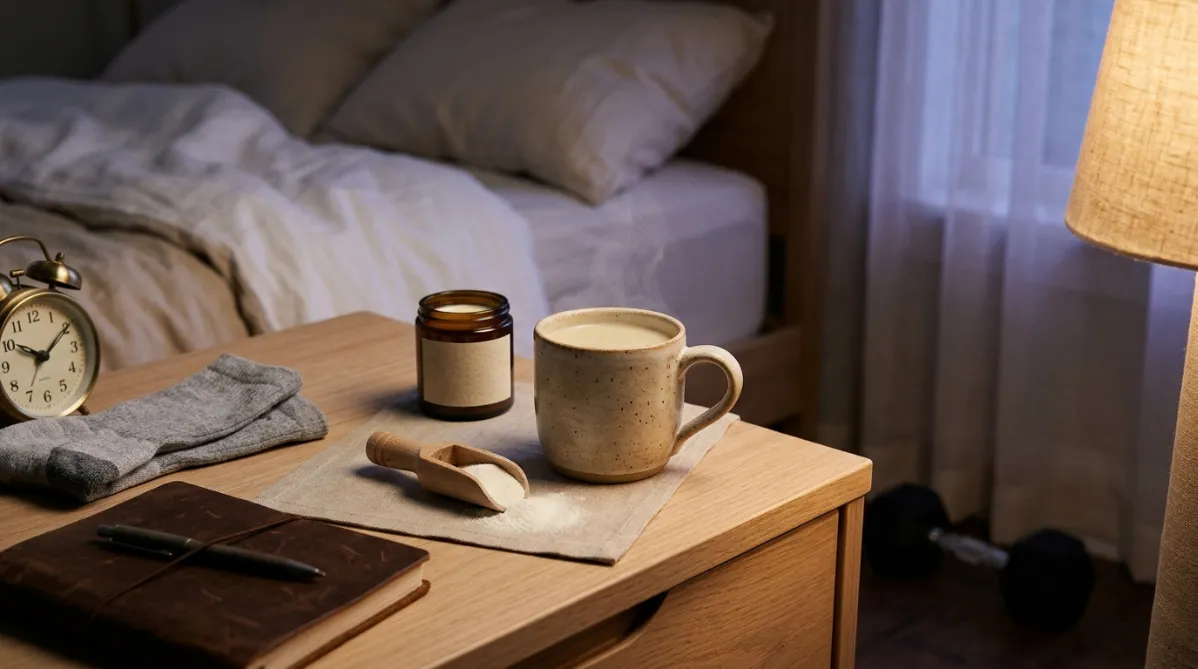
A softly lit bedroom nightstand scene in landscape format, photographed in a modern editorial lifestyle style. In the center of the frame sits a handmade ceramic mug in warm oatmeal tones, filled with a pale creamy drink. A thin wisp of steam rises from it. Beside the mug, a small wooden scoop rests on a matte linen-textured surface with a fine dusting of white collagen powder. A minimal amber glass jar with a cream label stands just behind, with no readable text. The nightstand is pale oak with subtle grain.

To the left, a neatly folded pair of gray cotton athletic socks and a worn leather-bound training journal with a pen on top hint at a lifter's routine. A small brass alarm clock reads about 9:30 and is slightly out of focus. On the right side, a sheer curtain filters the last blue-violet twilight from a window, while a warm bedside lamp with a linen shade casts a honey-colored glow across the scene. The glow contrasts gently with the cool dusk tones.

Behind the nightstand, the edge of a rumpled bed with soft white and sand-colored bedding is visible, with a dumbbell resting quietly on the floor in the soft-focus background to suggest recovery after training. The depth of field is shallow, with the mug and scoop in crisp focus and the background dissolving into creamy bokeh.

The palette is calm and earthy: warm beige, soft cream, muted terracotta, and dusk blue accents. The lighting is cinematic and low-key, with gentle highlights on the ceramic rim and a subtle rim light on the steam. The composition follows the rule of thirds, with the mug placed on the left third and generous negative space on the right for title overlay. The mood is serene, restorative, and quietly scientific without any clinical elements. The finish is clean, high-end, and magazine-worthy, with fine film grain and natural color grading, like a wellness feature in a contemporary online journal.
recovery

El truco del colágeno de 15 g antes de dormir que redujo los despertares nocturnos en un 27 %

BY DR. GYMBRO ·

Despertarse una y otra vez durante la noche puede sabotear silenciosamente tu recuperación, incluso cuando el entrenamiento y la nutrición están afinados. Un pequeño ensayo encontró que 15 g de péptidos de colágeno tomados una hora antes de acostarse redujeron los despertares registrados por polisomnografía de 29,3 a 21,3, aproximadamente un 27 % menos. Los participantes también obtuvieron mejores puntuaciones en una prueba Stroop matutina. Sin embargo, el tiempo total de sueño, la latencia y métricas como la eficiencia no cambiaron, y el estudio solo involucró a 13 hombres durante 7 noches con un producto provisto por la industria.

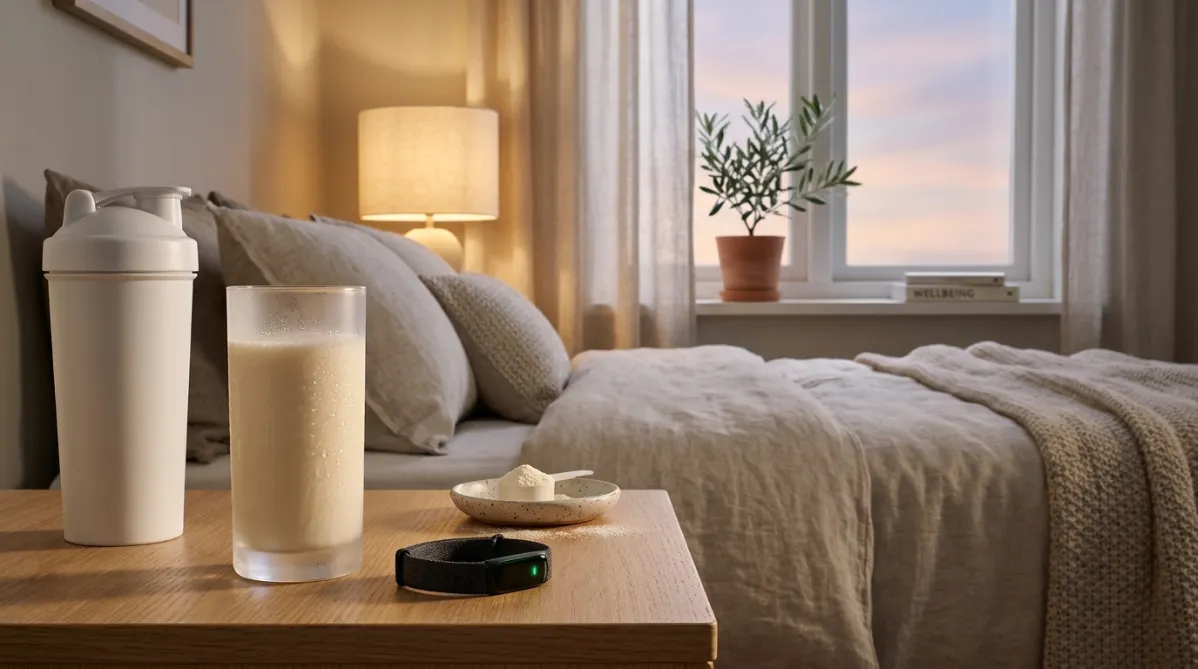
A quiet bedside scene at dusk, shot in soft natural light with a shallow depth of field. A tall frosted glass of creamy, pale-white shake sits on a light oak nightstand, with a thin film of condensation on the glass and a faint milky residue near the rim. Beside it, a matte ceramic scoop rests on a small linen coaster. A minimalist tub of unbranded protein powder in muted sage green sits slightly out of focus in the background.

To the left, a neatly made bed with oatmeal-colored linen sheets and a rumpled cream duvet. A pair of worn lifting gloves and a folded gray gym towel sit on the edge of the bed, suggesting an evening workout just finished. A small analog alarm clock reads about 10:30 PM, its soft face glowing faintly. A sprig of dried eucalyptus in a small stoneware bud vase adds an organic touch.

Through a large window on the right, deep indigo twilight fades into a warm amber horizon, and the last light spills across the wall in long, gentle gradients. A sheer curtain moves slightly. The palette is warm neutrals (cream, oak, sand, soft terracotta) with a few muted blue-violet accents from the evening sky.

The composition uses the rule of thirds, with the glass at the left-center foreground and generous negative space on the right, where headline text could sit. The mood is calm, restorative, and editorial, like a modern wellness and nutrition journal. The lighting is gentle and diffused, with subtle film grain and slightly lifted shadows. The textures of linen, wood, glass, and ceramic are crisp. The image is clean and uncluttered, with no text, logos, or people, and no futuristic or sci-fi elements.
nutrition

El batido nocturno de 40 g: Qué hace la caseína mientras duermes

BY DR. GYMBRO ·

¿Entrenar por la noche y luego pasar ocho horas sin comer perjudica la recuperación? Un estudio de 2012 administró a 16 hombres jóvenes 40 g de caseína 30 min antes de acostarse y siguió lo que ocurría durante la noche. La proteína se digirió y absorbió mientras dormían, la síntesis proteica total se disparó (311 vs 246 µmol/kg) y el balance neto de proteína pasó de negativo a positivo. La síntesis de proteína muscular fue aproximadamente un 22 % mayor, aunque sólo alcanzó significación marginal. Aquí explicamos qué significan los resultados, qué no demuestran y cómo aplicarlos.

A sunlit, minimalist home gym corner photographed in soft golden morning light, with a young athletic man seated on a wooden bench, leaning forward with his elbows resting on his knees, catching his breath after a hard leg session. He wears a muted sage-green t-shirt and charcoal shorts, his face turned slightly away from the camera, calm and focused. A matte ceramic dish in the foreground holds a few small, translucent golden softgel capsules, with a glass of water beside it catching the light and casting a soft caustic shadow across a pale oak floor. Behind him, a loaded barbell rests on a squat rack, slightly out of focus, and a tall window pours warm sunlight diagonally across the scene, creating long gentle shadows and a hazy glow. A small potted green plant sits on a shelf at the edge of the frame. The color palette is warm and editorial: cream, soft gold, sage green, pale wood, and charcoal accents. Shallow depth of field, with crisp focus on the capsules and glass in the lower third and a creamy bokeh background. The composition leaves generous negative space on the right side for a headline overlay. The mood is clean, modern, and aspirational, like a high-end wellness magazine or a trendy health journal feature. Shot on a 50mm lens, natural light, fine film grain, subtle matte finish, landscape 16:9 framing.
recovery

Vitamina D acelera la recuperación de la fuerza en hombres con niveles suficientes

BY DR. GYMBRO ·

Hombres con niveles de vitamina D perfectamente normales recuperaron la fuerza más rápido tras una sesión intensa de piernas al tomar 4 000 UI diarias. En este ensayo aleatorizado, controlado con placebo, con 28 hombres activos, la fuerza isométrica máxima se recuperó aproximadamente un 8 % más a las 24 horas. Los marcadores de daño muscular ALT y AST también aumentaron menos. La sorpresa es que la sensación de dolor muscular no mejoró en absoluto. A continuación se detallan los hallazgos del estudio, sus limitaciones y a quién podría interesar.

This page is available in