Dr. Gymbro
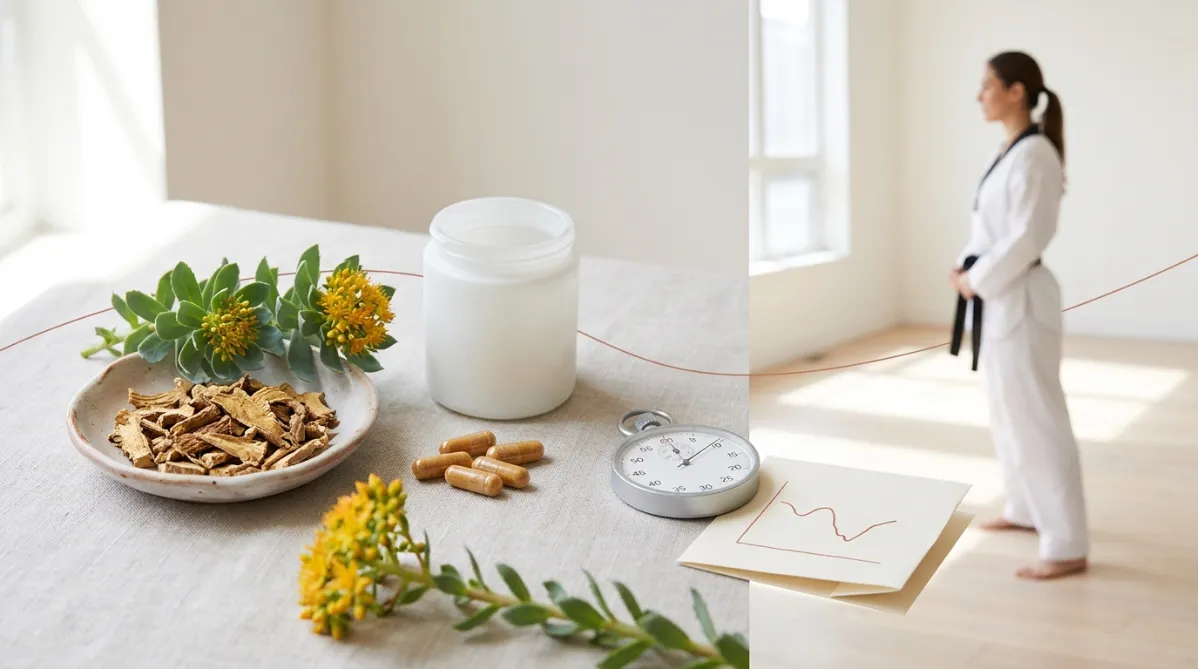
A wide, softly lit editorial still life on a pale warm-gray linen surface. On the left, a small ceramic dish holds dried golden-brown Rhodiola rosea root pieces, with a few fresh sprigs of the plant beside it. The sprigs have thick succulent blue-green leaves and tight clusters of small yellow-orange flowers. Next to the dish sit a handful of amber capsules and a matte white glass jar with no label. A sprig of the yellow blooms lies diagonally across the foreground, slightly out of focus.

On the right, in the middle distance, a woman in athletic wear is seen from the side and slightly blurred. She wears a crisp white taekwondo dobok with a black belt and stands in a calm ready stance in a bright, minimalist studio with pale wood floors and large windows. Soft morning light spills across the floor. Her form is a secondary element, and the shallow depth of field keeps the botanical objects sharp.

A thin, elegant detail ties the two halves together: a modern minimalist stopwatch with a clean white face rests on the linen near the capsules, its hand frozen mid-sweep. Beside it lies a small folded sheet of cream paper with a delicate hand-drawn line chart in muted terracotta ink, showing a small dip. A single fine terracotta line curves across the composition, loosely connecting the root, the stopwatch, and the athlete.

The palette is sophisticated and earthy: warm cream, sage green, dusty blush pink, terracotta, and a touch of marigold yellow from the flowers. The mood is calm, trustworthy, and wellness-forward, like a contemporary health and science journal. Light comes from the left, with soft shadows and gentle highlights on the ceramic and glass. There is generous negative space in the upper portion of the frame for title overlay. The image has a fine-grain, high-end editorial photography look, shot on a medium-format camera with a 50mm lens, shallow depth of field, and natural color grading.
Nutrition

Rhodiola reduce el tiempo de reacción en 60 ms en atletas con SPM, pero hay una trampa

Dr. Gymbro · · 4 min read

Los síntomas premenstruales pueden arruinar una semana de entrenamiento. Irritabilidad, falta de concentración, sueño deficiente, antojos y calambres no respetan que tengas una competición próxima. Un nuevo ensayo aleatorizado sugiere que una hierba barata y de venta generalizada podría mitigar parte de ese malestar. El dato que llamó nuestra atención es una mejora de 60 milisegundos en el tiempo de reacción visual. Antes de añadirla al carrito, debes conocer cuán reducido fue el estudio y qué cosas la hierba no logró.

El estudio: quién, qué y cuán grande

Investigadores de la Universidad Allameh Tabataba'i de Teherán y de la Deutsche Sporthochschule Köln (Universidad Deportiva de Colonia) publicaron el ensayo en el Journal of the International Society of Sports Nutrition. Fue un ensayo aleatorizado, doble ciego y controlado con placebo, el diseño más sólido para una pregunta sobre suplementos.

La muestra fue pequeña. Veinticuatro atletas femeninas de taekwondo con síndrome premenstrual (SPM) de moderado a severo se dividieron en dos grupos de 12. Un grupo tomó 500 mg al día de extracto estandarizado de Rhodiola rosea durante 10 días en la fase premenstrual estimada como sintomática. El otro grupo recibió un placebo. Se midieron los síntomas antes y después con la herramienta Premenstrual Symptoms Screening Tool (PSST), además del tiempo de reacción, marcadores sanguíneos, esfuerzo percibido y rendimiento aeróbico.

El hallazgo principal: un cerebro más rápido

Ajustando por los valores de referencia, el grupo que recibió Rhodiola presentó un tiempo de reacción visual 60 ms más rápido que el placebo (p < 0.001). En un deporte de combate, donde leer el movimiento del oponente es mitad del trabajo, ese número llama la atención. El estudio utilizó una prueba de reacción visual, no un sparring ni una competición real. Cuánto de esos 60 ms se traslada al tatami sigue siendo una incógnita.

Síntomas: una larga lista de mejoras

En comparación con el placebo, Rhodiola redujo significativamente varios síntomas del SPM (p < 0.05):

  • Irritabilidad
  • Depresión
  • Ansiedad
  • Retiro social
  • Disminución de la concentración
  • Hipersomnia (exceso de sueño)
  • Antojos alimentarios
  • Llanto
  • Problemas cutáneos
  • Dolor abdominal

Esto abarca estado de ánimo, cognición, apetito y malestar físico, lo cual es amplio para una sola hierba. Los síntomas fueron autoinformados; aun con control de placebo, las escalas subjetivas en grupos pequeños pueden ser ruidosas.

Serotonina, GABA y esfuerzo

Los niveles séricos de serotonina y GABA fueron ambos significativamente mayores en el grupo de Rhodiola que en el de placebo (p < 0.001). Estos neurotransmisores están vinculados al estado de ánimo, la calma y la activación, por lo que el hallazgo concuerda con la mejoría de los síntomas. Los autores los midieron en sangre, sin embargo. Las concentraciones sanguíneas no reflejan de forma fiable lo que ocurre en el cerebro, así que tómalo como una pista, no como prueba definitiva.

Los atletas también reportaron que el ejercicio resultó más fácil. La valoración percibida del esfuerzo post‑ejercicio disminuyó 1,40 unidades Borg frente al placebo (p = 0.006). El mismo trabajo se sintió menos agotador.

Lo que Rhodiola NO hizo

Esta es la parte que los anuncios de suplementos suelen omitir. El tiempo a la extenuación y el VO₂máx estimado no mostraron diferencias entre los grupos (p > 0.05). Rhodiola hizo que las atletas se sintieran mejor y reaccionaran más rápido, pero no mejoró las variables aeróbicas evaluadas. Si esperabas batir un nuevo récord de resistencia, este estudio no lo respalda.

Conclusiones prácticas

Dosis: El ensayo utilizó 500 mg al día de extracto estandarizado de Rhodiola rosea. El resumen del artículo no indica los porcentajes de estandarización, así que verifica que tu producto indique a qué está estandarizado.

Momento de la toma: Las participantes lo consumieron durante 10 días en la fase premenstrual estimada como sintomática. Fue una ventana corta y dirigida, no un consumo continuo durante todo el ciclo. Desconocemos si los efectos se mantienen con un uso prolongado.

A quién podría interesar: Mujeres deportistas con SPM moderado a severo que notan que el estado de ánimo, la concentración y la percepción del esfuerzo disminuyen en los días previos a su periodo. La evidencia se aplica directamente a jóvenes atletas de taekwondo; extrapolar a otros deportes y poblaciones es especulativo.

A quién debería evitarlo o consultar a un profesional primero:

  • Personas que toman antidepresivos u otros fármacos que influyen en la serotonina. El estudio mostró aumentos de serotonina, por lo que conviene asesoramiento médico.
  • Personas con trastorno bipolar u otras afecciones del ánimo bajo tratamiento.
  • Mujeres embarazadas o lactantes. El estudio no aborda la seguridad en esas situaciones.
  • Atletas bajo control de organismos deportivos deben optar por productos certificados por terceros y verificar la normativa vigente.
  • Personas con SPM grave o trastorno disfórico premenstrual (TDPM). Los síntomas persistentes y discapacitantes requieren evaluación médica, no solo un suplemento.

Limitaciones que no debes pasar por alto

Los propios autores lo reconocen. Con solo 12 personas por grupo, los resultados son frágiles y la variabilidad individual puede influir mucho. La fase premenstrual se determinó de forma estimada, sin confirmación hormonal, por lo que algunas participantes podrían haber estado en una fase diferente. Diez días es un período breve, y el estudio no permite inferir efectos a largo plazo. Las pruebas de rendimiento tampoco fueron específicas del deporte, y no se realizaron mediciones fisiológicas directas más allá de los marcadores sanguíneos y el VO₂máx estimado. Los autores solicitan ensayos más grandes con confirmación hormonal, intervenciones más prolongadas y pruebas de rendimiento específicas para cada disciplina. No se reportaron conflictos de interés.

Conclusión final

Este pequeño pero bien diseñado ensayo sugiere que un curso corto de Rhodiola rosea durante la ventana premenstrual puede aliviar los síntomas del SPM, acelerar el tiempo de reacción visual y hacer que el ejercicio resulte menos duro para las atletas femeninas. No mejoró el tiempo a la extenuación ni el VO₂máx estimado. Es evidencia prometedora pero preliminar, no una sentencia definitiva. Si decides probarla, considérela como un experimento cauteloso, lleva un registro de síntomas y consulta a un profesional de la salud si tomas medicación o presentas alguna condición del ánimo.
Original study

Read the original research on pubmed.ncbi.nlm.nih.gov →

This article summarizes published research for general information. It is not medical advice.

DG

Written by

Dr. Gymbro

Dr. Gymbro writes for Dr. Gymbro: science-backed fitness, nutrition & performance.

Related Articles

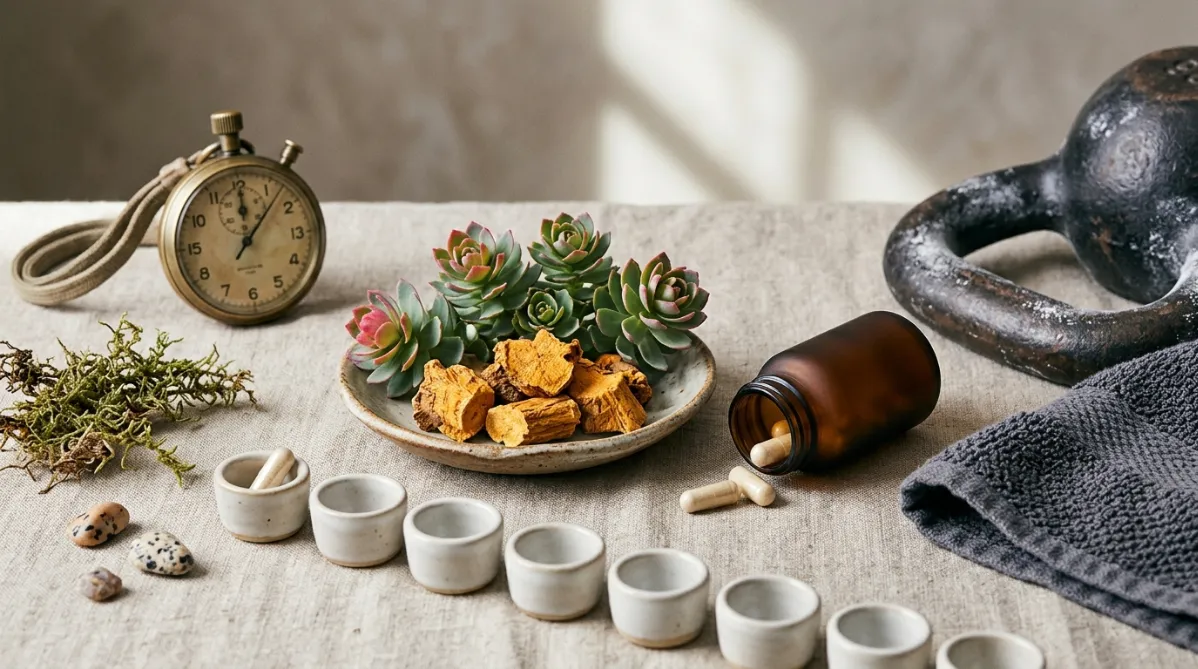
A wide, editorial still life photographed in soft natural window light on a pale oatmeal-colored linen surface. At the center sits a small, rustic ceramic dish holding a handful of dried golden-orange Rhodiola rosea root pieces and a few fresh, fleshy green-gray succulent rosettes with rosy-pink tips. Beside it, a single matte amber glass capsule bottle lies on its side, with two cream-colored capsules spilling out. On the left, a minimalist analog stopwatch with a brushed brass case rests slightly out of focus, its hands suggesting a duration just past the quarter-hour mark. On the right, a worn, chalk-dusted steel kettlebell handle and a folded charcoal gym towel fill the negative space, hinting at lifting without showing a full gym scene.

In the foreground, a neat row of seven tiny ceramic pill cups arranged in a gentle diagonal line, the first cup holding one capsule and the rest sitting empty, as a quiet visual metaphor for a single dose versus daily dosing. A sprig of dried alpine moss and a few small speckled pebbles add organic texture. The background is a softly blurred warm-gray plaster wall with a gentle gradient shadow cast by a window frame, creating diagonal light stripes across the scene.

The palette is muted and earthy: sage green, terracotta, warm cream, brushed brass, and soft charcoal, with one subtle pop of coral from the Rhodiola tips. Shallow depth of field, crisp focus on the root and capsules, and fine film-like grain. The composition leaves generous clean negative space in the upper left for a headline overlay. The overall feel is a modern wellness and science journal: calm, tactile, minimal, and sophisticated, with a slightly moody, high-end magazine look. There is no text, no people, and no futuristic elements.
nutrition

200 mg de Rhodiola aumentan 24 segundos; cuatro semanas de consumo diario no aportan nada

BY DR. GYMBRO ·

Una sola dosis de 200 mg de Rhodiola rosea tomada una hora antes del ejercicio incrementó el tiempo a la extenuación de 16,8 a 17,2 minutos y elevó el VO₂‑máx en un ensayo cruzado doble ciego. La sorpresa es que cuatro semanas de consumo diario no reforzaron ese efecto ni modificaron ninguna variable medida. La ganancia fue pequeña, apenas 24 segundos, y la fuerza, el tiempo de reacción y la atención permanecieron sin cambios. Aquí tienes lo que realmente encontró el estudio, quién podría probar una dosis aguda y por qué no deberías contar con “cargar” la rhodiola.

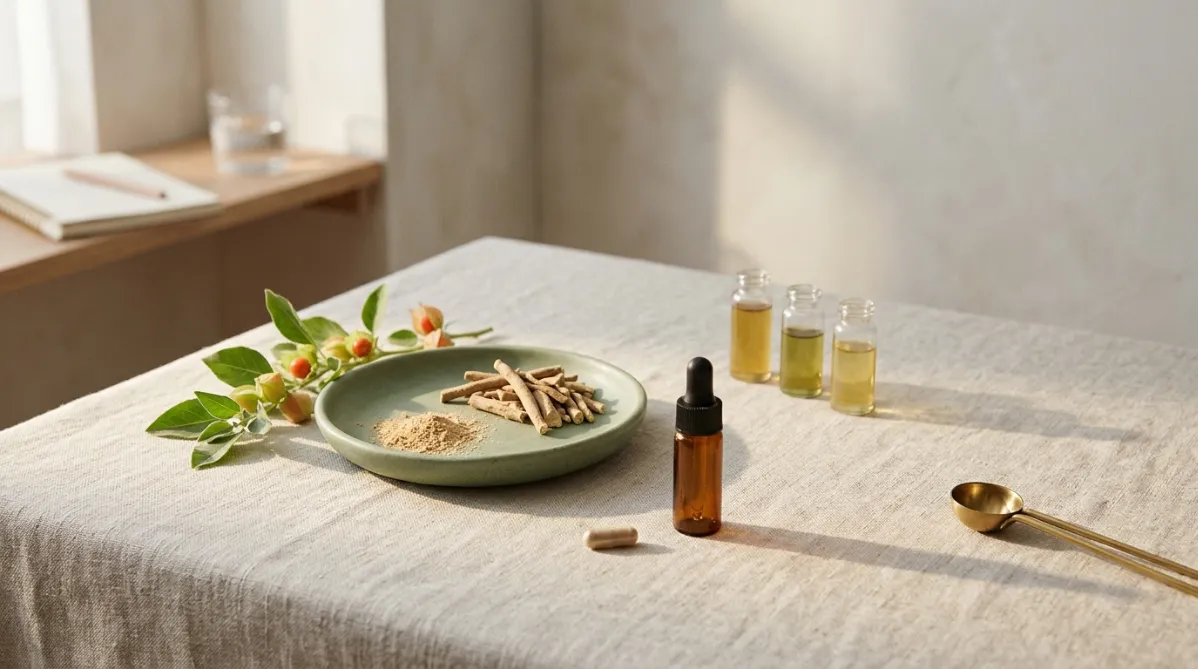
A softly lit, minimalist editorial still life on a pale oat-colored linen surface, shot from a slightly elevated three-quarter angle. In the center-left, a small handmade ceramic dish in matte sage green holds a modest pile of dried ashwagandha root pieces and a scattering of fine tan powder. A few fresh ashwagandha sprigs, with delicate green leaves and small orange-red berries in papery husks, rest beside it. In front, a single tiny capsule sits alone on the linen, with a slim glass dropper bottle in amber tint just behind it, suggesting a very small dose. To the right, a neat row of three small glass vials stands slightly out of focus, their contents a muted gold, hinting at comparison without any labels or text. A delicate brass measuring spoon lies at the edge of the frame, catching a thin highlight.

Soft morning window light falls from the upper left, casting long, gentle shadows and a warm glow across the textures: rough linen weave, matte ceramic, glossy glass, and the powdery root. The color palette is calming and earthy, with sage green, warm cream, soft terracotta, amber, and touches of muted coral from the berries. In the background, a blurred, airy room with a pale plaster wall and a hint of a wooden shelf holding a notebook and a small glass of water, adding a quiet wellness-journal atmosphere. Shallow depth of field, crisp focus on the dish and capsule, and generous negative space on the right third of the frame for headline overlay. The overall mood is calm, thoughtful, and slightly skeptical, like a contemporary health and science magazine feature, with natural, realistic photography, fine grain, and subtle film-like color grading.
science research

Solo 30 mg de Ashwagandha reducen el estrés en 4 semanas: el truco

BY DR. GYMBRO ·

La mayoría de los ensayos con ashwagandha utilizan entre 250 y 600 mg al día, pero este estudio probó solo 30 mg durante 28 días en 60 adultos estresados. El grupo que tomó ashwagandha informó menos estrés y su cortisol salival se mantuvo estable frente a un estrés de laboratorio, mientras que el grupo placebo mostró un aumento. Sin embargo, los valores p rondan entre 0,04 y 0,047, el análisis por protocolo no fue significativo y la mayoría de los demás resultados no mostraron diferencias. Además, el fabricante del extracto financió el estudio. Aquí se explica lo que los datos respaldan, a quién podría ayudar y lo que no prueban.

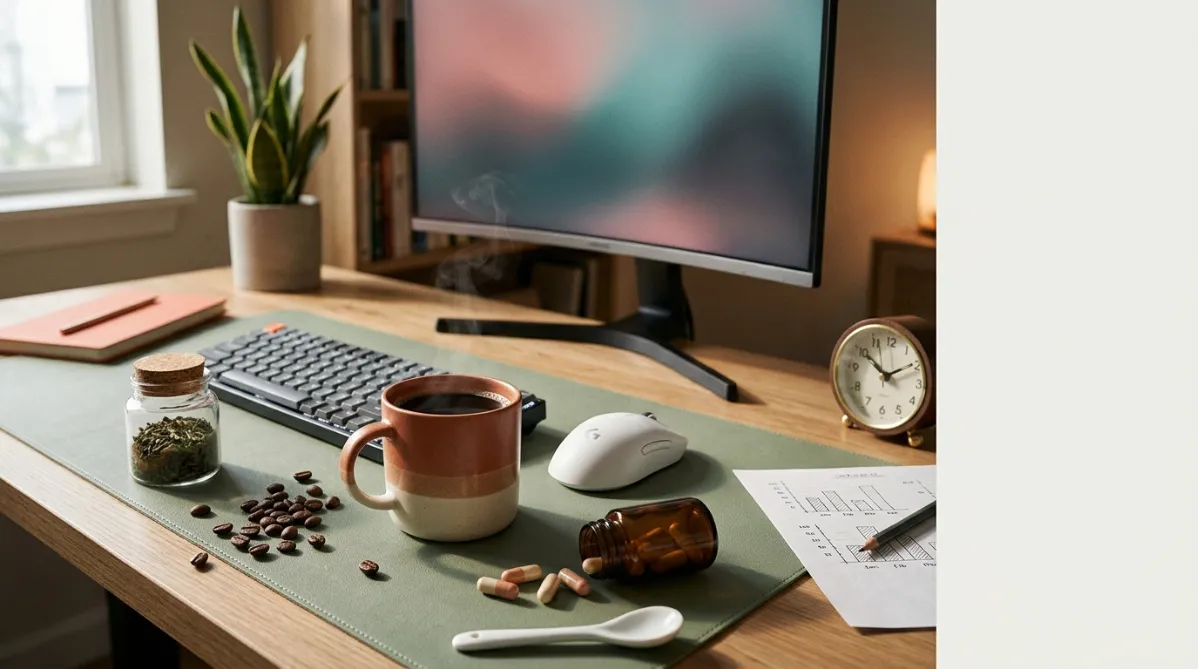
A landscape editorial still life on a softly lit desk, shot from a slightly elevated three-quarter angle with shallow depth of field. In the center sits a ceramic cup of black coffee with a thin curl of steam, on a matte sage-green desk mat. Beside it, a sleek white wireless gaming mouse and a minimal, low-profile keyboard are partly in focus. Scattered in the foreground are a few whole roasted coffee beans and a small glass jar of loose green tea leaves, as a quiet nod to caffeine sources. To the left, a few unlabeled supplement capsules in muted peach and cream spill from a small amber glass bottle onto the mat. Their blurred, ordinary look hints that they are less important than the coffee. In the background, a monitor glows with a soft, abstract, out-of-focus gradient of dusty rose and teal, with no readable game interface. A small analog alarm clock sits at the edge of the frame, its hands near late evening, suggesting sleep concerns. A sheet of paper with simple hand-drawn bar charts and a pencil rests near the cup, hinting at research and data without any legible text.

The palette is warm and modern: cream, sage, terracotta, charcoal, with a single accent of coral. Soft window light comes from the left, casting gentle long shadows and a subtle film-like grain. The composition is clean and uncluttered, with generous negative space on the right third for a title overlay. The look is contemporary and trendy, like a lifestyle-science magazine cover, calm, tactile, and sophisticated, with no sci-fi or neon cyberpunk elements.
supplements

El suplemento para gaming con evidencia real no es lo que prometen los anuncios

BY DR. GYMBRO ·

Los anuncios de suplementos para gaming prometen "foco láser", "reflejos relámpago" y "cero tilt", pero una revisión sistemática de 13 ensayos aleatorizados (466 jugadores) muestra que la evidencia se concentra casi exclusivamente en un ingrediente: la cafeína. Esta apareció en 14 de los 18 protocolos evaluados y se asoció a mejoras en la atención, las funciones ejecutivas, el estado de ánimo, la precisión de tiro y el tiempo de reacción. Otros compuestos, como la arginina silicato enriquecida con inositol, el GABA y los extractos de microalgas, también fueron probados, pero cuentan con mucho menos respaldo. Los autores advierten que el tamaño reducido de las muestras, la mayoría de jugadores aficionados y el riesgo de sesgo convierten los hallazgos en preliminares.

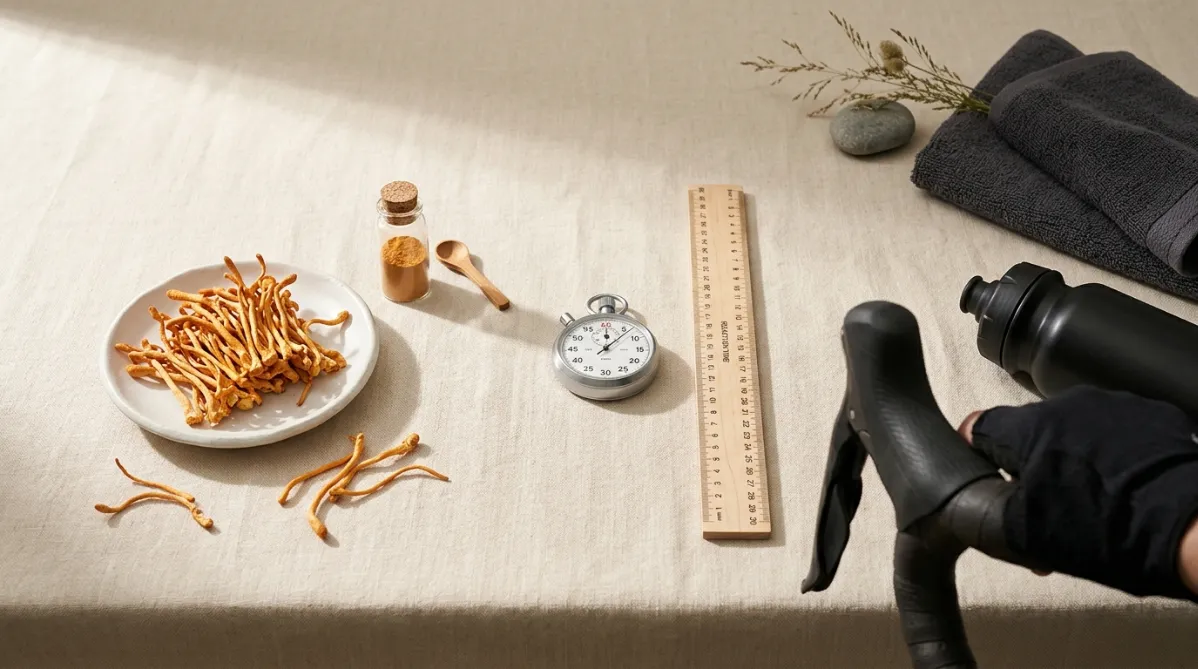
A softly lit editorial flat-lay on a pale oat-colored linen surface, shot from slightly above in a wide landscape frame. On the left, a small matte white ceramic dish holds a modest heap of golden-orange Cordyceps militaris, slender clustered fruiting bodies with a delicate, fibrous texture, a few strands scattered across the linen. Next to the dish sits a tiny clear glass vial with a pinch of fine amber powder, and a minimalist wooden spoon rests beside it. In the center of the frame, a sleek stainless steel stopwatch lies beside a simple analog reaction-timing ruler in light birch wood, its thin black measurement ticks sharply in focus. On the right, partially cropped, the handlebar and gloved hand of a road bicycle are visible. A matte black bottle and a folded gray cotton towel add a subtle athletic note. A sprig of dried grass and a single smooth river stone provide organic balance. Soft diffused morning window light enters from the upper left and casts long, gentle shadows. The palette is warm and restrained: cream, burnt orange, soft sage green, charcoal, and touches of brushed steel. The depth of field is shallow, with the mushrooms and stopwatch crisp and the background gently blurred into creamy neutral tones. The mood is calm, clean, and contemporary, like a high-end wellness and science journal cover, with generous negative space in the upper right for headline text. No people, no text, no logos, and no futuristic elements.
supplements

Cordyceps antes del ciclismo máximo acelera el tiempo de reacción: resultados de un pequeño ensayo

BY DR. GYMBRO ·

Una dosis única de 1 g de *Cordyceps militaris*, tomada 30 minutos antes de una prueba de ciclismo máximo, se asoció a tiempos de reacción más rápidos después del ejercicio en hombres jóvenes. El consumo de oxígeno en reposo también aumentó, pero el VO₂máx no cambió. El efecto de interacción clave no fue significativo y solo se probaron a 12 hombres recreativamente activos. A continuación se muestra qué mejoró realmente, qué no, y cómo interpretar este pequeño estudio sin exagerarlo.

This page is available in