Dr. Gymbro
←

#exercise recovery

2 articles
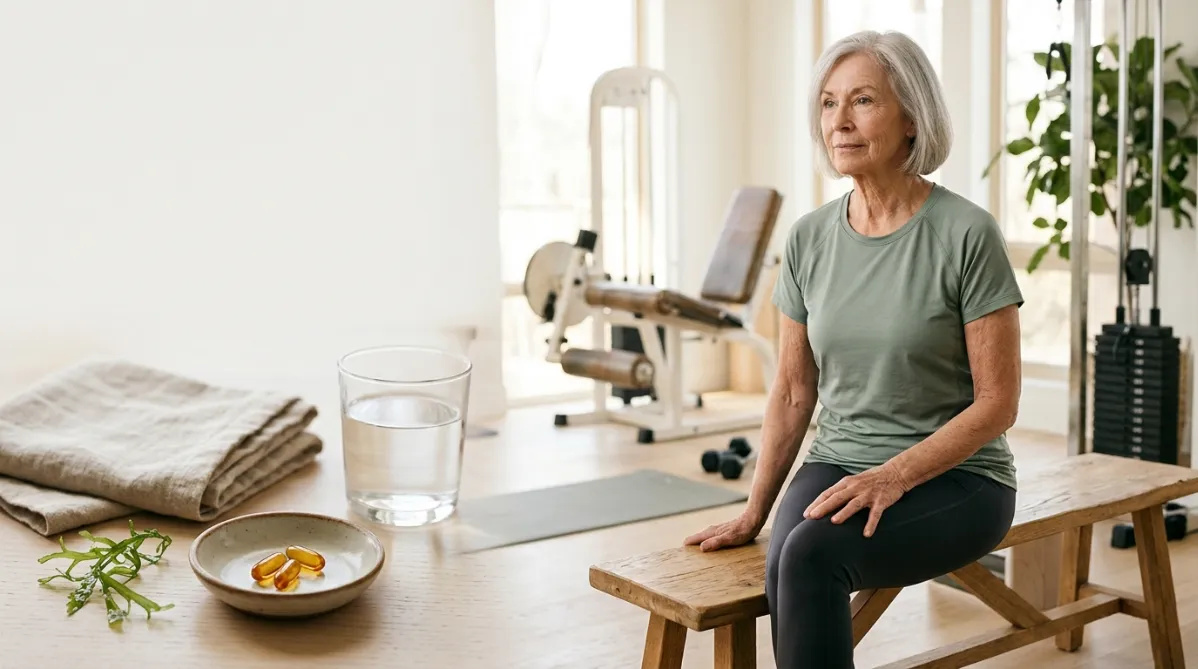
A warm, softly lit editorial scene of an older woman in her early seventies, with short silver hair and a calm, focused expression. She sits on the edge of a light oak bench in a bright, airy home gym, one hand resting on her thigh as she pauses between sets. She wears a muted sage-green athletic top and charcoal leggings. A well-worn leg extension machine sits blurred in the background, and a tall window floods the room with golden morning light.

In the foreground, slightly out of focus, a small ceramic dish on a pale wooden surface holds two translucent amber softgel capsules. Next to it sit a glass of water and a folded linen towel in warm cream. A single sprig of green algae-like seaweed rests beside the dish as a quiet nod to the algae-oil source. The sprig is delicate and natural, with no laboratory elements.

The color palette is earthy and modern: sage green, warm amber, oatmeal beige, and soft terracotta accents, with gentle highlights on the capsules. The composition follows the rule of thirds. The woman sits on the right, and the capsules and water fill the lower left. Negative space in the upper left keeps the layout clean for a headline overlay.

The photographic style is contemporary lifestyle editorial, shot on a 50mm lens at f/2, with shallow depth of field, soft natural grain, and subtle film-like tones. The mood is thoughtful, reassuring, and quietly skeptical. The scene suggests curiosity about whether a popular supplement delivers, with no drama and no clinical coldness. The image should look like the cover of a trendy health and wellness journal: clean, minimal, human, and sophisticated, with realistic textures in the skin, fabric, wood, and glass.
nutrition

Omega-3 para piernas adoloridas después de los 65: el ensayo tuvo un giro

BY DR. GYMBRO ·

Los suplementos de omega‑3 suelen promocionarse como una forma de aliviar el dolor muscular y acelerar la recuperación. Un nuevo ensayo aleatorizado y controlado con placebo puso a prueba esa afirmación en 43 adultos sanos de 65 a 85 años tras una exigente sesión de extensiones de pierna excéntricas. Tras ocho semanas con 2 g de omega‑3 de aceite de algas, la recuperación funcional no fue mejor que con placebo y la fuerza resultó menor a las 24 y 72 horas. La respuesta bioquímica sí mostró diferencias, pero diferente no significa mejor. A continuación, lo que cambió, lo que no cambió y qué deben aprender los levantadores mayores.
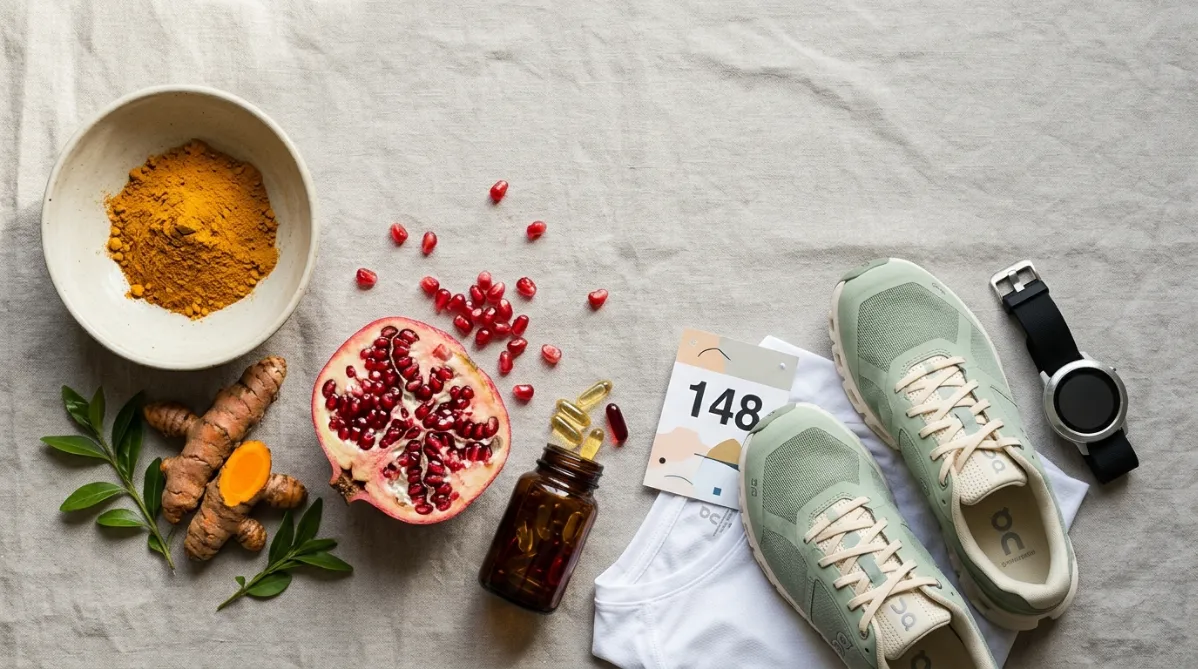
A wide, editorial-style flat lay photographed from above on a pale, warm-gray linen surface lit by soft morning window light. On the left, a rustic ceramic bowl in matte cream holds a small mound of golden-orange curcumin powder, with a few fresh turmeric roots, one cut open to show its vivid saffron interior, resting beside it. In the center, a halved pomegranate shows glossy ruby-red arils spilling across the surface, a few individual seeds scattered with delicate highlights. A small amber glass supplement bottle with a minimal unlabeled cream cap and a few capsules in translucent gold and deep red sit nearby.

On the right, a pair of lightweight running shoes in soft sage green and off-white rests at a slight angle, with a thin race bib with simple abstract numbers pinned to a folded white technical shirt. A simple silver sports watch curls loosely beside them. A sprig of green leaves and a few loose turmeric flecks add organic texture.

The palette is warm and harmonious: turmeric gold, pomegranate crimson, sage green, cream, and soft gray. Shadows are long, gentle, and diffused, with shallow depth of field so the foreground pomegranate seeds are crisp and the edges fall softly out of focus. Generous negative space on the upper right of the frame gives breathing room for a headline overlay. The composition feels modern, clean, and trendy, like a health and wellness magazine or a boutique science journal feature. The mood is calm, fresh, and athletic, with a natural, tactile, premium feel and subtle film-like grain.
science research

Esta Mezcla de Cúrcuma y Granada Reprogramó los Genes Inmunes de los Corredores

BY DR. GYMBRO ·

Veintisiete corredores tomaron durante 28 días una mezcla de cúrcuma y granada o un placebo antes de un medio maratón, y sus genes inmunológicos respondieron de forma distinta después de la carrera. El grupo que recibió el suplemento mostró un 25 % menos de supresión inmune a las 2 horas y un 232 % más de activación de vías relacionadas con la recuperación a las 4 horas. Sin embargo, se trata de biomarcadores de ARNm, no de medidas de dolor muscular ni de rendimiento. La mezcla es un producto de marca de Verdure Sciences y la muestra fue pequeña. A continuación se explica qué demuestra el estudio, qué no y cómo interpretarlo como atleta.

This page is available in