Dr. Gymbro
←

#exercise recovery

2 articles
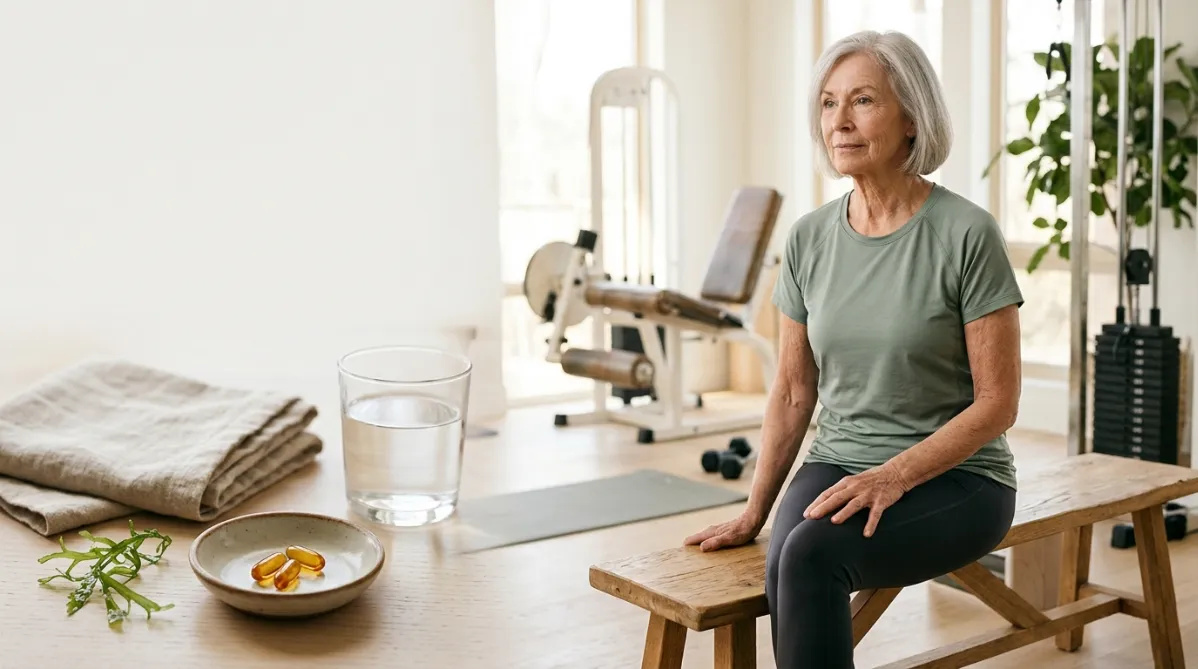
A warm, softly lit editorial scene of an older woman in her early seventies, with short silver hair and a calm, focused expression. She sits on the edge of a light oak bench in a bright, airy home gym, one hand resting on her thigh as she pauses between sets. She wears a muted sage-green athletic top and charcoal leggings. A well-worn leg extension machine sits blurred in the background, and a tall window floods the room with golden morning light.

In the foreground, slightly out of focus, a small ceramic dish on a pale wooden surface holds two translucent amber softgel capsules. Next to it sit a glass of water and a folded linen towel in warm cream. A single sprig of green algae-like seaweed rests beside the dish as a quiet nod to the algae-oil source. The sprig is delicate and natural, with no laboratory elements.

The color palette is earthy and modern: sage green, warm amber, oatmeal beige, and soft terracotta accents, with gentle highlights on the capsules. The composition follows the rule of thirds. The woman sits on the right, and the capsules and water fill the lower left. Negative space in the upper left keeps the layout clean for a headline overlay.

The photographic style is contemporary lifestyle editorial, shot on a 50mm lens at f/2, with shallow depth of field, soft natural grain, and subtle film-like tones. The mood is thoughtful, reassuring, and quietly skeptical. The scene suggests curiosity about whether a popular supplement delivers, with no drama and no clinical coldness. The image should look like the cover of a trendy health and wellness journal: clean, minimal, human, and sophisticated, with realistic textures in the skin, fabric, wood, and glass.
nutrition

Omega-3 for Sore Legs After 65? The Trial Had a Twist

BY DR. GYMBRO ·

Omega-3 supplements are often marketed as a way to ease muscle soreness and speed recovery. A new randomised, placebo-controlled trial put that claim to the test in 43 healthy adults aged 65 to 85 after a demanding eccentric leg-extension session. After eight weeks on 2 g of algae-oil omega-3, functional recovery was no better than placebo, and strength was lower at 24 and 72 hours. The biochemical response did look different, but different is not the same as better. Here is exactly what changed, what didn't, and what older lifters should take from it.
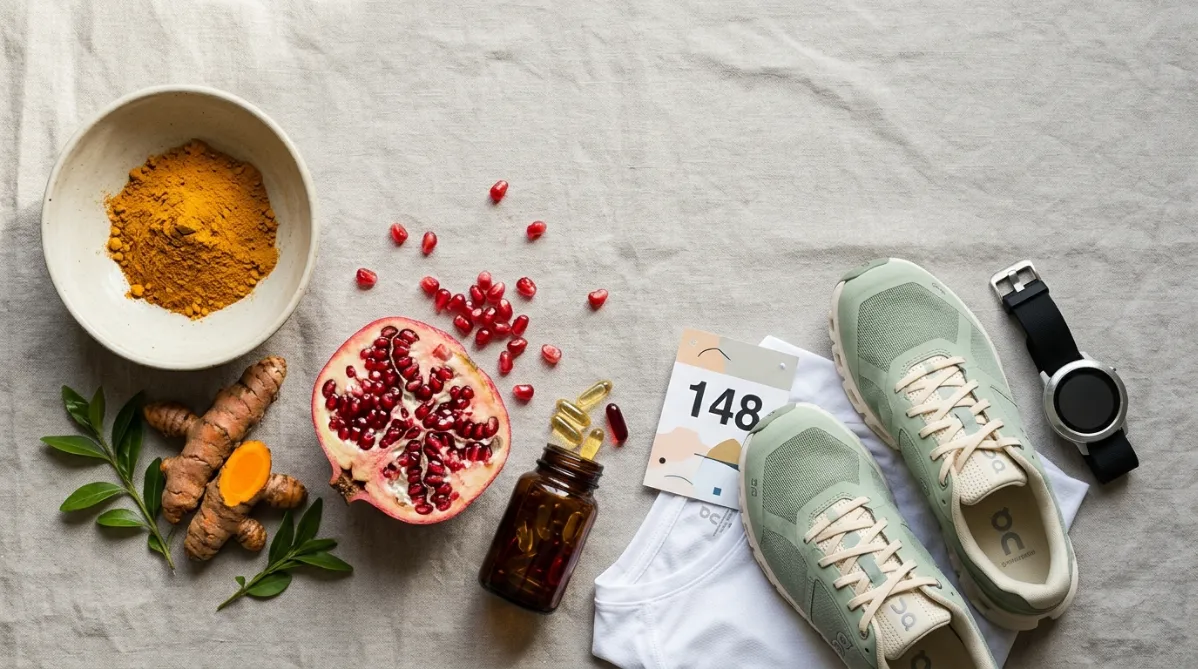
A wide, editorial-style flat lay photographed from above on a pale, warm-gray linen surface lit by soft morning window light. On the left, a rustic ceramic bowl in matte cream holds a small mound of golden-orange curcumin powder, with a few fresh turmeric roots, one cut open to show its vivid saffron interior, resting beside it. In the center, a halved pomegranate shows glossy ruby-red arils spilling across the surface, a few individual seeds scattered with delicate highlights. A small amber glass supplement bottle with a minimal unlabeled cream cap and a few capsules in translucent gold and deep red sit nearby.

On the right, a pair of lightweight running shoes in soft sage green and off-white rests at a slight angle, with a thin race bib with simple abstract numbers pinned to a folded white technical shirt. A simple silver sports watch curls loosely beside them. A sprig of green leaves and a few loose turmeric flecks add organic texture.

The palette is warm and harmonious: turmeric gold, pomegranate crimson, sage green, cream, and soft gray. Shadows are long, gentle, and diffused, with shallow depth of field so the foreground pomegranate seeds are crisp and the edges fall softly out of focus. Generous negative space on the upper right of the frame gives breathing room for a headline overlay. The composition feels modern, clean, and trendy, like a health and wellness magazine or a boutique science journal feature. The mood is calm, fresh, and athletic, with a natural, tactile, premium feel and subtle film-like grain.
science research

This Curcumin-Pomegranate Blend Rewired Runners' Immune Genes

BY DR. GYMBRO ·

Twenty-seven runners took either a curcumin-pomegranate blend or a placebo for 28 days before a half marathon, and their immune genes responded differently afterward. The supplement group showed 25% less immune suppression at 2 hours and 232% greater activation of recovery-linked pathways at 4 hours. But these are mRNA biomarkers, not measures of soreness or race performance. The blend is a branded Verdure Sciences product, and the sample was small. Here's what the study shows, what it doesn't, and how to think about it as an athlete.

This page is available in