Dr. Gymbro
←

#muscle-growth

3 articles
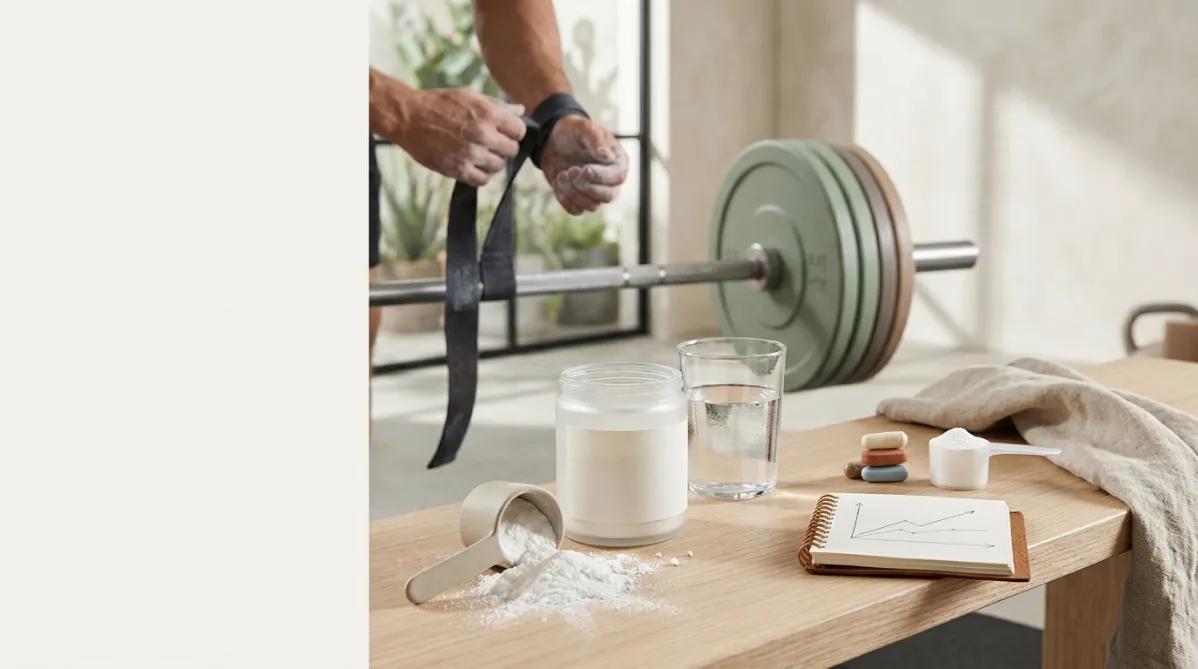
A wide, editorial-style still life photographed in soft natural window light, set on a pale oak gym bench or light wooden table. In the foreground, a matte ceramic scoop rests in a small mound of fine white creatine powder, with a few loose grains scattered across the surface. Next to it sits a minimalist frosted glass jar with a plain unbranded label. Beside the jar is a clear glass of water with delicate condensation. A pair of worn chalk-dusted hands is out of focus in the background, wrapping a lifting strap around a barbell. The barbell is a brushed steel bar with a few muted sage-green and warm gray bumper plates.

On the right side of the frame, a small stack of three different supplement capsules and tablets in neutral cream, terracotta, and soft blue sits next to a single clean white scoop of powder. This subtly contrasts the "stack" with the "plain" option. A folded linen towel in oatmeal beige drapes over the end of the bench. A small leather-bound notebook lies open, with a simple hand-drawn line graph showing two lines, one rising steadily and one flat, in pencil.

The background is softly blurred and shows a bright, airy, modern home gym with large windows, pale plaster walls, and a few green plants. Warm morning sunlight casts long, gentle shadows diagonally across the scene. The color palette is muted and sophisticated: cream, warm white, sage green, soft terracotta, and charcoal accents. Shallow depth of field with a crisp focus on the powder and scoop. Generous negative space on the left third for headline overlay. The mood is calm, thoughtful, and trustworthy, like a high-end health and science magazine cover, with subtle film grain and natural textures. No text, no logos, no futuristic elements.
nutrition

Una pila de creatina aumentó la masa muscular en principiantes, pero no la fuerza. ¿Por qué?

BY DR. GYMBRO ·

Un nuevo ensayo aleatorizado administró a levantadores novatos una mezcla de suplementos basada en creatina durante cuatro semanas y observó mayor masa muscular, un patrón testosterona/cortisol más favorable y mejor recuperación. Sin embargo, la fuerza máxima en prensa de piernas no superó al placebo. Las posibles causas incluyen ganancias neurales típicas de principiantes, la corta duración del estudio y la retención temprana de agua, aunque el artículo no puede determinar cuál es la responsable. Los marcadores renales se mantuvieron normales, pero el estudio fue pequeño, solo con hombres, financiado por la industria y no describió la fórmula completa. Para los recién iniciados, la opción más segura basada en evidencia sigue siendo la creatina monohidratada pura.
A sleek, modern gym interior with warm natural lighting streaming through large windows, featuring a minimalist weight training area with polished concrete floors and exposed brick walls. In the foreground, a single chrome barbell rests on a clean wooden bench, with perfectly organized dumbbells arranged on a contemporary rack in soft focus behind it. The scene captures a peaceful, contemplative moment with subtle shadows creating depth and visual interest. The color palette consists of warm grays, natural wood tones, and soft whites, with subtle amber lighting that creates an inviting, professional atmosphere perfect for serious training.
general

¿Las repeticiones lentas generan más músculo? Un meta‑análisis revolucionario revela la verdad sobre el entrenamiento por tempo

BY DR. GYMBRO ·

Un nuevo meta‑análisis ha puesto fin al debate sobre el tempo de las repeticiones y el crecimiento muscular. Investigadores revisaron decenas de estudios con hombres adultos sanos para determinar si las repeticiones lentas realmente generan más músculo que los movimientos más rápidos. Los resultados muestran que los tempos moderados (2‑4 s por repetición) combinados con un mayor volumen de entrenamiento son superiores a las repeticiones extremadamente lentas, desafiando la sabiduría convencional del mundo fitness.
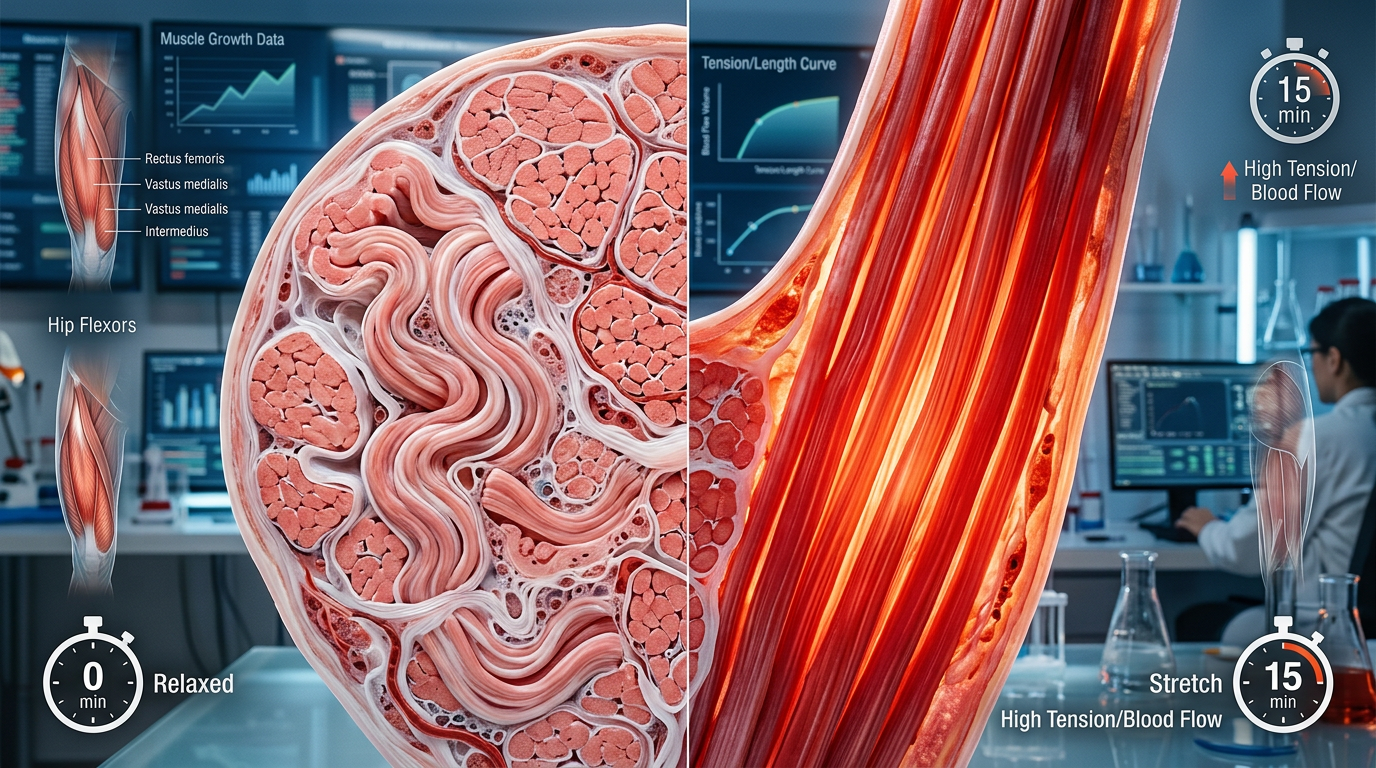
A split-screen composition showing the transformation of muscle fibers during stretching. On the left, a detailed cross-section view of relaxed muscle tissue with loose, wavy fibers in soft pink and white tones. On the right, the same muscle tissue during an intense stretch, with fibers elongated and aligned, glowing with increased blood flow in vibrant reds and oranges. The background features a modern research laboratory setting with charts and graphs displaying muscle growth data. Overlaying the image are subtle anatomical illustrations of the quadriceps muscle group and hip flexors. The lighting is clinical yet warm, with blue-white laboratory lighting contrasting against the organic warm tones of the muscle tissue. Small visual elements like stopwatch icons showing "15 min" and strength measurement indicators add scientific context to the transformative muscle-building process.
general

Estiramiento para el Crecimiento Muscular: Un nuevo estudio revela cómo sesiones de 15 minutos generan fuerza

BY DR. GYMBRO ·

Un estudio revolucionario de la Universidad de Graz ha demostrado que solo 15 minutos de estiramiento de alta intensidad, realizados tres veces por semana, pueden producir un crecimiento muscular significativo y aumentar la fuerza en los cuádriceps. Los hallazgos cuestionan los paradigmas tradicionales al mostrar que el estiramiento supervisado del flexor de cadera no solo aumenta el grosor muscular, sino que también mejora la fuerza isométrica y el equilibrio dinámico, ofreciendo una alternativa viable para quienes no pueden entrenar con pesas por lesiones o falta de equipamiento.

This page is available in