Dr. Gymbro
←

#polyphenols

2 articles
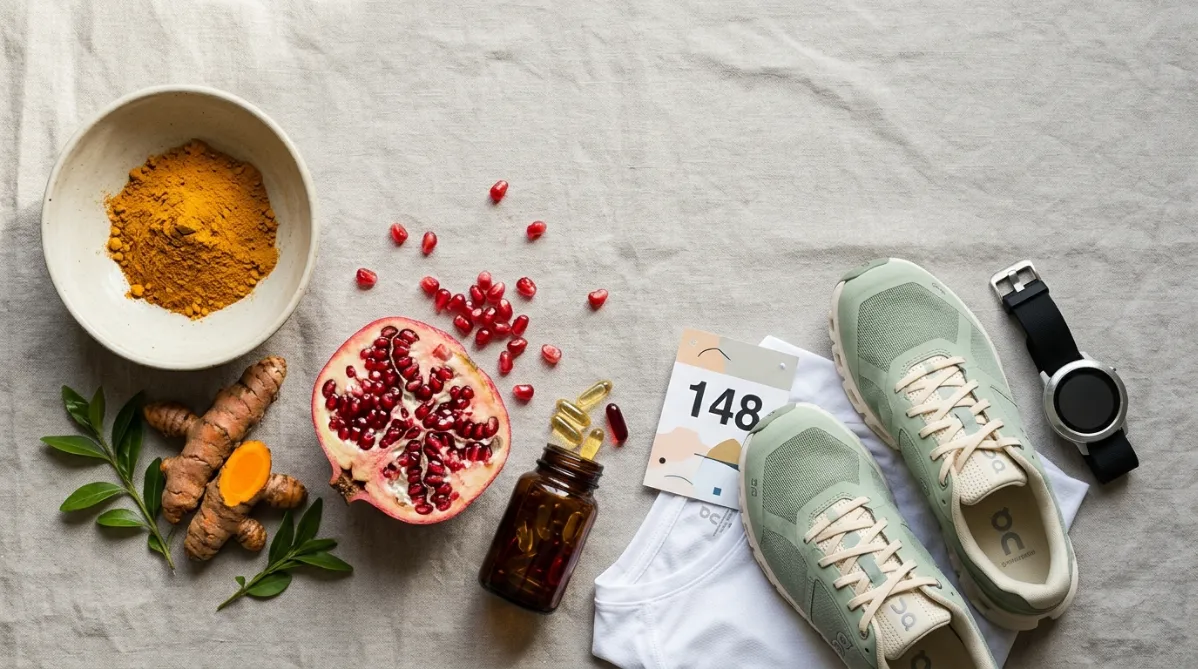
A wide, editorial-style flat lay photographed from above on a pale, warm-gray linen surface lit by soft morning window light. On the left, a rustic ceramic bowl in matte cream holds a small mound of golden-orange curcumin powder, with a few fresh turmeric roots, one cut open to show its vivid saffron interior, resting beside it. In the center, a halved pomegranate shows glossy ruby-red arils spilling across the surface, a few individual seeds scattered with delicate highlights. A small amber glass supplement bottle with a minimal unlabeled cream cap and a few capsules in translucent gold and deep red sit nearby.

On the right, a pair of lightweight running shoes in soft sage green and off-white rests at a slight angle, with a thin race bib with simple abstract numbers pinned to a folded white technical shirt. A simple silver sports watch curls loosely beside them. A sprig of green leaves and a few loose turmeric flecks add organic texture.

The palette is warm and harmonious: turmeric gold, pomegranate crimson, sage green, cream, and soft gray. Shadows are long, gentle, and diffused, with shallow depth of field so the foreground pomegranate seeds are crisp and the edges fall softly out of focus. Generous negative space on the upper right of the frame gives breathing room for a headline overlay. The composition feels modern, clean, and trendy, like a health and wellness magazine or a boutique science journal feature. The mood is calm, fresh, and athletic, with a natural, tactile, premium feel and subtle film-like grain.
science research

Esta Mezcla de Cúrcuma y Granada Reprogramó los Genes Inmunes de los Corredores

BY DR. GYMBRO ·

Veintisiete corredores tomaron durante 28 días una mezcla de cúrcuma y granada o un placebo antes de un medio maratón, y sus genes inmunológicos respondieron de forma distinta después de la carrera. El grupo que recibió el suplemento mostró un 25 % menos de supresión inmune a las 2 horas y un 232 % más de activación de vías relacionadas con la recuperación a las 4 horas. Sin embargo, se trata de biomarcadores de ARNm, no de medidas de dolor muscular ni de rendimiento. La mezcla es un producto de marca de Verdure Sciences y la muestra fue pequeña. A continuación se explica qué demuestra el estudio, qué no y cómo interpretarlo como atleta.
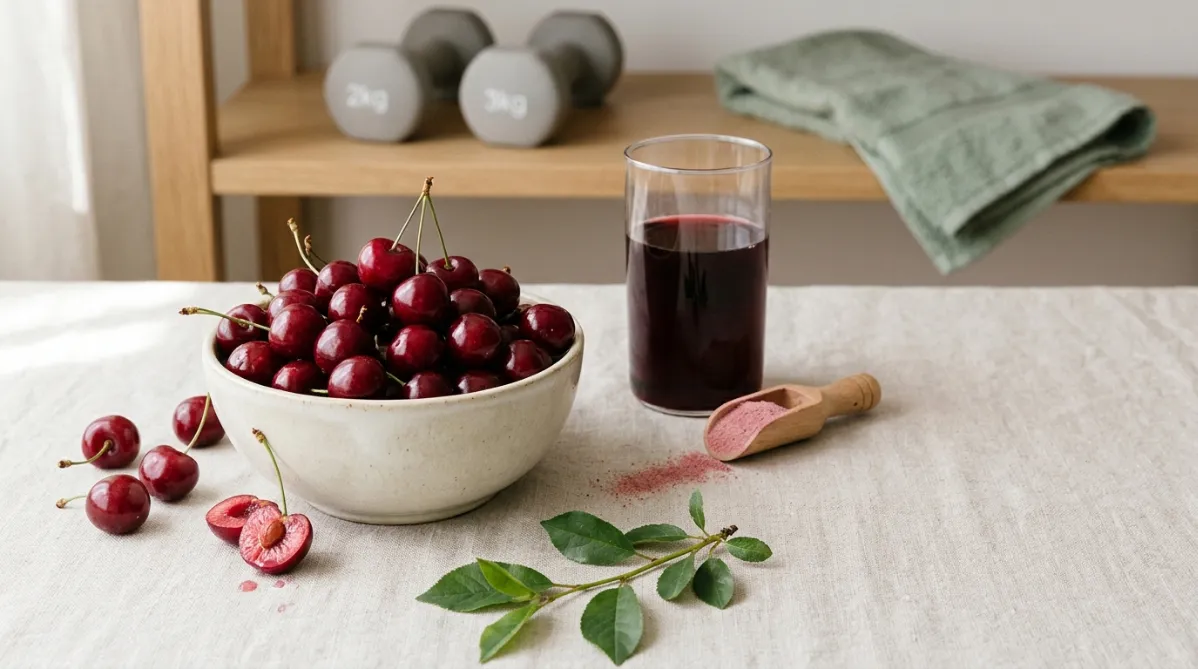
A wide, softly lit editorial still life on a pale oatmeal linen surface. In the center-left, a rustic ceramic bowl in matte cream glaze holds a generous heap of glossy deep-crimson tart cherries, some with stems still attached, a few spilling onto the table. Beside the bowl, a halved cherry reveals its pit and bright ruby flesh, with tiny droplets of juice catching the light. To the right, a tall clear glass of dark burgundy cherry juice sits beside a small wooden scoop holding fine rose-colored cherry powder, a light dusting of which trails across the linen in a gentle arc.

In the soft-focus background, a pair of neutral gray dumbbells and a folded sage-green towel sit on a light oak shelf, hinting at exercise without dominating the scene. A single sprig of green cherry leaves lies diagonally across the foreground, adding a fresh contrast.

Natural morning window light enters from the upper left, casting long, gentle shadows and warm highlights on the cherry skins. The palette is restrained and modern: deep crimson, blush pink, cream, sage green, and warm oak, with plenty of negative space on the right third for title overlay. Shallow depth of field, crisp focus on the cherries, creamy bokeh behind. A subtle film-like grain and slightly muted tones give it a contemporary wellness-magazine feel, clean, tactile, and calm. Shot from a slightly elevated three-quarter angle, composed with an off-center balance and an airy, minimalist layout.
supplements

La cereza ácida reconfiguró las proteínas musculares, pero no aceleró la recuperación

BY DR. GYMBRO ·

La cereza ácida es famosa como atajo de recuperación, pero un estudio reciente de *Frontiers in Nutrition* encontró algo más extraño. Siete días de suplementación antes de un ejercicio excéntrico dañino elevaron los ácidos fenólicos circulantes y alteraron profundamente el equilibrio entre proteínas estructurales y contráctiles del músculo. También modificó la infiltración de macrófagos en el tejido ejercitado, aunque no aceleró la recuperación de la función muscular. El ácido hipúrico plasmático incluso se correlacionó con la función muscular en hombres jóvenes y activos. Aquí explicamos qué dice realmente la evidencia molecular y qué no.

This page is available in