Dr. Gymbro
←

#polyphenols

2 articles
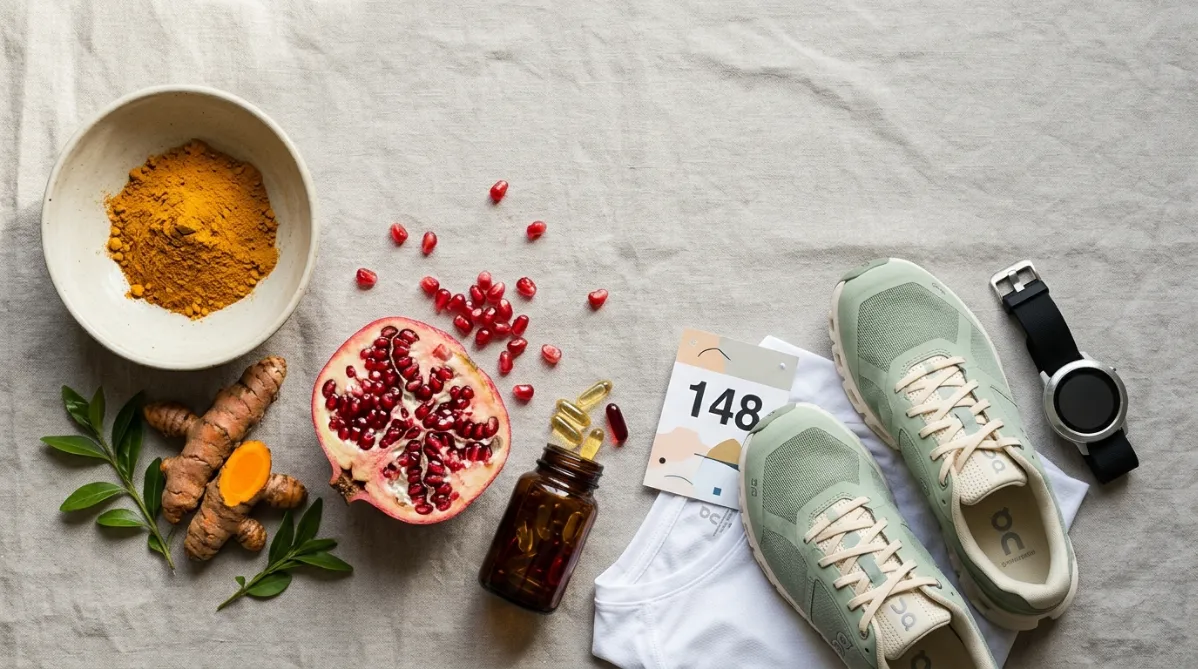
A wide, editorial-style flat lay photographed from above on a pale, warm-gray linen surface lit by soft morning window light. On the left, a rustic ceramic bowl in matte cream holds a small mound of golden-orange curcumin powder, with a few fresh turmeric roots, one cut open to show its vivid saffron interior, resting beside it. In the center, a halved pomegranate shows glossy ruby-red arils spilling across the surface, a few individual seeds scattered with delicate highlights. A small amber glass supplement bottle with a minimal unlabeled cream cap and a few capsules in translucent gold and deep red sit nearby.

On the right, a pair of lightweight running shoes in soft sage green and off-white rests at a slight angle, with a thin race bib with simple abstract numbers pinned to a folded white technical shirt. A simple silver sports watch curls loosely beside them. A sprig of green leaves and a few loose turmeric flecks add organic texture.

The palette is warm and harmonious: turmeric gold, pomegranate crimson, sage green, cream, and soft gray. Shadows are long, gentle, and diffused, with shallow depth of field so the foreground pomegranate seeds are crisp and the edges fall softly out of focus. Generous negative space on the upper right of the frame gives breathing room for a headline overlay. The composition feels modern, clean, and trendy, like a health and wellness magazine or a boutique science journal feature. The mood is calm, fresh, and athletic, with a natural, tactile, premium feel and subtle film-like grain.
science research

This Curcumin-Pomegranate Blend Rewired Runners' Immune Genes

BY DR. GYMBRO ·

Twenty-seven runners took either a curcumin-pomegranate blend or a placebo for 28 days before a half marathon, and their immune genes responded differently afterward. The supplement group showed 25% less immune suppression at 2 hours and 232% greater activation of recovery-linked pathways at 4 hours. But these are mRNA biomarkers, not measures of soreness or race performance. The blend is a branded Verdure Sciences product, and the sample was small. Here's what the study shows, what it doesn't, and how to think about it as an athlete.
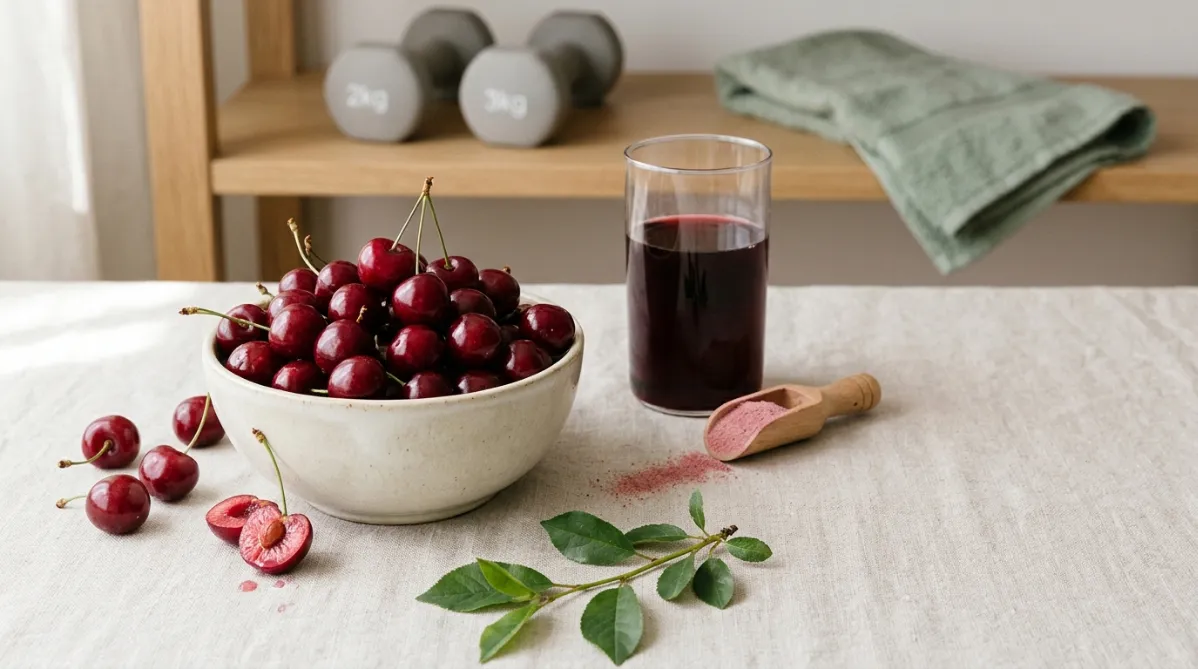
A wide, softly lit editorial still life on a pale oatmeal linen surface. In the center-left, a rustic ceramic bowl in matte cream glaze holds a generous heap of glossy deep-crimson tart cherries, some with stems still attached, a few spilling onto the table. Beside the bowl, a halved cherry reveals its pit and bright ruby flesh, with tiny droplets of juice catching the light. To the right, a tall clear glass of dark burgundy cherry juice sits beside a small wooden scoop holding fine rose-colored cherry powder, a light dusting of which trails across the linen in a gentle arc.

In the soft-focus background, a pair of neutral gray dumbbells and a folded sage-green towel sit on a light oak shelf, hinting at exercise without dominating the scene. A single sprig of green cherry leaves lies diagonally across the foreground, adding a fresh contrast.

Natural morning window light enters from the upper left, casting long, gentle shadows and warm highlights on the cherry skins. The palette is restrained and modern: deep crimson, blush pink, cream, sage green, and warm oak, with plenty of negative space on the right third for title overlay. Shallow depth of field, crisp focus on the cherries, creamy bokeh behind. A subtle film-like grain and slightly muted tones give it a contemporary wellness-magazine feel, clean, tactile, and calm. Shot from a slightly elevated three-quarter angle, composed with an off-center balance and an airy, minimalist layout.
supplements

Tart Cherry Rewired Muscle Proteins—But Didn't Speed Recovery

BY DR. GYMBRO ·

Tart cherry has a reputation as a recovery shortcut, but a new Frontiers in Nutrition study found something stranger. Seven days of supplementation before damaging eccentric exercise raised circulating phenolic acids and profoundly shifted the balance of structural and contractile muscle proteins. It also changed macrophage infiltration in the exercised muscle, yet it did not speed up the recovery of muscle function. Plasma hippuric acid even tracked with muscle function in young active men. Here is what the molecular evidence really says, and what it doesn't.

This page is available in