Dr. Gymbro
←

#roseburia

1 article
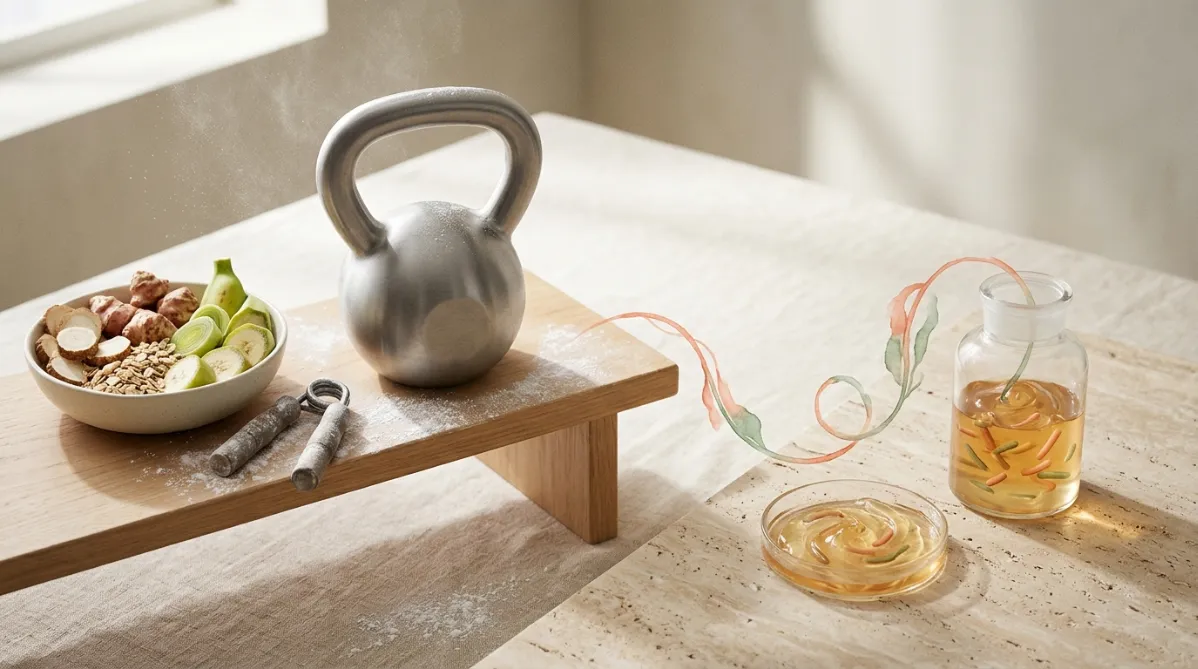
A landscape editorial still life on a soft, warm-neutral background of pale oat linen and light travertine stone. In the center-left, a matte brushed-steel kettlebell and a pair of worn chalk-dusted hand grippers rest on a low pale wooden bench. Beside them sits a shallow ceramic bowl of fermented and fiber-rich foods: sliced chicory root, Jerusalem artichokes, oats, leeks, and a few green banana slices. Soft powdery chalk drifts in the air like fine dust in a sunbeam.

On the right, a minimalist glass apothecary jar and a delicate petri-style glass dish hold a swirl of translucent amber-gold gel with tiny, organic rod-shaped forms. They are rendered as abstract, elegant botanical-looking filaments in soft coral and sage green, like watercolor ink bleeding through water. A single fine thread of this ink-like color curls out of the jar and gently loops across the surface toward the kettlebell, suggesting a quiet connection between gut and muscle without literal anatomy.

Late-morning window light enters from the upper left and casts long, soft shadows with gentle highlights on the metal and glass. Sage green, terracotta, cream, and muted gold make up the palette, with a subtle film-grain finish. The composition is airy, with generous negative space on the far right and top for headline overlay. The shallow depth of field, crisp focus on the foreground objects, and creamy blur behind them give it the polished, modern feel of a wellness and science magazine cover.
science research

La bacteria intestinal vinculada a levantamientos más fuertes: Roseburia inulinivorans

BY DR. GYMBRO ·

Una bacteria intestinal, *Roseburia inulinivorans*, se asoció con mayor fuerza en el agarre manual, la prensa de piernas y el press de banca en humanos, y al administrarla a ratones aumentó su fuerza de agarre. Otras especies de *Roseburia* no mostraron el mismo efecto, y la bacteria era menos abundante en adultos mayores que en jóvenes. Sin embargo, la evidencia de causalidad proviene solo de ratones y aún no existe ningún probiótico comercial. A continuación, lo que encontró el estudio en *Gut*, cómo podría funcionar y una forma especulativa y de bajo riesgo de apoyar tu microbiota mientras la ciencia avanza.

This page is available in